
DIY
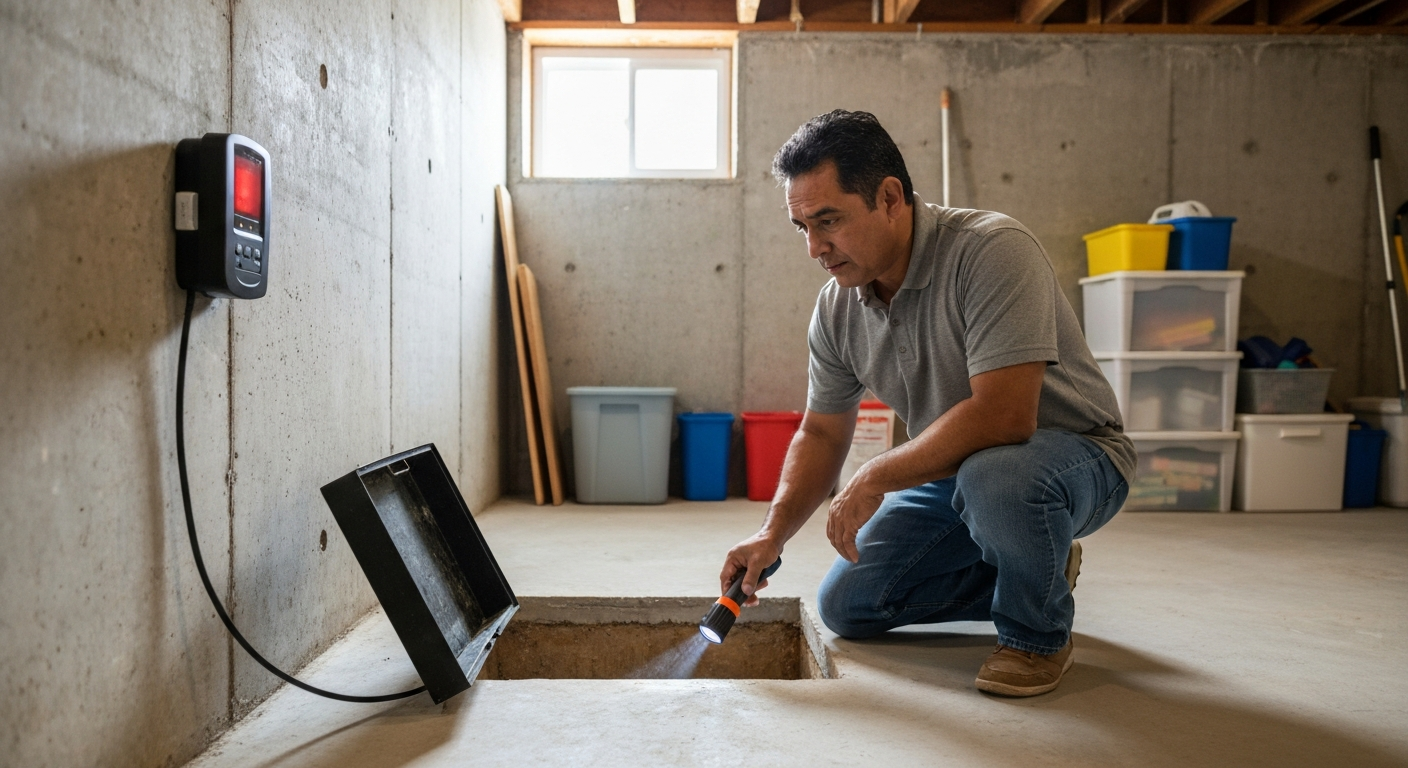

Your sump pump is beeping because it's detecting a problem that needs immediate attention—most commonly a high water level in the basin, a dying backup battery, a power failure, or a pump malfunction that could lead to basement flooding if ignored.
The alarm is doing exactly what it's designed to do: warning you before water damage occurs. The good news is that most causes are straightforward to diagnose and fix yourself, often in under 30 minutes. Below, you'll find every reason your sump pump alarm might be sounding in 2026, along with step-by-step solutions to silence it and protect your basement.
| ✓Our Pick |
Sump pump battery backup systems to prevent basement flooding Highly rated by thousands of buyers — this is one of the most effective solutions for this issue you can try at home. See on Amazon → |
A sump pump alarm indicates that water in your sump basin has risen above the normal operating level, or that the pump system itself has a fault preventing it from doing its job.
Modern sump pump systems include alarms as a safety feature. The alarm triggers when sensors detect conditions that could lead to flooding. Think of it as your basement's smoke detector—it's loud and annoying on purpose, because the alternative is thousands of dollars in water damage.
Most alarms use one of two detection methods. Float-based alarms trigger when a physical float rises with the water level. Electronic sensors trigger when water contacts probes mounted at a specific height. Either way, the beeping means action is required now, not later.
The alarm could be signaling anything from a simple power interruption to a pump that has completely failed—here's how to identify which problem you're dealing with.
The most common trigger for a sump pump alarm is water rising above the normal threshold. This happens when water enters the basin faster than the pump can remove it, or when the pump isn't activating at all.
Open the sump pit cover and look inside. If water is near the top of the basin or overflowing, you have an immediate problem. If the pump is running but water isn't dropping, the discharge line may be clogged or frozen. If the pump isn't running at all despite high water, move to the power and float switch checks below.
During heavy rainstorms, groundwater can overwhelm even a functioning pump. According to the Federal Emergency Management Agency (FEMA), basement flooding is the most common home disaster in the United States, affecting an estimated 14,000 people every day on average.
If your sump pump has a battery backup system, a beeping alarm often indicates the battery needs charging or replacement.
Battery backup alarms typically beep in a distinct pattern—often a series of short beeps every few minutes rather than a continuous tone. Check the battery backup unit's indicator lights. Most units have LED displays showing battery status.
Lead-acid batteries in sump pump backups generally last 3 to 5 years. If yours is older than that, replacement is likely overdue. Batteries can also fail prematurely if they've been deeply discharged multiple times or exposed to extreme temperatures.
To test the battery, disconnect AC power to the backup unit and see if it can run the pump on battery alone. If the pump doesn't activate or runs weakly, the battery needs replacement.
A power outage will trigger the alarm on battery backup systems because the backup has detected it's now the only line of defense. Even if the power is back on, the alarm may continue until you manually reset it.
Check whether other devices in your basement have power. If the outlet the sump pump uses has power, the pump's circuit breaker or GFCI outlet may have tripped. Sump pumps should be on a dedicated circuit, but many older installations share circuits with other basement equipment.
Reset any tripped breakers and test GFCI outlets by pressing the reset button. If the breaker trips again immediately, there's an electrical fault that needs professional attention.
The float switch tells the pump when to turn on and off—if it's stuck, tangled, or broken, the pump won't respond to rising water.
Float switches fail more often than the pumps themselves. Debris in the sump basin can jam the float in the down position, preventing activation. The float arm can also get tangled with the pump housing or discharge pipe.
Reach into the basin (after disconnecting power) and manually lift the float. You should feel it move freely through its full range of motion. If it sticks at any point, clear any debris and reposition the float so it has room to rise and fall without obstruction.
"Float switch failures account for a significant percentage of sump pump malfunctions. Homeowners should test their float switch monthly by pouring water into the basin and confirming the pump activates." — InterNACHI (International Association of Certified Home Inspectors)
If the pump hums but doesn't move water, or if it's completely silent when it should be running, the motor may have failed. Pump motors typically last 7 to 10 years with average use, but can fail sooner if they run frequently or cycle on and off excessively.
A burning smell near the sump pit is a telltale sign of motor burnout. If you notice this, disconnect power immediately. Running a burned-out motor can create fire hazards.
Test the pump by pouring a bucket of water into the basin. If the float rises but the pump doesn't activate (and you've confirmed power is reaching it), the motor has likely failed and the pump needs replacement.
A pump can run perfectly, but if the discharge line is clogged, kinked, or frozen, water has nowhere to go and will back up into the basin.
In winter, discharge lines that exit at ground level can freeze solid. This is especially common when the line runs horizontally for any distance before angling downward, or when the exit point is blocked by snow and ice.
Check the discharge point outside your home. Water should flow freely when the pump runs. If nothing comes out while the pump is running, the line is obstructed.
For frozen lines, applying heat tape or pouring warm (not boiling) water over accessible sections can help. Long-term, the discharge line should be buried below the frost line or fitted with a freeze-resistant exit port.
The check valve prevents water from flowing back down into the basin after the pump shuts off. If it fails, water drains back, causing the pump to cycle repeatedly. This constant cycling can trigger alarms and burn out the motor prematurely.
A failing check valve often produces a distinct "thunk" or water hammer sound shortly after the pump stops running. If your pump seems to run, stop, then run again within seconds, the check valve is the likely culprit.
Check valves are inexpensive and relatively easy to replace. They're installed in the vertical section of the discharge pipe, usually within a foot or two of the pump.
Also Read: Why Is My Toilet Bubbling When I Shower? 5 Causes & Fixes
Systematic troubleshooting will identify the problem faster than random guessing—follow this sequence for the quickest resolution.
| Step | Check | What to Look For | Fix |
|---|---|---|---|
| 1 | Power supply | Tripped breaker, unplugged cord, dead outlet | Reset breaker, plug in, test outlet |
| 2 | Water level | Water above normal line, near or at overflow | Address pump activation issues below |
| 3 | Float switch | Stuck, tangled, or restricted movement | Clear debris, reposition float |
| 4 | Pump activation | Pump runs when float is manually lifted | If no, check power path; if yes, float issue |
| 5 | Discharge flow | Water exits discharge point when pump runs | Clear blockages, thaw frozen sections |
| 6 | Battery backup | Battery indicator lights, age of battery | Replace if >3 years or showing fault |
| 7 | Check valve | Water hammer sound, rapid cycling | Replace check valve |
| 8 | Motor function | Hums but doesn't pump, or no sound at all | Replace pump |
After identifying and fixing the problem, most alarms require a manual reset. This is usually a button on the alarm unit or backup system. Some alarms reset automatically once normal conditions are restored.
If your pump is more than 7 years old, makes grinding noises, runs constantly, or fails to keep up during moderate rain, replacement is more cost-effective than repeated repairs.
Sump pumps are not designed to last forever. The average lifespan ranges from 7 to 10 years depending on usage frequency, water quality, and maintenance habits. Pumps in areas with high water tables or frequent storms work harder and wear out faster.
Signs it's time for a new pump include:
When replacing, consider upgrading to a pump with a higher horsepower rating if your current pump struggles during heavy rain. A 1/3 HP pump handles most residential applications, but 1/2 HP provides extra capacity for high-volume situations.
Also Read: Why Is My House Not Heating Up? 11 Causes & Quick Fixes
Regular maintenance prevents most alarm situations—a 15-minute quarterly check can save you from emergency calls and water damage.
Test your pump monthly by pouring water into the basin until the float triggers. The pump should activate, remove the water, and shut off automatically. This simple test catches problems before they become emergencies.
Clean the basin annually. Debris, sediment, and small stones accumulate over time and can interfere with the float switch or clog the pump intake. Remove the pump, clean the basin, and clear any buildup on the pump itself.
Inspect the discharge line seasonally, especially before winter and after heavy storms. Make sure the exit point remains clear and that no sections have settled or kinked.
Replace the backup battery every 3 to 5 years, even if it still holds a charge. Battery capacity degrades over time, and you don't want to discover the battery is weak during a storm when you need it most.
"Annual sump pump maintenance should include testing the backup power system, inspecting the discharge line, and cleaning debris from the sump basin. These steps significantly reduce the risk of basement flooding." — American Society of Home Inspectors (ASHI)
Your sump pump beeping is a warning that something in the system needs attention—whether it's high water, a weak battery, a stuck float, or a failing pump. The most common culprits are low backup battery charge, power interruptions, stuck float switches, and clogged discharge lines. Diagnose systematically by checking power first, then the float switch, then the discharge line, and finally the pump motor itself. Monthly testing and annual cleaning prevent most alarm situations. If your pump is over 7 years old and showing multiple issues, replacement is usually the smarter choice over continued repairs.
A beeping alarm with a dry basin usually indicates a battery backup issue rather than a water problem. The backup system may be signaling a low battery, a battery that won't hold charge, or a battery that's been disconnected. Check the backup unit's indicator lights—most display battery status directly. If the battery is older than 3 years, replacing it will likely solve the alarm.
Replace sump pump backup batteries every 3 to 5 years, regardless of whether they still seem to work. Lead-acid batteries lose capacity gradually, and a battery that tests fine under normal conditions may fail to deliver adequate power during an extended outage. Mark the installation date on the battery so you know when replacement is due.
Most sump pump alarms have a silence or mute button that stops the beeping for a set period, typically 24 hours. This gives you time to address the problem without the constant noise. However, silencing the alarm doesn't fix the underlying issue—use the quiet time to diagnose and resolve the problem, not to ignore it.
Standard homeowner's insurance policies typically do not cover water damage from sump pump failures or backed-up drains. You'll need to add a specific water backup endorsement to your policy, which usually costs $50 to $250 annually depending on your coverage limits. Given that basement flooding cleanup averages $3,000 to $10,000, this endorsement is worth considering.
For most residential applications, a 1/3 HP sump pump handles typical groundwater infiltration. If you live in an area with a high water table, frequent heavy rain, or a large basement footprint, consider a 1/2 HP or 3/4 HP pump. The discharge rate matters too—look for pumps rated to move at least 2,500 gallons per hour at an 8-foot lift height.
Reviewed and Updated on May 3, 2026 by George Wright