DIY
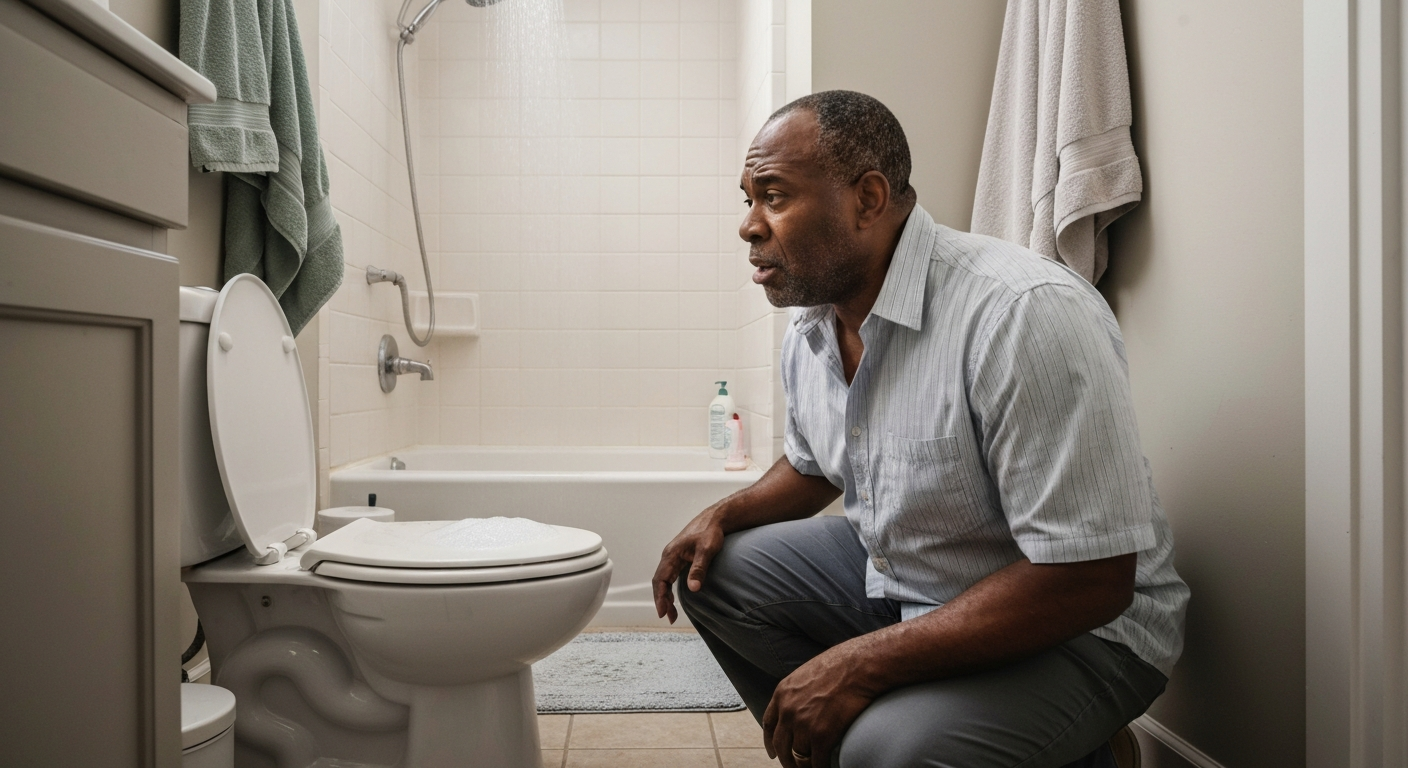

Your toilet is bubbling when you shower because both fixtures share the same drain line, and something is restricting airflow in your plumbing's vent system—most commonly a partial clog, blocked vent pipe, or undersized venting that forces air to escape through the toilet's water trap instead of through the roof vent.
When water rushes down your shower drain, it displaces air in the shared pipe. Normally, that air vents harmlessly through a pipe on your roof. But when the vent is blocked or the drain is partially clogged, the air has nowhere to go—so it pushes through the nearest water trap, which is often your toilet. The result is that distinctive gurgling, bubbling, or even whistling sound that makes you wonder if your plumbing is about to fail.
| ✓Our Pick |
Drain snake kit for clearing toilet and shower clogs Trusted by professionals and everyday users alike — a smart investment that pays for itself. See on Amazon → |
The bubbling happens because negative pressure builds up in your drain system, and air forces its way through the toilet's water seal to equalize that pressure.
Your home's drain-waste-vent (DWV) system relies on a simple principle: water flows down, air flows up. Every drain in your house connects to a vertical vent pipe that exits through your roof. This vent serves two purposes—it lets sewer gases escape outdoors and allows air to enter the system so water can drain smoothly.
When you turn on the shower, water rushes down the drain at several gallons per minute. That moving water acts like a piston, pushing air ahead of it. If the vent is clear, air enters from the roof to replace what's being displaced. But if something blocks that airflow, the system creates a partial vacuum. Air gets pulled from wherever it can—including through your toilet bowl, producing bubbles, gurgles, and sometimes a whistling or hissing sound.
"When a plumbing vent is blocked, draining water creates negative pressure that can siphon water from traps and cause gurgling sounds in fixtures." — International Association of Certified Home Inspectors
The most common cause of toilet bubbling is a blocked vent stack. Your main vent pipe exits through the roof, where it can collect leaves, bird nests, ice, or even tennis balls (it happens). When debris partially or fully blocks the vent, air can't enter the system, forcing it to find another route—through your toilet.
Signs of a blocked roof vent:
- Multiple drains gurgle simultaneously
- Slow drainage throughout the house
- Sewer smell near drains or in the bathroom
- Bubbling occurs regardless of which fixture drains
A partial clog in the shared drain line between your shower and toilet creates a bottleneck. Water backs up slightly, trapping air that then burps through the toilet. This is especially common when the clog is located downstream of both fixtures but before the main sewer line.
Common clog culprits:
- Hair accumulation (the #1 offender in shower drains)
- Soap scum buildup
- "Flushable" wipes that aren't actually flushable
- Mineral deposits in older pipes
Absolutely. If your toilet flushes fine and nothing is visibly blocked, the gurgling likely originates from the vent system or a clog elsewhere in the shared drain. The toilet itself isn't clogged—it's just the path of least resistance for escaping air.
Homes built before modern plumbing codes (or with unpermitted DIY work) sometimes have vents that are too small or poorly routed. A 1.5-inch vent might handle a single fixture, but if someone added a shower without upgrading the vent, you'll get chronic gurgling. Vents that have too many bends or run horizontally for too long also restrict airflow.
If the bubbling is new, has worsened recently, and comes with slow drains throughout the house, the issue may be in your main sewer line. Tree roots, collapsed pipe sections, or municipal sewer backups can all restrict flow enough to cause venting problems. This typically affects multiple bathrooms and drains, not just one toilet.
A toilet that hisses, whistles, or gurgles on its own usually has a different problem than one that reacts to the shower—most often a faulty fill valve or flapper inside the tank.
Random hissing or whistling from a toilet that isn't being used points to internal tank components, not drain venting. The fill valve (also called the ballcock) controls water entering the tank after a flush. When it wears out, it can vibrate or whistle as water slowly leaks through. A worn flapper can also let water trickle into the bowl, triggering the fill valve to top off the tank intermittently.
| Noise Type | Likely Cause | DIY Fix |
|---|---|---|
| Hissing (constant) | Fill valve not sealing | Replace fill valve ($10–$20) |
| Whistling after flush | Worn fill valve diaphragm | Replace fill valve or diaphragm |
| Random gurgling | Vent blockage or sewer backup | Check vent or call plumber |
| Ghost flushing | Leaky flapper | Replace flapper ($5–$10) |
| Squealing | Metal ballcock valve vibrating | Replace with modern fill valve |
If your toilet makes noise only when another fixture drains, the cause is venting. If it makes noise on its own, check the tank components first.
A shower that whistles or squeals usually has a clogged showerhead, worn valve cartridge, or high water pressure—unrelated to the toilet bubbling but worth addressing.
Shower whistling typically comes from water forcing through a restricted opening. Mineral buildup in the showerhead holes is the most common cause. Soaking the showerhead in white vinegar overnight usually solves it. If the whistling comes from the wall, a worn valve cartridge or excessively high water pressure (above 80 psi) is likely responsible.
Also Read: Why Is My Toilet Bubbling When the Shower Runs? 5 Causes & Fixes
Start with the simplest fixes before calling a plumber—most toilet bubbling can be resolved with basic tools and an hour of your time.
Climb onto your roof (safely, with proper equipment) and inspect the vent pipe opening. Remove any visible debris, leaves, or nests. You can also run a garden hose down the vent—if water backs up or drains very slowly, there's a blockage deeper in the pipe. A plumber's snake fed through the vent can clear most obstructions.
Remove the shower drain cover and pull out any visible hair or debris. Use a drain snake (a 15- to 25-foot model works for most residential drains) to clear buildup further down the pipe. Feed it until you feel resistance, then rotate and push through.
If clearing the shower drain doesn't help, the clog may be in the shared drain downstream. Use a toilet auger (also called a closet auger) to reach clogs in the toilet's trap and immediate drain line. This won't damage the porcelain like a standard drain snake might.
After clearing both drains, run the shower and flush the toilet simultaneously. If bubbling continues, the problem is likely in the vent stack or main sewer line—both of which typically require a professional.
"Gurgling sounds in plumbing fixtures often indicate a venting problem that, if left unaddressed, can lead to siphoning of water traps and sewer gas entering the home." — U.S. Environmental Protection Agency, Indoor Air Quality Guide
Call a plumber if DIY clearing fails, multiple fixtures are affected, you smell sewer gas, or the toilet bubbling started after recent construction or landscaping.
Some situations require professional equipment:
Expect to pay $150–$300 for a drain cleaning with camera inspection, or $300–$600 for vent repairs, depending on accessibility and local labor rates.
Also Read: Why Is My Electric Bill So High in My Apartment?
| Prevention Step | How Often | Why It Helps |
|---|---|---|
| Install a vent cap/screen | Once | Keeps debris and animals out of roof vent |
| Use drain covers/strainers | Always | Catches hair before it enters pipes |
| Avoid "flushable" wipes | Always | They don't break down and cause clogs |
| Pour hot water down drains | Monthly | Dissolves soap scum buildup |
| Schedule professional drain cleaning | Every 1–2 years | Clears buildup before it causes problems |
| Trim tree roots near sewer line | As needed | Prevents root intrusion into pipes |
Toilet bubbling when the shower runs signals a venting or drain issue in your plumbing system. The most common culprits are a blocked roof vent, partial drain clog, or undersized venting. Start by clearing visible debris from the vent and drains, then snake both the shower drain and toilet. If the problem persists, or if you notice sewer odors or multiple affected fixtures, call a licensed plumber to inspect with a camera and make necessary repairs.
A gurgling toilet that flushes normally isn't clogged itself—the restriction is elsewhere. The most likely cause is a blocked vent pipe on the roof or a partial clog in a shared drain line downstream. Air can't vent properly, so it escapes through your toilet's water trap. Check your roof vent for debris and snake the drain lines connected to the affected bathroom.
A constant hissing from your toilet usually means the fill valve isn't sealing properly. Water is slowly leaking past the valve, causing that hiss as it tries to refill the tank. This is a tank component issue, not a drain or vent problem. Replacing the fill valve (a $10–$20 part and a 30-minute DIY job) typically solves it.
Whistling after a flush points to a worn fill valve diaphragm or a metal ballcock valve vibrating as water flows through it. Modern plastic fill valves rarely whistle. If you have an older toilet with a brass or metal fill valve, replacing it with a modern Fluidmaster or Korky fill valve eliminates the noise.
Random bubbling without anyone using water in your home often indicates a main sewer line issue. When the municipal sewer line backs up or another home on your street flushes heavily, pressure changes can push air through your traps. Persistent random bubbling, especially with sewer smell, warrants a professional sewer line inspection.
A squealing shower typically has mineral buildup restricting the showerhead holes or a worn valve cartridge. Start by soaking the showerhead in vinegar overnight to dissolve deposits. If the squeal comes from the wall behind the handle, the cartridge inside the valve body needs replacement—a common issue in showers over 10 years old.
Reviewed and Updated on May 2, 2026 by Adelinda Manna