
Health
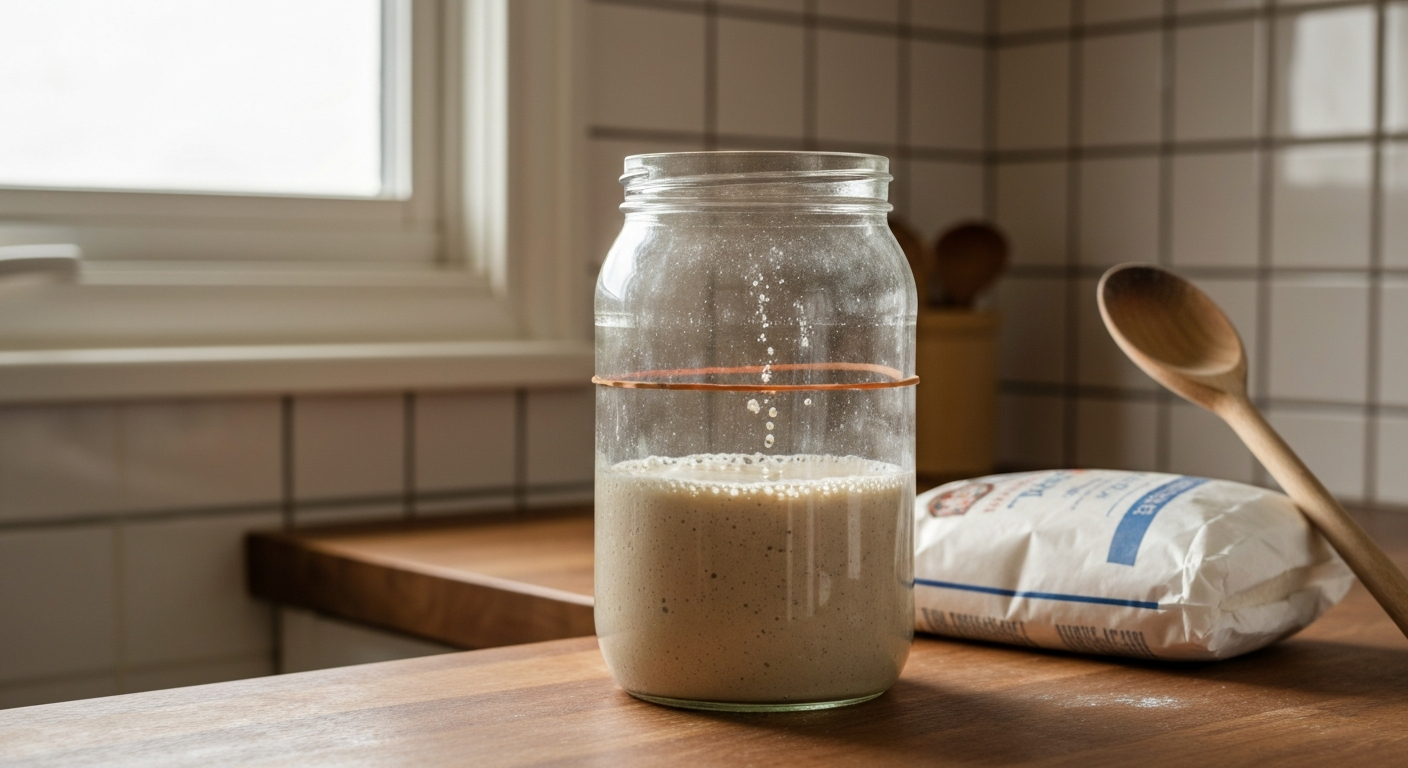

Your starter isn't rising because the yeast and bacteria aren't active enough — usually due to temperature being too cold, feeding ratios that are off, or a starter that simply needs more time to mature.
This single issue frustrates more home bakers than almost anything else in the kitchen. Whether you're troubleshooting a brand-new sourdough starter that won't double, bread dough that sits flat for hours, or pizza dough that refuses to puff up, the underlying causes are remarkably similar. The good news: nearly every rising problem has a straightforward fix once you understand what's actually happening inside that jar or bowl.
| ✓Our Pick |
Complete sourdough starter kit with thermometer and proofing supplies Backed by strong customer feedback — the most recommended solution in forums and Q&A communities. See on Amazon → |
Rising happens when yeast produces carbon dioxide gas, which gets trapped in the gluten network and inflates your dough — no gas production means no rise.
Yeast (whether wild cultures in sourdough or commercial packets) consumes sugars and starches in flour. As it eats, it releases CO2 and alcohol. The stretchy gluten strands you develop through kneading or folding act like tiny balloons, capturing those gas bubbles. Temperature, hydration, and time all influence how quickly this fermentation happens.
When any part of this system breaks down — inactive yeast, weak gluten, or hostile conditions — your dough stays flat. Understanding which link in the chain failed is the key to fixing it.
A brand-new sourdough starter typically takes 7 to 14 days before it's strong enough to raise bread. During the first week, you'll see bursts of activity (often from leuconostoc bacteria, not yeast) followed by apparent "death." This is normal. The wild yeast colony is still establishing itself.
Signs your starter needs more time:
- It's less than 10 days old
- It rises inconsistently or not at all
- It smells strongly of acetone or nail polish remover
- It hasn't doubled reliably for at least 3 consecutive feedings
Keep feeding daily. Most starters hit their stride around day 10–14.
Yeast activity slows dramatically below 70°F (21°C) and nearly stops below 50°F (10°C). If your kitchen runs cold — common in winter or air-conditioned homes — your starter and dough will take far longer to rise, or may not rise at all.
| Temperature | Fermentation Speed | Notes |
|---|---|---|
| 50–60°F (10–15°C) | Very slow | Dough may take 24+ hours |
| 65–70°F (18–21°C) | Slow | Expect 6–12 hours for bulk fermentation |
| 75–80°F (24–27°C) | Optimal | Standard 3–5 hour bulk fermentation |
| 85–90°F (29–32°C) | Fast | Risk of over-fermentation |
| Above 95°F (35°C) | Yeast stress begins | Can kill yeast above 120°F |
For consistent results in 2026, many bakers use a proofing box, oven with just the light on (typically 75–80°F), or a cooler with a jar of warm water inside.
Yeast dies at temperatures above 120°F (49°C). If you mixed your dough with water that was too hot, or added ingredients straight from the microwave, you may have killed the yeast before fermentation could begin.
"Instant yeast can tolerate water up to 120°F, but active dry yeast should be dissolved in water between 105–110°F. Hotter than that and you risk killing the cells." — Red Star Yeast Technical Support
For sourdough, feed your starter with room-temperature water (68–75°F). For commercial yeast doughs, test water temperature with a thermometer rather than guessing.
Sourdough starters need consistent feeding to maintain a healthy yeast population. If you're feeding too little flour relative to the starter you keep, the yeast runs out of food and acidifies the environment before it can properly rise. If you're feeding too much, the yeast is too diluted to ferment effectively.
A standard maintenance ratio is 1:1:1 (equal parts starter, flour, water by weight). For a sluggish starter, try a more aggressive 1:5:5 ratio — discarding all but a small amount of starter and feeding it much more flour and water. This dilutes the acids and gives the yeast fresh food.
Not all flour ferments equally. Bleached all-purpose flour has fewer wild microbes and nutrients than whole grain or unbleached flour. If your starter struggles, try adding 10–25% whole wheat or rye flour to your feedings. These contain more natural yeast and bacteria, plus minerals that support fermentation.
For bread dough specifically, low-protein flours (like cake flour or some all-purpose varieties) produce weaker gluten networks that can't trap gas effectively. Bread flour with 11–13% protein gives better structure.
Also Read: Why Is My Popcorn Not Popping? 6 Causes & Easy Fixes
Both salt and sugar are hygroscopic — they pull water away from yeast cells. In small amounts, they're fine. But if your recipe has proportionally high sugar (like cinnamon rolls or brioche) or you accidentally added too much salt, yeast activity slows or stops.
For sweet doughs, use osmotolerant yeast (often labeled SAF Gold) or add sugar gradually during mixing. Salt should generally be 1.8–2% of total flour weight. If you doubled the salt by mistake, the dough won't recover — you'll need to start over.
A starter covered in surface bubbles but failing to increase in volume is frustrating. This usually means fermentation is happening, but the starter can't hold its structure.
Common causes:
- Over-fermented: If you missed the peak and the starter collapsed, it looks bubbly but flat. Feed it and watch more closely.
- Too much water: A very liquid starter ferments but runs sideways instead of up. Try a stiffer 1:1:0.8 ratio.
- Weak flour: All-purpose flour sometimes can't provide enough structure. Add 20% bread flour or whole wheat.
Mark your jar with a rubber band at feeding time. True doubling means the top of the starter reaches twice the starting height, not just surface bubbles.
Sourdough not rising during bulk fermentation often means it hasn't been given enough time — especially in a cool kitchen. But dough that sits too long will over-ferment, becoming slack, sticky, and unable to rise further (the yeast exhausted its food supply and the gluten broke down from excess acid).
Signs of under-fermentation:
- Dough feels dense and tight
- Minimal increase in size (less than 50%)
- Few visible bubbles on surface or sides
Signs of over-fermentation:
- Dough is very loose, sticky, and hard to shape
- Strong sour or alcoholic smell
- Tears easily when stretched
Aim for a 50–75% size increase during bulk, with visible bubbles and a jiggly, aerated texture.
If your sourdough rises during bulk fermentation but falls flat in the oven, the issue is usually shaping technique, scoring depth, or oven temperature — not the starter itself.
Oven spring requires three things: an active dough with remaining fermentation power, a tightly shaped loaf that channels gas upward, and intense initial heat to rapidly expand those gases before the crust sets.
| Oven Spring Problem | Likely Cause | Fix |
|---|---|---|
| Flat loaf, dense crumb | Over-proofed before baking | Shorten final proof or bake from fridge |
| Crust tears at sides | Insufficient scoring | Score deeper (1/4–1/2 inch) at a 45° angle |
| No ear, minimal rise | Oven too cool | Preheat to 475–500°F; use a Dutch oven |
| Good shape but gummy inside | Under-baked | Bake longer; internal temp should hit 205–210°F |
Pre-heating your Dutch oven for at least 30 minutes before loading the dough makes a significant difference in oven spring.
If you feed once daily and your starter peaks and collapses between feedings, feed twice a day. If you're in a cold climate, feeding once daily may be enough — but the starter needs warmth to process that food.
Target 75–80°F consistently. Options include:
- Inside the oven with only the light on
- On top of the refrigerator
- Near (not on) a heat register
- In a proofing box or slow cooker on its lowest setting with water
Replace 25–50% of your all-purpose flour with whole wheat, whole rye, or bread flour for a few feedings. The additional nutrients and natural microbes often jumpstart a stalling culture.
Reduce water slightly (try 1 part starter : 1 part flour : 0.8 parts water by weight). A stiffer starter ferments more slowly but builds strength and holds structure better.
Most struggling starters recover within 5–7 days of consistent twice-daily feedings at warm temperatures. If yours still isn't rising after two weeks of this treatment, start a new one — occasionally a culture becomes dominated by unfavorable bacteria and won't recover.
Pizza dough and enriched doughs like cinnamon rolls follow the same fermentation principles, but fat and sugar slow yeast activity, requiring longer rise times or adjusted ratios.
For pizza dough that won't rise:
- Check yeast viability by proofing in warm water with a pinch of sugar — it should foam within 10 minutes
- Ensure water temperature was 105–110°F for active dry yeast
- Cold ferment in the fridge for 24–72 hours for better flavor and structure
For cinnamon roll or brioche dough:
- Expect longer rise times due to butter and sugar
- Use instant yeast (more reliable in sweet/fatty environments) or SAF Gold osmotolerant yeast
- Keep dough warm — the fat solidifies when cold, further slowing fermentation
"Enriched doughs containing more than 10% sugar by weight ferment best with osmotolerant yeast strains, which can function in high-sugar environments where standard yeast struggles." — King Arthur Baking Company
Also Read: Why Is My Lettuce Bitter? 7 Causes & How to Prevent It
The float test — dropping a spoonful of starter into water to see if it floats — is a popular readiness check, but it's not always reliable. A starter can float because of trapped gas even if it's past its peak and weakening. Conversely, a stiffer starter may not float despite being highly active.
Better indicators of starter readiness:
- Doubled or tripled in size within 4–8 hours of feeding
- Domed top (not collapsed or sunken)
- Network of bubbles visible through the jar
- Pleasant tangy smell (not harsh acetone or alcohol)
If your starter passes these checks but fails the float test, bake with it anyway. Structure and rise are more meaningful than buoyancy.
A starter or dough that won't rise almost always comes down to temperature, time, or feeding ratios. Young starters need patience (10–14 days minimum). Cold kitchens slow fermentation dramatically. Dead yeast from hot water or old packets can't be revived. Flour quality, salt and sugar levels, and hydration all play supporting roles. For oven spring issues, focus on shaping, scoring, and a properly preheated oven. With consistent warm temperatures, regular feedings, and quality flour, most starters recover within a week.
Bulk fermentation requires warmth and time. If your dough sits at 65°F instead of 78°F, it may take twice as long to ferment. Under-developed gluten from insufficient mixing can also prevent the dough from trapping gas. Aim for a 50–75% volume increase, visible bubbles on the surface and sides, and a jiggly texture before shaping. If you're not seeing this after 6–8 hours at room temperature, find a warmer spot.
Surface bubbles without height gain usually means the starter ferments but can't hold structure. This happens with over-hydrated starters (too runny), weak flour, or catching the starter after it already peaked and collapsed. Try a stiffer hydration ratio, add whole wheat or bread flour, and mark your jar to track actual height changes over time.
Pizza dough relies on commercial yeast, which can die from hot water, expire with age, or struggle in overly salty doughs. Test your yeast by dissolving it in 110°F water with a pinch of sugar — it should foam in 5–10 minutes. If it doesn't, the yeast is dead. Also ensure you're not adding salt directly to the yeast, and give the dough adequate time (1–2 hours at room temperature or 24–72 hours cold fermented) to develop.
Enriched doughs with butter, eggs, and sugar take longer to rise because fat coats yeast cells and sugar pulls water away from them. Use instant yeast or osmotolerant yeast (SAF Gold) for best results. Keep the dough warm — butter solidifies below 68°F, further slowing things. Allow 2–3 hours for the first rise in a 78–80°F environment, longer if your kitchen is cooler.
Poor oven spring usually means over-proofing before baking, weak shaping, shallow scoring, or insufficient oven heat. Dough baked after over-proofing has already used up most of its fermentation energy. Shaping needs to create surface tension that forces expansion upward. Scores should be 1/4–1/2 inch deep at a 45° angle. Preheat your Dutch oven to 475–500°F for at least 30 minutes before loading the dough.
Reviewed and Updated on May 27, 2026 by George Wright