Technology

Your popcorn isn't popping because the kernels have lost too much moisture — popcorn needs an internal moisture content of 13.5% to 14% to build enough steam pressure for the hull to explode, and dried-out kernels simply can't generate that pressure.
Stale popcorn, improper storage, insufficient heat, or a faulty microwave can all leave you with a bag (or pot) full of disappointing un-popped kernels. The good news? Most of these problems have simple fixes, and understanding the science behind popping will help you get a perfect batch every time.
A popcorn kernel is essentially a tiny pressure cooker: water trapped inside the starchy center turns to steam when heated, and when the pressure exceeds what the hard outer hull can contain, the kernel explodes into fluffy white popcorn.
Each kernel contains a small amount of water — ideally between 13.5% and 14% moisture content — surrounded by soft starch and encased in a hard, nearly impermeable hull called the pericarp. When you heat the kernel to around 356°F (180°C), that internal water turns to steam. The pressure builds rapidly until it reaches approximately 135 pounds per square inch. At that critical point, the hull ruptures, the superheated starch expands instantly, and you get the familiar fluffy shape.
"The hull of a popcorn kernel acts like a miniature pressure vessel. If there's not enough water inside, or if the hull is cracked, you won't get the pressure buildup needed for popping." — Dr. Bruce Hamaker, Food Science Professor at Purdue University
This is why moisture content is so critical. Too little water means not enough steam, and the kernel just sits there or partially pops into a dense, chewy "old maid." Too much moisture (which is rare) can cause weak, small pops. The hull also matters — any cracks or damage allow steam to escape before pressure can build.
The most frequent reason for un-popped kernels is moisture loss from age or improper storage, followed by heat-related issues with your cooking method.
Popcorn kernels don't spoil in the traditional sense, but they do lose moisture over time. A bag that's been sitting in your pantry for a year or more has likely dried below that critical 13.5% moisture threshold. You'll notice these kernels look slightly shriveled compared to fresh ones, and when you try to pop them, most will remain stubbornly un-popped or turn into small, dense pieces.
The shelf life of properly stored popcorn is roughly one to two years. Beyond that, popping rates drop significantly. If your kernels came from a bulk bin where turnover is slow, they may already be compromised.
Storage environment matters enormously. Popcorn kernels absorb and release moisture depending on their surroundings. An open bag in a humid climate can actually gain too much moisture initially, then dry out unevenly. A bag stored near heat sources — above the stove, near a sunny window, or in a hot garage — loses moisture faster.
The enemies of popcorn are heat, light, and air exposure. Once you open a package, the kernels start exchanging moisture with your environment.
Microwave popcorn that won't pop often points to a weak or aging microwave. Microwaves lose power over time — a unit that's five to ten years old may be operating well below its rated wattage. If your microwave struggles to heat a cup of water quickly, it probably can't generate enough heat for popcorn either.
Additionally, microwave hot spots and cold spots affect popping. If your microwave doesn't have a turntable, or if the turntable isn't spinning, some kernels may never reach popping temperature while others burn.
For stovetop popcorn, heat that's too low means the kernels heat slowly and lose moisture through evaporation before reaching popping temperature. Heat that's too high burns the oil and already-popped kernels before the remaining ones have a chance to pop.
The ideal stovetop approach uses medium-high heat with constant movement of the pot. You want the kernels to reach 356°F quickly and evenly.
| ✓Our Pick |
Popcorn poppers and accessories for better results A top-rated pick that works — readers who tried this reported noticeable improvement within days. See on Amazon → |
Oil matters more than many home cooks realize. When popping on the stovetop, the oil needs to reach around 400°F to 460°F to transfer heat efficiently to the kernels. Too little oil means uneven heat transfer. Too much oil can prevent kernels from moving freely, causing them to sit in cooler spots.
Cold-pressed or unrefined oils with low smoke points — like extra virgin olive oil — break down and smoke before reaching optimal popping temperature. High smoke point oils like refined coconut oil, avocado oil, or classic vegetable oil work best.
| Oil Type | Smoke Point | Good for Popcorn? |
|---|---|---|
| Refined coconut oil | 400°F | Excellent |
| Avocado oil | 520°F | Excellent |
| Vegetable/canola oil | 400°F | Good |
| Clarified butter (ghee) | 450°F | Good |
| Extra virgin olive oil | 320°F | Not recommended |
| Butter | 300°F | Not recommended alone |
Cracked hulls leak steam and prevent pressure buildup. This damage can happen during processing, shipping, or storage. Bargain-bin kernels or very old stock are more likely to have hull damage. You might notice small cracks or chips if you examine the kernels closely.
Some popcorn varieties also have naturally thinner hulls — these are marketed as "hull-less" popcorn, which actually means they shatter into smaller, less noticeable pieces. But truly damaged hulls won't pop well at all.
Rehydrating dried-out kernels is the most effective fix — you can restore moisture content by adding a small amount of water and letting the kernels absorb it over several days.
Place your un-popped kernels in a jar with a tight-fitting lid. Add one tablespoon of water for every one cup of kernels. Seal the jar, shake it well to distribute the water, and let it sit at room temperature for two to three days. Shake the jar once or twice daily to redistribute moisture. The kernels will gradually absorb the water and return closer to their ideal moisture content.
Test a small batch after three days. If they're still not popping well, add another teaspoon of water and wait another day or two.
Once you have good kernels — fresh or rehydrated — store them correctly:
If your microwave popcorn isn't popping, try these adjustments:
If water takes four minutes or longer to boil, your microwave may need repair or replacement.
"Microwave wattage directly affects popcorn performance. A 700-watt microwave will struggle with standard popcorn bags designed for 1,000-watt units." — Kimberly Baker, Food Safety Specialist at Clemson University Extension
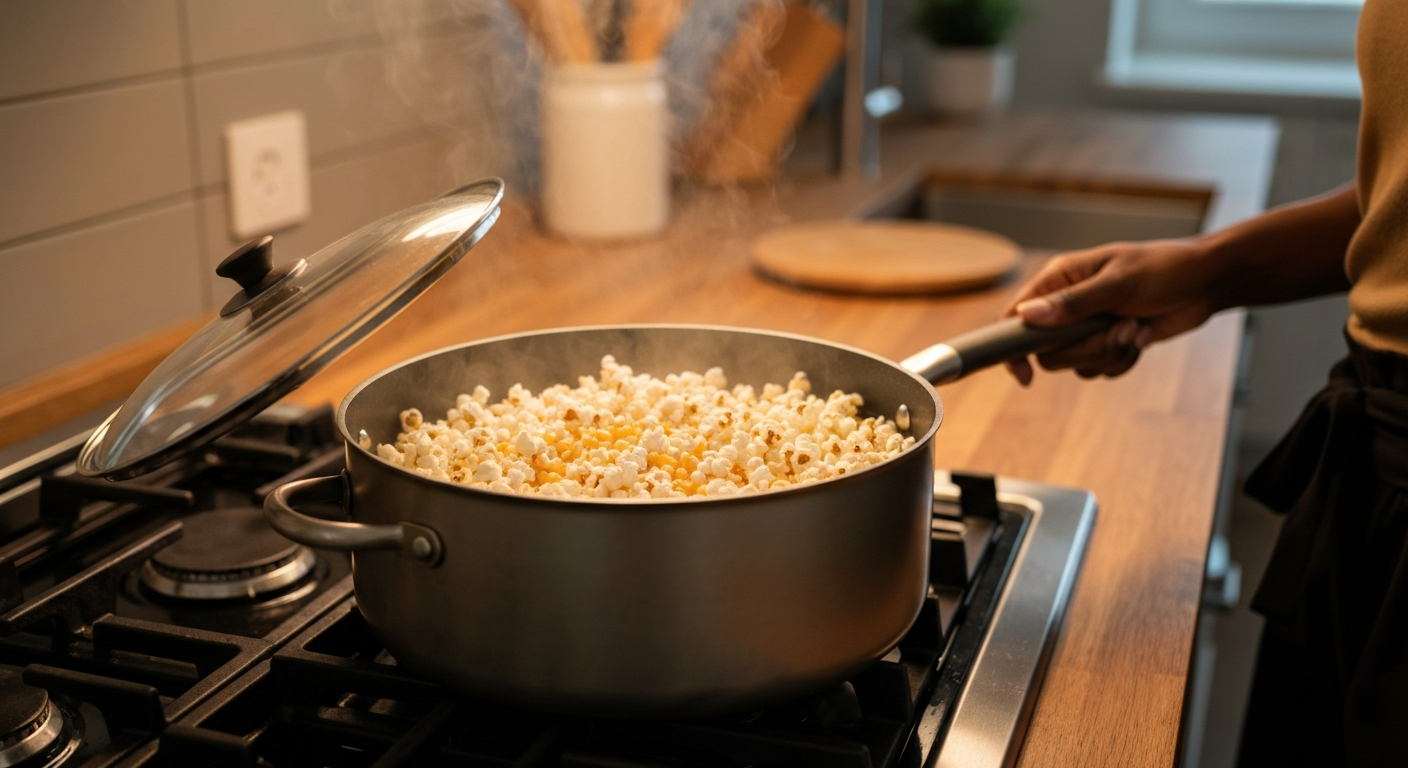
Use a heavy-bottomed pot with a lid. Add enough oil to generously coat the bottom — about two to three tablespoons for half a cup of kernels. Heat the oil over medium-high heat. Drop in three test kernels and cover the pot. When all three pop, your oil is ready.
Add the remaining kernels in a single layer, cover, and shake the pot every few seconds. The constant motion keeps kernels moving through hot spots and prevents burning. Once popping slows to two to three seconds between pops, remove from heat immediately.
Also Read: Why Is My House So Dry? 7 Causes & How to Fix It
Microwave popcorn fails most often due to stale bags, incorrect timing, or a microwave that isn't powerful enough to reach the necessary temperature quickly.
Pre-packaged microwave popcorn contains kernels, oil, and flavorings sealed in a specially designed bag. That bag has a susceptor — a metallic film on the inside that absorbs microwave energy and converts it to radiant heat, helping create the high temperatures needed for popping. But several things can go wrong:
The bag may be past its prime. Check the expiration date — microwave popcorn has a shorter effective shelf life than loose kernels because the oils can go rancid and the moisture balance shifts. Expired bags often produce many un-popped kernels and a stale taste.
Your microwave may be underpowered. Most microwave popcorn bags are formulated for 1,000-watt microwaves. If yours is 700 watts, you'll need to add time and accept that some kernels won't pop. Conversely, a 1,200-watt microwave may burn popcorn before all kernels pop.
Altitude affects popping. At high altitudes, lower air pressure means water boils at lower temperatures. This can affect how quickly kernels reach optimal internal pressure. If you live above 5,000 feet, you may need longer cook times.
If your kernels won't pop after rehydration attempts, or if they produce mostly small, dense pieces rather than fluffy popcorn, it's time to start fresh with a new batch.
Some signs your kernels are beyond saving:
Fresh, high-quality popcorn should have a popping rate of 95% to 98%. If you're consistently seeing 20% or more un-popped kernels even with good technique, the kernels themselves are the problem.
Your popcorn isn't popping because the kernels have lost moisture, your heat source isn't reaching the right temperature, or the kernels themselves are damaged. The fix usually involves rehydrating dried kernels, adjusting your cooking technique, or simply buying fresh popcorn. Store kernels in airtight containers away from heat and light, use the right oil at the right temperature, and keep your microwave in good working order for consistent, fluffy results.
Microwave popcorn underperforms when the bag is old, your microwave wattage is too low, or the bag wasn't positioned correctly. Check the expiration date first. Try increasing cook time by 15-second increments, listening for the pops to slow. Make sure your turntable rotates so all kernels move through hot zones evenly.
Yes, un-popped kernels from one batch can be saved and popped later. Collect them in a jar, add a tiny amount of water (about half a teaspoon per cup of kernels), and let them sit sealed for two to three days. The rehydrated kernels often pop successfully on the second attempt using stovetop methods.
Absolutely. Butterfly (or snowflake) kernels are the most common — they pop into irregular shapes with lots of surface area for toppings. Mushroom kernels pop into rounder, sturdier shapes preferred for coatings like caramel. Both types need proper moisture content, but mushroom varieties tend to be hardier and may store slightly longer.
Dried-out kernels often look slightly smaller and more shriveled than fresh ones. The most reliable test is simply popping a small batch — if more than 5% to 10% remain un-popped despite good technique and adequate heat, moisture loss is likely the culprit. You can also weigh kernels; significantly lighter than their labeled weight suggests moisture loss.
This usually means heat is too high, oil is insufficient, or you're not shaking the pot frequently enough. Lower your heat slightly, add more oil to improve heat distribution, and shake continuously once popping begins. Remove from heat the moment pops slow to two to three seconds apart — residual heat will finish the last few kernels.
Reviewed and Updated on May 24, 2026 by George Wright