Health
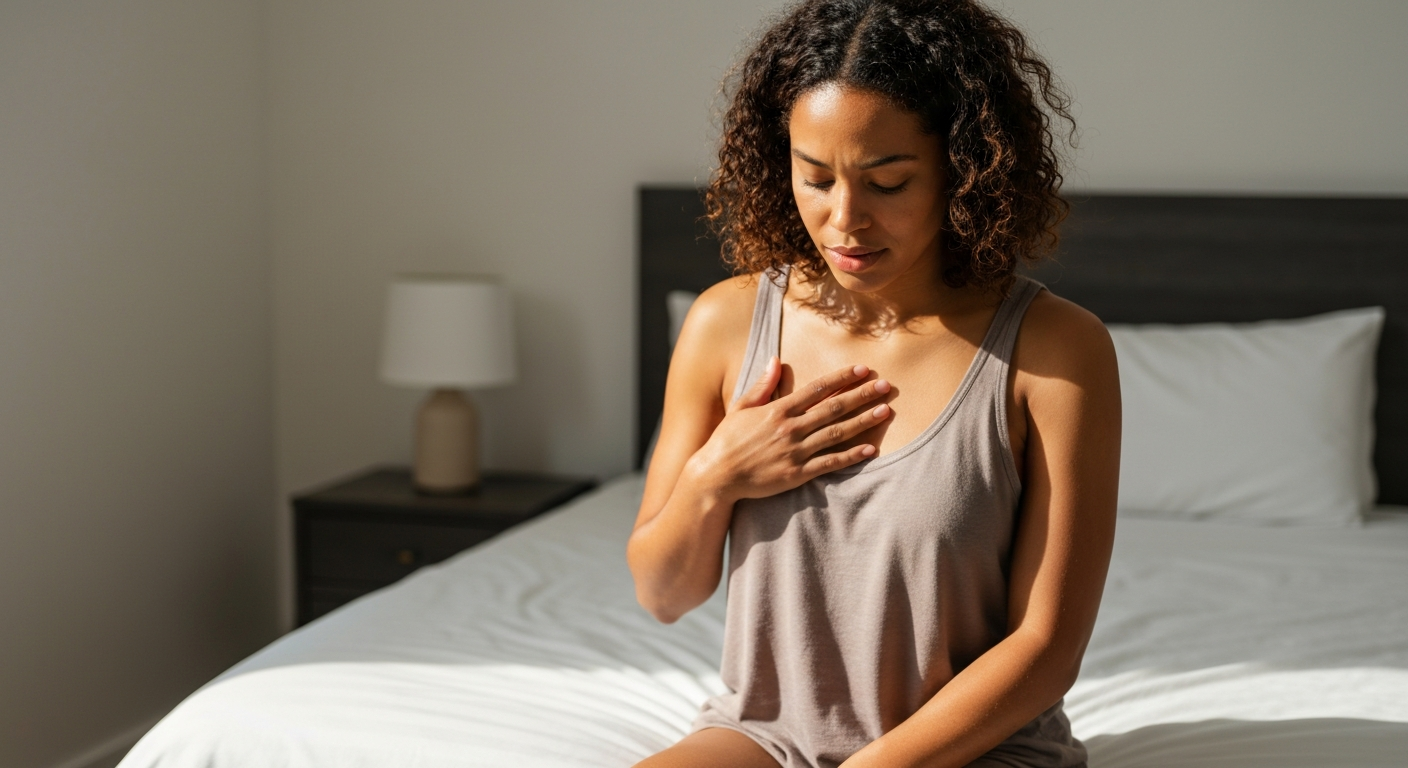

Chest breakouts happen when hair follicles on your chest become clogged with oil, dead skin cells, sweat, or bacteria—triggered by tight clothing, workout habits, hormonal shifts, or irritating skincare products.
Unlike facial acne, chest acne (sometimes called "truncal acne") sits on skin that's often covered, sweaty, and exposed to friction throughout the day. The same factors can cause breakouts on your back, neck, shoulders, and other body areas. Understanding what's driving your specific breakout pattern is the first step toward clearing your skin for good.
Chest acne forms when sebaceous glands overproduce oil, which mixes with dead skin cells and bacteria to block pores—but the triggers vary widely from person to person.
Your chest has a high concentration of sebaceous (oil) glands, making it prone to the same types of acne that affect your face. However, body acne has unique triggers that facial acne doesn't, including clothing friction, trapped sweat, and products that never touch your face.
The most common causes include:
"Truncal acne is extremely common, affecting over half of people with facial acne. The chest and back have large sebaceous glands that are prone to occlusion and inflammation." — American Academy of Dermatology
Yes—especially when sweat sits on your skin. Sweat itself isn't comedogenic (pore-clogging), but it creates an environment where bacteria multiply rapidly. When sweat mixes with the oils and dead skin cells already on your chest, it forms a sticky film that clogs follicles.
This is why gym-goers and athletes often struggle with chest and back breakouts. The longer sweaty clothing stays against your skin, the worse the problem becomes.
Absolutely. Dermatologists call this "acne mechanica"—breakouts caused by friction, pressure, and heat against the skin. Sports bras, compression shirts, backpack straps, and even seatbelts can trigger this type of acne on your chest, back, and shoulders.
The friction damages the outer layer of skin, making it easier for bacteria to enter follicles. Combined with trapped sweat, tight clothing creates perfect conditions for inflammatory acne.
Also Read: Why Is My Tattoo Cracking? 6 Causes & Healing Tips
Back acne shares the same root causes as chest acne—overactive oil glands, clogged pores, and bacteria—but the back is even more prone to breakouts because it's harder to reach and clean properly.
Your back has more sebaceous glands per square inch than almost any other body part. It also stays covered most of the day, trapping sweat and friction against the skin.
| Body Area | Primary Triggers | Unique Factors |
|---|---|---|
| Chest | Sweat, tight bras, necklaces | Exposed to irritating products |
| Back | Sweat, backpacks, synthetic shirts | Hard to reach and clean |
| Shoulders | Straps, friction, gym equipment | Constant pressure points |
| Butt | Sitting, non-breathable underwear | Occlusion and friction |
| Hairline | Hair products, sweat, hats | Pomade acne from styling products |
If your back is breaking out severely, consider whether you're showering immediately after workouts, using a long-handled brush or cloth to properly cleanse hard-to-reach areas, and wearing breathable fabrics during exercise.
| ✓Our Pick |
Clinically backed supplements for skin health and inflammation Consistently earns five-star reviews — reliable, well-supported, and genuinely effective. Learn More → |
Persistent chest redness without raised bumps is usually caused by skin sensitivity, rosacea, keratosis pilaris, or a condition called "flushing"—not acne.
Redness and breakouts aren't always the same thing. If your upper chest stays red even without pimples, you may be dealing with:
"Chronic redness on the chest, especially in a V-pattern, often indicates cumulative sun damage rather than acne. Photoprotection is essential for both prevention and treatment." — Dr. Susan Taylor, dermatologist at Perelman School of Medicine
If your chest is red but not bumpy, a dermatologist can determine whether you're dealing with vascular changes, inflammation, or an allergic reaction—each requiring different treatment approaches.
Sudden facial breakouts in adults are typically triggered by stress, hormonal changes, new products, dietary shifts, or medication side effects.
If your face has started breaking out unexpectedly—especially along the chin and jawline—hormones are often the culprit. Adult acne affects up to 15% of women, and it frequently appears on the lower face due to hormonal fluctuations during menstrual cycles, pregnancy, perimenopause, or high-stress periods.
Other sudden triggers include:
Hairline acne is almost always caused by hair products—pomades, gels, oils, and leave-in conditioners that migrate onto the forehead and temples. Dermatologists call this "pomade acne." Hats, headbands, and helmets can worsen the problem by trapping product residue against the skin.
Switching to non-comedogenic hair products and keeping styling products away from your hairline usually resolves this within a few weeks.
Chin and neck breakouts in adults are strongly associated with hormonal fluctuations. The lower face has hormone-sensitive receptors that respond to androgens by increasing oil production. This is why many women notice chin acne worsening before their period.
Neck acne may also result from shirt collars, necklaces, or the habit of touching or resting your chin on your hands.
Also Read: Why Is My Tongue Hurting? 11 Causes & How to Get Relief
Full-body breakouts suggest a systemic trigger—such as a new medication, hormonal imbalance, allergic reaction, or an infection like folliculitis—rather than simple clogged pores.
When acne appears across your chest, back, arms, butt, and face simultaneously, it's time to look at factors affecting your entire system:
| Potential Cause | Key Signs | What to Do |
|---|---|---|
| Hormonal imbalance | Worsens with cycle, concentrated on lower face and chest | See a doctor for hormone testing |
| Medication reaction | Started within weeks of new prescription | Consult prescribing physician |
| Folliculitis | Itchy, uniform small bumps, possibly with pus | May need antifungal or antibacterial treatment |
| Allergic reaction / hives | Raised welts, intense itching, appears suddenly | Identify allergen; antihistamines for relief |
| Steroid acne | Uniform small bumps, recent steroid use | Typically resolves after stopping medication |
If your arm is breaking out in bumps, this could be keratosis pilaris (a harmless keratin buildup) rather than acne. These bumps are typically rough, dry, and skin-colored—not red or inflamed like pimples.
Newborn acne affects up to 20% of babies and is caused by maternal hormones still circulating in the infant's system—it's completely normal and resolves on its own within a few weeks.
Baby acne typically appears between 2-4 weeks of age as small red or white bumps on the cheeks, nose, and forehead. It looks alarming but is harmless.
What you should know:
If your baby's rash is scaly, crusty, spreading to the body, or accompanied by fever, it may be eczema, cradle cap, or an infection rather than simple newborn acne—check with your pediatrician.
Also Read: Why Is My Pee Neon Yellow? 6 Causes & What It Means
Scalp acne results from the same factors as body acne—clogged follicles, excess oil, and bacteria—but is frequently worsened by heavy hair products, infrequent washing, and hat-wearing.
Your scalp has more hair follicles and sebaceous glands than any other part of your body. When these follicles become clogged with product buildup, dead skin cells, or bacteria, painful pimples form along the hairline, crown, or back of the head.
Common scalp acne triggers:
A clarifying shampoo used once weekly can help remove buildup, while medicated shampoos containing salicylic acid or ketoconazole address bacterial or fungal components.
Treating chest acne requires a consistent routine of proper cleansing, targeted active ingredients, breathable clothing, and patience—most people see improvement within 4-6 weeks.
Here's what dermatologists recommend:
For stubborn chest acne that doesn't respond to over-the-counter treatments after 8 weeks, a dermatologist can prescribe topical retinoids, antibiotics, or hormonal treatments depending on the underlying cause.
See a doctor if your breakouts are painful, leaving scars, covering large areas of your body, or not improving after 2-3 months of consistent home treatment.
You should also seek professional evaluation if:
A dermatologist can perform a proper diagnosis and access prescription-strength treatments that work faster and more effectively than drugstore options.
Chest breakouts happen when oil, sweat, dead skin, and bacteria clog your pores—triggered by tight clothing, workout habits, hormonal changes, or irritating products. The same factors cause breakouts on your back, neck, butt, face, and hairline. Newborn acne is normal and temporary. Treating body acne requires showering promptly after sweating, using medicated body washes, wearing breathable fabrics, and being patient—most breakouts improve within 4-6 weeks of consistent care. If home treatments aren't working, see a dermatologist for prescription options.
Hives (urticaria) are raised, itchy welts that appear suddenly and often disappear within hours—unlike pimples, which develop slowly and last for days. Hives indicate an allergic reaction to food, medication, insect stings, or environmental triggers. If hives spread rapidly, affect your breathing, or cause facial swelling, seek emergency medical care immediately.
Lip bumps can be acne, cold sores (herpes simplex), or angular cheilitis (cracked corners). Acne on the lip line looks like typical pimples, while cold sores start as tingling, then become fluid-filled blisters that crust over. If you're unsure which you're dealing with, avoid picking at the bump and see a doctor for proper diagnosis.
Butt breakouts are usually folliculitis (inflamed hair follicles) rather than true acne, caused by friction from sitting, non-breathable underwear, or tight clothing. Switching to cotton underwear, showering after workouts, and using a benzoyl peroxide wash on the area typically clears mild cases within 2-3 weeks.
Yes—stress triggers the release of cortisol and androgens, hormones that increase oil production throughout your body. Stress also slows wound healing and can worsen inflammation, making existing breakouts more severe. Managing stress through sleep, exercise, and relaxation techniques can help reduce hormonally-driven acne.
Heat and humidity increase sweating and oil production, creating ideal conditions for clogged pores. Summer also means more sunscreen use—and many sunscreens are comedogenic. Switch to lightweight, oil-free, non-comedogenic sunscreens and shower promptly after sweating to minimize summer breakouts.
Reviewed and Updated on May 28, 2026 by George Wright