
Health
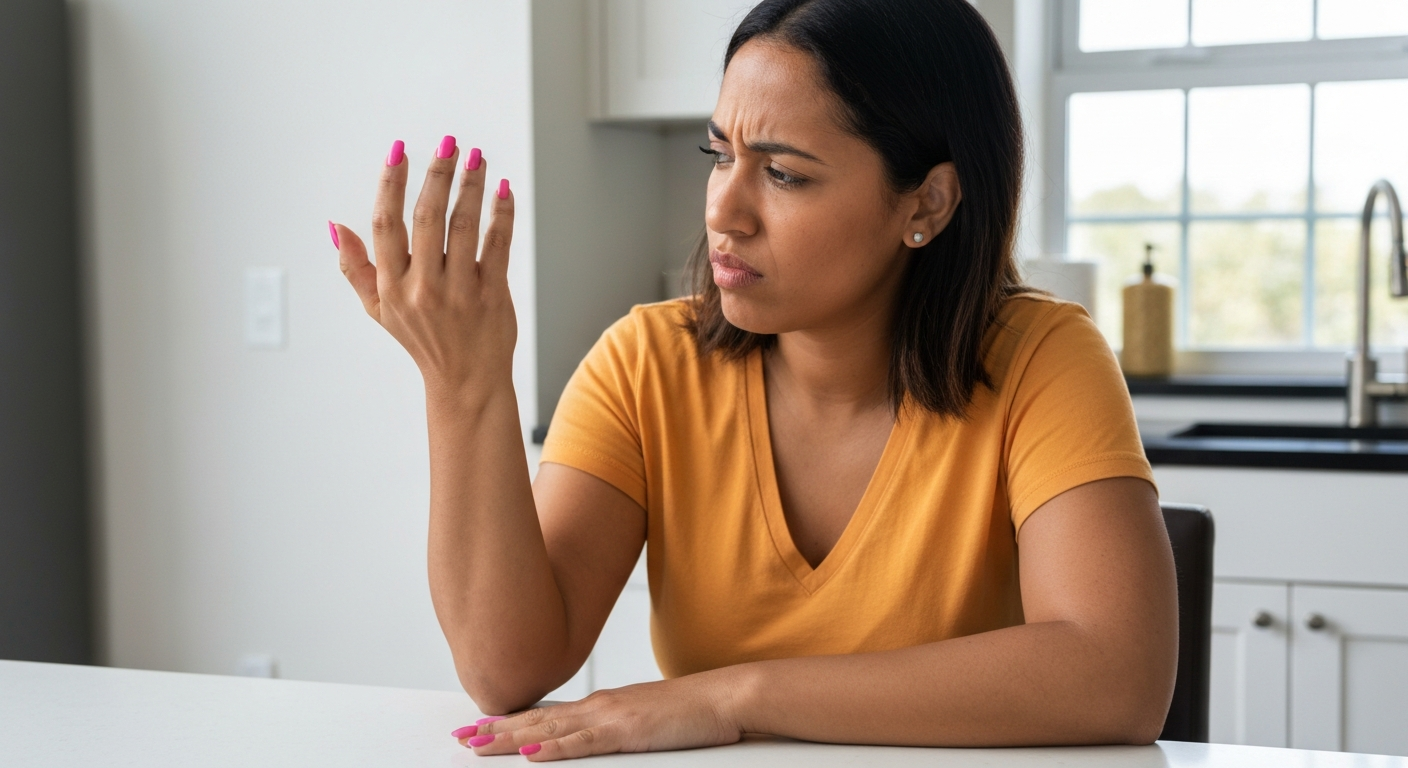

Nail polish stays tacky or refuses to dry because the layers are too thick, the formula is old, or the environment is too humid or cold — any of these factors prevents the solvents from evaporating properly, leaving you with smudged, dented nails.
| ✓Our Pick |
Quick-dry nail polish drops and finishing sprays One of the highest-rated products in its category — a reliable fix used by thousands of people. See on Amazon → |
Nail polish dries through solvent evaporation — the liquid chemicals in the formula must escape into the air, leaving behind a hardened film of color and resin on your nail.
This process sounds simple, but it's actually a carefully balanced chemical reaction. Most nail polishes contain a blend of solvents (like ethyl acetate and butyl acetate), film-forming agents (nitrocellulose), resins for adhesion, and plasticizers for flexibility. When you brush polish onto your nail, the solvents begin evaporating immediately. As they leave, the remaining ingredients bond together and harden.
The catch? Anything that slows solvent evaporation — thick layers, cold air, high humidity, or a degraded formula — will leave your manicure tacky, soft, or prone to dents and smudges. Understanding what's blocking this process is the first step to fixing it.
Thick coats are the number-one reason nail polish stays gummy instead of drying to a hard finish.
When you apply a heavy layer, the top surface begins to dry and form a skin while the solvents underneath remain trapped. This creates a tacky, easily dented surface that can take hours to fully harden — or never harden properly at all. You'll notice fingerprint impressions, sheet marks from bedding, or a wrinkled texture.
The fix is counterintuitive but effective: thinner layers dry faster and harder than thick ones. Professional nail technicians apply two to three thin coats, waiting 60 to 90 seconds between each, rather than one heavy coat.
A base coat creates a smooth, even surface that helps subsequent layers adhere and dry uniformly.
Without a base coat, polish clings unevenly to your natural nail, pooling in ridges and cuticle areas. These thicker spots take much longer to dry. Base coats are also formulated to be fast-drying themselves, which helps pull solvents out of the color coats applied above them.
"Base coats contain adhesion-promoting ingredients and are specifically designed to create an optimal surface for polish application." — Nail Manufacturers Council at Professional Beauty Association
High humidity slows evaporation dramatically, and cold temperatures make polish thick and sluggish.
Solvents evaporate best in warm, dry air. If you're painting your nails in a steamy bathroom after a shower, or in a cold basement, you're working against the chemistry. Humidity above 60 percent can double or triple drying time. Cold temperatures (below 60°F) thicken the polish itself, causing you to apply heavier coats unintentionally.
Aim for a room temperature between 65°F and 75°F with moderate humidity. Running a fan on low speed in the room (not directly on your nails) helps circulate air and speed evaporation.
Nail polish degrades over time — solvents evaporate even inside a sealed bottle, leaving behind a thick, gloopy formula that won't dry correctly.
Most polishes have a functional lifespan of 18 to 24 months after opening. Signs of an aging polish include:
| Symptom | What It Means |
|---|---|
| Thick, stringy consistency | Solvents have evaporated |
| Separation (liquid on top, pigment on bottom) | Formula is breaking down |
| Strange or strong chemical smell | Ingredients are degrading |
| Color looks different than the cap | Pigments are oxidizing |
You can temporarily revive a thickened polish by adding a few drops of nail polish thinner (not acetone — acetone breaks down the formula). However, if the polish is more than two years old or smells off, it's time to replace it.
Not all quick-dry drops and sprays work the same way — low-quality or expired products can actually interfere with curing.
Quality quick-dry drops use volatile silicones that create a slippery barrier and speed surface evaporation. Cheap formulas may contain oils that keep the top layer mobile, preventing a true cure. Expired products lose their active ingredients entirely.
Check the expiration date on quick-dry products and opt for well-reviewed brands. Apply drops only after the final coat, not between layers.
Natural oils, lotions, and cuticle treatments create a barrier that prevents polish from adhering and drying properly.
If you've recently moisturized your hands, applied cuticle oil, or even just touched your face, there's likely an invisible oil film on your nail plate. Polish applied over oil never fully bonds — it stays soft and peels or smudges easily.
Always prep your nails before polishing:
Some top coats are formulated for shine and longevity rather than speed — they can add significant drying time if applied too thickly.
Traditional top coats may take 10 to 15 minutes to fully set. Quick-dry top coats are specifically formulated to cure faster, but they still require thin application. A thick top coat layer will trap solvents from the color coats below, keeping everything tacky.
If you're using a quick-dry top coat and still experiencing slow drying, check that you're applying it in a single thin stroke rather than going back over the same area multiple times.
Also Read: Why Is My Moisturizer Pilling? 8 Causes & Easy Fixes
You can dramatically speed up drying time by controlling layer thickness, room environment, and using the right finishing products.
The single most effective technique is patience: apply a thin coat, wait 60 to 90 seconds, then apply the next. Three thin coats will dry faster and harder than two thick ones. Use the "three-stroke method" — one stroke down the center, one on each side — and resist the urge to keep brushing.
Quick-dry top coats contain solvents that evaporate rapidly and pull moisture from the layers below. Apply a thin layer as your final step. For best results, let your color coat set for 60 seconds before applying top coat.
A popular home method is dunking freshly painted nails in ice water for two to three minutes. The cold helps set the top layer faster. However, this only hardens the surface — the layers underneath still need time to cure. Wait at least five minutes after your final coat before trying this.
Move to a well-ventilated room away from bathroom humidity. If possible, paint your nails near a sunny window (warmth speeds evaporation) but out of direct sunlight (UV can yellow some polishes). A small desk fan on low speed helps without creating dust problems.
Tabletop nail fans are inexpensive and effective for regular polish. If you use gel polish, you'll need a UV or LED lamp — but these don't work on traditional polish, which cures through evaporation rather than light-activated chemicals.
| Drying Method | Works On | Time Saved |
|---|---|---|
| Quick-dry drops | Regular polish | 3–5 minutes |
| Quick-dry top coat | Regular polish | 5–10 minutes |
| Nail fan | Regular polish | 2–4 minutes |
| Ice water dip | Regular polish | 1–2 minutes (surface only) |
| LED/UV lamp | Gel polish only | Instant cure |
Also Read: Why Is My Tan Peeling Off? 7 Causes & How to Heal Fast
Gel polish cures under UV or LED light and hardens almost instantly, while regular polish dries through solvent evaporation and can take 30 minutes or more to fully set.
If you're frustrated with regular polish drying times, gel polish eliminates the problem entirely — but it requires a lamp and specific removal techniques. Gel won't air-dry at all; without light exposure, it stays liquid indefinitely.
Regular polish, conversely, cannot be cured with a lamp. If you've been holding your traditionally polished nails under an LED light and wondering why they're still tacky, that's why.
"Traditional nail lacquer relies entirely on solvent evaporation for film formation, while gel systems use photoinitiators that react with specific light wavelengths." — Doug Schoon, Nail Industry Scientist at Schoon Scientific
Properly dried polish feels hard and smooth to the touch, doesn't dent under light pressure, and maintains its glossy finish without tackiness.
Test your manicure after 15 to 20 minutes by gently touching your thumbnail to another nail. If they stick together or you feel any drag, the polish isn't cured yet. Fully dried polish will feel like hard plastic — no give, no texture transfer.
Warning signs of incomplete drying:
If you notice these issues regularly, revisit your application technique and environment before blaming the polish itself.
Nail polish that won't dry is almost always caused by thick layers, old formula, or unfavorable room conditions. Apply thin coats, wait between layers, prep your nails properly, and finish with a quality quick-dry top coat. Keeping the room warm and dry speeds evaporation significantly. If your polish is more than two years old or has thickened noticeably, replace it. Following these steps should give you a smudge-free, fully cured manicure in under 20 minutes.
Regular nail polish feels dry to the touch in 10 to 15 minutes but takes one to two hours to cure fully. During this time, the surface may seem hard, but the layers underneath remain soft and vulnerable to dents. Avoid heavy tasks, tight shoes, or sleeping for at least two hours after painting your nails for best results.
Blowing on wet nail polish can actually slow drying by adding moisture from your breath. The humidity in your exhaled air interferes with solvent evaporation. A cool fan from a distance works better because it moves dry air across the nail surface without adding moisture.
This is a popular myth, but hairspray doesn't speed up nail polish drying in any meaningful way. Some hairsprays contain alcohol that may evaporate quickly on the surface, creating the illusion of faster drying, but the layers underneath remain unaffected. Hairspray can also leave a sticky residue or dull your manicure's shine.
Wrinkled or bubbled polish happens when the top layer dries before the solvents in the lower layers escape. This traps gases underneath, creating an uneven surface. The most common causes are thick application, shaking the bottle (which introduces air bubbles), and painting in direct sunlight or high heat. Apply thin coats and roll the bottle between your palms instead of shaking it.
Yes — nail polish thinner restores the original formula by replacing evaporated solvents, while acetone breaks down the polish's chemical structure. Adding acetone to thickened polish will temporarily make it more liquid, but it damages the resin and film-forming agents, leading to a weaker, duller manicure that chips faster. Always use a dedicated nail polish thinner for reviving old bottles.
Reviewed and Updated on June 11, 2026 by George Wright