
Women's Health
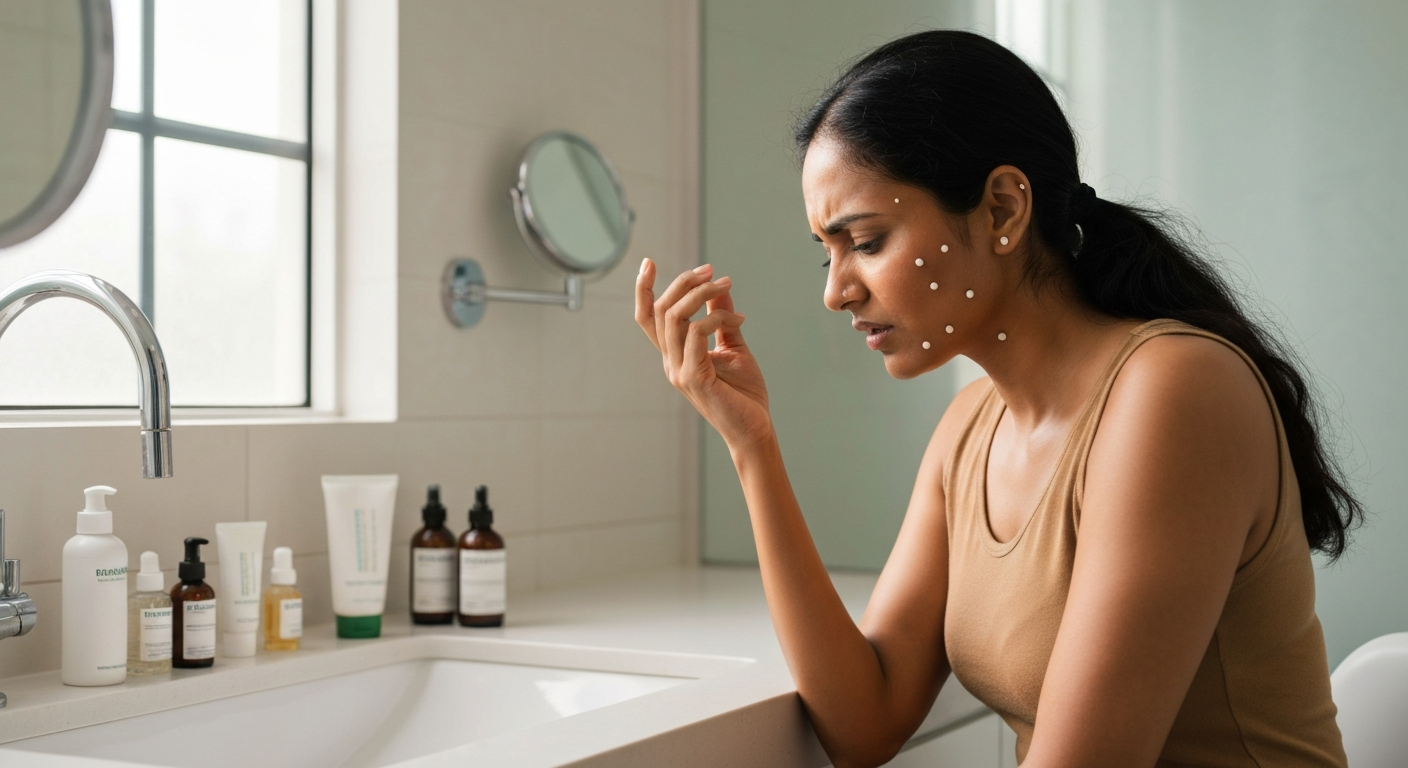

Moisturizer pilling happens when your skincare products clump into tiny balls or flakes instead of absorbing into your skin — it's usually caused by incompatible product formulas, applying too much, not waiting between layers, or using silicone-heavy products over water-based ones.
Those frustrating little rubbery bits rolling off your face aren't a sign of a bad moisturizer or dirty skin. Pilling is a chemistry problem that occurs when ingredients in your skincare routine don't play well together, or when you're not giving each layer enough time to absorb. The good news is that once you understand why it's happening, fixing it is straightforward.
Pilling occurs when product formulations physically conflict or when too much product sits on the skin's surface without absorbing — the friction from rubbing causes ingredients to ball up like eraser shavings.
Think of it like mixing oil and water. Certain skincare ingredients simply don't blend well when layered. When you apply a water-based serum followed by a silicone-heavy moisturizer (or vice versa), the products can separate on your skin. As you touch your face or apply makeup, the top layer rolls off in tiny balls.
The technical term for this is "balling" or "beading," and it happens with everything from moisturizers to sunscreens to primers. Understanding the specific cause in your routine is the first step to solving it.
Applying products in the wrong order is one of the most common reasons for pilling — water-based products should always go on before oil-based or silicone-based ones.
The general rule in skincare is to layer from thinnest to thickest consistency. When you apply a thick, occlusive moisturizer before a lighter serum, the serum has nowhere to go. It sits on top and eventually pills when disturbed.
Here's the correct layering order for most routines:
| Step | Product Type | Examples |
|---|---|---|
| 1 | Cleanser | Gel cleanser, micellar water |
| 2 | Toner/Essence | Hydrating toner, facial mist |
| 3 | Water-based serums | Hyaluronic acid, niacinamide, vitamin C (water-based) |
| 4 | Oil-based serums | Retinol oils, facial oils |
| 5 | Moisturizer | Gel cream, lotion, or rich cream |
| 6 | Sunscreen (AM) | Chemical or mineral SPF |
If you've been applying your hyaluronic acid serum after your moisturizer, that's likely why you're seeing those little balls form on your skin.
Also Read: Why Is My Face Stinging? 8 Causes & How to Fix It Fast
Silicones are the most common culprits behind pilling because they create a film on the skin that can interact poorly with other formulations, especially water-based products layered on top.
Look at your ingredient list. If you see words ending in "-cone" or "-siloxane" near the top — dimethicone, cyclopentasiloxane, cyclomethicone — you're dealing with a silicone-heavy product. These ingredients are excellent at creating a smooth, protective barrier, but they're notorious for causing pilling when combined with the wrong formulas.
"Silicones form a breathable film on the skin that can prevent subsequent products from absorbing properly. When you layer water-based products over silicone-based ones, the water cannot penetrate the silicone barrier, leading to pilling," — Dr. Shereene Idriss, board-certified dermatologist at Union Square Laser Dermatology.
The fix isn't necessarily to avoid silicones entirely — they provide valuable benefits like locking in moisture and smoothing texture. Instead, keep your silicone-based products together. If your moisturizer is silicone-heavy, use a silicone-based primer afterward rather than a water-based one.
Applying excessive amounts of moisturizer overwhelms your skin's ability to absorb it, leaving a layer that will inevitably pill when touched or rubbed.
A nickel-sized amount is usually sufficient for your entire face. Many people, especially those with dry skin, assume more product equals more hydration. In reality, your skin can only absorb so much at once. The excess sits on the surface, creating a perfect setup for pilling.
The same applies to serums. A few drops of most serums is enough to cover your face. If you're squeezing out a full dropper of hyaluronic acid, most of it is going to waste — and potentially causing problems.
Try halving the amount you normally use. If pilling stops and your skin still feels adequately moisturized, you've found your answer.
Aggressive rubbing and circular motions generate friction that physically rolls product off your skin — gentle patting and pressing motions absorb products without disturbing them.
There's a right way and a wrong way to apply skincare. Vigorously rubbing moisturizer into your skin might feel like you're helping it absorb, but you're actually creating the mechanical action that causes pilling.
Instead, try this approach:
This technique is especially important when layering multiple products or applying makeup over skincare. The less you disturb each layer, the less likely it is to ball up.
Rushing through your skincare routine doesn't give each product time to absorb, causing layers to mix on the surface and pill when the next product is applied.
Each product needs time to penetrate your skin before the next layer goes on. Slapping on serum, moisturizer, and sunscreen back-to-back in thirty seconds is a recipe for pilling.
The general guideline is to wait 30 to 60 seconds between each skincare step. For thicker products or actives like retinol, waiting two to three minutes is even better. If you're short on time in the morning, apply your serum, then brush your teeth, then come back for moisturizer.
"I recommend waiting at least one minute between application of each skincare product. This allows time for each layer to absorb and reduces the risk of products interacting on the skin's surface," — Dr. Joshua Zeichner, Director of Cosmetic & Clinical Research at Mount Sinai Hospital.
Dry, flaky, or dehydrated skin creates an uneven surface that prevents products from absorbing smoothly, while oily skin can cause products to slip around rather than sink in.
If your skin is dry and flaky, dead skin cells act like tiny barriers that products can't penetrate. The moisturizer sits on top of the flakes rather than absorbing into healthy skin cells. When you rub or apply makeup, those flakes — now coated in product — ball up.
Regular exfoliation can help. Using a gentle chemical exfoliant (like glycolic or lactic acid) two to three times per week removes the dead cell buildup that contributes to pilling.
On the other end, very oily skin can also cause issues. Excess sebum on the skin's surface can prevent water-based products from absorbing, causing them to slide around and eventually pill.
Also Read: Why Is My Tan Peeling Off? 7 Causes & How to Heal Fast
Some ingredient combinations are notorious for pilling — mixing products with different bases or combining certain actives almost guarantees those frustrating little balls.
While everyone's skin reacts differently, these combinations frequently cause problems:
| Combination | Why It Pills |
|---|---|
| Hyaluronic acid + silicone-based moisturizer | HA is water-based and sits under the silicone film |
| Water-based serum + oil-based sunscreen | Oil repels water, preventing absorption |
| Thick cream + powder makeup | Cream creates a slippery base that powder lifts off |
| Niacinamide + vitamin C (certain forms) | Can form unstable compounds that flake |
| Multiple silicone products | Silicone overload creates too much film |
If you suspect a specific combination is causing your pilling, try eliminating one product at a time until you identify the culprit.
The solution to pilling usually involves adjusting your technique, timing, or product selection — most people can solve the problem without buying new products.
Start by troubleshooting your current routine:
Check your ingredient bases: Compare the first five ingredients in each product. Are you mixing water-based and silicone-based formulas? Reorganize or switch products if needed.
Reduce product amounts: Cut the amount of each product in half for one week and see if pilling improves.
Slow down: Set a timer for 60 seconds between each skincare step.
Change your application method: Switch from rubbing to patting and pressing.
Exfoliate regularly: Add a gentle chemical exfoliant to your routine two to three times weekly.
Apply to damp skin: Lightly misting your face with water or toner before moisturizer can help it absorb better, especially for hyaluronic acid-based products.
If these steps don't work, the problem may be an incompatibility between specific products. Consider replacing your moisturizer with one that uses a different base (water-based if your current one is silicone-heavy, or vice versa).
| ✓Our Pick |
Search hydrating moisturizers and skincare essentials One of the highest-rated products in its category — a reliable fix used by thousands of people. See on Amazon → |
Moisturizer pilling is almost always caused by incompatible product formulas, using too much product, not waiting between layers, or applying products in the wrong order. The fix is usually simple: layer from thinnest to thickest, wait 30 to 60 seconds between steps, use gentle patting motions instead of rubbing, and make sure your products share compatible bases — either water-based or silicone-based, but not both in direct contact. Regular exfoliation also helps by removing the dead skin cells that can prevent absorption.
Makeup products, especially primers and foundations, often have different bases than skincare. If your moisturizer is water-based and your primer is silicone-based (or vice versa), they'll conflict when layered. The friction from applying foundation with a brush or sponge then causes the moisturizer to ball up. Try matching your moisturizer base to your primer base, or wait a full two to three minutes after moisturizing before applying makeup.
Pilling itself doesn't damage your skin or clog pores — it's purely a cosmetic annoyance. The balled-up product isn't being absorbed, so it won't cause breakouts. However, if you're constantly rubbing your face trying to fix pilling, that friction and irritation could potentially lead to sensitivity or inflammation over time. The bigger issue is that pilling means your moisturizer isn't doing its job.
Not necessarily. Expensive, high-quality moisturizers can pill just as easily as drugstore ones if they're layered incorrectly or applied over incompatible products. Pilling is about formulation chemistry and application technique, not product quality. That said, some budget moisturizers use high concentrations of silicones that can make pilling more likely — check your ingredient list.
Sunscreen pilling is extremely common because sunscreens — especially mineral formulas with zinc oxide or titanium dioxide — often have different bases than moisturizers. Mineral sunscreens sit on top of the skin rather than absorbing, making them more prone to balling up when rubbed. Wait at least two minutes after moisturizing before applying sunscreen, use less sunscreen, and pat it on rather than rubbing.
Skipping moisturizer isn't the answer — your skin needs hydration to stay healthy. Instead, try using a lighter moisturizer, switching to a gel formula, or applying your moisturizer to damp skin. You could also try using only one product (a moisturizer with SPF, for example) to reduce the number of layers that could potentially conflict.
Reviewed and Updated on June 10, 2026 by George Wright