DIY
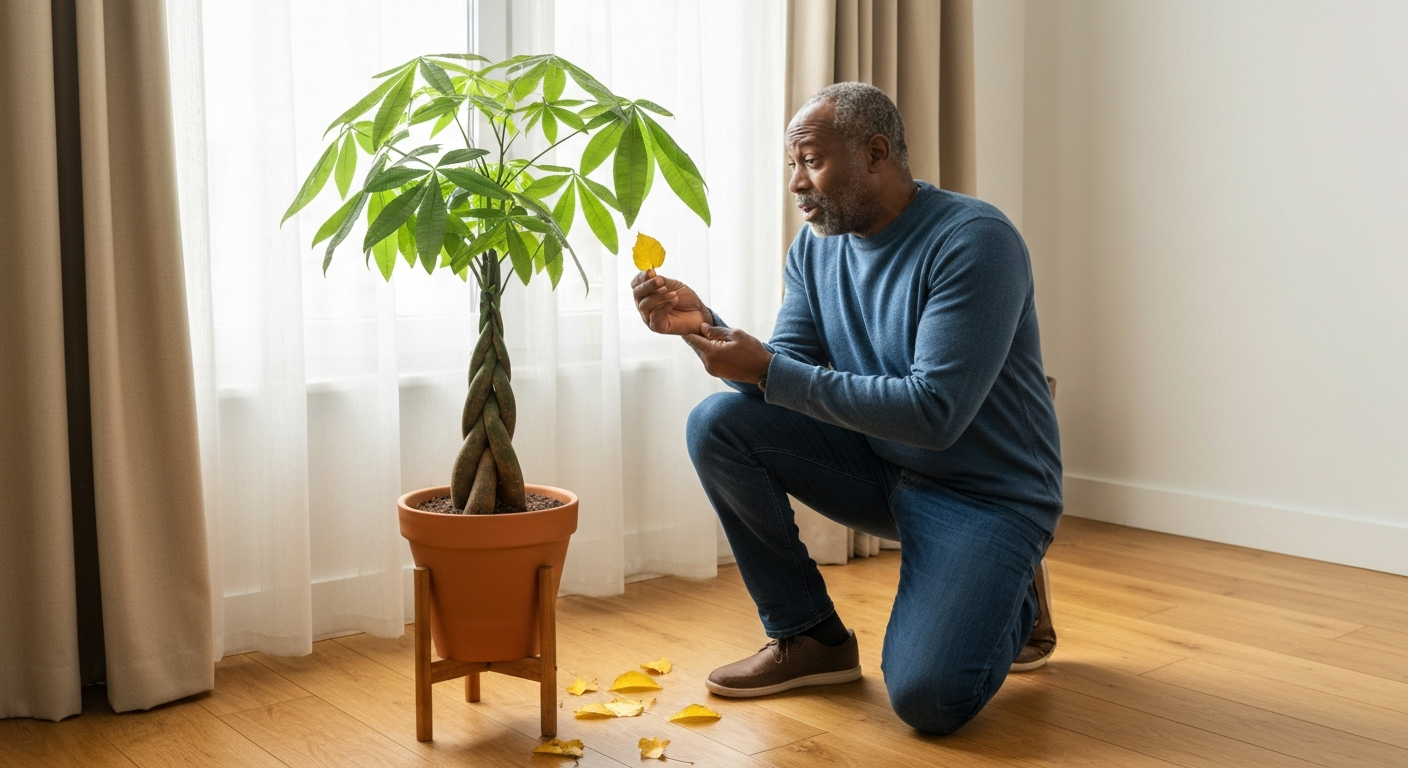

Your money tree is losing leaves because of overwatering, underwatering, low humidity, temperature stress, insufficient light, or natural shedding — with overwatering being the most common culprit in 2026 households.
Money trees (Pachira aquatica) are tropical plants that communicate distress through their foliage. When conditions deviate from their preferred environment, leaf drop is often the first visible warning sign. The good news is that most causes are straightforward to diagnose and fix once you know what to look for.
| ✓Our Pick |
Moisture meter for houseplants to prevent overwatering No special skills required — straightforward to use and most orders ship quickly. See on Amazon → |
Leaf loss in money trees stems from environmental stress, watering issues, or natural plant cycles — identifying which factor is at play requires examining the leaves themselves and your care routine.
Money trees are surprisingly resilient when their basic needs are met, but they react quickly when something goes wrong. The type of leaf loss — yellowing before dropping, browning at edges, or sudden green leaf fall — tells you exactly where to focus your troubleshooting efforts.
Overwatering is the number one killer of indoor money trees. When roots sit in waterlogged soil, they cannot absorb oxygen and begin to rot. The plant responds by shedding leaves to reduce its water demands.
Signs of overwatering include:
- Yellow leaves that feel soft or mushy
- Soil that stays wet for more than a week
- A musty or rotting smell from the pot
- Darkened, mushy stems near the soil line
Money trees need their soil to dry out partially between waterings. In most homes, this means watering every 1–2 weeks during warmer months and every 2–3 weeks in winter. Stick your finger 2 inches into the soil — if it feels damp, wait a few more days.
"Pachira aquatica is highly susceptible to root rot when overwatered. Allow the top 50-75% of the soil to dry out between waterings." — Missouri Botanical Garden
Yes, but the symptoms look different. Underwatered money trees develop crispy, brown leaf edges before dropping. The leaves often curl inward and feel papery rather than soft.
If your soil is bone dry and pulling away from the pot edges, underwatering is likely the culprit. Give the plant a thorough soaking until water runs from the drainage holes, then resume a regular watering schedule.
Money trees evolved in tropical swamps where humidity regularly exceeds 50%, so dry indoor air — especially during winter heating season — causes significant leaf stress.
Central heating and air conditioning strip moisture from indoor air. When humidity drops below 40%, money tree leaves lose water faster than roots can replace it. The result is browning leaf tips, yellowing, and eventual leaf drop.
Solutions for low humidity:
- Place the pot on a pebble tray filled with water
- Group plants together to create a microclimate
- Run a humidifier nearby during dry months
- Mist leaves in the morning (not at night, which invites fungal issues)
A simple hygrometer costs under $15 and lets you monitor your home's humidity levels throughout the year.
Also Read: Why Is My Money Tree Drooping? 7 Causes & Fixes
Money trees tolerate low light better than many houseplants, but "tolerate" does not mean "thrive." In dim conditions, the plant cannot produce enough energy through photosynthesis to maintain its full canopy. It sheds older leaves to conserve resources.
Ideal light conditions for money trees:
- Bright, indirect light for 6–8 hours daily
- East or west-facing windows work well
- North-facing windows may be too dim
- Direct south-facing sun can scorch leaves
If your money tree sits far from windows or in a room with limited natural light, consider supplementing with a grow light for a few hours daily.
Money trees prefer stable temperatures between 65°F and 80°F and react poorly to sudden changes or drafts.
Common temperature-related stressors include:
- Placement near exterior doors that let in cold drafts
- Proximity to heating vents that blast hot, dry air
- Sitting against cold windows during winter
- Air conditioning vents blowing directly on leaves
When exposed to temperatures below 50°F, money trees may drop leaves rapidly as a survival mechanism. Even brief cold exposure during transport from a nursery can trigger delayed leaf drop over the following weeks.
Examine the dropped leaves closely — their condition reveals the underlying cause.
| Leaf Condition | Likely Cause | Immediate Action |
|---|---|---|
| Yellow, soft, mushy | Overwatering | Let soil dry completely; check roots for rot |
| Brown, crispy edges | Underwatering or low humidity | Water thoroughly; increase humidity |
| Pale green or yellow throughout | Insufficient light | Move closer to window or add grow light |
| Sudden green leaf drop | Temperature shock or draft | Relocate away from vents and doors |
| Lower leaves only | Natural shedding | Normal; no action needed |
| Spots or unusual patterns | Pests or disease | Inspect closely; treat as needed |
Check the soil moisture, inspect for pests on leaf undersides, and note the plant's location relative to light sources, vents, and doors. This systematic approach usually identifies the problem within minutes.
Also Read: Why Is My Money Tree Wilting? 9 Causes & How to Fix It
Stabilizing your money tree's environment and adjusting your watering routine will halt leaf loss within 2–4 weeks in most cases.
If you suspect overwatering, unpot the plant and examine the roots. Healthy roots are white or tan and firm. Rotted roots are brown, black, or mushy and smell bad.
Trim away any rotted roots with clean scissors. Repot in fresh, well-draining soil and a pot with drainage holes. Hold off on watering for several days to let damaged roots heal.
The single most effective change most money tree owners can make is watering less frequently. Use the finger test or a moisture meter to check soil before watering rather than following a fixed schedule.
"Most houseplant deaths are caused by overwatering. When in doubt, wait another day or two before watering." — University of Vermont Extension
Move your money tree away from heating and cooling vents. Keep it at least 3 feet from exterior doors that open frequently. If winter humidity in your home drops below 40%, add a humidifier or pebble tray.
Reposition your plant closer to a bright window if possible. Money trees adapt slowly to new light conditions, so make changes gradually over 1–2 weeks to avoid additional stress.
Even after you correct the underlying problem, your money tree may continue dropping a few leaves while it adjusts. New growth should appear within 4–6 weeks if conditions have genuinely improved.
Occasional leaf loss is a natural part of your money tree's growth cycle, particularly among older leaves near the base of the plant.
As money trees grow, they naturally shed older, lower leaves that no longer receive adequate light. This redirects the plant's energy toward new growth at the top. If only the bottommost leaves are yellowing and dropping while the rest of the plant looks healthy, you likely have nothing to worry about.
Seasonal changes also trigger minor leaf adjustments. Money trees may drop a few leaves when transitioning between summer and winter as they adapt to changing light levels and indoor heating patterns.
Also Read: Why Is My Money Tree Dropping Leaves? 9 Causes & Fixes
Spider mites, mealybugs, and scale insects weaken money trees by feeding on leaf tissue, leading to yellowing and eventual leaf drop.
Inspect your plant closely, paying special attention to:
- Undersides of leaves (spider mites leave fine webbing)
- Leaf joints and stems (mealybugs appear as white cottony masses)
- Along stems and leaf veins (scale looks like small brown bumps)
If you find pests, isolate the plant immediately to prevent spread. Treat with insecticidal soap or neem oil, applying every 5–7 days until the infestation clears. Badly damaged leaves will not recover but new growth should be healthy.
| Care Factor | Ideal Condition |
|---|---|
| Watering | When top 2 inches of soil are dry |
| Light | Bright, indirect (6–8 hours daily) |
| Humidity | 50% or higher |
| Temperature | 65°F–80°F, stable |
| Soil | Well-draining potting mix |
| Fertilizer | Monthly during growing season (spring/summer) |
| Pot | Must have drainage holes |
Your money tree is most likely losing leaves due to overwatering, which causes root rot and forces the plant to shed foliage. Other common causes include low humidity, temperature fluctuations from drafts or vents, insufficient light, and natural shedding of older leaves. Diagnose the problem by examining the condition of dropped leaves — yellow and soft suggests overwatering, brown and crispy points to underwatering or low humidity. Correct the underlying issue, be patient, and your money tree should stabilize and produce new growth within several weeks.
Winter leaf loss typically results from the combination of dry heated air and reduced natural light. Indoor humidity often drops below 30% when heating systems run continuously, stressing tropical plants like money trees. Shorter days also mean less photosynthesis energy available. Combat this by running a humidifier, moving your plant closer to windows, and reducing watering frequency since the plant's needs decrease in winter.
Yes, money trees can recover even from severe defoliation as long as the trunk and roots remain healthy. If the trunk is still firm and green when you scratch the bark, the plant is alive. Correct whatever caused the leaf loss, maintain proper care, and new growth should emerge from the trunk within 4–8 weeks. Resist the urge to overwater in an attempt to speed recovery.
Yes, gently remove yellowing leaves once they become mostly discolored. Dying leaves no longer contribute to photosynthesis but continue drawing some energy from the plant. Use clean scissors or simply tug gently — leaves that are ready to go will detach easily. However, investigate why leaves are yellowing before removing them, so you can address the root cause.
There is no universal watering schedule because frequency depends on pot size, soil type, humidity, temperature, and light levels. The reliable method is checking soil moisture before watering. Insert your finger 2 inches into the soil — water only when it feels dry at that depth. For most indoor conditions, this means every 7–14 days in summer and every 14–21 days in winter.
Repotting causes temporary stress that may trigger some leaf drop over the following 2–3 weeks. This is normal and does not indicate a problem if you repotted correctly. Minimize stress by repotting in spring when the plant is actively growing, choosing a pot only 1–2 inches larger than the current one, and using well-draining soil. Avoid fertilizing for a month after repotting to let roots recover.
Reviewed and Updated on May 3, 2026 by Adelinda Manna