DIY
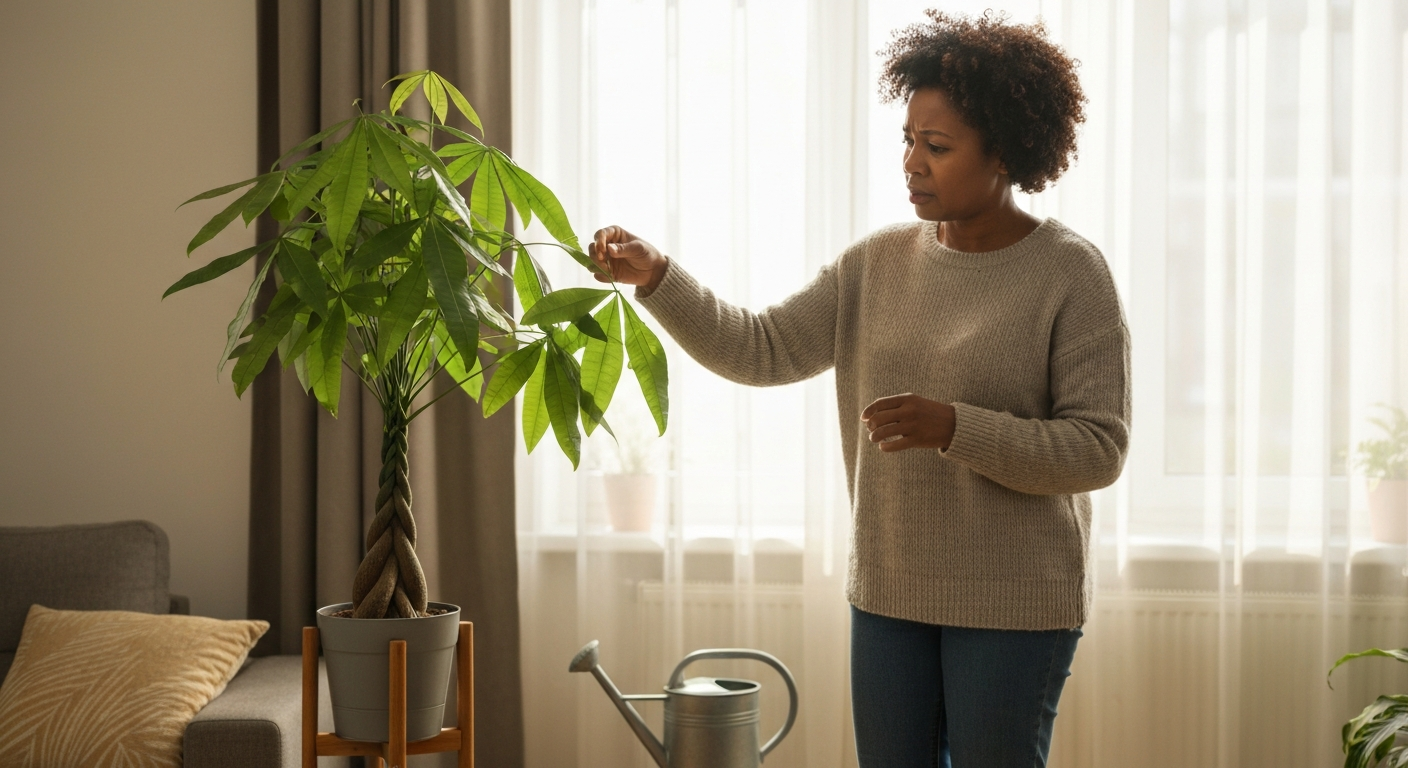

Your money tree is drooping because of a watering problem — either too much or too little — combined with environmental stress from inadequate light, temperature extremes, or root damage that prevents the plant from maintaining turgor pressure in its leaves and stems.
| ✓Our Pick |
Moisture meter for houseplants — stops guessing when to water A well-reviewed choice that delivers real results — worth every penny for anyone dealing with this. See on Amazon → |
Drooping is one of the most common distress signals in houseplants, and it affects money trees (Pachira aquatica) with frustrating regularity. The good news: drooping is usually reversible once you identify the root cause. This guide covers the seven most common reasons your money tree — or any indoor plant — starts sagging, plus the exact fixes that work in 2026.
Drooping happens when plant cells lose water pressure (called turgor), which is the internal force that keeps leaves and stems rigid — without it, the plant goes limp like a deflated balloon.
Every plant cell contains a central vacuole filled with water. When that vacuole is full, it pushes against the cell wall and creates structural firmness. When water supply drops — or roots can't absorb water due to damage — cells deflate and the plant wilts.
This mechanism applies universally. Whether you're asking why your peace lily is drooping, why your snake plant is drooping, or why your fiddle leaf fig is drooping, the underlying physics are identical. The causes, however, vary based on each species' specific needs.
"Turgor pressure is the force within the cell that pushes the plasma membrane against the cell wall. Without adequate turgor, plants lose their rigidity and wilt." — Dr. Lincoln Taiz at University of California, Santa Cruz
Underwatering is the most common cause of drooping in money trees and most houseplants — the soil dries out completely, roots can't absorb moisture, and cells lose the water pressure needed to stay upright.
Money trees prefer consistently moist (not wet) soil. When the top 2–3 inches dry out completely and stay dry, the plant starts pulling water from its leaves to survive. You'll notice:
The fix is straightforward. Water thoroughly until liquid drains from the bottom holes. Then establish a consistent schedule — most money trees need watering every 7–10 days depending on humidity and pot size.
This same underwatering pattern causes drooping in spider plants, peace lilies, prayer plants, and most tropical houseplants. Succulents like jade plants and cacti are more drought-tolerant but will eventually droop when severely dehydrated.
Also Read: Why Is My Money Tree Dropping Leaves? 9 Causes & Fixes
Overwatering causes drooping that looks nearly identical to underwatering, but the mechanism is opposite — waterlogged soil suffocates roots, which then rot and can't transport water to leaves.
This is the trickiest diagnosis because the symptoms overlap. Both over- and underwatered plants droop. The difference is in the soil and roots:
| Symptom | Underwatering | Overwatering |
|---|---|---|
| Soil feel | Dry, crumbly, pulls from pot | Soggy, smells musty |
| Leaf texture | Dry, crispy edges | Soft, mushy, yellowing |
| Pot weight | Very light | Heavy |
| Root appearance | Dry, pale | Brown, slimy, foul smell |
| Recovery speed | Hours after watering | Days to weeks |
Root rot is the silent killer. When roots sit in water, oxygen can't reach them. The roots suffocate, turn brown, and stop functioning. Even though there's plenty of water in the soil, the plant can't access it.
If you suspect overwatering, remove the plant from its pot and inspect the roots. Healthy roots are white or light tan. Rotted roots are dark brown or black and smell like decay. Trim all dead roots with sterile scissors, let the root ball air-dry for 24 hours, and repot in fresh, well-draining soil.
Overwatering is the primary reason snake plants, rubber plants, jade plants, and ZZ plants droop. These species evolved in low-water environments and are especially vulnerable to soggy conditions.
Insufficient light causes gradual drooping because the plant can't photosynthesize enough energy to maintain healthy cell structure — stems become weak and leggy as they stretch toward any available light source.
Money trees need bright, indirect light for 6–8 hours daily. In low-light conditions, they'll survive but not thrive. Signs of light deficiency include:
Move your plant closer to a window, but avoid direct afternoon sun, which can scorch leaves. East-facing windows provide ideal morning light. If natural light is limited, a grow light running 10–12 hours daily works as a substitute.
Light requirements vary significantly by species:
| Plant | Light Needs | Drooping from Low Light? |
|---|---|---|
| Money tree | Bright indirect | Yes — common |
| Snake plant (sansevieria) | Low to bright | Rare — very tolerant |
| Peace lily | Low to medium | Yes — but tolerates shade |
| Fiddle leaf fig | Bright indirect | Yes — very sensitive |
| Pothos | Low to medium | Mild — usually okay |
| Bird of paradise | Bright direct | Yes — needs sun |
| Croton | Bright direct | Yes — colors fade too |
Sudden temperature changes — from cold drafts, heating vents, or moving plants between environments — shock the plant's system and cause rapid drooping as cells struggle to regulate water loss.
Money trees are tropical plants native to Central and South American wetlands. They prefer temperatures between 65°F and 80°F. Exposure to temperatures below 50°F can cause immediate drooping and potential cold damage.
Common temperature stress sources:
The fix is environmental stability. Keep plants away from vents and drafts. If you just brought a new plant home and it's drooping, give it 1–2 weeks to acclimate before assuming something else is wrong.
Temperature sensitivity varies. Tropical plants like alocasia, caladium, elephant ears, and bird of paradise are extremely cold-sensitive. Succulents, lavender, and Mediterranean plants like rosemary tolerate wider temperature swings.
"Most tropical foliage plants perform best at temperatures between 70°F and 80°F during the day and 60°F to 68°F at night. Temperatures below 50°F can cause chilling injury." — University of Florida IFAS Extension
When roots outgrow their container, they become root-bound — circling the pot in a dense mass that can't absorb water efficiently, leading to chronic drooping even with proper watering.
Root-bound plants show several telltale signs:
To check, slide the plant out of its pot. If roots form a tight, circling mass with little visible soil, it's time to repot into a container 1–2 inches larger in diameter.
When repotting, gently loosen the root ball with your fingers. This encourages roots to grow outward into fresh soil rather than continuing to circle. Use a well-draining potting mix appropriate for your plant type.
Fast-growing plants like pothos, philodendrons, spider plants, and umbrella plants become root-bound quickly — often within a year. Slow growers like snake plants and ZZ plants can stay in the same pot for 2–3 years.
Also Read: Why Is My Money Tree Wilting? 9 Causes & How to Fix It
Humidity below 40% causes tropical plants to lose water through their leaves faster than roots can replace it, resulting in drooping, crispy edges, and overall stress.
Money trees evolved in humid wetland environments. While they adapt to average home humidity (40–50%), they struggle in dry winter air or air-conditioned spaces that drop below 30% humidity.
Signs of humidity stress:
Solutions include:
Humidity sensitivity varies dramatically. Prayer plants, calatheas, ferns, and alocasias need 60%+ humidity and droop quickly in dry air. Snake plants, pothos, and dracaenas tolerate much drier conditions.
Plants often droop for 1–3 weeks after repotting as roots recover from disturbance and establish themselves in new soil — this temporary drooping is normal and resolves with proper care.
Transplant shock happens because:
After repotting, water thoroughly and place the plant in bright, indirect light. Avoid fertilizing for 4–6 weeks — damaged roots can't handle the nutrient load and may burn. Keep conditions stable and be patient.
If drooping persists beyond 3 weeks, investigate other causes. The plant may have had underlying root rot that worsened during repotting, or the new soil may be retaining too much water.
| ✓Our Pick |
Self-watering plant pots for consistent moisture This is the go-to fix recommended by professionals — save time and money by getting it right the first time. See on Amazon → |
Use this table to narrow down the cause based on your specific plant type and symptoms:
| Plant Type | Most Likely Cause | Quick Check |
|---|---|---|
| Money tree, fiddle leaf fig, rubber plant | Overwatering or underwatering | Check soil moisture 2 inches down |
| Peace lily, prayer plant, calathea | Underwatering or low humidity | Soil dry? Humidity below 50%? |
| Snake plant, sansevieria, ZZ plant | Overwatering/root rot | These rarely droop — check roots |
| Succulent, jade, cactus | Overwatering | Soil should be dry between waterings |
| Alocasia, elephant ear, caladium | Cold temperature or overwatering | Check for drafts, inspect roots |
| Orchid | Dehydrated roots or root rot | Roots should be green, not brown |
| Tomato, pepper, vegetable plant | Underwatering or wilt disease | Check soil; if wet, suspect disease |
| Hydrangea, rose, outdoor shrub | Underwatering or transplant shock | Water deeply; check recent changes |
| Lavender, mint, herbs | Overwatering or poor drainage | These need dry soil between waterings |
| Venus fly trap | Mineral buildup or wrong water | Use distilled water only |
Money trees and most houseplants droop because of water imbalance — either too little water causing cell deflation or too much water causing root rot. Secondary causes include insufficient light, temperature shock, root-binding, and low humidity. To diagnose, check soil moisture first (dry = underwater, wet = overwater), inspect roots for rot, and evaluate environmental conditions. Most drooping reverses within days to weeks once you correct the underlying cause.
If your peace lily droops immediately after watering and perks up, that's normal — peace lilies are dramatic and wilt quickly when thirsty. If it stays droopy after watering, suspect root rot from chronic overwatering. Remove the plant, trim damaged roots, and repot in fresh soil. Peace lilies also droop in low humidity, so consider increasing moisture levels around the plant.
Snake plants (sansevieria) droop almost exclusively from overwatering. Their thick leaves store water, so they need far less moisture than most houseplants — watering every 2–4 weeks is typical. If your snake plant is drooping with mushy, yellowing leaves, root rot is likely. Unpot, remove all rotted roots, let dry, and repot in cactus mix or very well-draining soil.
Fiddle leaf figs are notoriously finicky. Drooping usually indicates inconsistent watering, temperature stress, or insufficient light. They hate being moved and can droop for weeks after relocation. Check that soil dries slightly between waterings (top 1–2 inches), keep temperatures stable between 65–75°F, and provide bright indirect light. Avoid cold drafts and heating vents.
Tomato plants commonly droop in afternoon heat as a protective response — they reduce leaf surface area to conserve water. If the plant perks up by evening or morning, this is normal and not cause for concern. If drooping persists, check for underwatering, bacterial wilt disease (which causes permanent wilting), or root damage from pests. Water deeply in the morning rather than during midday heat.
A drooping cactus usually indicates root rot from overwatering at some point, even if you've since reduced watering. Cacti store water in their stems, so they can appear fine for weeks before suddenly collapsing when roots fail. Check for soft, mushy spots at the base. If present, cut away all rot until you reach healthy tissue, let the cutting callus for a week, then replant in dry cactus soil.
Reviewed and Updated on May 3, 2026 by Adelinda Manna