DIY
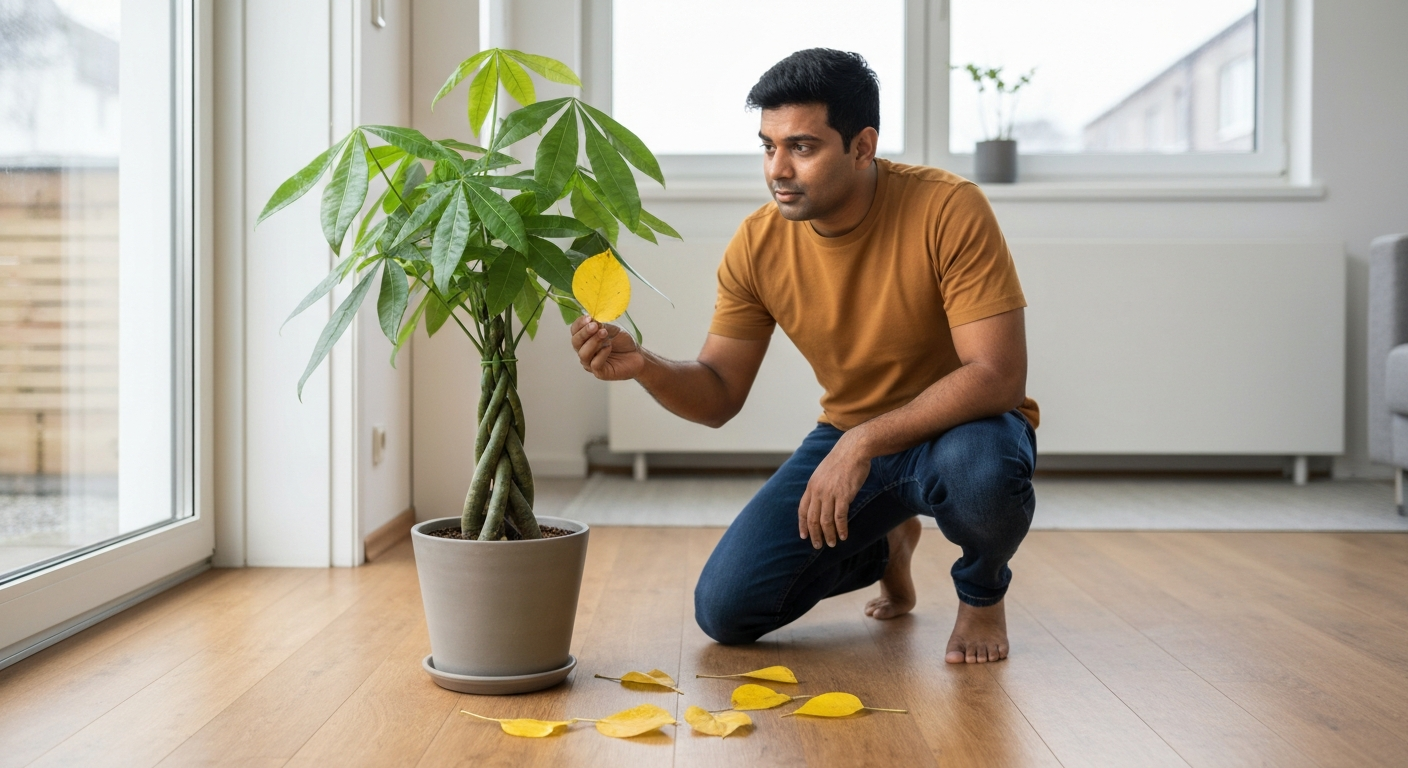

Your money tree is dropping leaves because of overwatering, underwatering, low humidity, temperature stress, insufficient light, or root rot — with overwatering being the most common culprit by far. A healthy money tree (Pachira aquatica) holds its leaves firmly, so sudden leaf drop signals an environmental problem that needs correcting before the plant declines further.
| ✓Our Pick |
Moisture meter for houseplants — stops overwatering guesswork Great value for money — this product tackles the root cause rather than just masking the symptoms. See on Amazon → |
Leaf drop in money trees almost always traces back to water, light, humidity, or temperature — not disease or pests. Once you identify which stressor applies to your plant, recovery typically begins within 2–4 weeks.
Overwatering is the leading killer of indoor money trees. When soil stays soggy for days, roots suffocate and begin to rot. The plant can no longer absorb water or nutrients, so it sheds leaves to reduce demand. You'll notice yellowing leaves that feel soft and mushy before they fall. The soil smells sour or musty. This same mechanism causes leaf drop in jade plants, rubber plants, and umbrella plants — any tropical or succulent species sitting in waterlogged soil will respond identically.
Check the soil before watering. Stick your finger 2 inches deep. If it feels moist, wait. Money trees prefer to dry out partially between waterings. In winter, you may only need to water every 2–3 weeks.
Underwatered money trees drop leaves too, but the presentation differs. Leaves turn crispy and brown at the edges before falling. The soil pulls away from the pot's edges. Stems may droop or feel papery.
This affects other houseplants the same way. Your fiddle leaf fig, croton, or hoya will shed lower leaves first when chronically underwatered — the plant sacrifices older foliage to protect new growth. Establish a consistent watering schedule rather than waiting until the plant looks stressed.
Indoor humidity below 40% stresses tropical plants and causes leaf drop, especially during winter when heating systems run constantly.
Money trees evolved in Central and South American wetlands where humidity hovers around 60–80%. Your home in January might hit 20–30%. The plant responds by dropping leaves to reduce moisture loss through transpiration.
"Most tropical houseplants thrive at 50–60% relative humidity. Below 40%, you'll see brown leaf tips, edges, and premature leaf drop." — University of Minnesota Extension
Fiddle leaf figs, rubber plants, and umbrella plants share this sensitivity. A small humidifier near your plant collection solves the problem more reliably than misting, which only raises humidity for minutes.
Money trees tolerate 65–80°F comfortably. Below 50°F, cellular damage occurs. Above 85°F, the plant struggles to regulate water loss. But the real danger is sudden swings — a plant near a drafty window, exterior door, or heating vent experiences temperature changes of 20°F or more within hours.
This shocks the plant. Leaves yellow and drop within days. Christmas cacti and poinsettias are notoriously sensitive to this — a single cold draft can trigger dramatic leaf and flower drop overnight.
Move your money tree away from:
- Air conditioning vents
- Heating registers
- Exterior doors
- Single-pane windows
- Fireplaces
Too little light causes gradual leaf drop, while too much direct sun scorches leaves and forces the plant to shed damaged foliage.
Money trees need bright, indirect light — think a few feet back from an east or north-facing window, or filtered light from a south-facing window with a sheer curtain. In dim corners, the plant cannot photosynthesize enough energy to support all its leaves. It drops the lowest, oldest leaves first.
Direct afternoon sun, especially through south or west-facing glass, burns leaves. You'll see bleached patches, brown crispy spots, then leaf drop. This affects crotons, hoyas, and fiddle leaf figs similarly — all prefer bright but indirect exposure.
Root rot is the terminal stage of chronic overwatering. Fungal pathogens (Pythium, Phytophthora, Fusarium) colonize waterlogged roots, turning them brown and mushy. The plant drops leaves rapidly because the root system can no longer function.
Signs of root rot:
- Rapid, severe leaf drop (many leaves at once)
- Yellowing throughout the plant, not just lower leaves
- Soft, blackened stem base
- Foul smell from soil
- Roots that are brown and mushy when you unpot the plant
If you catch it early, you can save the plant. Unpot it, trim all rotted roots with sterile scissors, let the root ball air-dry for a day, then repot in fresh, well-draining soil. If more than half the roots are gone, survival is unlikely.
Did you recently buy your money tree, move it to a new room, or repot it? Leaf drop in the first 2–4 weeks is often simple transplant shock. The plant adjusts to new light, humidity, and temperature conditions by shedding some foliage.
This is normal and self-limiting. Don't overreact by watering more or moving the plant repeatedly. Give it stable conditions and time. The same adjustment period affects newly purchased olive trees, lemon trees, and magnolia trees — all experience transit stress that triggers temporary leaf drop.
Spider mites, mealybugs, and scale insects suck sap from leaves, weakening the plant. Heavy infestations cause yellowing, stippling, and leaf drop. Check the undersides of leaves and along stems for:
Treat with insecticidal soap or neem oil. Isolate the affected plant to prevent spread to your fiddle leaf fig, jade plant, or other houseplants.
A money tree that hasn't been fertilized in years may drop lower leaves as it reallocates limited nutrients to new growth. Yellow leaves with green veins often indicate iron or magnesium deficiency.
Feed with a balanced liquid houseplant fertilizer (10-10-10) monthly during spring and summer. Stop fertilizing in fall and winter when growth slows. Over-fertilizing causes salt buildup that burns roots — more is not better.
Also Read: Why Is My Money Tree Drooping? 7 Causes & How to Fix It
| Symptom | Likely Cause | Fix |
|---|---|---|
| Yellow, mushy leaves; wet soil | Overwatering | Let soil dry 2" deep between waterings |
| Crispy brown edges; dry soil | Underwatering | Water thoroughly when top 2" is dry |
| Brown leaf tips; dry air | Low humidity | Add humidifier; aim for 50%+ |
| Sudden drop after cold snap | Temperature shock | Move away from drafts, keep 65–80°F |
| Lower leaves yellow and drop | Insufficient light | Move to brighter indirect light |
| Rapid drop; mushy roots; smell | Root rot | Unpot, trim rot, repot in fresh soil |
| Leaves drop 1–3 weeks after purchase | Transplant shock | Wait; provide stable conditions |
| Stippled or webbed leaves | Spider mites | Treat with insecticidal soap |
| Yellowing with green veins | Nutrient deficiency | Fertilize monthly in growing season |
The principles that save a money tree apply to most tropical houseplants — the specific tolerances just shift slightly.
| Plant | Water Needs | Humidity | Light | Cold Tolerance |
|---|---|---|---|---|
| Money tree | Moderate (dry between) | 50–60% | Bright indirect | 50°F minimum |
| Jade plant / Elephant bush | Low (succulent) | 30–50% | Bright direct okay | 50°F minimum |
| Fiddle leaf fig | Moderate | 50–65% | Bright indirect | 55°F minimum |
| Rubber plant | Moderate | 40–60% | Medium to bright | 50°F minimum |
| Croton | Moderate | 50–70% | Bright (needs light for color) | 60°F minimum |
| Umbrella plant | Moderate | 40–60% | Medium to bright | 55°F minimum |
| Hoya | Low to moderate | 40–60% | Bright indirect | 50°F minimum |
| Christmas cactus | Low | 40–60% | Bright indirect | 50°F minimum |
| Poinsettia | Moderate | 40–60% | Bright indirect | 55°F minimum |
| Lemon tree | High | 50–70% | Full sun | 50°F minimum |
| Olive tree | Low to moderate | 30–50% | Full sun | 25°F minimum |
| Magnolia tree | High | Outdoor humidity | Full sun to partial | Varies by species |
Jade plants and elephant bush, as succulents, tolerate drought and lower humidity but rot quickly when overwatered. Fiddle leaf figs and crotons demand higher humidity and react dramatically to any change. Lemon trees and olive trees often drop leaves when brought indoors for winter — the light reduction is severe, and supplemental grow lights may be necessary.
Losing 1–3 lower leaves per month is normal aging; losing 5+ leaves per week signals a problem requiring immediate action.
All plants shed old leaves as they produce new growth. If your money tree drops an occasional yellow leaf from the bottom while producing healthy new leaves at the top, that's natural turnover. Concern yourself when:
"Sudden leaf drop in houseplants almost always indicates a rapid environmental change — water, temperature, or light. Gradual loss of lower leaves is normal senescence." — Missouri Botanical Garden
Money trees drop leaves primarily due to overwatering, but underwatering, low humidity, temperature stress, insufficient light, and root rot can all cause the same symptom. Check soil moisture before watering, maintain humidity above 40%, keep temperatures between 65–80°F, provide bright indirect light, and inspect roots if decline is rapid. The same diagnostic approach works for jade plants, fiddle leaf figs, rubber plants, crotons, hoyas, and most other tropical houseplants — identify the stressor, correct it, and the plant recovers within weeks.
Jade plants drop leaves almost exclusively from overwatering or cold exposure. As succulents, they store water in their thick leaves and need soil to dry completely between waterings. Water every 2–3 weeks in summer, less in winter. Keep temperatures above 50°F. Leaves that fall off plump and healthy (not shriveled) indicate overwatering; shriveled fallen leaves mean underwatering.
Fiddle leaf figs are notoriously dramatic about environmental changes. Moving the plant, repotting, drafts, inconsistent watering, or low humidity all trigger leaf drop. They prefer bright indirect light, consistent moisture (not soggy), humidity above 50%, and no temperature swings. Once you find a spot they like, don't move them.
Christmas cacti drop segments (which function as leaves) when overwatered, underwatered, or exposed to temperature swings. They're sensitive to cold drafts and hot air from heating vents. Water when the top inch of soil is dry. They prefer cooler temperatures (60–70°F) than most tropical plants and need long nights (12+ hours of darkness) to bloom.
Lemon trees drop leaves indoors primarily due to insufficient light. They need 8+ hours of direct sunlight daily — far more than most indoor locations provide. Supplement with a grow light if natural light is limited. Overwatering, low humidity, and spider mites are secondary causes. Lemon trees also naturally drop some leaves during the transition from outdoor to indoor conditions each fall.
Healthy succulent leaves that fall off plump indicate overwatering — the most common succulent killer. Succulents store water in their leaves and need fast-draining soil that dries completely between waterings. Shriveled leaves that drop mean underwatering, which is less common but occurs when neglected for many weeks. Leaves dropping from the bottom while new growth looks healthy is normal aging.
Reviewed and Updated on May 3, 2026 by Adelinda Manna