DIY
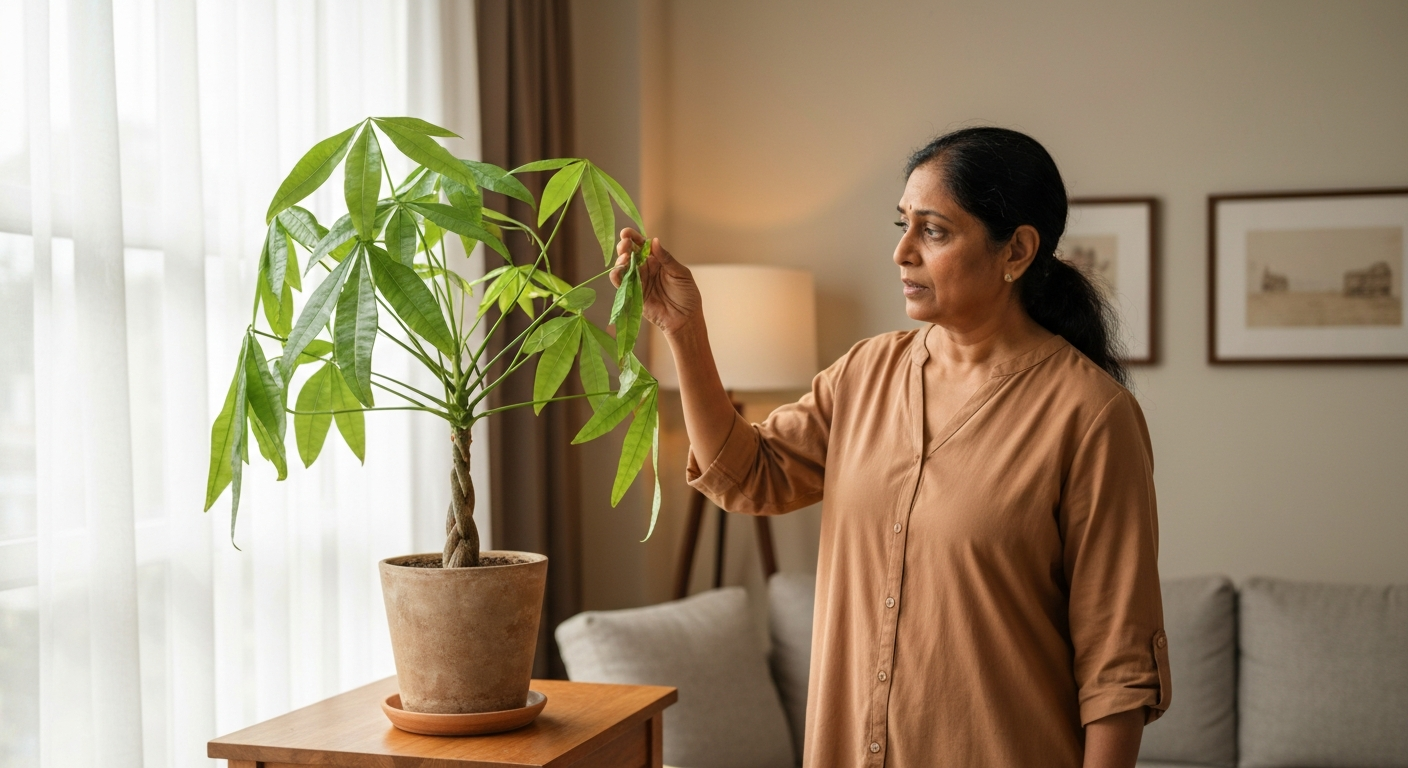

Your money tree is wilting because it's experiencing stress from one or more environmental factors — most commonly overwatering, underwatering, insufficient light, or temperature shock. The same drooping, soft leaves that signal distress in a money tree (Pachira aquatica) appear across houseplants from orchids to ivy when their basic needs go unmet. Identifying which stressor is affecting your plant takes about two minutes of detective work, and most wilting plants recover fully once you correct the underlying problem.
| ✓Our Pick |
Moisture meter for houseplants — stops guessing about watering Used by over 10,000 satisfied customers — an easy, affordable option you can start using today. See on Amazon → |
Wilting happens when a plant's cells lose turgor pressure — the internal water pressure that keeps stems upright and leaves firm.
Think of each plant cell as a tiny water balloon. When there's enough water inside, the balloon stays plump and the cell wall rigid. When water is scarce — or when root damage prevents water uptake — those balloons deflate. The result is the soft, droopy appearance you're seeing on your money tree, tomato plant, coleus, or any other wilting greenery.
Plants lose water constantly through tiny pores called stomata on their leaves (a process called transpiration). Under normal conditions, roots absorb water from the soil fast enough to replace what's lost. Wilting occurs when that balance tips — either because the soil is too dry, the roots are damaged, or environmental conditions are accelerating water loss faster than the plant can keep up.
"Wilting is often the first visible sign that a plant is under stress, but the underlying cause can range from simple dehydration to serious root disease." — Dr. Linda Chalker-Scott, Extension Horticulturist at Washington State University
The most common causes of wilting fall into two categories: water-related problems and environmental stressors. Here's how to diagnose which one is affecting your plant.
Overwatering is the number one killer of indoor plants, including money trees, orchids, and African violets. When soil stays constantly soggy, roots can't get oxygen. They begin to rot, turning brown or black and losing their ability to absorb water. Ironically, an overwatered plant shows the same wilting symptoms as an underwatered one — because damaged roots can't deliver water to the leaves regardless of how wet the soil is.
Check for overwatering by:
- Sticking your finger 2 inches into the soil — if it's wet and has been for days, you're overwatering
- Smelling the soil — a sour or musty odor indicates root rot
- Gently sliding the plant from its pot to inspect the roots — healthy roots are white or tan; rotting roots are brown, black, or mushy
Underwatering is the second most common cause of wilting. Money trees, avocado trees, and English ivy all show rapid drooping when their soil dries out completely. The fix is straightforward — water thoroughly until it drains from the bottom — but the key is catching it before chronic dehydration causes permanent leaf damage.
Signs of underwatering include:
- Soil pulling away from the pot edges
- Lightweight pot (dry soil weighs significantly less than wet)
- Crispy leaf edges alongside wilting
Low light causes a slower, more gradual wilt than water problems. Plants like money trees, coleus, and ivy become leggy and weak when they're not getting enough photosynthesis fuel. Their stems lose structural strength, and leaves may droop even when water levels are correct.
Most tropical houseplants need bright, indirect light for 6–8 hours daily. If your plant is more than 6 feet from a window or in a room with northern exposure only, light deficiency could be your culprit.
Too much light is just as damaging as too little. Money trees, orchids, African violets, and poinsettias evolved under forest canopies and can't handle direct afternoon sun. Intense light accelerates transpiration, causing water loss faster than roots can replace it. You'll see wilting combined with bleached, brown, or crispy patches on sun-facing leaves.
Sudden temperature changes cause immediate wilting in temperature-sensitive plants. Your money tree, poinsettia, or cilantro may wilt dramatically if:
- Placed near a heating vent or radiator
- Left near a drafty window or exterior door in winter
- Exposed to air conditioning blowing directly on leaves
- Moved outdoors without hardening off
Most tropical houseplants prefer steady temperatures between 65–80°F. Anything below 50°F can cause cold shock, while temperatures above 85°F accelerate stress.
Also Read: Why Is My Money Tree Drooping? 7 Causes & How to Fix It
Indoor humidity, especially during winter heating season, often drops below 30% — far too dry for tropical plants that evolved in 50–80% humidity environments. Orchids, money trees, ivy, and African violets show wilting, brown leaf tips, and crispy edges when humidity is chronically low.
Spider mites, mealybugs, aphids, and scale insects suck sap directly from plant tissue, causing localized wilting that spreads as infestations grow. Check the undersides of leaves and along stems for:
- Tiny moving dots (spider mites)
- White cottony masses (mealybugs)
- Sticky residue on leaves (honeydew from multiple pests)
- Tiny bumps that don't wipe off (scale)
When roots circle the inside of the pot with no room to grow, they can't absorb water efficiently even when soil moisture is adequate. A severely rootbound money tree, English ivy, or avocado tree will wilt repeatedly between waterings despite your best efforts.
Check by looking at drainage holes — if roots are growing out the bottom, it's time to repot into a container 1–2 inches larger in diameter.
Diseases like Fusarium wilt, bacterial wilt, and various root rots cause wilting that doesn't respond to water adjustments. Tomato plants and lavender are particularly susceptible to soil-borne fungal diseases. Warning signs include:
- Wilting in only part of the plant while other sections look fine
- Yellow or brown streaking inside stems when cut
- Rapid collapse despite moist soil and healthy-looking roots
"Vascular wilt diseases block the plant's water-conducting tissues, causing sections of the plant to wilt even when soil moisture is adequate." — University of Minnesota Extension
Different plants have different vulnerabilities. Use this table to zero in on the most likely cause for your specific plant.
| Plant | Most Common Wilting Cause | Secondary Causes | Special Notes |
|---|---|---|---|
| Money Tree | Overwatering / root rot | Low humidity, cold drafts | Let soil dry 50–75% between waterings |
| Orchid | Overwatering | Root suffocation from old media | Roots should be silvery-green, not brown |
| Tomato Plant | Underwatering | Fusarium/Verticillium wilt, heat stress | Wilts midday in heat, recovers by evening if healthy |
| Lavender | Overwatering | Poor drainage, high humidity | Needs dry, well-draining soil — treat like a succulent |
| Poinsettia | Cold drafts | Underwatering, low light | Keep above 55°F at all times |
| Cilantro | Heat stress | Underwatering, bolting | Goes to seed (bolts) when temps exceed 75°F |
| English Ivy | Underwatering | Spider mites, low humidity | Check for mites if wilting with speckled leaves |
| African Violet | Overwatering | Cold water shock, crown rot | Water from below only; room-temp water |
| Avocado Tree | Overwatering | Salt buildup, root rot | Very sensitive to soggy soil — needs perfect drainage |
| Coleus | Underwatering | Heat stress, too much sun | Prefers consistent moisture and partial shade |
The recovery approach depends entirely on the diagnosis you made above. Here's the systematic fix for each scenario.
For lavender, cilantro, and other rot-prone plants, mix 50% perlite or coarse sand into your potting soil to improve drainage.
Move your plant closer to a window or supplement with a grow light. Money trees, ivy, and coleus do well 3–5 feet from an east or west window. Orchids and African violets prefer bright indirect light without any direct sun.
| ✓Our Pick |
Humidifier for plant room — maintains tropical humidity levels This is the go-to fix recommended by professionals — save time and money by getting it right the first time. See on Amazon → |
Isolate the affected plant immediately to prevent spread. Wipe visible pests with a cotton ball dipped in rubbing alcohol. Spray the entire plant with insecticidal soap or neem oil, covering all leaf surfaces. Repeat treatment every 5–7 days for three weeks to break the pest life cycle.
Not every wilting plant can be saved. Here's how to know when it's time to start over.
Your plant is likely beyond recovery if:
- More than 75% of roots are brown and mushy
- The main stem is soft, black, or hollow
- The plant has completely collapsed and doesn't respond to watering within 48 hours
- Disease symptoms (streaking, lesions, mold) are present throughout the plant
In these cases, dispose of the plant and soil to prevent spreading pathogens to your other plants. Clean the pot with a 10% bleach solution before reusing.
Most wilting houseplants are suffering from water mismanagement — either too much or too little. Stick your finger in the soil to diagnose the problem before reaching for the watering can. Overwatered plants need to dry out and may need root inspection; underwatered plants need a thorough soaking. Environmental factors like low humidity, temperature swings, and improper light levels cause slower wilting that responds to adjusting your plant's location. Pests and diseases are less common but should be ruled out if water and environment adjustments don't help within a week. With prompt diagnosis and correction, most wilting plants recover fully within days.
Orchids wilt from overwatering more often than underwatering. Their roots need air circulation and will rot quickly in soggy media. If your orchid's roots are brown or mushy instead of silvery-green, root rot is the issue. Repot in fresh orchid bark, trim dead roots, and water only when the media is nearly dry — typically every 7–10 days for most home environments.
Midday wilting in tomatoes is often temporary heat stress, not a sign of serious problems. When temperatures exceed 85°F, tomato leaves can't transpire fast enough to stay turgid. If your plant recovers by evening, it's fine. If wilting persists into cooler hours or affects only one side of the plant, suspect bacterial or fungal wilt diseases, which require removing and destroying the plant.
Lavender is a Mediterranean plant that hates wet feet. If your lavender is wilting in moist soil, it's almost certainly root rot from overwatering or poor drainage. Lavender needs soil that dries completely between waterings and excellent drainage. Amend heavy soil with sand or perlite, and never mulch directly against the stems.
Wilting ivy with brown spots is often spider mite damage. These tiny pests thrive in dry indoor conditions and cause stippled, brown leaves alongside general wilt. Look for fine webbing on leaf undersides. Treat by showering the plant to knock off mites, then apply insecticidal soap weekly until the infestation clears.
Coleus wilts dramatically in heat and direct afternoon sun — it's their way of reducing leaf surface area to conserve water. Move your coleus to a spot with morning sun and afternoon shade, keep soil consistently moist (but not soggy), and expect some temporary wilting on days above 85°F even with perfect care.
Reviewed and Updated on May 3, 2026 by Adelinda Manna