DIY
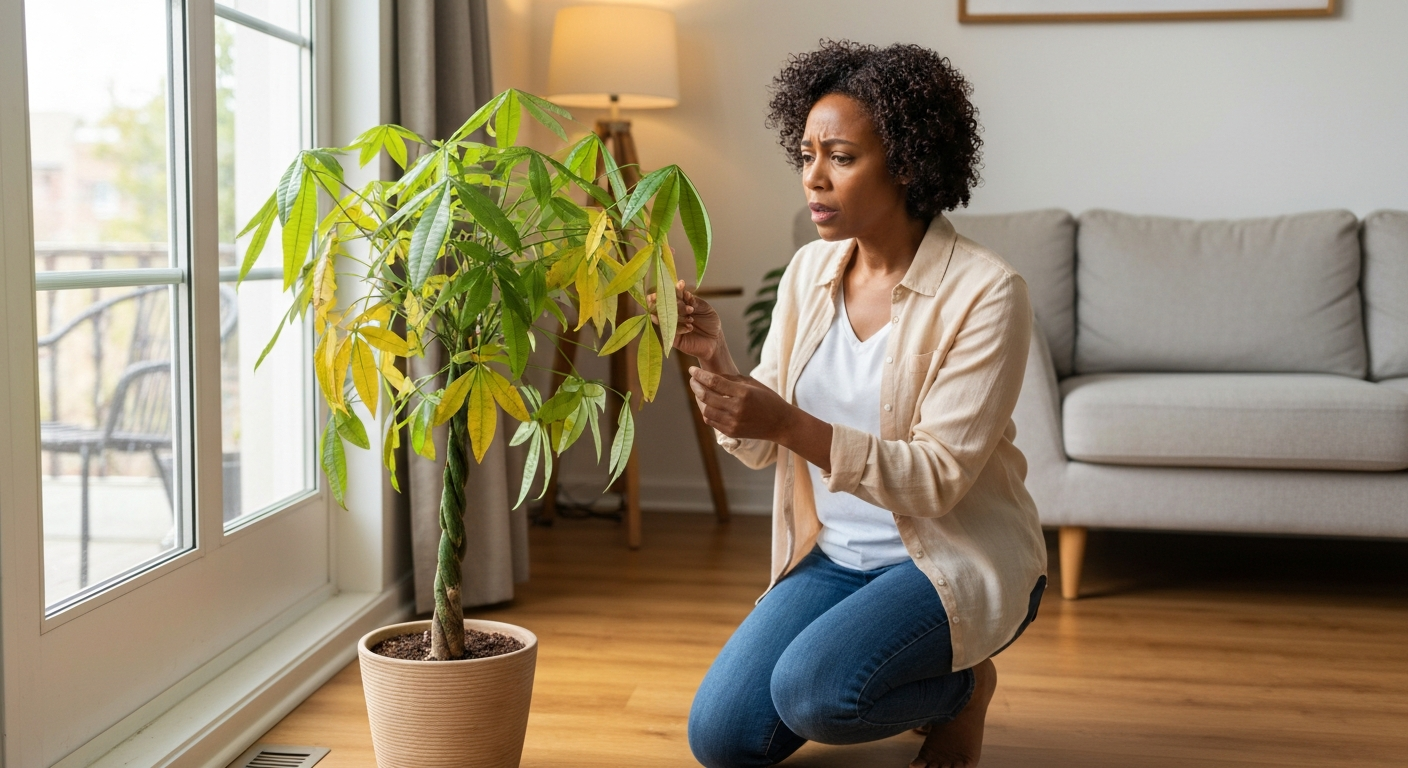

Your money tree is dying because of one or more care mistakes—most often overwatering, insufficient light, or root rot caused by poor drainage. Money trees (Pachira aquatica) signal distress through yellowing leaves, drooping stems, leaf drop, and mushy trunk bases, and identifying the specific cause is the first step to saving your plant.
| ✓Our Pick |
Moisture meter for indoor plants Highly rated by thousands of buyers — this is one of the most effective solutions for this issue you can try at home. See on Amazon → |
Money trees have a reputation as low-maintenance houseplants, but that reputation misleads many owners. These tropical natives need specific conditions to thrive indoors, and when those conditions fall out of balance, decline happens fast. The good news? Most dying money trees can be revived if you catch the problem early and make the right corrections.
Money trees die from a limited set of causes, and almost all of them relate to water, light, soil, or environmental stress. Below are the nine issues responsible for most indoor plant deaths.
Understanding which cause matches your plant's symptoms lets you skip the guesswork and apply the right fix.
Overwatering is the number-one killer of indoor money trees. The symptoms often mimic underwatering—yellow leaves, drooping stems, leaf drop—which leads owners to water even more, accelerating the decline.
Money trees store water in their trunks. They evolved in wetland areas but adapted to periods of drought. When soil stays constantly saturated, roots cannot access oxygen. They begin to suffocate and die. Dead roots cannot absorb water or nutrients, so the plant wilts despite sitting in wet soil.
Signs of overwatering include:
- Yellow leaves starting at the bottom of the plant
- Soft, mushy trunk base
- Soil that smells sour or musty
- Fungus gnats hovering around the soil surface
Root rot is the consequence of prolonged overwatering. Fungal pathogens like Phytophthora and Pythium thrive in waterlogged soil. Once established, they destroy root tissue rapidly.
"Root rot is caused by overwatering and poorly drained soil. The roots turn brown and mushy and are unable to take up water and nutrients." — Linda Chalker-Scott, Ph.D. at Washington State University Extension
To check for root rot, gently remove your money tree from its pot. Healthy roots are white or light tan and feel firm. Rotted roots are brown or black, mushy, and may have a foul odor. If more than half the root system is damaged, the plant's survival becomes uncertain.
While less common than overwatering, underwatering causes its own set of problems. Chronically dry soil leads to crispy leaf edges, wilting that does not recover after watering, and eventual leaf drop.
Money trees prefer their soil to dry out partially between waterings—but not completely. The top 1 to 2 inches should dry before you water again. Bone-dry soil throughout the pot stresses the plant.
| Symptom | Overwatering | Underwatering |
|---|---|---|
| Leaf color | Yellow, starting at base | Brown, crispy edges |
| Trunk texture | Soft, mushy | Firm but shriveled |
| Soil condition | Soggy, may smell | Dry, pulling from pot edges |
| Leaf drop | Lower leaves first | All leaves affected |
| Recovery after watering | Slow or none | Quick improvement |
Insufficient light ranks as the second most common cause of money tree decline. These plants need bright, indirect light for 6 to 8 hours daily. Rooms with north-facing windows or spots far from any window rarely provide enough light for sustained health.
Low light causes:
- Leggy, stretched growth toward the nearest light source
- Pale green or yellowing leaves
- Slow growth or no new growth
- Increased susceptibility to overwatering (less light means less water use)
Direct afternoon sunlight, however, scorches leaves. The ideal spot receives bright light filtered through a sheer curtain or bounced off a wall. East-facing windows work particularly well in most homes.
Money trees are tropical plants native to Central and South American wetlands. They thrive at 50 to 60 percent humidity. Most American homes, especially in winter with heating running, drop to 30 percent or lower.
Low humidity causes brown, crispy leaf tips and edges. The plant may also become more susceptible to spider mite infestations, which thrive in dry conditions.
To increase humidity around your money tree:
- Group it with other plants
- Place the pot on a pebble tray filled with water
- Run a humidifier nearby
- Mist leaves occasionally, though this provides only temporary relief
Also Read: Why Is My Money Tree Losing Leaves? 9 Causes & Fixes
Money trees prefer temperatures between 65°F and 80°F. They tolerate brief dips to 50°F but suffer damage below that threshold. They also resent sudden temperature swings.
Common temperature stress sources include:
- Placement near exterior doors opened frequently in winter
- Air conditioning vents blowing directly on foliage
- Heating vents creating hot, dry drafts
- Cold window glass touching leaves
Move your money tree away from HVAC vents and drafty windows. Consistent, moderate temperatures support healthy growth.
A money tree that has outgrown its container cannot absorb water and nutrients efficiently. Water runs straight through without moistening the root ball. The plant shows stress symptoms even with attentive watering.
Signs your money tree needs repotting:
- Roots circling the inside of the pot or growing out of drainage holes
- Water running immediately through and out the bottom
- Plant becoming top-heavy and tipping over
- Stunted growth despite good care
Repot in spring into a container 1 to 2 inches larger in diameter. Use fresh, well-draining potting mix.
Even with perfect watering habits, soil that retains too much moisture creates root rot conditions. Standard potting soil often holds water too long for money trees.
"Pachira aquatica requires well-drained soil to prevent waterlogging. A mixture of peat, perlite, and coarse sand provides adequate drainage while retaining some moisture." — University of Florida IFAS Extension
The ideal money tree soil mix contains:
- 2 parts standard potting mix
- 1 part perlite
- 1 part coarse sand or orchid bark
Your pot must have drainage holes. Decorative pots without holes trap water at the bottom, guaranteeing root problems.
Weakened money trees attract pests. Spider mites, mealybugs, scale insects, and fungus gnats are the most common invaders.
| Pest | What to Look For | Treatment |
|---|---|---|
| Spider mites | Fine webbing, stippled leaves, tiny dots moving | Wipe with soapy water, increase humidity |
| Mealybugs | White cottony masses on stems and leaf joints | Remove with alcohol-soaked cotton swab |
| Scale | Brown bumps on stems and undersides of leaves | Scrape off manually, apply neem oil |
| Fungus gnats | Small flies hovering around soil | Let soil dry more, use sticky traps |
Inspect your money tree weekly. Early pest detection makes treatment far easier than dealing with an established infestation.
Also Read: Why Is My Money Tree Drooping? 7 Causes & Fixes
Systematic diagnosis prevents wasted effort treating the wrong problem. Follow this step-by-step process to identify your plant's specific issue.
Step 1: Check the soil moisture. Insert your finger 2 inches into the soil. If it feels wet or soggy, overwatering is likely. If bone dry, underwatering may be the culprit. A moisture meter removes the guesswork—aim to water when the meter reads "dry" at the bottom third of the pot.
Step 2: Examine the roots. Gently slide the plant from its pot. Healthy roots are white and firm. Brown, mushy, or foul-smelling roots indicate rot.
Step 3: Assess the light. Hold your hand between the light source and your plant. A sharp shadow means bright light. A fuzzy shadow means medium light. No shadow means insufficient light for a money tree.
Step 4: Measure humidity. A digital hygrometer costs under $15 and tells you exactly what humidity level your plant experiences. Below 40 percent causes problems for money trees.
Step 5: Inspect for pests. Check leaf undersides, stem joints, and the soil surface. Use a magnifying glass to spot spider mites.
Step 6: Review recent changes. Did you move the plant? Change its watering schedule? Turn on the heat for the season? Plants react to environmental changes, sometimes weeks after the change occurred.
Once you identify the cause, apply the appropriate fix. Here is how to address each major problem.
If root rot is present:
1. Remove the plant from its pot and shake off all soil
2. Cut away all brown, mushy roots with sterilized scissors
3. If the trunk base is mushy, cut above the damage if possible
4. Let the roots air-dry for 1 to 2 hours
5. Repot in fresh, well-draining soil in a clean pot with drainage holes
6. Do not water for 5 to 7 days, allowing roots to begin healing
If simply overwatered without rot:
1. Move the plant to a brighter location to increase water use
2. Do not water until the top 2 inches of soil are dry
3. Consider switching to a terracotta pot, which wicks moisture from soil
Move your money tree to a brighter location. Ideal spots include:
- 3 to 6 feet from a south or west window
- Directly in front of an east-facing window
- Under a grow light for 10 to 12 hours daily if natural light is insufficient
If your home lacks adequate natural light, full-spectrum LED grow lights provide an effective alternative. Position the light 12 to 18 inches above the plant.
| ✓Our Pick |
Money tree grow light setup One of the highest-rated products in its category — a reliable fix used by thousands of people. See on Amazon → |
Boost humidity by placing a humidifier near your money tree. This benefits both the plant and your own respiratory comfort during dry winter months. Target 50 to 60 percent humidity in the plant's immediate environment.
For temperature stress, relocate the plant away from vents, exterior doors, and cold windows. Consistent temperatures matter more than specific numbers within the acceptable range.
Repot root-bound plants in spring:
1. Choose a pot 1 to 2 inches larger in diameter
2. Ensure it has drainage holes
3. Use the well-draining soil mix described earlier
4. Water thoroughly after repotting, then wait until the top 2 inches dry before watering again
Also Read: Why Is My Money Tree Wilting? 9 Causes & How to Fix It
Prevention beats treatment. Establish these habits to keep your money tree thriving long-term.
Water only when the top 1 to 2 inches of soil are dry. This typically means every 1 to 2 weeks, but frequency varies by season, pot size, and environmental conditions. Never water on a fixed schedule—always check the soil first.
Provide bright, indirect light for at least 6 hours daily. Rotate the pot a quarter turn weekly to promote even growth.
Fertilize monthly during spring and summer with a balanced liquid fertilizer diluted to half strength. Do not fertilize in fall or winter when growth slows.
Wipe leaves with a damp cloth monthly to remove dust, which blocks light absorption and can harbor pests.
Inspect for pests weekly. Catching problems early prevents them from becoming plant-threatening.
Your money tree is dying because of overwatering, insufficient light, root rot, or environmental stress—often a combination of several factors. Diagnosing the specific cause requires checking soil moisture, examining roots, assessing light levels, and inspecting for pests. Most dying money trees can recover with corrected watering habits, better light exposure, and appropriate soil drainage. Prevention through consistent care keeps these attractive houseplants healthy for years.
Regular watering often means overwatering. Money trees need soil to partially dry between waterings, not constant moisture. Check soil moisture before each watering rather than following a fixed schedule. If soil stays wet for more than a week, your plant likely sits in too little light or soil that drains poorly, both of which slow water uptake.
Windows can harm plants in several ways. Cold window glass in winter damages leaves touching it. South or west windows may provide too much direct afternoon sun, scorching foliage. Air conditioning or heating vents near windows create temperature fluctuations. Pull your money tree back from the glass and away from HVAC registers while keeping it in bright indirect light.
A mushy trunk indicates advanced root rot that has spread into the stem. If the entire trunk is soft, the plant likely cannot be saved. If only the base is affected and firm wood exists above the damage, you can attempt to cut above the rot and root the healthy portion in water or moist soil. Success is not guaranteed, but it offers the only chance for severely damaged plants.
Recovery time depends on the severity of damage. Mild stress from underwatering or low humidity often improves within 1 to 2 weeks of corrected care. Root rot recovery takes 4 to 8 weeks, assuming enough healthy roots remained after pruning. Plants that lost significant foliage may need several months to produce new growth. Patience and consistent care matter more than quick fixes.
Repot only if root rot, root-bound conditions, or poor drainage caused the decline. Repotting stresses plants, and a weakened money tree may not survive the additional trauma. If overwatering or low light caused the problem, fix those issues first and repot only after the plant shows signs of recovery and new growth.
Reviewed and Updated on May 3, 2026 by Adelinda Manna