DIY
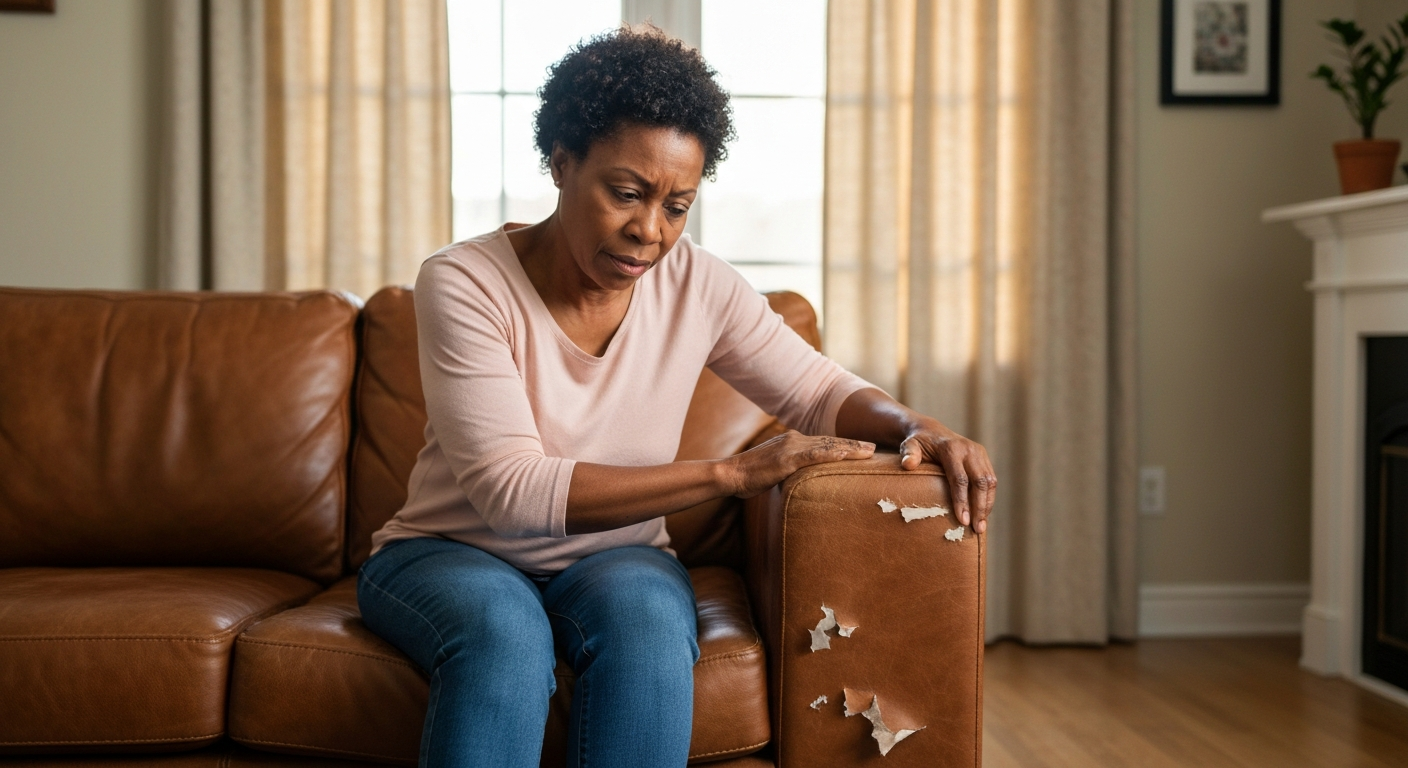

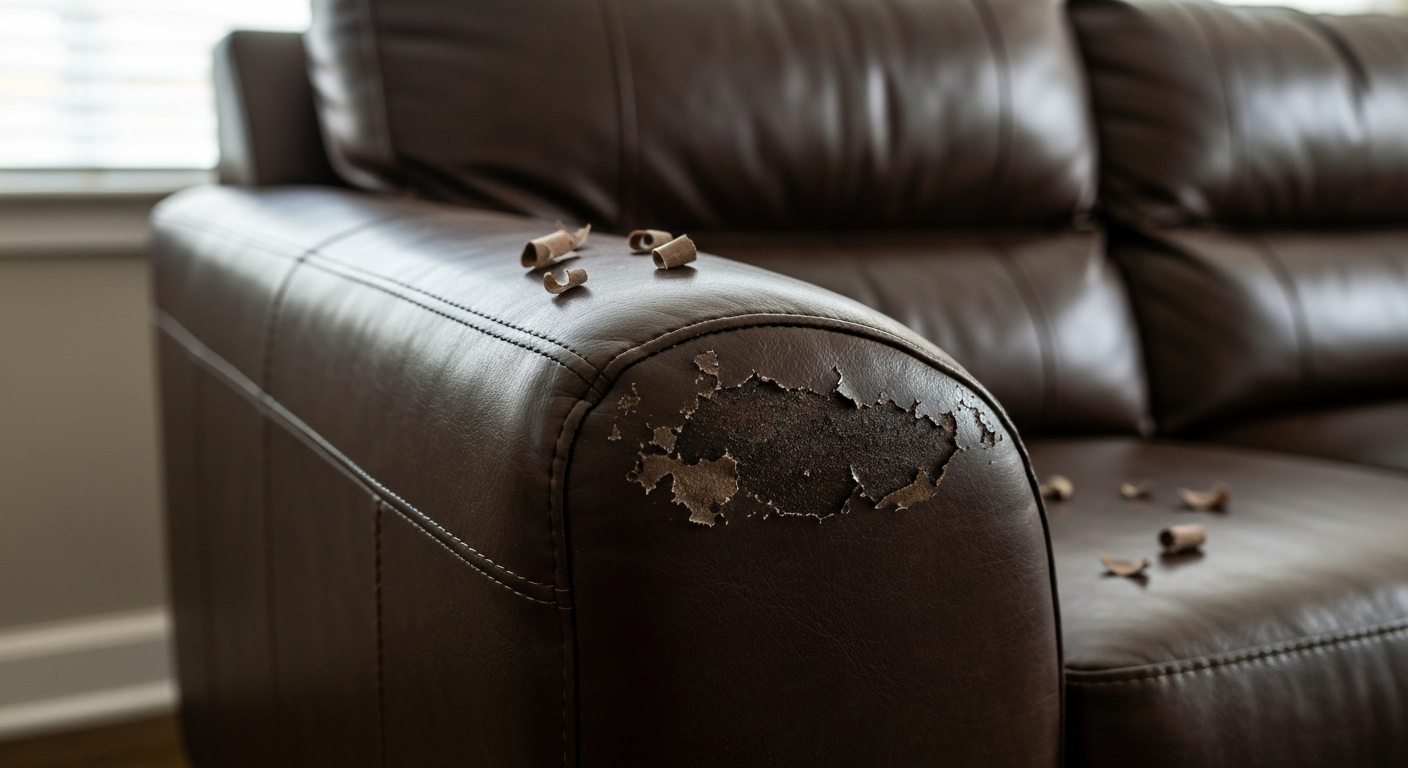
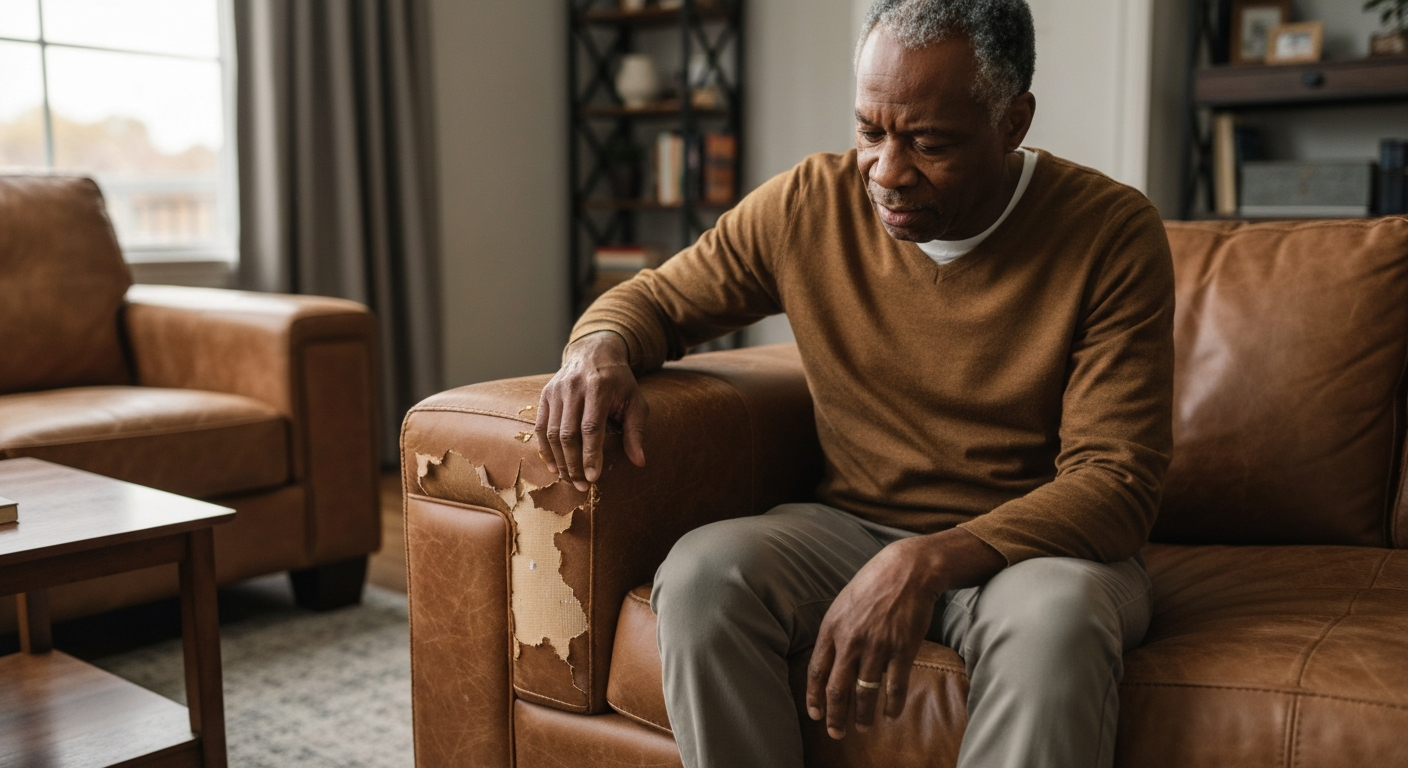
Your leather sofa is peeling because it's made from bonded leather or bicast leather — not genuine full-grain leather — and the thin polyurethane coating has begun to crack, flake, and separate from the backing material due to age, dryness, heat exposure, or wear.
True top-grain and full-grain leather sofas don't peel; they develop a patina and may crack if severely neglected, but they won't flake off in sheets. If your sofa is shedding its surface like sunburned skin, it's almost certainly a composite material marketed under names like "bonded leather," "bicast," "leather match," "100% leather" (which can legally mean only parts are leather), or "reconstituted leather." Understanding exactly why this happens — and whether your sofa can be saved — starts with knowing what you're actually sitting on.
Bonded leather is made from leather scraps (sometimes as little as 10–20% actual leather fibers) mixed with polyurethane and bonded to a fabric or paper backing, then coated with a painted polyurethane finish that mimics the look of real leather.
This construction method creates a product that looks convincing in the showroom but has a fundamental design flaw: the bond between the surface coating and the substrate weakens over time. The polyurethane layer is essentially plastic, and like all plastics, it becomes brittle as plasticizers evaporate and the material ages.
| Material Type | Leather Content | Expected Lifespan | Peeling Risk |
|---|---|---|---|
| Full-grain leather | 100% hide | 15–25+ years | None (may crack if neglected) |
| Top-grain leather | 100% hide (sanded surface) | 10–20 years | Minimal |
| Bicast/Bycast leather | Real leather base + PU coating | 2–5 years | High |
| Bonded leather | 10–20% leather fibers + PU | 2–5 years | Very high |
| Faux leather (PU/PVC) | 0% leather | 3–7 years | Moderate to high |
The industry has used increasingly creative terminology to obscure the difference. A tag saying "genuine leather" sounds premium, but it's actually one of the lowest grades — it just means some part of the product contains some amount of real animal hide.
Low indoor humidity is one of the fastest accelerators of bonded leather deterioration.
The polyurethane coating on bonded and bicast leather needs some ambient moisture to stay flexible. In homes with forced-air heating, humidity levels can drop below 30% during winter months, causing the coating to dry out, stiffen, and crack. Air conditioning has a similar dehumidifying effect in summer.
If you've noticed peeling worsening during heating season or after running the AC heavily, dryness is likely a contributing factor.
Direct heat sources — radiators, heating vents, fireplaces, and sunlit windows — accelerate the breakdown of polyurethane coatings.
Heat causes the plasticizers in the coating to evaporate faster, making the surface brittle. It also creates expansion and contraction cycles as the material heats and cools, weakening the bond between layers.
Position matters enormously. A sofa arm that sits three feet from a heating vent will often peel years before the rest of the piece.
UV radiation degrades polyurethane at the molecular level, causing it to yellow, crack, and eventually separate from the backing.
Even indirect sunlight through windows delivers enough UV exposure to damage bonded leather over time. South-facing rooms with large windows are particularly hard on these materials.
"UV light causes photodegradation of the polymer chains in polyurethane coatings, leading to chalking, cracking, and loss of adhesion." — American Coatings Association
Natural body oils, sweat, and the salts they contain break down the polyurethane finish over time, especially in high-contact areas like headrests, armrests, and seat cushions.
These substances soften and weaken the coating from above while the normal flexing from sitting creates stress from below. The combination is particularly destructive.
You'll often see peeling start precisely where people rest their heads or where arms rub against the surface — these high-contact zones fail first because they receive the most exposure to body chemistry.
Using harsh cleaners, all-purpose sprays, alcohol-based products, or abrasive scrubbing pads strips away the protective coating and accelerates peeling.
Many household cleaners contain solvents that dissolve polyurethane. Bleach, ammonia, and even some "leather cleaners" not formulated for bonded materials can cause immediate damage or weaken the coating over time.
The irony is that people often try to clean their peeling sofa more aggressively as it starts to look worn, which only speeds up the deterioration.
Bonded leather has a finite lifespan of roughly 2–5 years with regular use, regardless of how well you care for it.
The material simply isn't designed for longevity. The bond between the polyurethane coating and the substrate weakens with every flex of the cushions, every time someone sits down and stands up. This is normal mechanical fatigue, and no amount of conditioning can prevent it entirely.
If your sofa is over three years old and sees daily use, it may simply have reached the end of its designed lifespan.
The easiest test: if it's peeling in flakes or sheets like paint, it's not genuine leather.
Real leather doesn't peel — it's a single solid material all the way through. It may crack, dry out, or develop surface damage, but it won't delaminate because there are no separate layers to separate.
Other ways to identify bonded or bicast leather:
Also Read: Why Is My Air Mattress Bulging on One Side? 6 Causes & Fixes
Temporary repairs are possible, but bonded leather peeling is progressive and irreversible — once it starts, it will continue.
For small areas just beginning to peel:
This can buy you 6–12 months before the surrounding areas begin failing.
When peeling covers significant portions of the sofa, your realistic options are:
| Option | Cost Range | Result |
|---|---|---|
| DIY leather repair kit | $30–$80 | Temporary (3–12 months) |
| Professional reupholstering | $1,500–$4,000+ | Permanent (if using real leather) |
| Furniture slipcover | $50–$200 | Cosmetic only |
| Replacement | Varies | Permanent |
Professional reupholstering often costs more than the original bonded leather sofa was worth, making replacement the more economical choice for most people.
You can't stop bonded leather from eventually peeling, but you can slow the process significantly.
These measures won't prevent peeling — they'll delay it, potentially by a year or two.
If more than 20% of the surface is peeling, or if peeling has spread to multiple cushions, replacement is usually more cost-effective than repair.
Consider repair if:
- Peeling is limited to one small area (under 6 inches)
- The sofa has significant sentimental value
- You're willing to accept that repairs are temporary
- The sofa is less than 2 years old (possible warranty claim)
Consider replacement if:
- Peeling covers multiple areas or entire cushions
- The sofa is over 3–4 years old
- Repair costs approach 50% of replacement cost
- You want a permanent solution
When shopping for a replacement, look for full-grain or top-grain leather if you want genuine leather that won't peel. If budget is a concern, modern high-quality synthetic leathers (PU leather, not bonded) often outperform bonded leather and don't carry the same delamination risk.
| ✓Our Pick |
Browse dehumidifiers for home humidity control No special skills required — straightforward to use and most orders ship quickly. See on Amazon → |
Leather sofas peel because they're made from bonded leather or bicast — composite materials with a polyurethane coating that breaks down over time due to dryness, heat, UV exposure, body oils, and normal wear. True full-grain leather doesn't peel. Temporary repairs can extend the life of a mildly peeling sofa by several months, but once peeling starts, it's progressive and irreversible. For sofas with significant peeling, replacement with a genuine leather or high-quality synthetic alternative is usually more economical than professional repair.
No, you cannot fully stop bonded leather from peeling once the process has begun. The delamination occurs because the bond between the polyurethane coating and the backing has failed, and this failure spreads over time. You can slow the progression by controlling humidity, avoiding heat and sunlight, and using appropriate conditioners, but the peeling will eventually affect the entire surface. Repairs are temporary cosmetic fixes, not permanent solutions.
Price doesn't always indicate material quality. Many retailers sell bonded leather sofas at premium prices because they look indistinguishable from real leather in the showroom. A $1,200 "leather" sofa may still be bonded or bicast, which has a lifespan of 2–5 years regardless of brand or price point. Always verify material specifications before purchase — look for "full-grain" or "top-grain" in the product description.
No conditioner can prevent bonded leather from eventually peeling because the failure occurs at the bond between layers, not at the surface. Conditioners designed for bonded leather may help maintain surface flexibility and delay the onset of cracking, but they cannot address the fundamental structural weakness of the material. Products marketed as "peel preventers" typically just mask early damage temporarily.
Possibly, if your sofa is still within the warranty period and the warranty covers material defects. However, many warranties on bonded leather furniture specifically exclude peeling as "normal wear" rather than a defect. Review your warranty documentation carefully. If the sofa peeled within the first 1–2 years despite proper care, you may have grounds for a claim, especially if the material was misrepresented at the time of sale.
If you want real leather, invest in full-grain or top-grain leather, which will last 15–25 years with proper care and never peel. If budget is a concern, high-quality synthetic leather (often called PU leather or faux leather) made with modern manufacturing methods can last 5–10 years and doesn't carry the same delamination risk as bonded leather. Avoid anything labeled "bonded," "bicast," "leather match," or "reconstituted."
Reviewed and Updated on June 11, 2026 by George Wright