DIY
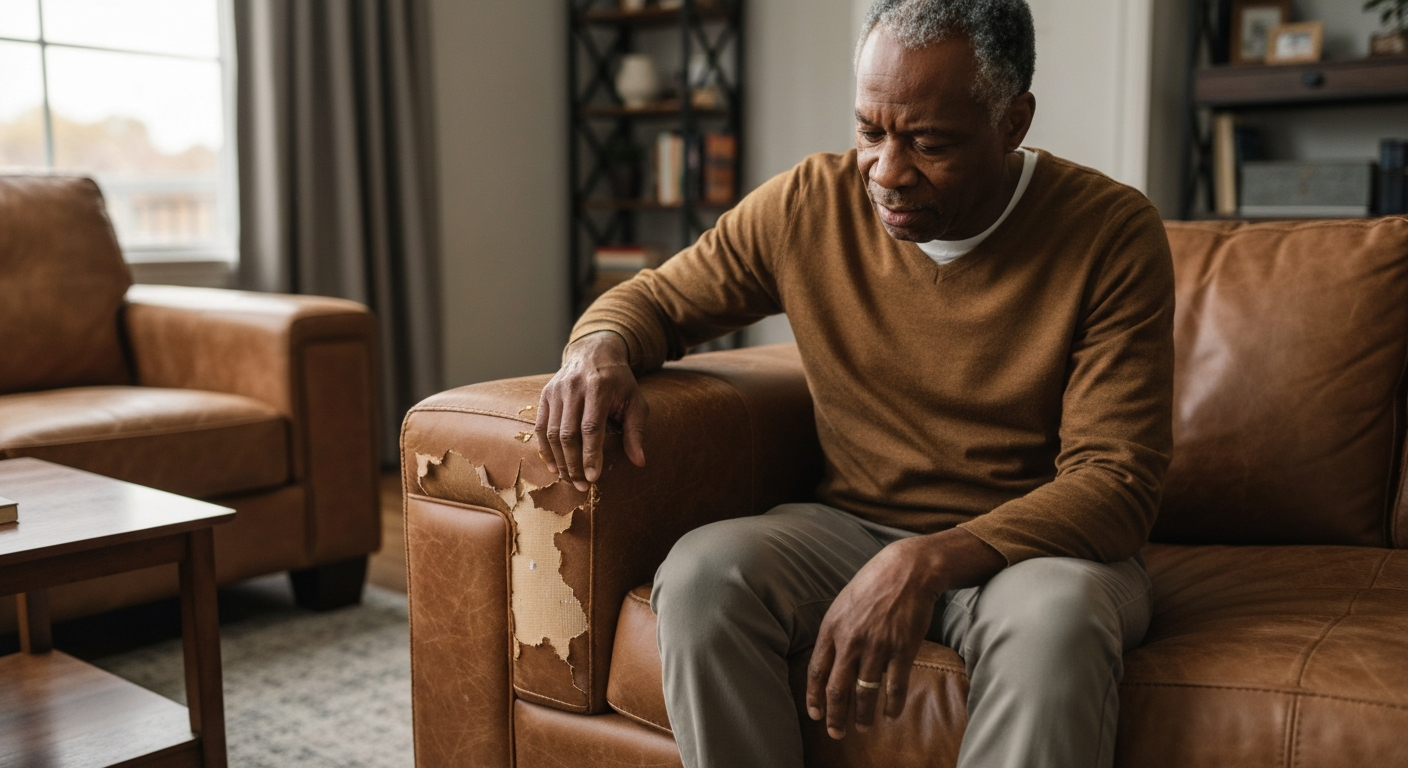

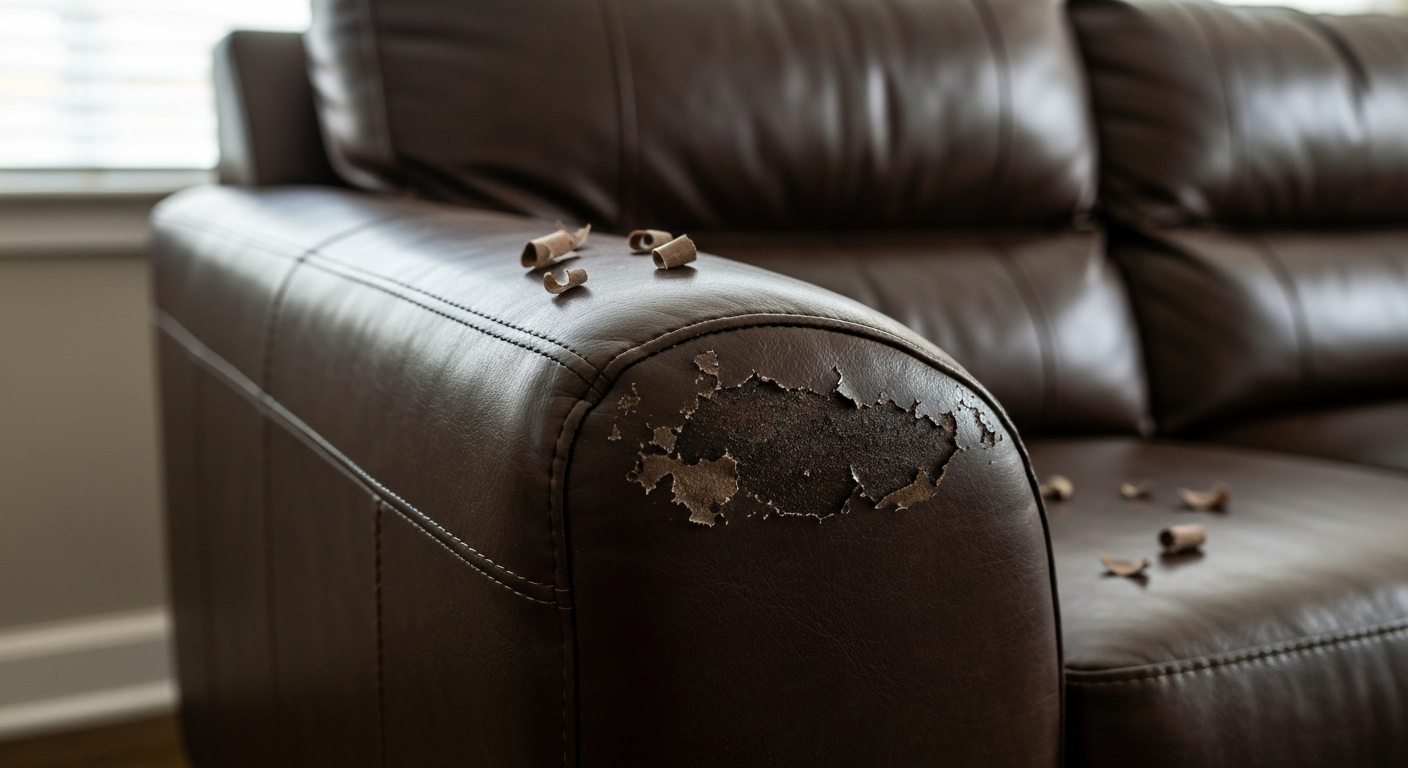
Your leather couch is peeling because it's made from bonded leather or faux leather (PU/PVC), not genuine top-grain or full-grain leather — real leather cracks and patinas but doesn't peel in flakes or sheets like synthetic materials do.
The frustrating truth is that most "leather" furniture sold today contains little to no actual animal hide. Bonded leather uses only 10–20% leather fibers mixed with polyurethane, while faux leather is entirely synthetic. Both have a thin top coating that degrades over time from body oils, UV exposure, humidity swings, and cleaning product buildup. Once that coating starts to lift, the peeling accelerates rapidly and cannot be reversed — only managed or covered.
The material your couch is made from determines whether peeling is inevitable degradation or a fixable surface issue — and most peeling couches aren't real leather at all.
Understanding your material is the first step to knowing whether repair is worthwhile or if you're fighting a losing battle.
| Material | Composition | Peeling Behavior | Typical Lifespan |
|---|---|---|---|
| Full-grain leather | 100% animal hide, natural surface | Does not peel — develops patina, may crack | 15–25+ years |
| Top-grain leather | 100% animal hide, sanded and refinished | Rarely peels — may crack with neglect | 10–20 years |
| Bonded leather | 10–20% leather fibers + polyurethane backing | Peels in sheets and flakes | 2–5 years |
| Faux leather (PU) | Polyurethane over fabric backing | Peels and cracks extensively | 3–7 years |
| Faux leather (PVC) | Vinyl over fabric backing | Cracks, stiffens, peels | 2–5 years |
Check your couch's tag or original paperwork. Terms like "bonded leather," "leather match," "bicast leather," "PU leather," or "leather-aire" all indicate synthetic or heavily processed materials that will eventually peel. If the peeling reveals a fabric mesh or fuzzy backing underneath, you're dealing with faux or bonded leather.
Yes — the oils from your skin and hair are one of the leading causes of leather surface degradation, especially on armrests, headrests, and seat cushions where contact is constant.
Human skin produces sebum, an oily substance that slowly dissolves the polyurethane coating on bonded and faux leathers. You'll notice peeling starting exactly where people sit and lean most often. The oil penetrates microscopic cracks in the finish, lifting it from the backing material underneath.
Direct UV exposure breaks down both the dyes and the protective top coat on leather furniture, causing fading, drying, and eventual peeling — especially near windows.
UV rays cause a chemical reaction called photodegradation that makes polyurethane coatings brittle. A couch positioned near a south-facing window can show UV damage within 1–2 years. The surface first fades unevenly, then begins to crack and lift in the sun-exposed areas while shaded sections remain intact.
Using the wrong cleaners — especially those containing alcohol, ammonia, bleach, or harsh detergents — strips protective coatings and accelerates peeling dramatically.
Many household cleaners that work fine on other surfaces are disastrous for leather. Baby wipes, glass cleaners, all-purpose sprays, and even some products labeled "leather cleaner" contain ingredients that dissolve the finish layer. Once that protective coating is compromised, moisture escapes and the material dries out, leading to cracking and peeling.
"Cleaning leather with harsh chemicals or abrasive materials can strip away the protective finish, leaving the leather vulnerable to drying, cracking, and peeling." — Leather Honey
Extreme humidity fluctuations — both too dry and too humid — stress leather surfaces and accelerate the peeling process.
Leather and its synthetic alternatives need stable humidity levels between 40–55%. In winter, heated homes often drop below 30% humidity, causing materials to dry out and crack. In summer, high humidity can cause the backing material to swell while the top coating doesn't, creating separation. This seasonal expansion and contraction cycle weakens the bond between layers.
Pet claws, even when trimmed, create micro-scratches in the surface coating that allow oils and moisture to penetrate, accelerating degradation.
The scratches themselves may not be visible initially, but they compromise the protective layer. Pet saliva and the oils from their fur also contribute to surface breakdown. If your cat or dog has a favorite spot on the couch, you'll likely see peeling start there first.
Bonded leather and faux leather have a built-in expiration date — typically 2–7 years regardless of how carefully you maintain them.
The polyurethane coating simply isn't designed to last indefinitely. Manufacturers know this, which is why bonded leather furniture is typically much cheaper than genuine leather. The adhesives binding the layers together degrade over time through a process called hydrolysis (breakdown from moisture in the air). Even a rarely-used bonded leather couch stored in perfect conditions will eventually peel.
Also Read: Why Is My Tan Peeling Off? 7 Causes & How to Heal Fast
You cannot reverse peeling on bonded or faux leather, but you can slow progression and improve appearance with proper cleaning, conditioning, and protective measures.
Examine your couch carefully. Early-stage peeling (small flakes, isolated areas) responds better to repair attempts than advanced peeling (large sheets lifting, exposed backing visible). If more than 30% of a surface is actively peeling, cosmetic repair becomes impractical.
Use only pH-balanced leather cleaners or a simple solution of distilled water with a few drops of mild dish soap. Apply with a soft microfiber cloth, wiping gently in circular motions. Never saturate the surface — use a damp cloth, not a wet one. Allow to dry completely before proceeding.
For genuine leather with minor cracking (not peeling), a quality leather conditioner can restore moisture and flexibility. Apply a thin layer, let it absorb for 15–20 minutes, then buff off excess. For bonded or faux leather, skip this step — conditioner won't penetrate the synthetic coating and may make surfaces slippery.
Leather repair kits contain flexible filler compounds and color-matched coatings that can disguise peeling areas. Clean the damaged area, apply filler to any gouges or exposed backing, let dry, then apply the color coating in thin layers. Results vary widely — this works best for small areas and provides a temporary cosmetic fix rather than a permanent solution.
For extensive peeling, a high-quality slipcover or furniture protector may be the most practical solution. Modern covers come in stretch fabrics that conform to furniture shapes and are machine washable. This protects the couch from further damage while making it usable again.
Prevention is only truly possible with genuine leather — bonded and faux leathers will eventually peel regardless of care, though proper maintenance extends their usable life.
For any leather or leather-alternative furniture:
For genuine leather specifically, these steps can extend lifespan to 20+ years. For bonded leather, you might extend the 2–5 year window to 5–7 years with diligent care — but peeling will still eventually occur.
"Bonded leather contains about 10–20% real leather fibers that have been shredded and bonded together with polyurethane. Over time, the polyurethane breaks down and begins to peel away." — Furniture Fair
Replace your couch when peeling covers more than 30–40% of visible surfaces, when backing material is extensively exposed, or when repair costs approach 50% of replacement cost.
Consider these factors:
When shopping for replacement furniture, invest in genuine top-grain or full-grain leather if budget allows. Yes, it costs significantly more upfront — often 3–5 times the price of bonded leather alternatives. But a quality leather couch can last 15–25 years versus the 2–5 year lifespan of bonded leather, making the per-year cost comparable or even lower.
If genuine leather isn't in the budget, consider high-quality fabric upholstery instead. Modern performance fabrics resist stains, clean easily, and won't peel — ever. They're often more practical for households with children or pets.
Also Read: Why Is My Air Mattress Bulging on One Side? 6 Causes & Fixes
DIY repair kits work for minor cosmetic touch-ups, but professional restoration is worthwhile only for genuine leather furniture with significant sentimental or monetary value.
| Factor | DIY Repair | Professional Restoration |
|---|---|---|
| Cost | $20–$60 for kit | $200–$800+ depending on damage |
| Best for | Small areas, surface scratches, minor peeling | Genuine leather, heirloom pieces, extensive damage |
| Results | Temporary, visible upon close inspection | Can be nearly invisible on genuine leather |
| Longevity | 6 months to 2 years | 5–10+ years on genuine leather |
| Not recommended for | Extensive peeling, bonded leather | Bonded leather (waste of money) |
Professional leather restoration involves stripping old finish, repairing substrate damage, re-dying, and applying new protective coatings. This process only makes sense for genuine leather because there's actual hide underneath to restore. On bonded leather, professionals can't restore what was never there — the "leather" layer is just fiber scraps glued together.
| ✓Our Pick |
Search leather couch repair kits and conditioners This is the go-to fix recommended by professionals — save time and money by getting it right the first time. See on Amazon → |
Your leather couch is peeling because it's almost certainly bonded leather or faux leather, not genuine leather — and these materials have a built-in expiration date of 2–7 years. Body oils, UV exposure, wrong cleaning products, humidity swings, pet damage, and simple age all accelerate the inevitable breakdown of the polyurethane coating. You cannot reverse peeling, but you can slow it with proper care, use repair kits for cosmetic touch-ups, or cover the furniture. When shopping for your next couch, genuine top-grain leather or quality fabric upholstery will last far longer than budget "leather" alternatives that are engineered to fail.
Peeling typically starts in high-contact areas — seat cushions, armrests, and headrests — where body oils and friction concentrate. These zones experience the most wear and chemical exposure from skin contact. Sun-facing sections also peel first due to UV damage. The back and sides often remain intact longer simply because they receive less stress.
No — shoe polish is formulated differently than furniture leather products and can make the problem worse. Shoe polish contains waxes and dyes designed for the flex patterns of footwear, not the stretch and compression of furniture. It may temporarily mask discoloration but won't stop peeling and can create a sticky, uneven surface that attracts dirt.
Genuine full-grain or top-grain leather should never peel — it may crack with severe neglect after 15–20 years, but peeling indicates synthetic content. Bonded leather typically begins peeling within 2–5 years. Faux leather (PU) lasts 3–7 years before significant peeling. These timelines can be shorter in sunny rooms, dry climates, or with improper cleaning.
Most furniture warranties explicitly exclude peeling on bonded and faux leather as "normal wear" after the first year. Read your warranty carefully — many specify coverage only for frame and cushion defects, not surface materials. If peeling occurs within 90 days to 1 year, document the damage and contact the retailer, as this may indicate a manufacturing defect in the coating application.
Cracking appears as lines or fissures in the surface while the material stays attached — this happens to genuine leather when it dries out. Peeling involves the top layer lifting away in flakes or sheets and revealing a different material underneath — this happens to bonded and faux leathers when the polyurethane coating separates from the backing. Cracking can often be treated with conditioning; peeling cannot be reversed.
Reviewed and Updated on June 11, 2026 by George Wright