
DIY
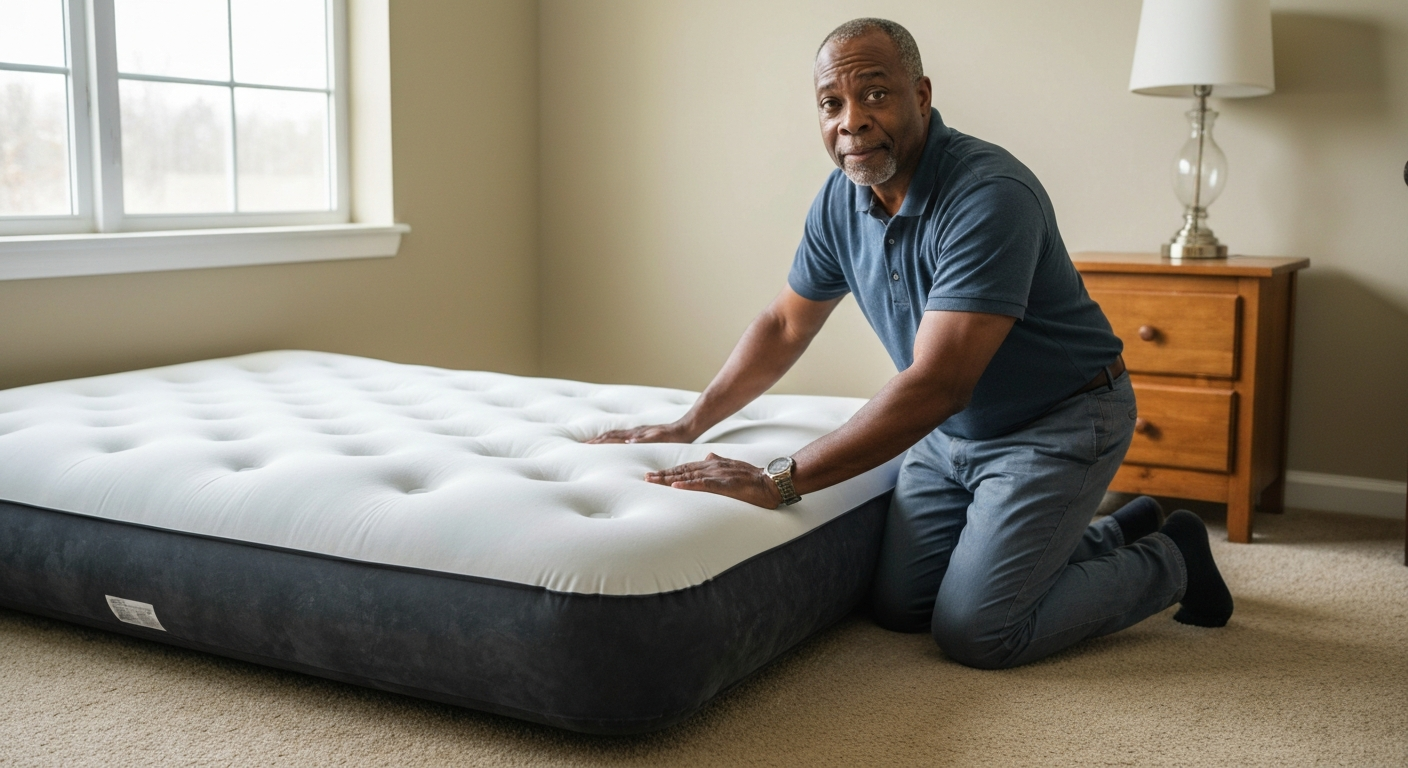

An air mattress bulging on one side is almost always caused by overinflation, a weakened seam, uneven weight distribution, or temperature-induced pressure changes inside the mattress — not necessarily a hole.
The bulge forms when internal pressure becomes uneven, forcing air into one area where the material stretches more than the rest. This same pressure imbalance explains why your air mattress might be deflating overnight or losing air but showing no visible hole. The fix depends on whether you're dealing with a structural weakness, user error, or environmental factors — all of which are straightforward to diagnose and often reversible.
| ✓Our Pick |
Premium airbeds with reinforced construction and built-in pumps This is the go-to fix recommended by professionals — save time and money by getting it right the first time. Learn More → |
A one-sided bulge develops when the internal structure fails to distribute pressure evenly, allowing air to concentrate in a weakened section of the mattress.
Air mattresses use internal baffles, chambers, or coils to maintain a flat sleeping surface. When one of these structures fails — or when external factors push air toward one area — you get the telltale bubble or bulge. Here are the primary causes.
The most common cause of bulging is simply adding too much air. Manufacturers design air mattresses to be firm, not rock-hard. When you inflate beyond the recommended pressure, the seams and material stretch unevenly. The weakest point — often a corner or edge — balloons outward.
Most air mattresses don't have pressure gauges, so users tend to keep pumping until the surface feels "done." This intuitive approach frequently leads to overinflation, especially with electric pumps that fill quickly.
Internal seams bond the top and bottom layers together, creating the flat sleeping surface. Over time, these seams weaken from:
When a seam fails, air rushes into that section, creating a bulge. This is different from a hole — the mattress holds air, but it distributes incorrectly.
If you consistently sleep on one side of the bed or if one person is significantly heavier than the other, that area bears more stress. Over months or years, this concentrated pressure weakens the material and seams on that side, making it more prone to bulging or stretching.
"The PVC and vinyl materials used in most air mattresses experience stress relaxation over time, meaning they permanently stretch when subjected to sustained loads." — Dr. Michael Ashby at Oxford University Department of Materials
Air expands when heated and contracts when cooled. If you inflate your mattress in a cool room and then the temperature rises overnight (from body heat or ambient temperature), the internal pressure increases. This extra pressure can:
This temperature effect also explains why many people notice their air mattress deflating overnight — it's not always a leak, but the air contracting as temperatures drop in the early morning hours.
Air loss without a visible puncture typically comes from valve leakage, seam permeability, or the natural stretching of new materials — not a hole you can patch.
This is one of the most frustrating air mattress mysteries. You've submerged sections in water, listened for hissing, and found nothing. Yet every morning, the mattress is softer than when you went to bed.
The valve is the most common source of undetectable leaks. Problems include:
| Valve Issue | Symptom | Fix |
|---|---|---|
| Debris in seal | Slow, steady deflation | Clean valve with damp cloth |
| Worn gasket | Air escapes when lying on mattress | Replace valve cap or gasket |
| Loose valve housing | Hissing near valve area | Tighten valve base if possible |
| Damaged one-way valve | Won't hold air after pump disconnects | Replace valve assembly |
Even a tiny gap in the valve seal — invisible to the eye — can release enough air overnight to make the mattress noticeably softer.
Brand-new air mattresses often seem to lose air faster than older ones. This isn't a defect — it's the material stretching during its first uses. PVC and vinyl need to "break in," and as they stretch, the internal volume increases slightly, making the mattress feel less firm.
This initial stretching period typically lasts 3–5 uses. After that, the material stabilizes and the apparent air loss stops.
As mentioned earlier, air contracts in cooler temperatures. If your bedroom drops 10–15°F overnight, the air inside the mattress contracts proportionally. This can make a fully inflated mattress feel 20–30% softer by morning — with zero actual air loss.
Also Read: Why Is My Sheetrock Cracking? 7 Causes & How to Fix Them
Sleep Number beds use dual air chambers, so one-sided deflation usually indicates a problem with that specific chamber's hose connection, pump, or internal bladder.
Sleep Number systems are more complex than standard air mattresses. Each side operates independently, which means problems are usually isolated to one chamber.
| Component | What Goes Wrong | Signs to Look For |
|---|---|---|
| Hose connection | Loose or cracked fitting | Hissing near base, one side only |
| Air bladder | Pinhole or seam failure | Gradual deflation, pump runs frequently |
| Pump | Failing to maintain pressure | Error codes, motor sounds |
| Remote/controller | Incorrect settings | Number display doesn't match firmness |
The dual-chamber design means air can't migrate from one side to the other — if your side is deflating, the problem is specific to your chamber's components.
Start by checking the simplest explanations:
"Sleep Number's Connected Bed technology can detect air loss patterns and alert owners before they notice a problem, but older models require manual inspection of connections and bladders." — Sleep Number Product Support
Most bulging and air loss issues can be resolved at home by adjusting inflation levels, reinforcing weak points, or replacing worn components.
If your mattress is bulging, the first step is controlled deflation. Open the valve and press gently on the bulge to release excess air. Then reinflate to about 90% of what feels "full" — this gives the material room to adjust without overstressing seams.
For mysterious air loss, use this detection method:
For small holes or weak seams:
For valve issues:
| Prevention Strategy | Why It Works |
|---|---|
| Inflate to 90% capacity | Reduces seam stress |
| Keep away from heat sources | Prevents pressure spikes |
| Use a mattress pad | Protects from punctures and friction |
| Store deflated and flat | Prevents crease damage |
| Rotate sleeping position | Distributes wear evenly |
Replace your air mattress when the bulge returns after repair, when multiple seams show weakness, or when the material has become thin and brittle from age.
Air mattresses have a limited lifespan — typically 2–5 years for occasional use, less for nightly use. Signs that repair isn't worth it include:
At this point, a quality replacement with reinforced construction will outperform endless repairs to a failing mattress.
Also Read: Why Is My Yard Growing Mushrooms? 7 Causes & What to Do
Air mattress bulging on one side is caused by overinflation, weakened seams, uneven weight distribution, or temperature changes — not always a hole. Deflation without a visible leak usually traces back to valve problems, new material stretching, or temperature-related air contraction. Sleep Number beds have isolated chambers, so one-sided issues point to that specific chamber's hose, bladder, or pump. Most problems can be fixed at home by adjusting inflation, repairing weak points, or replacing worn valves — but if the bulge keeps returning or the material feels degraded, replacement is the better long-term solution.
Overnight deflation is usually caused by temperature drops (air contracts as it cools), a slow valve leak, or new material stretching. Your body heat warms the mattress initially, but as room temperature falls in the early morning, internal pressure drops and the surface feels softer. This isn't always actual air loss — a mattress that felt firm at 70°F will feel noticeably softer at 60°F.
You can often extend the life of a bulging air mattress by reinforcing the weak seam from the inside (if accessible) or applying a large patch over the bulged area after deflating it flat. However, if the internal baffle structure has failed, the bulge will likely return. Permanent fixes work best on minor seam weakness; major structural failure usually means replacement.
Nightly air loss in a Sleep Number bed most commonly comes from a loose hose connection at the pump or bladder, a small bladder leak, or a failing pump that can't maintain pressure. Check connections first — they can loosen over time. If connections are secure and the problem persists, the bladder or pump may need replacement, often covered under warranty.
Many manufacturers cover bulging under warranty if it results from a manufacturing defect (like a weak seam) rather than user damage or overinflation. Check your specific warranty terms — most require the bulge to appear within a certain timeframe and may exclude damage from exceeding weight limits or using the mattress in unintended ways.
A quality air mattress used occasionally (guests, camping) typically lasts 3–5 years before showing significant wear. Air mattresses used nightly often develop problems within 1–2 years due to the constant stress of inflation cycles and body weight. Sleep Number beds, with their higher-quality components, generally last 8–15 years with proper maintenance.
Reviewed and Updated on June 10, 2026 by George Wright