
Cats
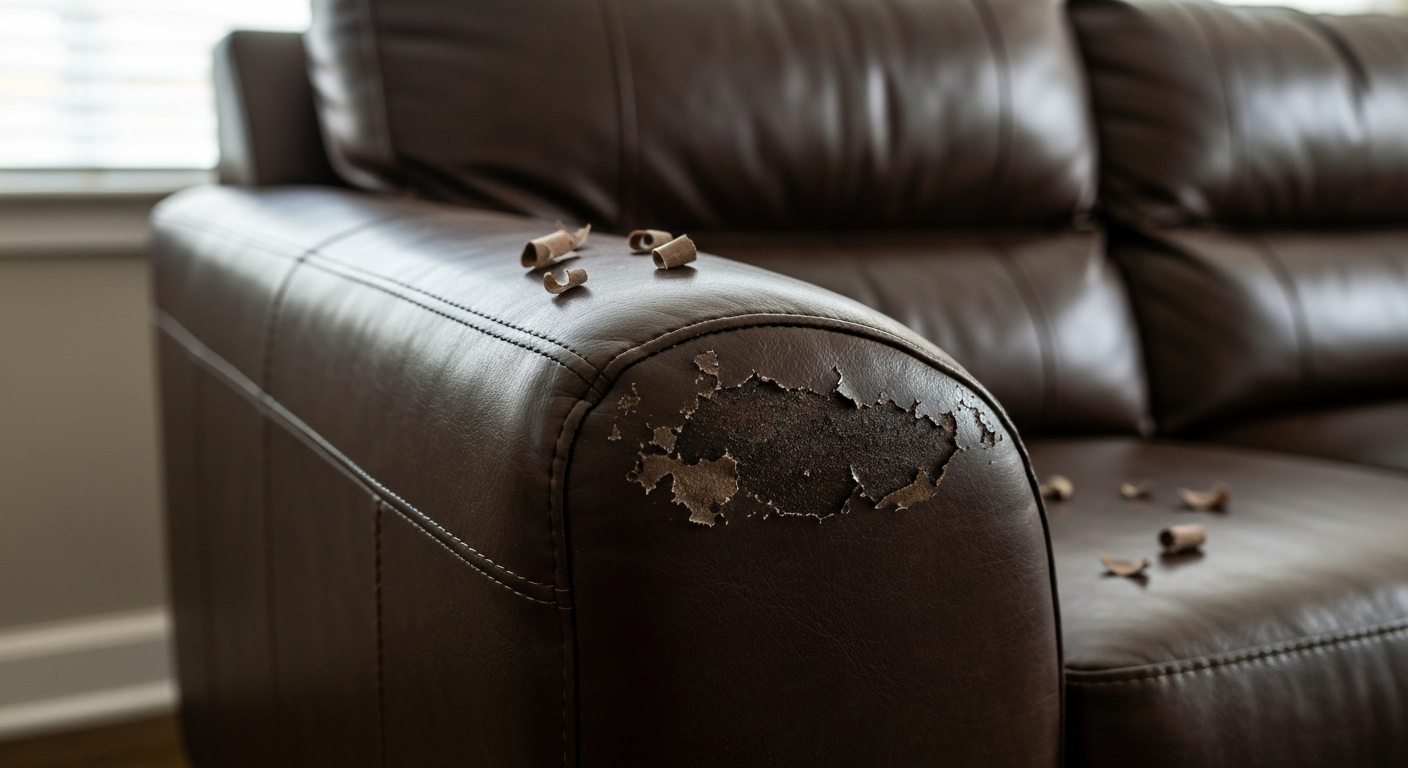

Your leather couch is flaking because it's made from bonded leather or bicast leather—materials that contain a thin polyurethane coating over leather fibers, and that coating inevitably breaks down after 2–5 years of normal use, heat exposure, and body oils.
True top-grain or full-grain leather rarely flakes; it develops a patina instead. If your couch is peeling in sheets or crumbling into small pieces, you're almost certainly dealing with a synthetic-leather hybrid that was marketed as "genuine leather" but lacks the durability of the real thing. The good news: you can slow the damage, and in some cases, repair it affordably at home.
The flaking you're seeing is the polyurethane top layer separating from the base material beneath it—this happens with bonded leather, bicast leather, and faux leather, not with full-grain or top-grain hides.
Understanding what your couch is made of determines whether it's worth repairing or replacing:
| Leather Type | Composition | Flakes? | Typical Lifespan |
|---|---|---|---|
| Full-grain leather | 100% hide, natural surface | No—develops patina | 15–25+ years |
| Top-grain leather | 100% hide, surface sanded | Rarely | 10–20 years |
| Corrected-grain leather | 100% hide with pigmented coating | Sometimes (coating can peel) | 8–15 years |
| Bicast leather | Split leather with polyurethane layer | Yes | 2–5 years |
| Bonded leather | 10–20% leather fibers + polyurethane | Yes—severely | 2–5 years |
| Faux/PU leather | 100% synthetic polyurethane | Yes | 2–5 years |
Bonded leather is the worst offender. Manufacturers grind up leather scraps, mix them with adhesives, and bond them to a fabric backing before applying a plastic-like coating. That coating cannot flex indefinitely—it cracks, then flakes, then peels in large patches.
"Bonded leather is made from leftover hide materials that are shredded, mixed with a bonding agent, and then adhered to a fiber backing. The surface is typically sprayed with a polyurethane coating to simulate the look of real leather." — Leather Honey
Yes—the repeated cycle of sitting, shifting, and standing creates friction that wears through the polyurethane coating, while body heat accelerates the breakdown of the bonding agents underneath.
The seat cushions, armrests, and headrest areas flake first because they receive the most contact. Every time you sit down, the surface flexes. Over thousands of cycles, microscopic cracks form in the coating, eventually connecting into visible flaking.
Direct or reflected UV light degrades polyurethane at the molecular level, turning flexible coatings brittle within 1–2 years of consistent exposure.
If your couch sits near a window—even if not in direct sunbeams—UV rays break down the plasticizers that keep the surface supple. The result is a dry, cracked surface that flakes when touched. South- and west-facing windows cause the most damage in the Northern Hemisphere.
Dry air pulls moisture from both real leather and the polyurethane coatings on synthetic leathers, causing the material to shrink slightly and crack.
Indoor humidity below 30% (common in winter with central heating, or year-round in desert climates) accelerates flaking dramatically. The material can't maintain flexibility without adequate moisture in the air around it.
Harsh cleaners, baby wipes, all-purpose sprays, and even some products labeled "leather cleaner" strip protective finishes and dry out the surface.
Alcohol-based cleaners are particularly damaging. They dissolve the oils in real leather and break down polyurethane coatings on bonded leather. If you've been cleaning your couch with anything other than a dedicated leather-safe product, you may have accelerated the flaking.
Bonded and bicast leathers have a built-in expiration date—the polyurethane coating oxidizes over time regardless of how carefully you treat the furniture.
Even a bonded leather couch that sits in a temperature-controlled room with no direct sunlight will begin flaking around the 3–5 year mark. The chemistry simply isn't designed for longevity. This is why these materials cost less upfront but rarely last a decade.
Manufacturing defects—thin coatings, poor adhesion, or contaminated materials—can cause premature flaking within months of purchase.
If your couch started flaking within the first year, check your warranty. Some retailers and manufacturers will replace defective bonded leather furniture, though many try to blame normal wear. Keep purchase receipts and take dated photos of the damage.
You cannot reverse flaking that has already occurred, but you can stabilize the surface, fill damaged areas, and dramatically slow future deterioration with proper treatment.
Remove loose flakes with a soft brush or vacuum on low suction. Then wipe the entire couch with a damp (not wet) microfiber cloth. Avoid soaps or detergents at this stage—you're just removing surface debris.
For couches with minor flaking, a quality leather conditioner can rehydrate the material and restore some flexibility to the coating. Apply a thin layer with a soft cloth, let it absorb for 10–15 minutes, then buff off excess. Condition every 2–3 months going forward.
Leather repair kits contain flexible fillers and colorants designed to bond with both real and synthetic leather surfaces. Clean the flaking area, apply the filler in thin layers (letting each dry completely), then apply the colorant to match your couch. Finish with a sealant to protect the repair.
"Leather repair compounds work best when applied in multiple thin layers rather than one thick application. Each layer should dry completely before adding the next." — The Leather Repair Company
Move the couch away from windows or install UV-filtering window film. Keep the couch at least 3 feet from heating vents, radiators, and fireplaces. Consider closing blinds during peak sunlight hours.
Use a hygrometer to monitor indoor humidity. Aim for 40–50% relative humidity year-round. A room humidifier during winter heating season can extend your couch's life significantly.
Also Read: Why Is My Air Mattress Bulging on One Side? 6 Causes & Fixes
If more than 30% of the surface is actively flaking, or if the damage has spread to the foam or frame beneath, repair costs typically exceed the value of bonded leather furniture.
At that point, you have three options:
| ✓Our Pick |
Search leather repair kits and furniture conditioners Backed by strong customer feedback — the most recommended solution in forums and Q&A communities. See on Amazon → |
Your leather couch is flaking because it's made from bonded leather, bicast leather, or faux leather—materials with a polyurethane coating that breaks down after 2–5 years from normal use, UV exposure, low humidity, and body heat. True full-grain leather doesn't flake. You can slow further damage with conditioning, UV protection, and humidity control, and you can patch visible damage with a leather repair kit—but if more than a third of the surface is deteriorating, replacement is usually more cost-effective than extensive repair.
No repair is truly permanent on bonded or bicast leather because the underlying material continues to degrade. However, a well-applied leather repair kit can last 1–3 years before needing touch-ups. For corrected-grain real leather with coating damage, professional refinishing can restore the surface for 5+ years.
The term "genuine leather" is legally meaningless in the US and often appears on bonded leather products. If your couch was labeled genuine leather but is flaking, it's almost certainly bonded leather (10–20% leather fibers) or bicast leather (split leather with a plastic coating). True top-grain and full-grain leather is typically marketed with those specific terms.
Full-grain and top-grain leather couches should never peel—they last 15–25+ years with basic care. Bonded and bicast leather typically begins flaking between 2–5 years, even with careful maintenance. If your couch started peeling within 2 years, it may have had manufacturing defects covered under warranty.
If the damage is limited to a few high-wear spots (less than 20% of the surface), a $25–$50 repair kit can extend the couch's life by several years. If flaking is widespread or the material is crumbling to the touch, repair costs and effort rarely justify the result—covering or replacing the couch makes more financial sense.
Check the backing: real leather has a rough, fibrous underside, while bonded leather shows a fabric mesh. Smell it: genuine leather has a distinct natural scent, not a plastic or chemical odor. Look at the grain: real leather has irregular pores and texture variations, while bonded leather has a uniform, stamped pattern. Finally, check hidden areas—under cushions or on the bottom—for labels stating the exact material composition.
Reviewed and Updated on June 11, 2026 by George Wright