Health
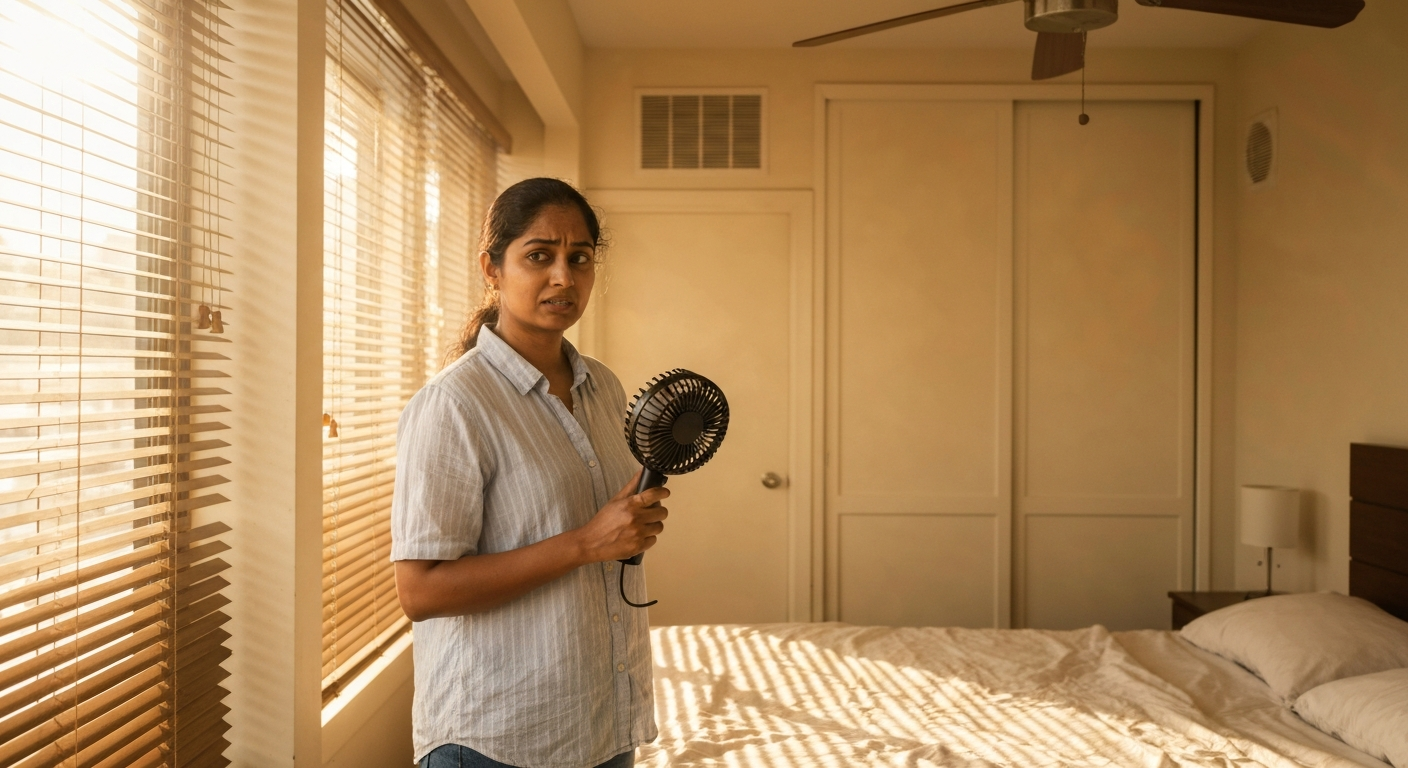

Your room is hotter than the rest of your house because heat is accumulating faster than it can escape—typically due to poor airflow, direct sunlight, inadequate insulation, heat-generating electronics, or HVAC issues that prevent cooled air from reaching that space.
A single room turning into a sauna while the rest of your home stays comfortable is frustrating, especially when you're paying for air conditioning that doesn't seem to reach where you need it most. The good news: most causes are fixable without calling a professional. Below, you'll find the most common reasons your room runs hot in 2026, how to diagnose each one, and practical fixes that actually work.
| ✓Our Pick |
Portable air conditioner for hot rooms without central AC This is what many people find solves the problem quickly, without a costly professional visit. See on Amazon → |
Heat doesn't distribute evenly through your home—physics, architecture, and your HVAC system all conspire to create temperature differences between rooms, sometimes as much as 10°F or more.
When your thermostat reads 72°F but your bedroom feels like 80°F, something is blocking, absorbing, or generating heat in that specific space. The culprit is usually one of these factors: the room's position relative to the sun, how air moves (or doesn't) through your ductwork, what's inside the room creating heat, or structural issues that let outdoor temperatures seep in.
Understanding which factor—or combination of factors—applies to your situation is the first step toward actually fixing it rather than just cranking the AC harder.
| ✓Quick Fix |
The Quick Fix Most People Reach for First A low-cost, no-commitment option to rule out before spending more on this problem. See on Amazon → |
Yes—south-facing and west-facing rooms absorb significant solar heat, especially in summer afternoons when the sun is low enough to penetrate windows directly.
Windows act like magnifying glasses, letting sunlight in while trapping the resulting heat inside. A single south-facing window can add 1,000 BTUs of heat per hour during peak sun. West-facing rooms get hit hardest in late afternoon when outdoor temperatures are already at their daily maximum.
You'll notice this pattern if your room is comfortable in the morning but unbearable by 4 PM. The fix is blocking sunlight before it enters: blackout curtains, cellular shades, or exterior awnings reduce solar heat gain by 45–77% depending on the material.
Closed supply vents or blocked return vents prevent cooled air from entering and warm air from leaving—creating a pocket of stagnant heat.
Check every vent in the hot room. Supply vents (where cold air blows out) should be fully open and unobstructed by furniture, curtains, or rugs. Return vents (larger grilles that pull air back to the system) are equally important; blocking them forces your AC to work harder while accomplishing less.
A common mistake: closing vents in unused rooms to "save energy." This actually increases pressure in your ductwork, reduces overall efficiency, and can make other rooms hotter. Open all vents throughout your home for proper airflow balance.
Rooms above garages, at the end of ductwork runs, or under poorly insulated attics absorb heat from surrounding spaces and lose conditioned air faster.
"Inadequate insulation in attics and walls is one of the primary reasons for uneven temperatures throughout a home." — ENERGY STAR
If your hot room is directly below the attic, heat radiates down through the ceiling—especially if insulation has settled, shifted, or was never installed to current standards. The Department of Energy recommends R-38 to R-60 insulation for most attics in 2026. Many older homes have R-19 or less.
Rooms above garages are particularly problematic because garage ceilings often lack insulation entirely, and the garage itself can reach 100°F+ on summer days.
Yes—computers, gaming consoles, TVs, and even phone chargers convert electricity into heat, and in a closed room, that heat accumulates quickly.
A gaming PC can output 300–500 watts of heat while running. A 65-inch TV adds another 100–150 watts. Combine those with a lamp, phone charger, and router, and you've essentially installed a space heater in your bedroom.
Count the devices in your hot room that stay on or in standby mode. If you have more electronics there than elsewhere in your house, that's likely contributing to the temperature difference. Moving your router or game console to a better-ventilated area, or using a power strip to fully shut down devices when not in use, can make a noticeable difference.
Ductwork that's undersized, leaking, disconnected, or running through hot spaces like attics can fail to deliver adequate cooled air to distant rooms.
The average home loses 20–30% of conditioned air through duct leaks. If your hot room is at the end of a long duct run—or if the duct passes through an unconditioned attic—even more cooling is lost before it reaches you.
Signs of ductwork issues: weak airflow from vents, visible dust streaks around vent edges, or ducts that feel warm to the touch when AC is running. A professional duct inspection costs $100–300 but can identify leaks, disconnections, and design problems that DIY methods miss.
Upper floors are naturally hotter because heat rises, and rooms at the end of HVAC runs receive conditioned air last—after it's already warmed slightly traveling through ducts.
Second and third floors can run 5–10°F warmer than ground floors even with perfectly functioning HVAC. This is basic thermodynamics: warm air is less dense than cool air, so it rises and accumulates at the highest points in your home.
Corner rooms and rooms far from the HVAC unit face similar challenges. By the time conditioned air reaches them, it has absorbed heat from ductwork and lost pressure. These rooms need supplemental cooling solutions or ductwork modifications to achieve the same temperature as rooms closer to the air handler.
A clogged filter restricts airflow throughout your entire HVAC system, reducing its ability to cool any room—but the effect is most noticeable in rooms already prone to running warm.
HVAC filters should be replaced every 1–3 months depending on type, household dust levels, and whether you have pets. A filter that's visibly gray or matted with debris is overdue for replacement.
"A dirty filter can increase energy consumption by 5–15% while significantly reducing the system's cooling capacity." — U.S. Department of Energy
Check your filter first—it's the easiest and cheapest fix. If you can't see light through the filter material when held up to a window, replace it immediately.
An undersized AC can't remove heat fast enough on hot days, while an oversized unit short-cycles—turning on and off too quickly to properly dehumidify or distribute air evenly.
Both scenarios create rooms that don't cool properly. Undersized systems run constantly without ever catching up. Oversized systems cool the area near the thermostat quickly, then shut off before conditioned air reaches distant rooms.
The general rule: 20 BTUs per square foot of living space, adjusted for ceiling height, insulation quality, and climate. A 1,500 square foot home typically needs a 2.5-ton (30,000 BTU) unit, but this varies significantly based on your specific situation.
High humidity prevents sweat from evaporating, which is your body's primary cooling mechanism—so a room at 75°F with 70% humidity feels like 80°F or higher.
If your hot room feels stuffy and sticky rather than just warm, humidity is likely part of the problem. Bathrooms, kitchens, and rooms with poor ventilation often have higher humidity than the rest of the house. Running exhaust fans, using a standalone dehumidifier, or ensuring your AC is properly sized (oversized units are particularly bad at dehumidifying) can make the same temperature feel significantly more comfortable.
Also Read: Why Is My Gas Bill So High This Month? 9 Causes & Fixes
Before spending money on solutions, identify which factors apply to your room using this systematic approach.
| Diagnostic Check | What to Look For | Likely Cause If Positive |
|---|---|---|
| Time pattern | Room heats up in afternoon/evening | Direct sunlight exposure |
| Vent test | Weak airflow from supply vents | Ductwork problems or clogged filter |
| Location check | Room is upstairs or over garage | Position/insulation issues |
| Device count | Multiple electronics running | Heat-generating equipment |
| Humidity feel | Sticky, stuffy sensation | Humidity + poor ventilation |
| Filter inspection | Filter gray or matted | Restricted airflow |
| Vent obstruction | Furniture blocking vents | Supply/return imbalance |
Start with the free checks: inspect your filter, ensure vents are open and unobstructed, and note when the room gets hottest. These observations point you toward the right solution without wasting money on fixes that won't help.
Start with zero-cost and low-cost solutions before investing in equipment or professional services.
These steps solve the problem for about 40% of people with a hot room. If your room is still uncomfortable after implementing all of them, move to targeted solutions.
Blackout curtains, cellular shades, and reflective films block solar heat before it enters your room—far more effective than trying to remove heat after it's already inside.
Cellular (honeycomb) shades trap air in insulating pockets, reducing heat gain by up to 60%. Blackout curtains with white or reflective backing perform nearly as well and cost less. Reflective window film is permanent but effective, reducing solar heat gain by 50–70% depending on tint level.
For maximum impact, install window treatments on the outside of the glass. Exterior shades, awnings, or shutters stop heat before it passes through the window at all.
When you can't fix the root cause, portable air conditioners and evaporative coolers provide targeted relief for a single room.
Portable AC units exhaust hot air through a window hose and can drop room temperature by 10–20°F. Look for units rated for your room size (BTU rating should match square footage × 20). Dual-hose models are more efficient than single-hose designs because they don't create negative pressure that pulls hot air in from other areas.
Evaporative coolers (swamp coolers) work well in dry climates but add humidity—not ideal if your room already feels stuffy.
Some problems require professional diagnosis and repair: ductwork modifications, refrigerant issues, and system sizing miscalculations.
Call a professional if:
- Multiple rooms have temperature problems
- Your AC runs constantly but never reaches the set temperature
- You hear unusual sounds or notice ice forming on the outdoor unit
- Airflow from vents is weak throughout the house
An HVAC technician can pressure-test ductwork for leaks, verify refrigerant levels, and recommend system modifications like damper adjustments or supplemental mini-split installation for problem rooms.
| ✓Our Pick |
Digital thermometer for checking room temperature Save yourself the frustration — a proven solution with consistently positive feedback from real buyers. See on Amazon → |
An overworked AC trying to cool a problem room increases energy bills, accelerates system wear, and may shorten the lifespan of your HVAC equipment by years.
If you're cranking your thermostat down to compensate for one hot room, you're overcooling the rest of your house—wasting energy and money. Addressing the root cause typically pays for itself within one to two cooling seasons through reduced electricity costs and lower strain on your system.
Also Read: Why Is My Gas Bill So High in Summer? 7 Causes & Fixes
A hot room usually results from direct sunlight, blocked vents, poor insulation, heat-generating electronics, or HVAC issues that prevent conditioned air from reaching that space. Start by checking your air filter, opening all vents, and blocking afternoon sun. If those don't solve the problem, investigate ductwork, insulation, and whether supplemental cooling like a portable AC or mini-split makes sense for your situation. Most hot room problems are fixable without major expense once you identify the specific cause.
Your bedroom likely retains heat absorbed during the day from sunlight, electronics, and body heat from sleeping occupants. Bedrooms also tend to have doors closed at night, which prevents air circulation with the rest of the house. Running a ceiling fan, cracking the door, or using a small portable AC can help. Consider blackout curtains to prevent heat buildup during the day.
If cold air isn't reaching your room despite the AC running, check for closed or blocked vents first. Then inspect your filter—a clogged filter reduces airflow system-wide. If vents are open and the filter is clean, you likely have a ductwork problem: leaks, disconnections, or undersized ducts serving that room. A professional duct inspection can identify the specific issue.
Thermostats measure temperature only at their location, not throughout your home. If your thermostat is in a naturally cool spot—near the AC return, in shade, or on a lower floor—it will read comfortable while distant rooms overheat. Consider a smart thermostat with remote temperature sensors, or simply adjust the set point lower to compensate for the difference.
Ceiling fans don't lower air temperature, but they create a wind-chill effect that makes you feel 4–8°F cooler through evaporative cooling of your skin. In summer, set fans to run counterclockwise (when viewed from below) to push air downward. Fans only help when you're in the room—turn them off when you leave to save energy.
Heat rises naturally, so upper floors collect warm air from the entire house. Additionally, attic heat radiates down through ceilings, and ductwork in hot attics loses cooling capacity before air reaches upstairs rooms. Solutions include improving attic insulation, sealing duct leaks, using zoned HVAC systems, or adding a ductless mini-split dedicated to the upstairs area.
Reviewed and Updated on June 20, 2026 by George Wright