
Technology
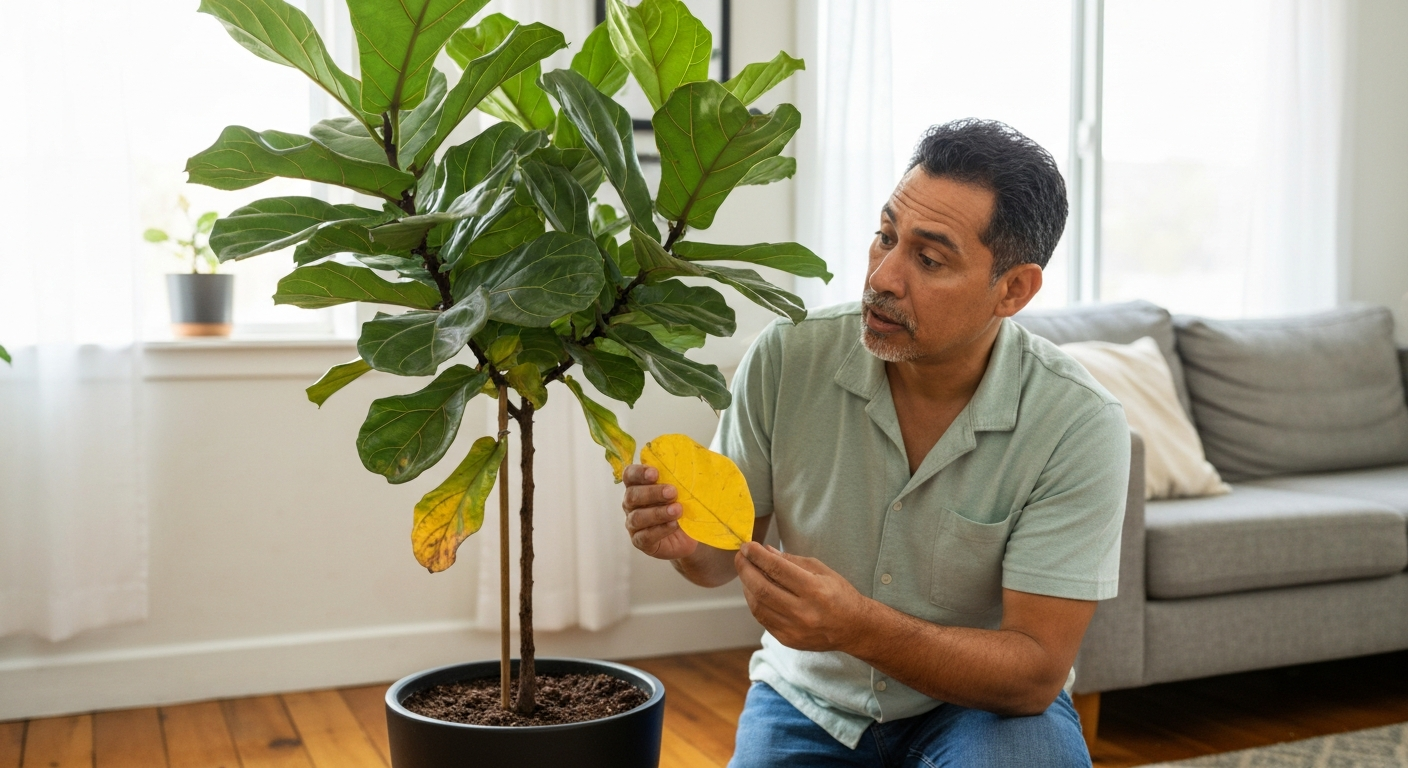

Fig tree leaves turn yellow most commonly because of overwatering, underwatering, or natural seasonal leaf drop — but nutrient deficiencies, pests, temperature stress, and root problems can also trigger yellowing depending on the pattern and timing.
Yellow leaves on your fig tree are its way of telling you something is off. The good news: once you identify the specific cause from the leaf pattern and your care routine, most problems are straightforward to fix. Let's diagnose exactly what's happening with your fig and get it back to healthy, green growth.
| ✓Quick Fix |
What Actually Works for This, Fast A low-cost, no-commitment option to rule out before spending more on this problem. See on Amazon → |
Yellowing fig leaves fall into seven main categories: water issues (too much or too little), nutrient deficiencies, pest infestations, light and temperature stress, natural seasonal changes, root problems, and transplant shock.
Each cause produces a slightly different yellowing pattern. Understanding these patterns is the fastest way to pinpoint your fig's specific problem before it worsens.
| Cause | Yellowing Pattern | Other Signs |
|---|---|---|
| Overwatering | Lower leaves yellow first, may feel soft | Mushy stems, soil stays wet for days |
| Underwatering | Leaves yellow and curl at edges | Crispy leaf tips, soil pulls away from pot |
| Nitrogen deficiency | Older/lower leaves yellow uniformly | Stunted new growth, pale green overall |
| Iron deficiency | New leaves yellow with green veins | Affects youngest leaves first |
| Spider mites | Stippled yellow spots, webbing | Fine webs under leaves, tiny moving dots |
| Cold stress | Sudden yellowing after temperature drop | Leaves may blacken at edges |
| Natural leaf drop | Bottom leaves yellow in fall/winter | Plant otherwise healthy, seasonal timing |
Overwatering is the number one cause of yellow fig leaves — it suffocates roots, prevents nutrient uptake, and creates conditions for root rot.
Fig trees, especially the popular fiddle leaf fig (Ficus lyrata) and common edible fig (Ficus carica), evolved in environments with periods of dry soil. When roots sit in constantly wet soil, they can't absorb oxygen. This leads to root damage that shows up first as yellowing lower leaves.
Check for overwatering by sticking your finger 2 inches into the soil. If it feels wet or soggy and your fig's lower leaves are yellowing, you've likely been watering too frequently. Other signs include:
"Overwatering is one of the most common causes of houseplant death. Plants need oxygen at their roots, and waterlogged soil prevents this gas exchange." — University of Maryland Extension
The fix: Let the soil dry out until the top 2 inches feel dry before watering again. For potted figs, ensure your container has drainage holes. If root rot has set in (black, mushy roots when you unpot the plant), trim away damaged roots, repot in fresh soil, and cut back on watering frequency.
Yes — underwatered fig leaves turn yellow and develop crispy, brown edges because the plant can't move nutrients through its system without adequate moisture.
Underwatering produces a different yellowing pattern than overwatering. The leaves often curl inward to conserve moisture, edges turn brown and crispy, and the soil may pull away from the sides of the pot. Outdoor figs in hot weather or indoor figs near heating vents are especially prone to drying out.
To check for underwatering, feel the soil depth. If it's bone dry several inches down, your fig is thirsty. Lift the pot — an underwatered plant feels significantly lighter than a well-watered one.
The fix: Water thoroughly until it drains from the bottom of the pot. For severely dried-out soil that repels water, soak the entire pot in a basin for 15-30 minutes to rehydrate the root ball. Going forward, water when the top 1-2 inches of soil feel dry. Mulching around outdoor figs helps retain soil moisture during hot spells.
| ✓Our Pick |
Moisture meter and watering tools for indoor plants Trusted by professionals and everyday users alike — a smart investment that pays for itself. See on Amazon → |
Nutrient deficiencies cause distinctive yellowing patterns — nitrogen deficiency yellows older leaves first, while iron deficiency affects new growth with yellow leaves and green veins.
Fig trees are moderate feeders, but potted figs and figs in poor soil can run short on essential nutrients. The pattern of yellowing tells you which nutrient is lacking:
Nitrogen is mobile in the plant, meaning the fig will pull it from older leaves to feed new growth when supplies run low. This causes lower and older leaves to turn uniformly pale yellow-green while newer leaves stay relatively healthy. Overall growth slows noticeably.
The fix: Apply a balanced fertilizer (like 10-10-10) according to package directions. For organic options, well-composted manure or fish emulsion works well. Potted figs benefit from monthly feeding during the growing season (spring through early fall).
Iron deficiency shows up as interveinal chlorosis — the tissue between leaf veins turns yellow while the veins themselves stay green. This affects the newest leaves first because iron doesn't move easily within the plant.
Iron chlorosis often happens in alkaline soil (pH above 7), which locks up iron even when it's present. Container figs watered with hard tap water can develop this problem over time.
The fix: Test your soil pH. If it's above 7, apply chelated iron according to package directions or acidify the soil with sulfur. For a quick fix, foliar spray with chelated iron can green up leaves within weeks.
"Interveinal chlorosis on young leaves is a classic symptom of iron deficiency. Soil pH strongly influences iron availability to plants." — University of Florida IFAS Extension
Also Read: Why Is My Lavender Dying? 7 Causes & How to Save It
Spider mites, scale insects, and mealybugs feed on fig leaf sap, causing stippled yellow spots that spread if untreated.
Pests often go unnoticed until significant damage appears. Spider mites are the most common culprit — they're nearly invisible to the naked eye but leave telltale fine webbing on leaf undersides. Their feeding creates tiny yellow dots that eventually merge into larger yellowed areas.
Check for pests by:
- Looking closely at leaf undersides with a magnifying glass
- Holding a white paper under leaves and tapping — mites appear as tiny moving specks
- Checking stems and leaf joints for cottony white masses (mealybugs) or brown bumps (scale)
The fix: For light infestations, spray leaves (especially undersides) with a strong stream of water to dislodge pests. For heavier infestations, apply insecticidal soap or neem oil every 7-10 days until pests are gone. Isolate affected plants from healthy ones to prevent spread.
Fig trees are sensitive to cold and sudden temperature swings — exposure below 50°F (10°C) triggers rapid yellowing and leaf drop, especially in tropical varieties like fiddle leaf figs.
Indoor figs placed near cold windows, drafty doors, or air conditioning vents can develop yellow leaves from temperature stress. Outdoor figs in USDA zones below their hardiness range (generally zones 7-11 for common figs) experience cold damage during unexpected freezes.
Signs of temperature stress include:
- Sudden yellowing after a cold snap or AC exposure
- Yellowing concentrated on the side facing the cold source
- Leaf edges turning brown or black along with yellowing
The fix: Move indoor figs away from drafts, vents, and cold windows. Maintain temperatures between 60-75°F (15-24°C) for tropical fig varieties. For outdoor figs, mulch heavily around the roots before winter and consider wrapping the tree in burlap in borderline zones.
Also Read: Why Is My Bedroom So Cold? 7 Causes & Easy Fixes
Some yellowing and leaf drop is completely normal — deciduous figs shed leaves in fall, and all fig types drop older lower leaves as the plant grows taller.
Before panicking, consider the timing and pattern:
The fix: For natural leaf drop, no action is needed. Continue normal care and the plant will recover. Remove fallen leaves to prevent fungal issues.
Root rot, root-bound conditions, and damaged roots prevent nutrient uptake, causing yellowing that spreads from the bottom of the plant upward.
Root problems are tricky because you can't see them without unpotting the plant. However, certain signs point to root issues:
Carefully slide the plant from its pot. Healthy fig roots are white or tan and firm. Root rot shows as brown or black roots that feel mushy and may smell sour. A root-bound plant has roots that wrap tightly in circles with little visible soil.
The fix: For root rot, trim all damaged roots with clean scissors, rinse remaining roots, and repot in fresh well-draining soil. For root-bound plants, gently loosen the root ball, trim circling roots, and repot into a container 2-3 inches larger in diameter.
Repotted or newly transplanted figs commonly develop yellow leaves as their roots recover — this usually resolves within 2-4 weeks with proper care.
Transplant shock happens because disturbed roots temporarily can't absorb water and nutrients efficiently. Symptoms include wilting, yellowing leaves, and slowed growth.
The fix: Keep recently transplanted figs in indirect light (not full sun) for 1-2 weeks. Water when the top inch of soil is dry — not more, not less. Avoid fertilizing for at least a month after transplanting, as salts can stress recovering roots. Most figs bounce back on their own with patience.
Also Read: Why Is My Peace Lily Leaves Turning Black? 7 Causes & Fixes
Use this diagnostic flow to narrow down the cause quickly:
Most yellow fig leaves come down to watering issues. Start there, and you'll solve the majority of problems.
Yellow fig leaves almost always trace back to water stress, nutrient issues, or environmental factors. Check your soil moisture first — overwatering and underwatering are the most common culprits. If water isn't the issue, look at the yellowing pattern to identify nutrient deficiencies or pests. Some yellowing, especially on lower leaves or during fall, is completely normal and nothing to worry about. With the right diagnosis, most figs recover fully within a few weeks of corrected care.
Fiddle leaf figs drop yellow leaves most often due to overwatering or sudden environmental changes. These tropical figs are especially sensitive to soggy soil, cold drafts, and changes in light. Check that your soil drains well and dries out between waterings, keep temperatures above 60°F, and avoid moving the plant frequently. Leaf drop within a few weeks of bringing a new fiddle leaf fig home is normal acclimation.
Lower leaves yellowing while upper growth stays healthy usually indicates either nitrogen deficiency or natural leaf shedding. If your fig hasn't been fertilized recently, feed it with a balanced fertilizer. If the plant is otherwise thriving and growing well, it may simply be dropping older leaves to support new growth — this is normal and not a cause for concern.
Yes, but it typically causes bleached, faded, or scorched patches rather than uniform yellowing. Figs need bright light but can burn in intense direct afternoon sun, especially if moved suddenly from lower light conditions. Yellowing with brown crispy patches on sun-facing leaves suggests sun stress. Move the plant to bright indirect light or filter harsh afternoon sun.
Yes, removing yellow leaves is generally helpful. Fully yellowed leaves won't recover and can attract pests or harbor fungal issues. Use clean scissors to snip them off at the base. However, address the underlying cause first — continuing to remove yellowing leaves without fixing the problem won't save your plant.
Water when the top 1-2 inches of soil feel dry, typically every 7-10 days for indoor figs, though this varies by season, pot size, and humidity. Rather than watering on a strict schedule, check the soil before each watering. Figs prefer to dry out slightly between waterings — consistent moisture without sogginess keeps leaves green and healthy.
Reviewed and Updated on June 20, 2026 by George Wright