
Technology
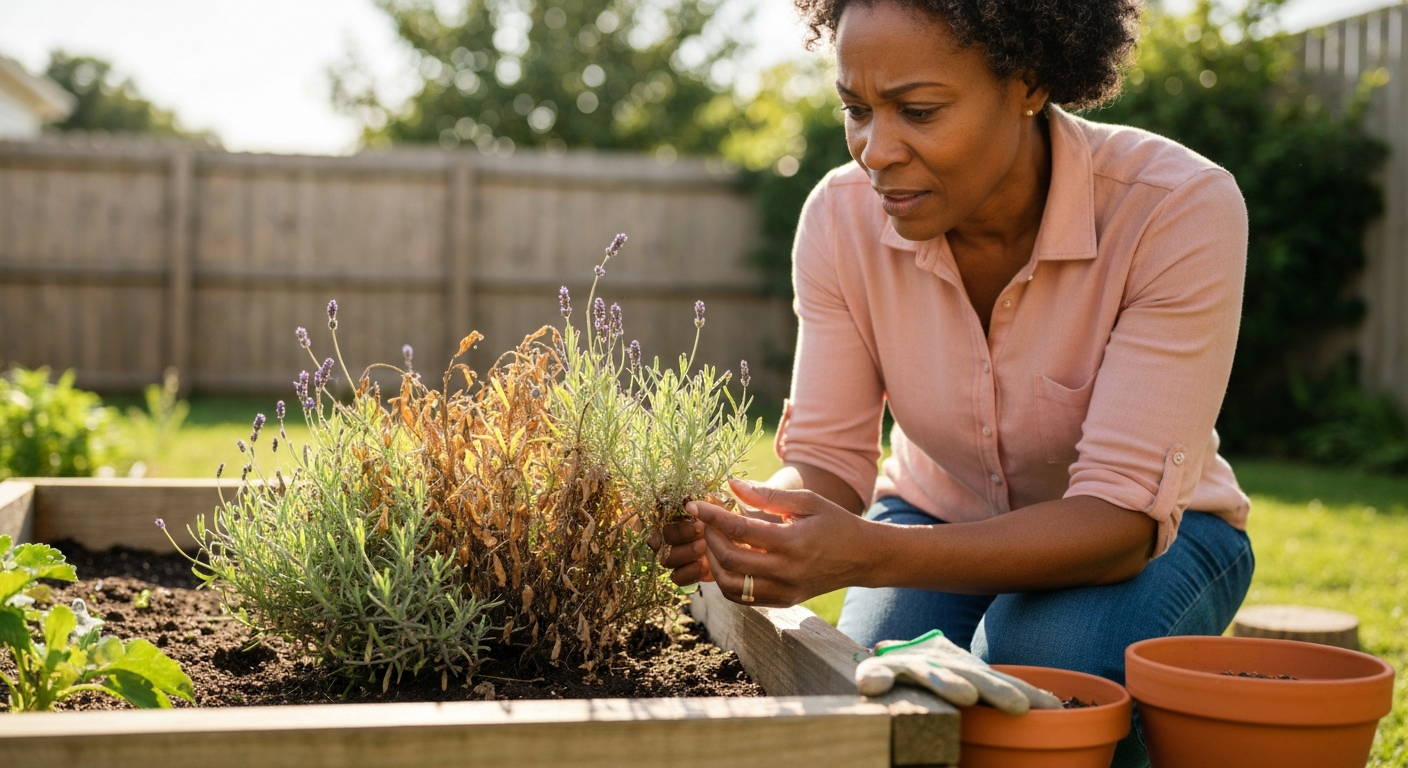

Lavender typically dies from overwatering, poor drainage, or soil that's too rich and acidic—conditions that mimic the plant's Mediterranean homeland are essential for survival.
Lavender is one of the most beloved garden plants, yet it's also one of the most commonly killed. The irony? Gardeners usually love their lavender to death with too much water, fertilizer, and attention. Understanding what lavender actually needs—and what slowly kills it—can transform your struggling plant into a thriving, fragrant shrub that lives for 15 years or more.
| ✓Quick Fix |
The First Thing Most People Try A low-cost, no-commitment option to rule out before spending more on this problem. See on Amazon → |
Your lavender is most likely dying from one of seven causes: overwatering, poor drainage, wrong soil type, humidity damage, incorrect pruning, winter cold, or root rot.
Each of these problems produces distinct warning signs. Knowing which symptoms match which cause lets you diagnose your plant quickly and take corrective action before it's too late.
| Symptom | Most Likely Cause | Urgency |
|---|---|---|
| Brown, drooping foliage | Overwatering or root rot | High |
| Yellow leaves at base | Overwatering or nitrogen excess | Medium |
| Leggy, woody growth | Lack of pruning | Low |
| Black stems near soil | Root rot or fungal disease | Critical |
| Brown tips only | Winter damage or underwatering | Medium |
| Entire plant turning gray-brown | Drainage failure | High |
| Wilting despite moist soil | Root rot | Critical |
Overwatering is the number one killer of lavender plants—their Mediterranean roots evolved for drought, not moisture.
Lavender originates from the rocky, sun-baked hillsides of southern France, Spain, and Italy where summer droughts are normal. The plant developed deep taproots to find water far underground and waxy, silvery leaves to minimize moisture loss. When you water lavender like a typical garden perennial, you're essentially drowning a desert plant.
Signs of overwatered lavender include yellowing lower leaves, a generally droopy appearance (even though the soil is moist), and a rotting smell near the base. The foliage may turn from silver-green to a sickly yellow-green before progressing to brown.
"Lavender requires infrequent watering once established. Overwatering is the most common cause of lavender plant death." — University of California Agriculture and Natural Resources
The fix is straightforward but requires patience. Stop watering immediately and let the soil dry out completely. Established lavender in the ground typically needs water only every two to three weeks during dry spells, and potted lavender needs watering only when the top two inches of soil are bone dry.
Also Read: Why Is My Peace Lily Leaves Turning Black? 7 Causes & Fixes
Lavender turns brown and dies in waterlogged soil because the roots suffocate without oxygen—drainage matters more than how often you water.
You can water perfectly, but if your soil holds moisture like a sponge, your lavender will still develop root problems. Clay-heavy soils, low spots in the garden, and containers without adequate drainage holes all create conditions where water sits around the roots for too long.
Test your drainage by digging a hole 12 inches deep, filling it with water, and timing how long it takes to drain. If water remains after 30 minutes, your soil drains too slowly for lavender.
Fixes for poor drainage include:
Lavender dies in rich, acidic, or organic-heavy soil—the plant thrives in poor, alkaline, rocky conditions that would stress most garden plants.
This is where well-meaning gardeners go wrong. Adding compost, fertilizer, or nutrient-rich potting mix seems logical, but lavender interprets these as hostile growing conditions. In its native habitat, lavender grows in thin, chalky, limestone soil with minimal organic matter.
The ideal soil pH for lavender falls between 6.5 and 8.0 (neutral to alkaline). Most garden soils in the eastern United States lean acidic, which causes nutrient uptake problems and slow decline. Yellowing leaves can signal soil that's too acidic or too rich in nitrogen.
"Lavender prefers low to moderately fertile soils. High fertility, especially high nitrogen, can result in excessive foliage growth and reduced flowering." — North Carolina State Extension
To fix soil problems, test your pH with an inexpensive kit and add garden lime if readings fall below 6.5. For container lavender, use a mix of regular potting soil, coarse sand, and perlite in equal parts—skip the moisture-retaining additives.
Yellow lavender leaves typically indicate overwatering, nitrogen excess, or root rot beginning to take hold.
Yellow foliage is your plant's early warning system. When lower leaves turn yellow while upper growth stays green, the problem is usually related to water or soil conditions. When yellowing spreads randomly throughout the plant, suspect root rot or disease.
Nitrogen toxicity causes rapid, soft green growth followed by yellowing as the plant struggles to process excess nutrients. This often happens when lavender is planted near a lawn that receives regular fertilizer applications or in beds amended with fresh manure or high-nitrogen compost.
If your lavender is turning yellow, check these factors:
Also Read: Why Is My Bonsai Turning Brown? 7 Causes & How to Save It
High humidity promotes fungal diseases that kill lavender—the plant needs excellent air circulation to stay healthy.
Lavender evolved in breezy, dry Mediterranean climates. In humid regions like the southeastern United States or Pacific Northwest, fungal diseases become a constant threat. Symptoms include blackened stems, spotted leaves, and sudden wilting of entire branches.
Humidity management strategies include:
Lavender that isn't pruned annually becomes woody and unproductive, eventually dying from the center outward.
Unlike many shrubs, lavender doesn't regenerate from old wood. If you cut into the brown, woody stems at the base, new growth won't emerge—the plant will simply have a permanent bald spot. This means annual pruning is essential to keep the plant compact and vigorous.
The right time to prune is immediately after flowering, typically in late summer. Cut back about one-third of the plant's height, being careful to leave several inches of green growth above the woody base. A second light trim in early spring can shape plants that have sprawled over winter.
Never prune lavender in fall. New growth stimulated by late-season pruning won't harden off before frost, making the entire plant more vulnerable to winter damage.
Lavender dies in winter from cold damage to roots, ice accumulation on foliage, or freeze-thaw cycles that heave plants from the soil.
English lavender (Lavandula angustifolia) is the hardiest type, surviving in USDA zones 5 through 9. French and Spanish lavenders tolerate only zones 7 through 9, dying at temperatures below about 10°F. Even cold-hardy varieties can succumb when winter conditions include wet soil, heavy ice, or poor drainage.
Winter damage shows up as brown tips in spring, dieback of entire branches, or complete plant death. The key to winter survival in cold climates is ensuring perfect drainage going into the cold season—wet soil around roots in winter is far more lethal than cold air temperatures alone.
Protect lavender in winter by:
To save dying lavender, first identify the cause, then address drainage and watering before taking any other action.
If your lavender is still showing some green growth, there's hope. The recovery process depends on correctly diagnosing the problem and making environmental changes rather than adding treatments.
For root rot cases (black stems, wilting despite moist soil, rotting smell), your options are limited. Try digging up the plant, cutting away all blackened roots, and replanting in fresh, fast-draining soil in a new location. Success rates are low, but it's worth attempting before discarding the plant entirely.
For overwatering or drainage problems without severe root rot:
For winter damage, wait until late spring to assess—lavender often looks dead in March but pushes new growth in April. Prune only clearly dead wood, leaving anything that might still be alive.
| ✓Our Pick |
Soil moisture meter and drainage tools for container gardening Save yourself the frustration — a proven solution with consistently positive feedback from real buyers. See on Amazon → |
Lavender dies most often from overwatering, poor drainage, and overly rich soil—the exact opposite of what most gardeners instinctively provide. This Mediterranean native needs neglect to thrive: infrequent watering, rocky or sandy soil, full sun, and excellent air circulation. Yellow leaves signal water or nutrient problems developing, while brown foliage indicates the damage has progressed further. Saving a struggling plant requires fixing environmental conditions first, then waiting patiently for recovery.
Brown stems at the base of lavender almost always indicate root rot from overwatering or poor drainage. The fungal pathogens that cause root rot work from the bottom up, killing roots first, then progressing into stems. If the brown sections feel soft or mushy rather than simply dry, root rot has likely taken hold. Dig up the plant to inspect roots—healthy roots are white or tan, while rotted roots are brown, black, or slimy.
Lavender that appears completely dead may still recover if any live tissue remains. Scratch the bark on several stems with your fingernail—if you see green beneath the surface, the plant is alive. Even mostly-dead lavender can regenerate from a single surviving branch. However, if all stems show only brown beneath the bark and roots are mushy, the plant is beyond saving and should be replaced.
Established lavender in the ground needs water only every two to three weeks during dry periods, and many gardeners find their plants thrive with no supplemental watering at all. Container lavender dries out faster and may need weekly watering in summer, but always check that the top two inches of soil are completely dry before adding water. When in doubt, don't water—lavender recovers from drought far better than from overwatering.
Potted lavender fails most often due to containers without adequate drainage, moisture-retaining potting mix, and pots that are too large (holding too much wet soil around roots). Use terracotta pots with multiple drainage holes, mix regular potting soil with coarse sand and perlite, and choose containers only slightly larger than the root ball. Terracotta breathes better than plastic or glazed ceramic, allowing soil to dry faster.
Lavender performs best with no fertilizer at all. Adding nutrients—especially nitrogen—produces lush, floppy growth with fewer flowers and increased susceptibility to disease. If your lavender looks healthy and blooms well, fertilizer will only cause problems. The only exception is correcting severely alkaline or depleted soil, in which case a light application of bone meal in early spring provides phosphorus without nitrogen overload.
Reviewed and Updated on June 20, 2026 by George Wright