Sleep
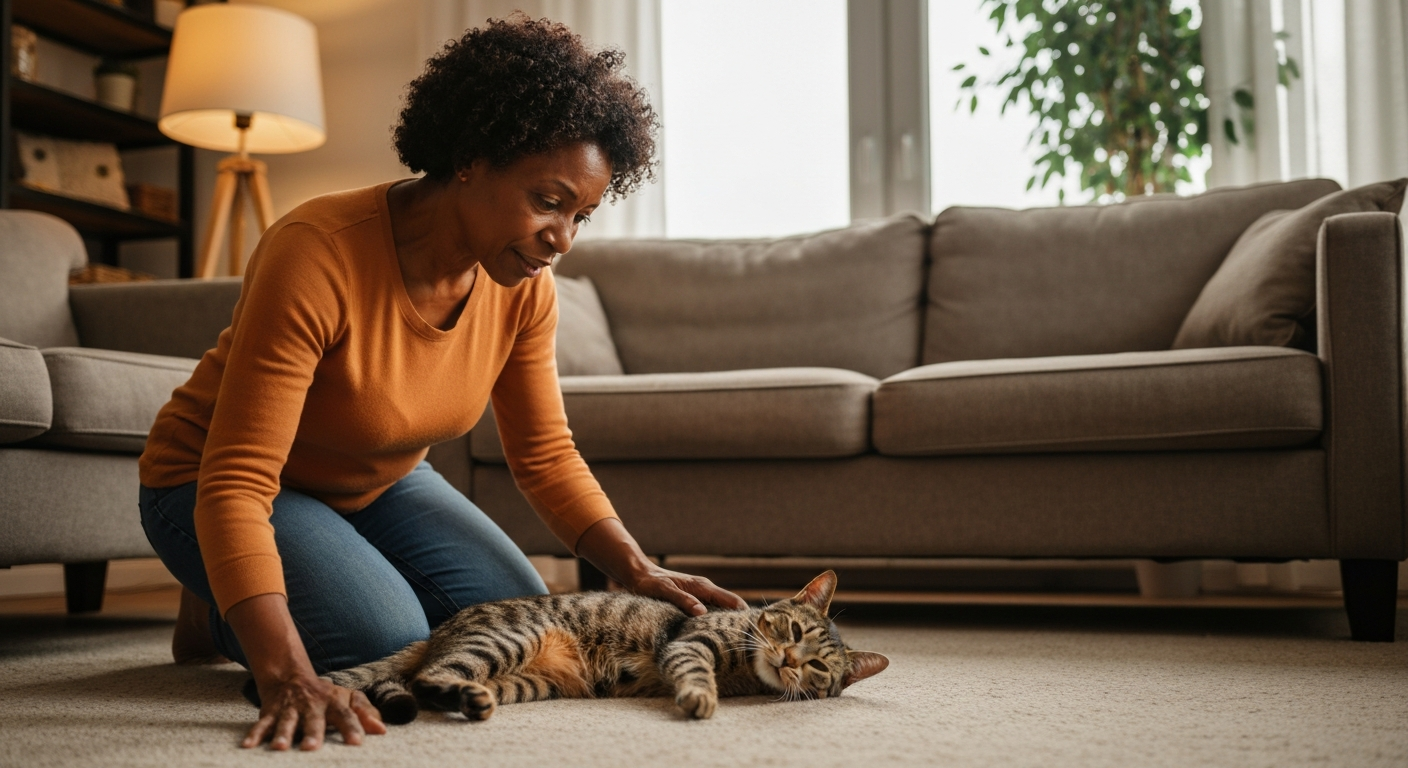

Your cat is likely breathing heavy because of overheating, physical exertion, stress, or an underlying health condition such as respiratory infection, asthma, heart disease, or fluid in the chest — and while brief panting after intense play is usually normal, persistent rapid breathing at rest (over 30 breaths per minute) or open-mouth breathing that doesn't resolve within a few minutes is a veterinary emergency.
| ✓Our Pick |
$3,000 emergency vet fund with 24/7 online vet access Great value for money — this product tackles the root cause rather than just masking the symptoms. Learn More → |
Cats are obligate nose breathers, meaning they're designed to breathe through their noses almost exclusively. When your cat starts breathing rapidly, panting with an open mouth, or making loud huffing sounds, it's a significant departure from normal — and your concern is warranted. Unlike dogs, who pant routinely to cool down, cats only resort to mouth breathing when something is genuinely wrong or they've pushed themselves to a physical limit.
A healthy cat at rest takes 15 to 30 breaths per minute with minimal visible chest or belly movement, and you should barely notice the breathing at all.
To count your cat's respiratory rate, watch the chest rise and fall while your cat is relaxed or sleeping. Each rise-and-fall cycle counts as one breath. Set a timer for 30 seconds, count the breaths, then multiply by two.
| Breathing Pattern | Rate (Breaths/Min) | What It Means |
|---|---|---|
| Normal resting | 15–30 | Healthy, no intervention needed |
| Elevated but temporary | 30–40 | Could be heat, mild stress, or post-play — monitor |
| Rapid at rest | Over 40 | Likely abnormal — call your vet |
| Open-mouth panting | Any rate | Always abnormal in cats unless brief post-exercise |
If your cat's breathing rate consistently exceeds 30 breaths per minute while resting, or if you notice open-mouth breathing, loud respiratory sounds, or visible effort (belly heaving, neck extending), you're dealing with something that needs attention.
Brief panting after intense play — lasting under 5 minutes — can be normal, especially in kittens and young cats, but it should resolve quickly once they stop exerting themselves.
Cats don't have efficient cooling systems. They have sweat glands only on their paw pads, so when they overheat during vigorous activity, they may resort to open-mouth panting to release excess heat. You might notice your cat panting with their tongue out after chasing a feather toy or sprinting through the house.
This type of panting should meet all three criteria:
- It happens immediately after strenuous activity
- The cat returns to normal breathing within 3 to 5 minutes
- There are no other symptoms like lethargy, coughing, or blue-tinged gums
If your cat pants for longer than 5 minutes after stopping play, pants during light activity, or pants at rest, something else is going on.
"Panting in cats is not a normal finding. If you notice your cat panting, it's important to assess the situation and seek veterinary attention if the panting is prolonged or accompanied by other signs of distress." — Dr. Jennifer Coates, DVM at PetMD
Also Read: Why Is My Cat Sneezing Blood but Acting Normal? 7 Causes
Rapid breathing at rest — called tachypnea — usually signals pain, respiratory disease, heart problems, or oxygen deprivation, and it requires prompt veterinary evaluation.
When cats breathe fast while doing nothing, their body is working harder than it should to get enough oxygen. This is fundamentally different from post-exercise panting.
Yes. Anxiety, fear, and stress trigger a sympathetic nervous system response (the "fight or flight" mechanism) that increases heart rate and breathing rate. Common stressors include car rides, new pets in the home, loud noises, and unfamiliar environments.
Stress-related rapid breathing typically:
- Occurs alongside other stress signs like dilated pupils, flattened ears, hiding, or aggression
- Resolves once the stressor is removed
- Doesn't happen repeatedly at rest without an obvious trigger
Absolutely. Cats are susceptible to heat stress, especially brachycephalic breeds like Persians and Himalayans, overweight cats, and cats with thick coats. In hot environments or during summer months, your cat may pant or breathe heavily to dissipate heat.
Signs of overheating include:
- Panting with tongue extended
- Drooling
- Bright red gums
- Restlessness followed by lethargy
- Body temperature above 104°F
Move your cat to a cool area, offer water, and contact your vet if symptoms don't improve within 10 to 15 minutes.
Cats hide pain remarkably well, but increased respiratory rate is one of the few consistent indicators. A cat in pain may breathe faster, hunch their posture, avoid being touched, and become withdrawn. Abdominal pain, injuries, urinary blockages, and dental disease can all manifest as rapid breathing.
If your cat's labored breathing persists beyond a few minutes or occurs at rest, one of these conditions is likely responsible — and most require veterinary diagnosis and treatment.
Feline asthma affects approximately 1% to 5% of cats, causing chronic inflammation of the airways. During an asthma attack, cats wheeze, cough, huff, and may breathe with visible effort. The belly often heaves as the cat struggles to expel air.
Triggers include dust, pollen, cigarette smoke, scented litter, and household aerosols. Treatment typically involves bronchodilators and corticosteroids — often delivered via a specially designed cat inhaler.
Upper respiratory infections caused by feline herpesvirus, calicivirus, or bacteria like Bordetella are extremely common, especially in sheltered or multi-cat environments. Symptoms include sneezing, nasal discharge, eye discharge, congestion, and noisy or labored breathing.
Severe infections can progress to pneumonia, which causes more pronounced respiratory distress with open-mouth breathing, fever, and lethargy.
Hypertrophic cardiomyopathy (HCM) is the most common heart disease in cats. It causes the heart muscle to thicken, reducing the heart's efficiency. As the condition progresses, fluid can accumulate in or around the lungs (pulmonary edema or pleural effusion), making breathing difficult.
Signs of heart disease in cats include:
- Rapid breathing at rest
- Open-mouth breathing
- Reluctance to exercise
- Weakness or collapse
- Sudden hind limb paralysis (a medical emergency called saddle thrombus)
"Cats with heart disease often show no symptoms until the condition is advanced. Rapid breathing at rest, especially over 40 breaths per minute, can be an early warning sign of congestive heart failure." — Dr. Bruce Kornreich at Cornell Feline Health Center
Pleural effusion — fluid accumulation in the chest cavity surrounding the lungs — prevents the lungs from fully expanding. Cats with this condition breathe rapidly and shallowly, often with their mouths open and necks extended.
Causes include heart disease, cancer, infections (pyothorax), chylothorax, and trauma. This is a medical emergency requiring immediate drainage of the fluid.
When cats lose red blood cells — due to parasites, bleeding, immune-mediated disease, or chronic illness — there aren't enough cells to carry oxygen. The body compensates by increasing the breathing rate.
Signs of anemia include pale gums, weakness, rapid breathing, and increased heart rate. Severe flea infestations can cause life-threatening anemia in kittens.
Overweight cats have to work harder to breathe. Excess fat around the chest and abdomen restricts lung expansion. Obese cats may breathe heavily during minimal activity or even at rest.
If your cat is overweight and breathing heavily, weight management is essential — but have your vet rule out underlying heart or respiratory disease first.
| ✓Our Pick | ||
 | ||
Premium science-backed cat food and supplements Backed by strong customer feedback — the most recommended solution in forums and Q&A communities.
|
Foreign objects, polyps, and tumors in the nasal passages, throat, or airways can physically obstruct airflow. Cats may make loud snoring or stridor sounds, breathe through their mouths, or struggle to get enough air.
Older cats are at higher risk for tumors affecting the respiratory system.
Seek emergency veterinary care immediately if your cat shows any of these signs — they indicate potentially life-threatening oxygen deprivation or cardiovascular collapse.
| 🐾Find a Vet |
Find a specialist vet near you VetClinic.info is a free directory of board-certified specialist vets across the US — find an orthopedic surgeon, oncologist, neurologist, or emergency clinic near you in seconds. Find Near You → |
Call your vet or emergency clinic right away if you observe:
- Open-mouth breathing that doesn't resolve within 5 minutes
- Blue, purple, or gray tongue or gums (cyanosis)
- Breathing with neck extended and elbows out
- Collapse or extreme weakness
- Breathing rate over 50 breaths per minute at rest
- Sudden onset of severe respiratory distress
- Labored breathing combined with hind limb weakness or paralysis
Do not attempt to give your cat food or water if they're in respiratory distress. Keep them calm, minimize handling, and transport them to the vet as quickly and quietly as possible.
Also Read: Why Is My Cat's Belly Hard? 7 Causes & When to Worry
Your vet will use a combination of physical examination, imaging, and blood work to determine why your cat is breathing abnormally.
| Diagnostic Tool | What It Reveals |
|---|---|
| Physical exam & auscultation | Heart murmurs, lung sounds, airway obstruction |
| Chest X-rays | Heart size, lung patterns, fluid, masses |
| Blood tests | Infection, anemia, organ function |
| ProBNP test | Heart disease markers |
| Echocardiogram (ultrasound) | Heart structure and function |
| Thoracentesis | Analysis of chest fluid if present |
| Bronchoscopy | Direct visualization of airways |
The diagnostic approach depends on your cat's presentation. A cat in severe distress may need stabilization with oxygen before extensive testing.
Here's a step-by-step approach to assess the situation and decide whether your cat needs immediate care.
First, stay calm — your stress can worsen your cat's anxiety. Then work through these steps:
Never assume heavy breathing will "sort itself out." Cats deteriorate quickly once respiratory distress sets in.
Heavy breathing in cats is almost always significant — cats are designed to breathe quietly through their noses, so panting, rapid breathing, or mouth breathing indicates heat stress, exertion, fear, or a medical problem requiring attention. Brief panting after intense play can be normal, but any open-mouth breathing at rest, respiratory rate over 40 breaths per minute while relaxed, or breathing accompanied by lethargy, coughing, or color changes in the gums warrants immediate veterinary evaluation. Heart disease, asthma, respiratory infections, and fluid in the chest are among the most common causes, and early diagnosis dramatically improves outcomes.
Also Read: Why Is My Cat Squinting Both Eyes? 7 Causes & When to Worry
Cats can have elevated respiratory rates due to early-stage heart disease, mild respiratory infections, low-grade pain, or chronic conditions before showing obvious illness. If your cat's breathing rate at rest is consistently over 30 breaths per minute — even without other symptoms — schedule a vet visit. Early detection of conditions like hypertrophic cardiomyopathy can significantly extend your cat's life.
Huffing sounds in cats often indicate airway narrowing, nasal congestion, or irritation. Upper respiratory infections, nasal polyps, allergies, or early asthma can all cause huffing. If it's accompanied by sneezing or nasal discharge, infection is likely. If it occurs during exertion with a wheeze, asthma is possible. Either way, persistent huffing deserves a vet check.
Post-play panting with the tongue visible is your cat's way of cooling down after intense exertion — cats lack efficient cooling mechanisms, so they resort to panting when overheated. This is normal only if it lasts under 5 minutes and your cat quickly returns to nose-breathing at rest. If panting persists longer, occurs during light activity, or happens without exercise, it's abnormal.
Loud breathing sounds like snoring, wheezing, or stridor (a high-pitched sound) indicate partial airway obstruction or inflammation. Causes include upper respiratory infections, nasal polyps, obesity, brachycephalic anatomy (flat-faced breeds), or masses in the airway. If your cat suddenly starts breathing loudly at rest, or if the sound is accompanied by visible effort, contact your vet.
Heaving motions with a tucked abdomen and extended neck can indicate nausea and impending vomiting, but they can also be a sign of asthma attacks or attempts to clear airway obstruction. If your cat heaves repeatedly without producing anything — especially if accompanied by wheezing or coughing — asthma or a hairball lodged in the airway may be the cause. Repeated unproductive heaving warrants veterinary evaluation.
Reviewed and Updated on June 16, 2026 by George Wright