DIY
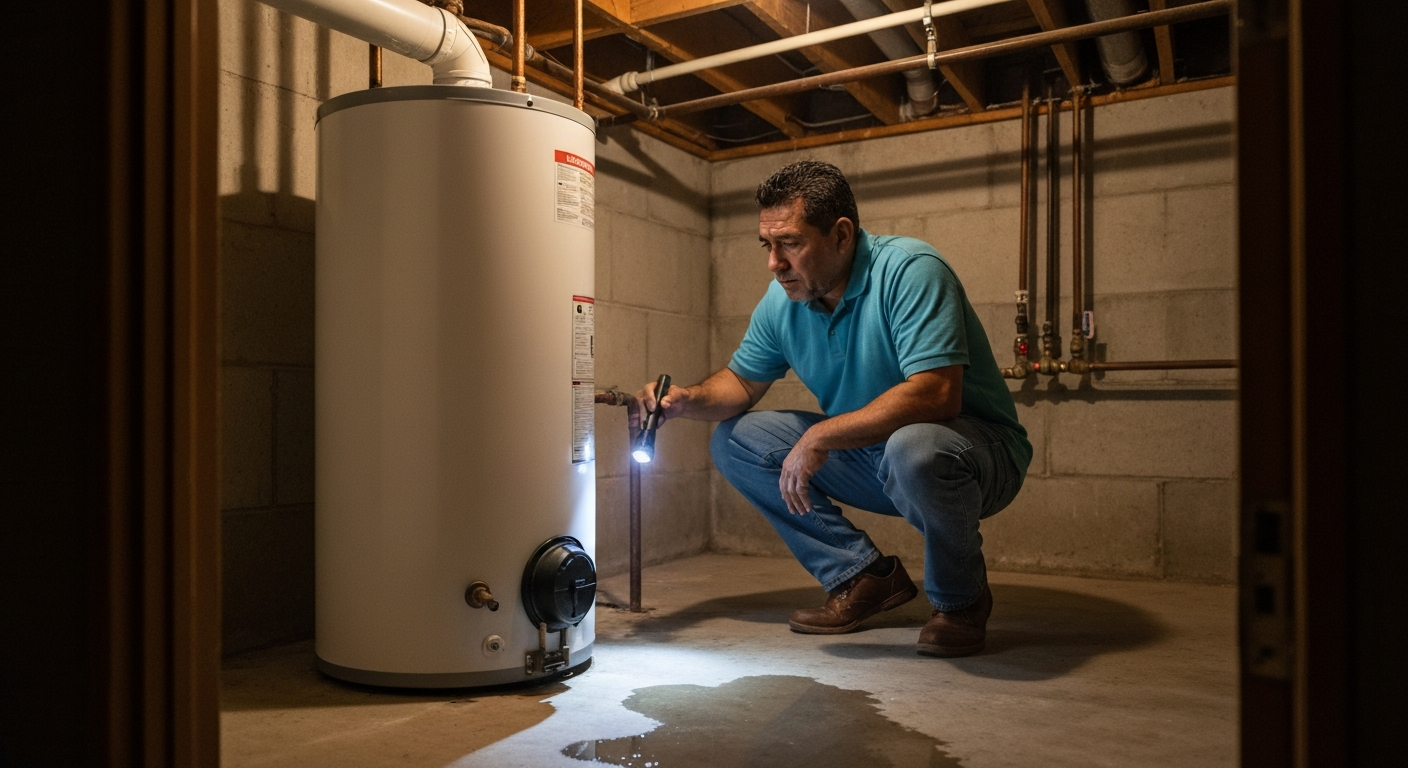

Your water heater is leaking because one of seven common failure points has broken down — the pressure relief valve is releasing excess pressure, inlet/outlet connections have loosened, the drain valve is faulty, internal corrosion has eaten through the tank, the heating element gasket has failed, condensation is forming on the exterior, or the tank itself has cracked from age or sediment buildup.
| ✓Our Pick |
Water heater drain valve and maintenance kit No special skills required — straightforward to use and most orders ship quickly. See on Amazon → |
A leaking water heater demands immediate attention. Even a small drip can waste hundreds of gallons per month, spike your utility bills, and cause structural water damage to floors, walls, and foundations. The good news: most leaks originate from serviceable components you can diagnose yourself in under ten minutes. The key is locating exactly where the water is coming from before deciding whether this is a quick fix or a tank replacement situation.
Before attempting any repair, you need to identify the precise leak location — this determines whether you're looking at a $15 part replacement or a $1,500 tank swap.
Turn off the power to your water heater first. For electric units, flip the dedicated breaker. For gas units, turn the gas control valve to the "pilot" position. Then shut off the cold water inlet valve at the top of the tank.
Wipe the entire exterior of the tank dry with towels. Place paper towels or newspaper around the base and along all visible fittings. Wait 30 minutes to an hour, then inspect which areas show new moisture. This tells you the leak's origin point.
| Leak Location | Most Likely Cause | Repair Complexity |
|---|---|---|
| Top of tank near pipes | Loose inlet/outlet connections | Easy DIY |
| Side of tank (upper) | Temperature & pressure relief valve | Moderate DIY |
| Side of tank (lower) | Heating element gasket (electric) | Moderate DIY |
| Bottom drain valve | Faulty or partially open drain valve | Easy DIY |
| Underneath the tank | Internal tank corrosion or crack | Requires replacement |
| Exterior surface (no drips) | Condensation (not a true leak) | No repair needed |
The temperature and pressure (T&P) relief valve is a critical safety device — if it's leaking, it may be doing its job correctly by releasing dangerous excess pressure, or the valve itself may have failed.
The T&P valve sits on the side or top of your tank with a discharge pipe running downward. Its purpose is to open automatically if internal pressure exceeds 150 PSI or temperature exceeds 210°F. This prevents your water heater from becoming a pressure bomb.
If you see water dripping from this valve, check these conditions:
"The temperature-pressure relief valve is one of the most important safety devices on your water heater. It's designed to open and release water if the temperature or pressure inside the tank gets too high." — U.S. Department of Energy
Test the valve by lifting the lever briefly — water should discharge and stop when released. If it continues dripping afterward, the valve needs replacement.
Also Read: Why Is My Gas Bill Suddenly So High? 8 Causes & Fixes
Loose or corroded connections at the cold water inlet and hot water outlet are among the most common and easily fixable causes of water heater leaks.
These connections sit at the top of your tank. Over time, temperature cycling causes expansion and contraction that gradually loosens threaded fittings. Corrosion from water minerals accelerates the problem.
Inspect both connections visually. Look for:
- White or greenish mineral buildup around fittings
- Visible moisture or active dripping
- Rust-colored staining on pipes
Tightening usually requires an adjustable wrench or pipe wrench. Turn clockwise in quarter-turn increments — overtightening can crack fittings. If threads are corroded beyond repair, the nipples (short threaded pipes) connecting your plumbing to the tank can be replaced for under $10 each.
Dielectric unions — special fittings that prevent galvanic corrosion between dissimilar metals — should connect copper plumbing to steel tanks. If your heater lacks these, consider adding them during any repair.
A leaking drain valve at the bottom of the tank is a common problem that's usually solved by tightening or replacing this inexpensive component.
The drain valve is a spigot near the tank's base used for flushing sediment. Two issues cause leaks here:
To replace a drain valve, you'll need to drain the tank first. Attach a garden hose to the existing valve, run it to a floor drain or outside, and open the valve. Once empty, unscrew the old valve and apply Teflon tape to the threads of the new one before installing.
"Sediment buildup at the bottom of a water heater tank reduces efficiency and can accelerate corrosion. Annual draining and flushing helps extend tank life." — International Association of Certified Home Inspectors
On electric water heaters, a failed gasket around the heating element allows water to seep out from the side of the tank — this is repairable without replacing the entire unit.
Electric water heaters have one or two heating elements that screw into the tank through rubber or fiber gaskets. These gaskets deteriorate over time, especially in hard water areas.
Signs of a heating element gasket leak:
- Water seeping from the access panel area on the side of the tank
- Moisture around the hexagonal flange of the element
- Rust staining below the element location
Replacing the gasket requires draining the tank, removing the element with a heating element wrench, and installing a new gasket. Replacement gaskets cost under $5, and universal heating element kits with gaskets run $20–$40.
Important: Never remove a heating element without draining the tank first. The element sits below the water line, and removing it with a full tank floods your utility area.
If moisture appears on the outside of your tank but you can't find any dripping source, you're likely seeing condensation — not a leak — which occurs when cold incoming water meets warm humid air.
Condensation is most common:
- During initial installation
- After heavy hot water use that refills the tank with cold water
- In humid basements or utility rooms
- On poorly insulated tanks
The moisture typically appears on the lower portion of the tank and may drip onto the floor, mimicking a leak. The key distinction: condensation is temporary and evaporates once the tank heats up.
If condensation happens regularly, improve ventilation in the utility space or add a water heater blanket (insulation jacket) to reduce temperature differential on the tank surface. These blankets cost $20–$40 and can also reduce energy loss.
If water is pooling directly beneath the tank with no identifiable leak at valves, fittings, or elements, internal corrosion has likely created holes in the tank lining — this is not repairable and requires full replacement.
Standard tank water heaters last 8–12 years. Several factors shorten lifespan:
- Hard water accelerates sediment buildup and anode rod depletion
- High water pressure (above 80 PSI) stresses tank walls
- Infrequent maintenance allows corrosion to progress unchecked
- Water temperature set above 120°F increases mineral precipitation
The anode rod is a sacrificial metal rod inside your tank that attracts corrosive elements, protecting the tank walls. Once the anode rod is consumed (typically after 3–5 years), corrosion attacks the tank itself. By the time you see rust-colored water or bottom leaks, irreversible damage has occurred.
| Tank Age | Recommended Action |
|---|---|
| Under 6 years | Investigate and repair — likely a component failure |
| 6–10 years | Repair if possible, but budget for replacement |
| Over 10 years | Replacement often more cost-effective than major repair |
| Rust-colored water + leak | Replace immediately — tank integrity is compromised |
Also Read: Why Is My Sink Gurgling? 7 Causes & How to Fix It
Most water heater leaks can be fixed in under an hour with basic tools and inexpensive replacement parts — here's how to address each common failure point.
Annual maintenance dramatically extends water heater lifespan and prevents most leak scenarios before they start.
Maintenance checklist for 2026 and beyond:
- Flush the tank annually: Draining 2–3 gallons removes sediment before it causes damage
- Test the T&P valve yearly: Lift the lever to verify it releases and reseals properly
- Inspect the anode rod every 3 years: Replace when more than 50% depleted
- Check pipe connections: Tighten any loose fittings during your annual inspection
- Monitor water pressure: Install a pressure gauge; readings above 80 PSI need a pressure-reducing valve
- Set thermostat to 120°F: Reduces mineral precipitation, energy costs, and scalding risk
"Water heater maintenance is one of the most overlooked aspects of home care. A few minutes of annual attention can add years to the life of your unit." — This Old House
A leaking water heater typically traces back to one of seven causes: the pressure relief valve releasing excess pressure, loose inlet/outlet pipe connections, a faulty drain valve, a failed heating element gasket, condensation from temperature differences, internal tank corrosion, or a cracked tank from age and sediment buildup. Most leaks from valves, connections, and gaskets are DIY-repairable for under $30 in parts. However, water pooling beneath the tank with no identifiable external source indicates internal corrosion — this means the tank has failed and needs full replacement. Annual maintenance including flushing, anode rod inspection, and valve testing prevents most failures before they start.
Top leaks almost always originate from the cold water inlet or hot water outlet connections. Temperature cycling loosens fittings over time. Less commonly, a corroded anode rod port or T&P valve mounted on top can leak. Inspect all fittings, tighten with a wrench, and apply Teflon tape to any threads that continue seeping.
It depends on the leak source. Small drips from valves or fittings are generally safe to use temporarily while you arrange repairs. However, if the tank itself is leaking from internal corrosion, continued use risks catastrophic failure and water damage. Turn off power and water supply, and replace the unit promptly.
DIY repairs for valves, gaskets, and connections typically cost $10–$50 in parts. Professional plumber visits for the same repairs range from $150–$350 including labor. Full tank replacement runs $1,000–$2,000 for standard models including installation, while tankless units cost $2,000–$4,500 installed.
Signs of internal tank corrosion include rust-colored hot water, a metallic taste, visible rust on the exterior near seams, and water pooling beneath the tank without any identifiable valve or fitting leak. If your heater is over 8 years old and showing these signs, replacement is typically the only solution.
For heaters at or beyond their expected 10-year lifespan, replacement is usually more cost-effective than repair — especially if the leak involves anything beyond a simple valve swap. New models are significantly more energy-efficient, and the labor cost of repairs often approaches 30–50% of full replacement cost on older units.
Reviewed and Updated on May 6, 2026 by Adelinda Manna