
DIY
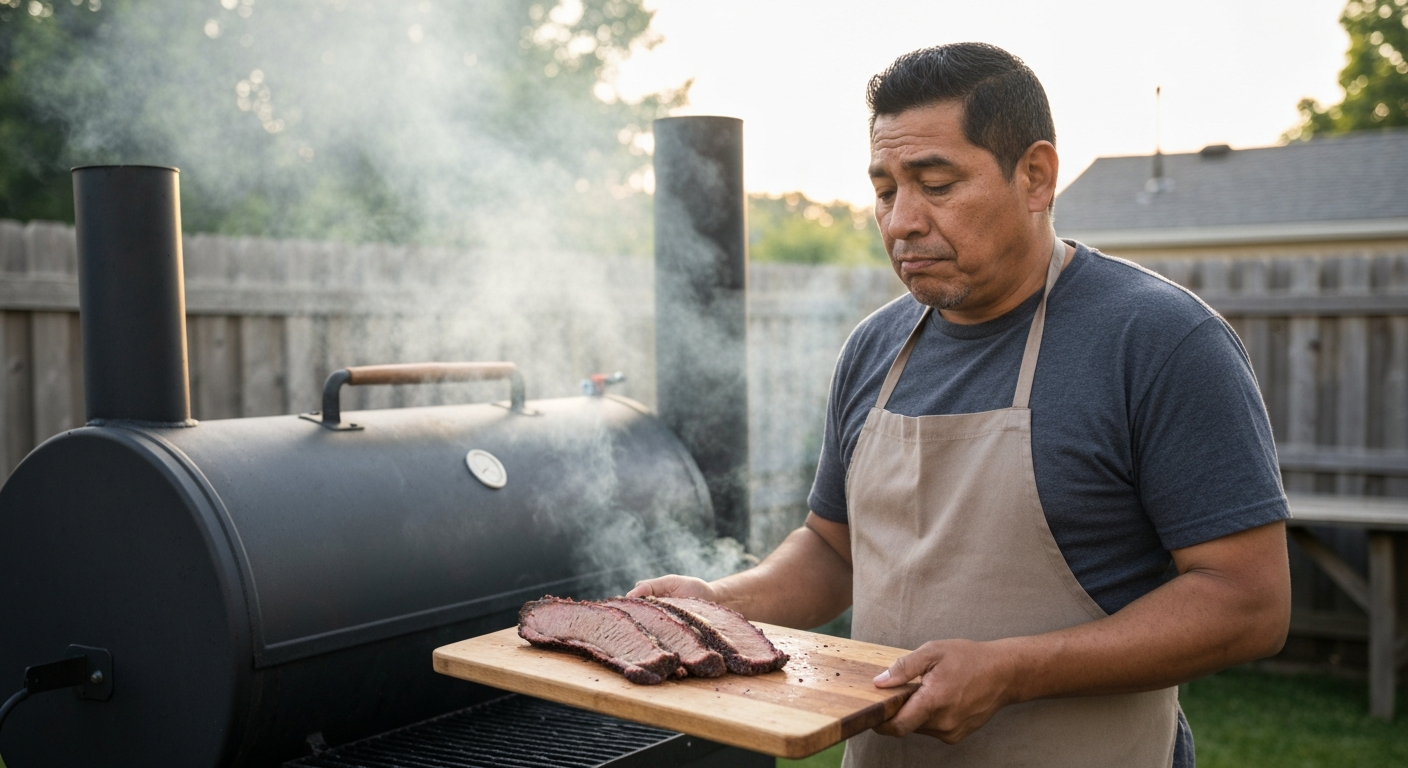

Your brisket is tough because the collagen inside the meat hasn't had enough time or heat to break down into gelatin — the process that transforms a chewy cut into tender, pull-apart perfection. Brisket comes from the chest muscles of the cow, which are loaded with connective tissue that requires low temperatures (around 225–275°F) and extended cooking times (often 10–14 hours) to dissolve properly. If you pulled it too early, cooked too hot, or skipped the rest, that collagen stays intact and fights back with every bite.
| ✓Our Pick |
Wireless meat thermometer for perfect brisket every time You'll wonder why you didn't try this sooner — practical, well-reviewed, and easy to get started. See on Amazon → |
Brisket contains more connective tissue than almost any other cut of beef, which is why it demands a completely different cooking approach.
The brisket muscle supports about 60% of a cow's body weight, meaning it's constantly working and building collagen fibers. This collagen is tough and chewy when raw or undercooked. However, when exposed to temperatures between 160°F and 205°F for extended periods, collagen undergoes a chemical transformation called hydrolysis — it converts into gelatin, which is what gives properly cooked brisket its moist, tender texture.
"Collagen begins to denature at around 160°F, but the conversion to gelatin happens most efficiently between 180°F and 205°F over several hours." — Dr. Greg Blonder, physicist and barbecue researcher at Boston University
This transformation isn't instant. Even at the right temperature, collagen needs time to break down completely. Rush the process, and you're left with a brisket that's technically "cooked" but still tough as leather.
The most common reason for tough brisket is removing it from the heat before the internal temperature reaches 195–205°F.
Many home cooks panic when the brisket hits the "stall" — a frustrating period around 150–170°F where the internal temperature plateaus for hours. The surface moisture evaporating from the meat creates a cooling effect, like sweat on skin. Impatient cooks often pull the brisket at this point, assuming it's done, but the collagen hasn't even begun to fully convert yet.
| Internal Temperature | What's Happening Inside |
|---|---|
| 130–140°F | Proteins start denaturing; meat is still very tough |
| 150–170°F | The stall begins; moisture evaporates, temperature plateaus |
| 180–190°F | Collagen starts converting to gelatin; texture improving |
| 195–205°F | Optimal tenderness; collagen fully rendered |
| 210°F+ | Risk of drying out; fat continues rendering |
If your brisket was tough, check whether you pulled it before reaching 195°F. Temperature alone doesn't guarantee tenderness — you also need the "probe test," where a thermometer or probe slides into the thickest part of the meat like butter. If there's resistance, it's not ready.
Also Read: Why Is My Starter Not Rising? 8 Causes & Proven Fixes
Cooking brisket above 300°F causes the exterior to dry out before the interior collagen has time to break down.
When you crank up the heat to save time, the outside of the brisket overcooks while the center remains tough. The muscle fibers contract rapidly, squeezing out moisture before the collagen can convert to gelatin. You end up with a brisket that's dry on the outside and chewy in the middle — the worst of both worlds.
Low and slow isn't just tradition; it's chemistry. At temperatures between 225–275°F, the meat has time to gradually reach the collagen-conversion zone while retaining moisture. The fat renders slowly, basting the meat from within rather than dripping away before it can do its job.
"The ideal cooking temperature for brisket is 225°F to 250°F. Higher temperatures cause the muscle fibers to contract too quickly, resulting in moisture loss before collagen breakdown occurs." — Meathead Goldwyn, founder of AmazingRibs.com and author of The Science of Great Barbecue and Grilling
If you cooked your brisket at 350°F or higher hoping to speed things up, that's likely your culprit.
Not resting your brisket for at least 30–60 minutes — or up to 4 hours in a cooler — causes the juices to run out when you slice, leaving the meat dry and tough.
During cooking, the muscle fibers contract and push moisture toward the center of the brisket. If you slice immediately, that concentrated moisture floods out onto the cutting board instead of staying in the meat. Resting allows the fibers to relax and reabsorb the juices evenly throughout the cut.
For best results, wrap the finished brisket in butcher paper or foil, then in old towels, and place it in a cooler (without ice). This "faux Cambro" method keeps the brisket above 140°F (safe serving temperature) while allowing it to rest for 2–4 hours. Competition pitmasters swear by this technique for achieving maximum tenderness.
If you sliced your brisket immediately after pulling it from the smoker, the lost juices likely contributed to the tough, dry texture.
Slicing with the grain instead of against it creates long, chewy muscle fibers that are much harder to bite through.
The grain refers to the direction of the muscle fibers running through the meat. When you slice parallel to these fibers, each bite requires your teeth to break through long strands of protein — tough work even on a properly cooked brisket. Slicing perpendicular to the grain cuts those fibers into short segments that separate easily when chewed.
Here's the tricky part: brisket has two muscles (the flat and the point) with grains running in different directions. When you reach the section where they overlap, you need to rotate your knife to continue cutting against the grain of each muscle. Many home cooks miss this transition and end up with tough slices from the point even when the flat is perfect.
Before cooking, note the grain direction on both muscles. Some pitmasters even score a small line in the fat cap to remind themselves which way to slice later.
Select-grade brisket has less intramuscular fat than Choice or Prime, making it more prone to drying out and ending up tough.
The USDA grades beef based on marbling — the white flecks of fat distributed throughout the muscle tissue. This intramuscular fat melts during cooking, lubricating the meat and adding moisture. A Select-grade brisket has minimal marbling, so there's less internal fat to keep things tender.
| USDA Grade | Marbling Level | Best For |
|---|---|---|
| Select | Slight | Faster cooking methods; not ideal for brisket |
| Choice | Moderate | Good for smoking; most common grocery grade |
| Prime | Abundant | Best for low-and-slow; premium tenderness |
| Wagyu | Exceptional | Luxury option; extremely tender results |
If you bought the cheapest brisket at the supermarket, it was likely Select grade. Next time, look for Choice or Prime (often at warehouse clubs or specialty butchers) for a more forgiving cook.
Leaving brisket unwrapped for the entire cook causes excessive moisture loss, especially during the stall.
The "Texas crutch" — wrapping the brisket in foil or butcher paper midway through cooking — helps the meat push through the stall faster and retains more moisture. Without wrapping, the evaporative cooling effect continues for hours, drying out the exterior bark and extending the cook time.
If you cooked your brisket completely unwrapped, the extended stall may have dried it out enough to make it tough, even if you hit the right final temperature.
Also Read: Why Is My Lettuce Bitter? 7 Causes & How to Prevent It
If your brisket is already tough, you can salvage it by slicing it thin, adding moisture, and reheating gently.
Don't throw away that brisket. Slice it as thin as possible (against the grain) to shorten the muscle fibers. Then place the slices in a baking dish, add beef broth or au jus, cover tightly with foil, and warm at 250°F for 30–45 minutes. The added liquid and gentle heat won't magically convert remaining collagen, but the moisture and thin slicing make it much more palatable.
Alternatively, cube the tough brisket and braise it for 2–3 hours in a flavorful liquid with onions, garlic, and tomatoes. This extended wet-heat cooking will continue breaking down collagen and turn your failure into excellent brisket chili or tacos.
For future cooks:
Your brisket is tough because collagen didn't have enough time or low-enough temperatures to convert into gelatin. The most common causes are pulling the brisket before 195–205°F, cooking at temperatures too high for proper breakdown, skipping the rest period, slicing with the grain, or starting with a lower-grade cut that had insufficient marbling. For your next cook, embrace low-and-slow (225–275°F), trust the probe test over temperature alone, and always rest your brisket before slicing against the grain.
Time alone doesn't guarantee tenderness — temperature matters more. If your smoker was running too cool (below 200°F) or too hot (above 300°F), the collagen may not have converted properly even after 12+ hours. Check your smoker's actual temperature with an independent thermometer, as built-in gauges are often inaccurate by 25–50 degrees.
This usually means you wrapped too early or too tightly, trapping moisture while preventing proper collagen breakdown. The meat retained liquid but didn't spend enough time in the 180–205°F conversion zone. Next time, wait until internal temp hits 165°F before wrapping, and consider using butcher paper instead of foil for better heat circulation.
The point muscle has denser collagen and more fat, so it needs longer cooking than the flat. If you pulled the brisket when the flat probed tender, the point may not have been ready. Some pitmasters separate the two muscles and cook them differently, or they accept that the point needs extra time after the flat is done.
Yes, in most cases. If your brisket is tough but not dried out, return it to the smoker at 225°F until a probe slides in without resistance. The collagen will continue converting as long as there's moisture remaining. However, if the brisket is already dry and tough, further cooking won't help — use the rescue methods above instead.
Most briskets reach optimal tenderness between 200–205°F, but temperature is a guideline, not a guarantee. The probe test is more reliable: insert a thermometer or skewer into the thickest part of the meat. If it slides in with no resistance, like pushing into warm butter, the brisket is ready regardless of the exact temperature reading.
Reviewed and Updated on May 27, 2026 by George Wright