
Cars
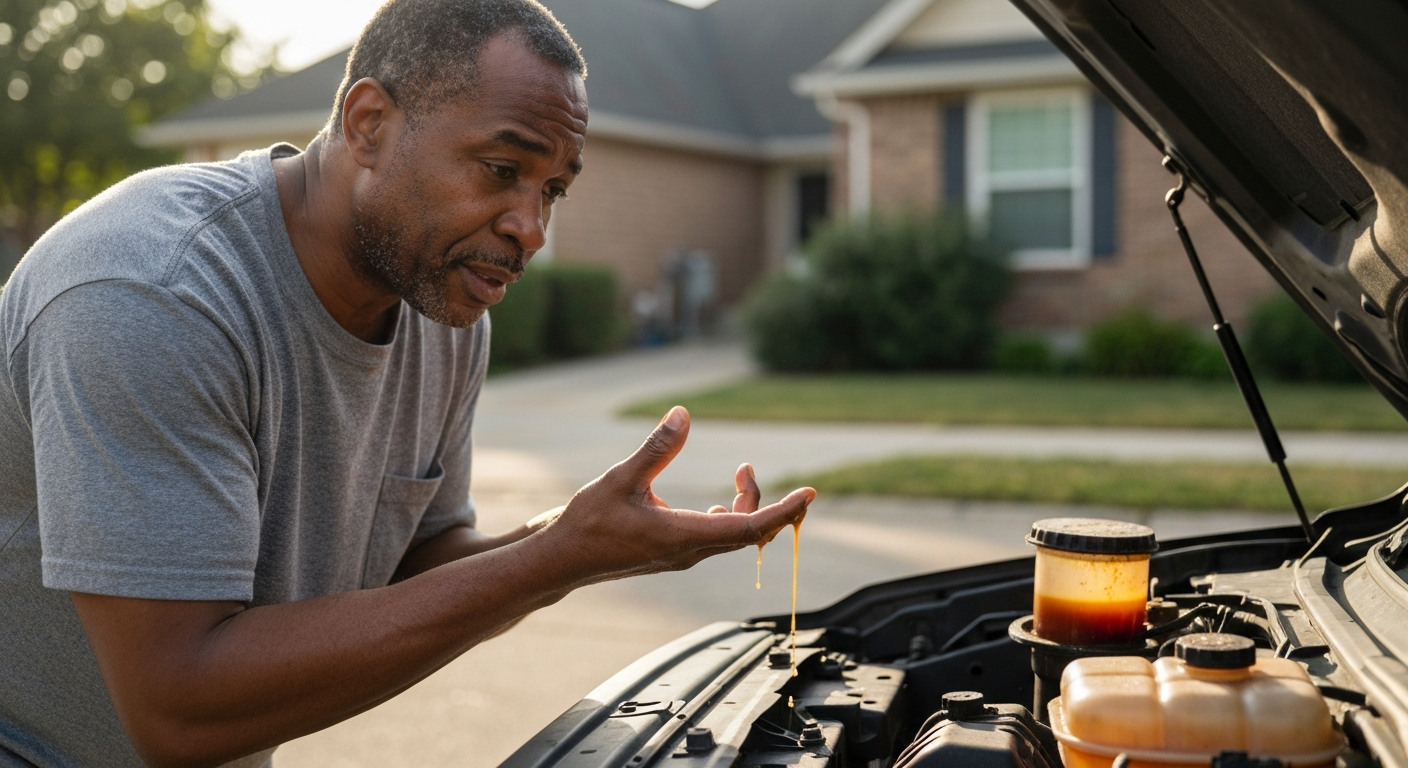

Brown antifreeze signals internal contamination—most commonly from rust, degraded coolant, or oil mixing with your radiator fluid—and indicates your cooling system needs immediate attention to prevent engine damage.
Healthy coolant is bright green, orange, pink, or blue depending on the formula. When you pop the hood and find murky brown sludge in your reservoir or radiator, something has gone wrong. That discoloration isn't cosmetic; it's a warning sign that contaminants are circulating through your engine, reducing cooling efficiency and potentially corroding critical components from the inside out.
Brown coolant results from one of six main contamination sources: internal rust, oil intrusion, degraded coolant chemistry, mixed coolant types, sediment buildup, or head gasket failure.
Understanding which culprit is responsible helps you determine whether you're looking at a simple fluid change or a costly repair. Let's work through each cause so you can identify what's happening in your vehicle.
Rust is the most common reason coolant turns brown, especially in vehicles over five years old or those with inconsistent maintenance histories. Your cooling system contains iron and steel components—the engine block, cylinder heads, heater core, and some radiator designs. When coolant breaks down or loses its corrosion inhibitors, these metal surfaces begin to oxidize.
The rust particles suspend in the fluid, turning it progressively darker. You might notice it starts as a slightly muddy tint before advancing to full chocolate-brown. This contamination creates a self-perpetuating cycle: rust particles abrade internal surfaces, exposing fresh metal, which rusts further.
"Corrosion inhibitors in antifreeze protect the metal components inside an engine. Once these inhibitors are depleted, corrosion begins, leading to rust particles contaminating the coolant." — Russ Komarnicki at Cars.com
Brown coolant with a milky or oily sheen indicates oil contamination—a far more serious problem than rust alone. Oil enters the cooling system through two primary routes: a failing head gasket or a cracked engine component.
When a head gasket deteriorates, the barrier between oil passages and coolant passages breaks down. Oil seeps into the coolant channels, creating a distinctive brown or tan milkshake appearance. You might also find coolant in your oil (check the dipstick for a frothy, coffee-colored residue).
A cracked cylinder head or engine block produces similar symptoms. These cracks often develop from overheating events, freeze damage, or manufacturing defects that worsen over time.
Coolant doesn't last forever. The chemical additives that prevent corrosion, lubricate the water pump, and maintain proper pH levels break down through heat cycling and time. Most manufacturers recommend coolant replacement every 30,000 to 50,000 miles or every three to five years, though some long-life formulas extend to 100,000 miles.
Neglected coolant becomes acidic as its buffering agents deplete. This acidity attacks aluminum components (common in modern radiators and water pumps) and accelerates corrosion throughout the system. The result? Brown, sludgy fluid that no longer protects your engine.
Mixing different coolant formulations causes chemical reactions that produce brown sediment. This is more common than many drivers realize, often happening during top-offs at quick-lube shops or DIY maintenance.
| Coolant Type | Color | Chemistry | Lifespan |
|---|---|---|---|
| Inorganic Acid Technology (IAT) | Green | Silicate/phosphate-based | 2–3 years |
| Organic Acid Technology (OAT) | Orange, red, or pink | Carboxylate-based | 5 years |
| Hybrid OAT (HOAT) | Yellow, turquoise, or pink | Silicate + carboxylate | 5 years |
| Phosphated HOAT (P-HOAT) | Blue or pink | Phosphate + carboxylate | 5 years |
When IAT coolant (green) mixes with OAT coolant (orange), the silicates and organic acids react, forming gel-like deposits that turn brown and clog cooling passages. The damage can be gradual—you might not notice problems immediately, but the contamination steadily worsens.
Sediment accumulation creates brown coolant even without rust or oil. This sediment comes from several sources:
Sediment settles in low-flow areas like the heater core and radiator tubes, then circulates when disturbed by temperature changes or pressure fluctuations. Heavy sediment loads restrict flow, causing localized hot spots and accelerating further degradation.
A blown head gasket deserves special attention because it combines multiple contamination sources. Beyond allowing oil into coolant, a failed gasket can introduce combustion gases and carbon deposits.
Warning signs of head gasket failure alongside brown coolant include:
Also Read: Why Is My Nissan Altima Not Starting? 6 Causes & Fixes
Proper diagnosis requires examining the coolant's appearance, checking for secondary symptoms, and performing targeted tests to identify the contamination source.
Start with a visual inspection. Drain a small sample of coolant into a clean, clear container. Hold it up to light and observe:
Next, check for combustion gas leakage using a block tester (also called a combustion leak tester). This inexpensive tool uses chemical fluid that changes color when exposed to exhaust gases in the coolant. A positive result strongly indicates head gasket failure.
Examine your oil dipstick and oil filler cap. Milky residue or frothy oil confirms coolant is entering the oil system—a telltale sign of internal gasket or crack issues.
"A combustion leak test is the most reliable method to confirm head gasket failure. The test detects exhaust gases present in the cooling system that wouldn't exist if the gasket were intact." — Jason Unrau at YourMechanic
Treatment depends on the contamination source—ranging from a thorough flush for rust and degraded coolant to major engine repair for head gasket failure.
If rust or old coolant is the problem, a complete cooling system flush resolves most issues. Here's the process:
For heavily contaminated systems, you may need multiple flush cycles or professional chemical cleaning to remove stubborn deposits.
Oil in your coolant requires identifying and repairing the leak source before flushing. If a head gasket is responsible, replacement costs typically range from $1,000 to $2,500 depending on your vehicle. Cracked heads or blocks cost significantly more—sometimes making repair uneconomical for older vehicles.
After completing the repair:
Mixed coolants require complete system drainage and multiple flushes to remove the reactive compounds. Don't simply top off with one coolant type—the damage continues until all incompatible fluid is removed. After thorough flushing, refill with the single correct coolant type specified in your owner's manual.
Also Read: Why Is My Hyundai Sonata Not Starting? 9 Causes & Fixes
Seek professional diagnosis if you notice milky coolant, persistent overheating, white exhaust smoke, or if flushing doesn't restore normal coolant color.
DIY flushes work well for simple contamination, but some situations demand professional attention:
Continuing to drive with contaminated coolant risks catastrophic overheating. An engine rebuild or replacement costs far more than addressing cooling system problems early.
Regular coolant maintenance, using the correct fluid type, and addressing overheating promptly keeps your cooling system healthy.
Follow these practices to avoid future discoloration:
| ✓Our Pick |
Find quality replacement cooling system parts Simple to use and genuinely effective — for many people this is all they ever needed. Learn More → |
Brown antifreeze indicates contamination from rust, degraded coolant, oil intrusion, mixed fluid types, or sediment—each requiring different treatment approaches. Rusty or old coolant responds well to thorough flushing, while milky brown fluid suggests head gasket failure requiring professional repair. Always use the correct coolant type for your vehicle, follow maintenance intervals, and investigate color changes promptly before minor contamination becomes major engine damage.
If coolant turns brown shortly after replacement, you likely have ongoing contamination. Rust may be actively flaking from corroded components, the wrong coolant type may be reacting with residual old fluid, or an internal oil leak is introducing fresh contamination. Perform a thorough multi-cycle flush and consider having a mechanic inspect for head gasket issues if the problem persists.
Thick, sludgy brown coolant typically indicates severely degraded fluid combined with heavy sediment accumulation. This happens when coolant isn't changed for many years, allowing corrosion inhibitors to fully deplete. The acidic fluid attacks metal surfaces aggressively, creating substantial rust and scale that mixes into paste-like sludge. Complete flushing with chemical cleaners is necessary, and internal damage may already exist.
Short distances to reach a repair shop are generally acceptable, but extended driving risks serious engine damage. Brown coolant has compromised cooling efficiency and active contamination that worsens with every mile. Watch your temperature gauge closely and stop immediately if it rises above normal. Overheating with compromised coolant can warp heads or crack blocks within minutes.
Costs vary dramatically based on the cause. A DIY cooling system flush runs $30 to $50 in supplies. Professional flushing costs $100 to $200. If a head gasket is responsible, expect $1,000 to $2,500 for parts and labor. Major engine damage from neglected contamination can exceed repair value on older vehicles.
Healthy coolant appears bright and translucent in green, orange, pink, blue, or yellow depending on the formula. The fluid should be clear enough to see through, without cloudiness, particles, or oil sheen. Any darkening, muddiness, or color change from the original formulation indicates contamination requiring attention.
Reviewed and Updated on June 12, 2026 by George Wright