
Cars
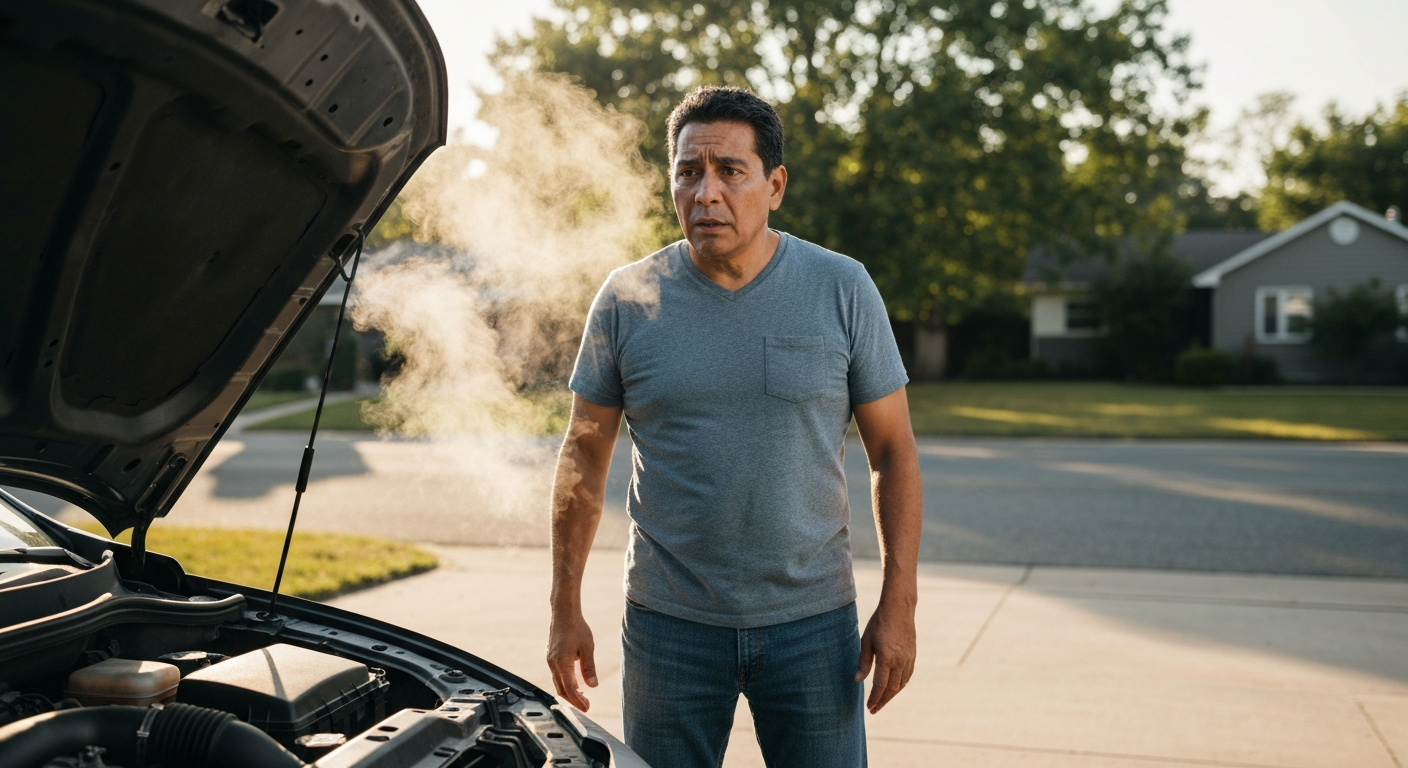

Antifreeze boils in your car's cooling system when pressure drops (from a failed radiator cap, leak, or head gasket issue), when the coolant level gets too low, when the water pump stops circulating fluid, or when your thermostat sticks closed—trapping heat until the coolant reaches its boiling point and overflows.
| ✓Our Pick |
Search radiator caps, thermostats, and water pumps This is the go-to fix recommended by professionals — save time and money by getting it right the first time. Learn More → |
Seeing your antifreeze bubbling and boiling is alarming—and for good reason. Your engine's cooling system is designed to keep coolant well below its boiling point, so when you see steam rising from your overflow tank or catch that sweet, sickly smell of hot coolant, something has gone wrong. The good news is that most causes of boiling antifreeze are diagnosable at home, and many are fixable without a trip to the mechanic. This guide walks you through the six most common culprits, how to identify each one, and what to do next.
Your cooling system uses pressure to raise the boiling point of antifreeze, which is why a small pressure loss can cause immediate boiling even when temperatures seem normal.
Pure water boils at 212°F at sea level. A 50/50 mix of antifreeze and water raises that to about 223°F. But your engine routinely operates at 195–220°F—dangerously close to that threshold. The solution is pressure. Your radiator cap maintains 13–18 PSI in the system, which pushes the effective boiling point up to roughly 265°F. That margin keeps your coolant liquid even under hard driving conditions.
When any part of this system fails—whether it's a leak that drops pressure, a stuck thermostat that traps heat, or a water pump that stops moving fluid—coolant temperatures spike past the boiling point. The result is the bubbling you see in your overflow reservoir.
A worn or damaged radiator cap is the most common and cheapest-to-fix cause of boiling antifreeze.
The radiator cap does more than seal your system. It contains a spring-loaded valve that maintains specific pressure—typically 13–16 PSI for most vehicles. When this cap weakens, cracks, or loses its seal, system pressure drops. Without adequate pressure, your coolant's boiling point plummets back toward 223°F, well within normal operating range.
"The pressure cap is designed to vent the system at a specific pressure, and a weak or improperly sealing cap can lead to coolant boilover." — James E. Duffy in Modern Automotive Technology
Signs of a bad radiator cap include:
- Coolant boiling at normal temperature readings
- Overflow tank overflowing repeatedly
- Visible cracks, rust, or deterioration on the cap seal
- Hissing sounds when the engine is warm
Replacement caps cost $10–25 and take seconds to install. Always replace with the exact PSI rating specified for your vehicle.
Yes—when coolant drops below the minimum level, there's not enough liquid to absorb engine heat, causing the remaining fluid to overheat and boil rapidly.
Your cooling system relies on volume. The coolant absorbs heat from the engine block, carries it to the radiator, releases it, then cycles back. When levels drop—from a leak, evaporation through a bad cap, or simple neglect—the remaining coolant must absorb the same amount of heat with less mass. The result is rapid temperature rise and boiling.
Check your coolant level when the engine is cold. The reservoir has "MIN" and "MAX" lines. If coolant is below the minimum, top it off with the correct type (consult your owner's manual) and monitor for drops over the next few days. Repeated low levels indicate a leak somewhere in the system.
Also Read: Why Is My Nissan Altima Not Starting? 6 Causes & Fixes
A thermostat stuck in the closed position traps coolant in the engine block, preventing it from reaching the radiator—heat builds with nowhere to go until the coolant boils.
The thermostat acts as a gate between your engine and radiator. When the engine is cold, it stays closed to help the engine warm up quickly. Once coolant reaches operating temperature (usually 195–210°F), it opens to allow flow to the radiator. A stuck-closed thermostat never opens, trapping hot coolant in the block.
Symptoms of a stuck thermostat include:
- Temperature gauge climbing rapidly into the red
- Heater blowing cold air (no hot coolant reaching the heater core)
- Upper radiator hose cool to the touch while lower hose is hot
- Boiling in the overflow tank despite a cold radiator
Thermostats cost $15–50 and are a moderate DIY repair. If you're not comfortable replacing it yourself, expect $150–250 at a shop.
A failing water pump can't circulate coolant through the system, creating hot spots in the engine that cause localized boiling.
The water pump is the heart of your cooling system—it moves coolant from the radiator through the engine block and back again. When the pump's impeller wears down, its bearings seize, or its drive belt slips, circulation slows or stops. Coolant sitting in contact with hot engine surfaces quickly reaches boiling temperatures.
Warning signs include:
- Whining or grinding noise from the front of the engine
- Coolant leak near the water pump weep hole
- Steam from under the hood
- Rapid temperature fluctuations on the gauge
Water pump replacement typically runs $300–750 at a shop, including labor. If you're already replacing the timing belt, mechanics often recommend doing the water pump at the same time since access is already available.
Any leak—no matter how small—reduces system pressure and coolant volume, both of which lower the boiling point and lead to overheating.
Coolant leaks come from many sources: cracked hoses, corroded radiator tanks, failed water pump seals, loose hose clamps, or deteriorated gaskets. Even pinhole leaks can drop enough pressure to cause boiling over time.
| Leak Location | Common Signs | Typical Repair Cost |
|---|---|---|
| Radiator hose | Visible drips at connections, bulging hose | $20–75 (DIY) |
| Radiator core | Green/orange puddle under car, visible corrosion | $300–900 |
| Water pump seal | Drip at pump weep hole, pink residue | $300–750 |
| Heater core | Sweet smell inside car, foggy windshield | $500–1,200 |
| Head gasket | White exhaust smoke, milky oil | $1,000–3,000 |
To find a leak, let the engine cool completely, then visually inspect hoses, the radiator, and the water pump area. A UV dye kit (available at auto parts stores for $15–30) can help locate slow leaks—you add the dye to the coolant and use a UV light to spot escaping fluid.
A blown head gasket allows combustion gases to enter the cooling system, displacing coolant and creating pressure spikes that force antifreeze to boil and overflow.
The head gasket seals the junction between your engine block and cylinder head. When it fails, high-pressure combustion gases can leak into the cooling passages. These gases rapidly heat the coolant and create pressure beyond what the radiator cap can vent, causing violent boiling and overflow.
"Combustion gas leakage into the cooling system is a telltale sign of head gasket failure and will cause rapid overheating and coolant boilover." — Tom Newton in How Cars Work
Head gasket failure symptoms include:
- White, sweet-smelling exhaust smoke
- Milky residue under the oil filler cap
- Bubbles in the coolant overflow tank with the engine running
- Persistent overheating despite full coolant and working components
- Coolant and oil mixing
A combustion leak test kit ($30–50 at auto parts stores) can confirm this diagnosis. The kit uses a chemical solution that changes color when exposed to combustion gases in the coolant.
Start with the cheapest, easiest possibilities and work toward the more complex diagnoses—this approach saves time and money.
If your temperature gauge enters the red zone or you see steam from under the hood, pull over immediately—continuing to drive can cause catastrophic engine damage within minutes.
Overheating beyond the red zone can warp cylinder heads, crack engine blocks, and destroy head gaskets. These repairs often exceed the vehicle's value. The moment you notice boiling coolant combined with high temperature readings, safely pull over, turn off the engine, and let it cool for at least 30 minutes before opening the hood.
Call a mechanic or arrange a tow if:
- The temperature gauge redlines repeatedly
- You see white smoke from the exhaust
- Coolant disappears with no visible external leak
- You've replaced the radiator cap and thermostat but boiling continues
Also Read: Why Is My Hyundai Sonata Not Starting? 9 Causes & Fixes
Antifreeze boils when your cooling system loses pressure (bad radiator cap, leaks), runs low on coolant, or can't circulate fluid properly (stuck thermostat, failing water pump). The most serious cause is a blown head gasket, which lets combustion gases superheat the coolant. Start your diagnosis with the radiator cap and coolant level—these are the cheapest fixes—then work toward the thermostat, water pump, and leak testing. If you see a red temperature gauge or exhaust smoke, stop driving immediately to prevent engine damage.
Your temperature gauge relies on a sensor in the engine block, not in the overflow reservoir. If your radiator cap is failing, coolant can boil in the reservoir at relatively low system temperatures because pressure has dropped. The engine itself may still be within normal range. Replace the radiator cap first—if boiling continues with normal gauge readings, investigate further.
Briefly, yes—but address it soon. A failing radiator cap causing low-pressure boiling won't immediately destroy your engine, but it does mean your cooling system is compromised. Continued driving risks eventual overheating if conditions change (hot weather, traffic, towing). Replace the cap within a day or two.
Bubbling that continues after shutdown often indicates a blown head gasket. Residual combustion pressure continues forcing gases into the cooling system even when the engine isn't running. Perform a combustion leak test to confirm.
No—never open the radiator cap or reservoir when the engine is hot or coolant is boiling. The system is under pressure, and releasing it suddenly will cause a violent steam eruption that can cause severe burns. Wait at least 30 minutes after shutdown, and even then, use a thick rag and turn the cap slowly to release pressure gradually.
Costs vary dramatically depending on the cause. A radiator cap costs $10–25. A thermostat runs $15–50 for the part or $150–250 installed. Water pump replacement typically costs $300–750. Head gasket repair ranges from $1,000 to $3,000 or more. Always start with the cheapest diagnostic steps to avoid unnecessary spending.
Reviewed and Updated on June 12, 2026 by George Wright