
Health
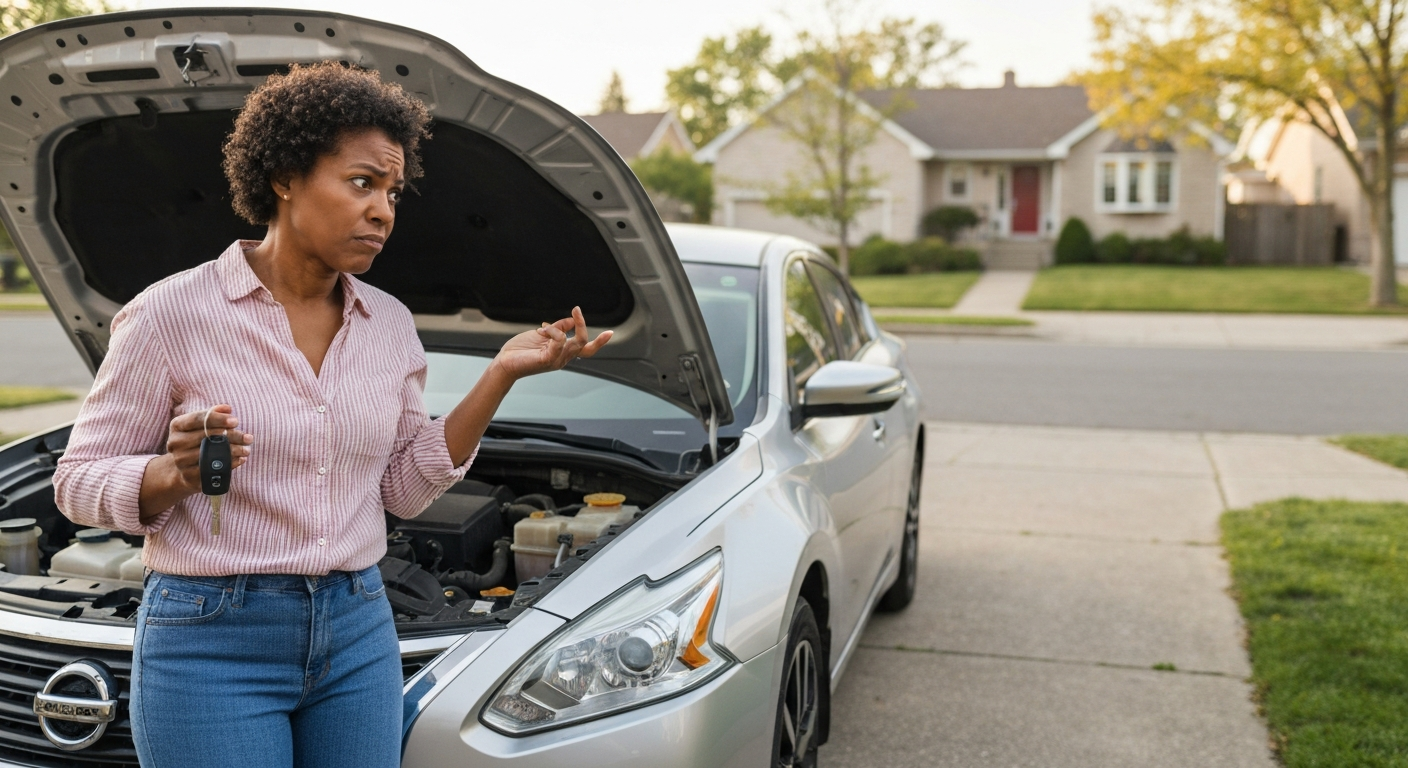

Your Nissan Altima won't start because of a dead or weak battery, a faulty starter motor, a failed ignition switch, a malfunctioning fuel pump, a defective crankshaft position sensor, or an anti-theft system lockout — and identifying which one depends on what happens when you turn the key.
When you're stuck in your driveway or a parking lot with an Altima that refuses to fire up, the cause almost always falls into one of three categories: electrical failure, fuel delivery problems, or sensor/security issues. The good news is that most no-start conditions give you diagnostic clues through sounds, lights, and behavior that point directly to the culprit.
The six most frequent causes of a no-start condition in Nissan Altimas are battery failure, starter motor problems, ignition switch defects, fuel pump failure, crankshaft position sensor malfunction, and Nissan Anti-Theft System (NATS) lockout.
Each of these components plays a critical role in the starting sequence. When any one fails, the engine either won't crank at all or will crank but refuse to fire. Understanding which system is failing helps you avoid unnecessary repairs and get back on the road faster.
A dead or weak battery is the single most common reason any Altima won't start. If you turn the key and hear rapid clicking, or if the dashboard lights dim significantly when you attempt to start, the battery lacks sufficient charge to engage the starter motor.
Nissan Altima batteries typically last 3–5 years. Extreme temperatures accelerate degradation — cold weather reduces cranking power, while heat evaporates electrolyte fluid. A battery that worked fine yesterday can fail overnight if it was already marginal.
To test your battery quickly: turn on the headlights before attempting to start. If they're bright but dim dramatically when you turn the key, the battery has some charge but not enough cranking amps. If the lights are already dim or won't turn on at all, the battery is essentially dead.
When you turn the key and hear a single loud click followed by nothing, the starter motor or its solenoid has likely failed. The solenoid engages the starter gear with the flywheel — a failing solenoid produces that distinctive single click but can't complete the engagement.
Starter motors in Altimas generally last 100,000–150,000 miles, but they can fail earlier if the engine has been subjected to frequent short trips or extended cranking periods. Heat soak from the exhaust manifold, which sits close to the starter on many Altima engines, can also shorten starter life.
"A starter motor that intermittently fails to engage, especially when the engine is hot, often indicates worn brushes or a failing solenoid," explains the Car Care Council. "The problem typically worsens over time until the starter fails completely."
The ignition switch does more than just send power to the starter. It also signals the fuel pump to pressurize the system and tells the engine control module (ECM) to prepare for starting. A failing ignition switch may allow accessories to work while preventing the starter from engaging.
Symptoms of ignition switch failure include: the key turns but nothing happens (no click, no crank), intermittent starting problems that come and go, or electrical accessories cutting out while driving. Altimas from the 2002–2006 generation are particularly prone to ignition switch issues.
Also Read: Why Is My Hyundai Sonata Not Starting? 9 Causes & Fixes
If your engine cranks normally — that familiar whirring sound as it spins — but won't actually fire and run, the problem lies in fuel delivery, spark generation, or sensor signals rather than the starting circuit itself.
This distinction matters because it completely changes your diagnostic approach. A cranking engine means the battery, starter, and ignition switch are all working. The failure is downstream in the combustion process.
The fuel pump pressurizes the fuel system before the engine starts. When you turn the key to the "on" position (without starting), you should hear a brief whirring or humming sound from the rear of the car lasting 2–3 seconds. This is the fuel pump priming the system.
No priming sound often indicates a dead fuel pump, a blown fuel pump fuse, or a failed fuel pump relay. Fuel pumps in Altimas typically last 100,000+ miles, but running the tank low frequently can shorten pump life because the fuel helps cool the pump motor.
To check fuel pressure without specialized tools: turn the key to "on" three times in succession, waiting 2 seconds each time, then attempt to start. This allows the pump to build maximum pressure. If the engine fires briefly then dies, low fuel pressure is the likely culprit.
The crankshaft position sensor (CKP) tells the ECM exactly where the crankshaft is in its rotation cycle. Without this signal, the ECM can't time the fuel injectors or spark plugs correctly — and on many Altimas, the ECM won't even attempt to fire the engine without a valid CKP signal.
A failing CKP sensor often causes intermittent no-start conditions. The engine might start fine when cold but refuse to restart when hot, or vice versa. You might also notice the tachometer needle staying at zero while cranking, since the tachometer relies on the same sensor signal.
"The crankshaft position sensor is one of the most critical sensors for engine starting," notes RepairPal. "When it fails completely, the engine will crank but the computer won't command fuel injection or spark."
| ✓Our Pick |
Search ignition and sensor components for your Altima A top-rated pick that works — readers who tried this reported noticeable improvement within days. Learn More → |
The Nissan Anti-Theft System (NATS) can prevent starting if it doesn't recognize your key's transponder chip or if the system experiences a glitch — and this is more common than most owners realize.
Modern Altimas (2002 and newer) use a transponder chip embedded in the key head. The NATS module reads this chip and compares it to stored codes. If the codes don't match, NATS disables the fuel pump and ignition system even though the engine will crank normally.
The security indicator light on your dashboard tells you NATS status. If this light blinks rapidly when you attempt to start, NATS isn't recognizing the key. If it stays solidly lit, the system has locked out the vehicle entirely.
Common NATS triggers include: a damaged or demagnetized key transponder, water damage to the key, interference from other keys on the same ring, or a weak key fob battery affecting the signal. Even using the wrong key from another Nissan can trigger a lockout.
To reset NATS: exit the vehicle with all keys, lock it with the fob, wait 10 minutes, then unlock and attempt to start. This allows the system to fully reset. If you have a spare key, try it — if the spare works, your original key's transponder is the problem.
Systematic diagnosis starts with observing exactly what happens when you turn the key — the sounds, lights, and behaviors tell you which system to focus on.
Use this diagnostic table to narrow down the cause:
| Symptom | Likely Cause | Quick Test |
|---|---|---|
| No lights, no sounds, completely dead | Dead battery or loose battery terminal | Check terminal connections, test headlights |
| Rapid clicking when turning key | Weak battery or poor connection | Jump start attempt or battery voltage test |
| Single loud click, then nothing | Starter motor or solenoid failure | Tap starter housing while someone turns key |
| Cranks normally but won't fire | Fuel, spark, or sensor issue | Listen for fuel pump prime, check for codes |
| Cranks, fires briefly, then dies | Fuel delivery or NATS lockout | Check security light, try secondary key |
| Key turns but nothing happens | Ignition switch or NATS | Check if accessories work, watch security light |
If you have access to an OBD-II scanner, checking for stored diagnostic trouble codes (DTCs) can immediately identify sensor failures. Common codes for no-start Altimas include P0335 (crankshaft position sensor), P0340 (camshaft position sensor), and P0463 (fuel level sensor, which can indicate pump circuit issues).
Before calling a tow truck, several quick fixes might get your Altima running — and they're worth trying even if you're not mechanically inclined.
If you suspect a dead battery, jump-starting is the fastest test. Connect jumper cables properly: positive to positive, negative to a ground point on the dead car's engine block (not the battery negative terminal, which can cause sparks near the battery). Let the donor vehicle run for 2–3 minutes before attempting to start.
If the Altima starts immediately with a jump, the battery either needs charging or replacement. If it still won't start with jumper cables connected, the problem isn't the battery alone.
Disconnecting the battery for 15 minutes resets the ECM and can clear temporary glitches affecting the starting system. This won't fix hardware failures, but it can resolve software issues that occasionally prevent starting.
After reconnecting, the idle may be rough for a few minutes as the ECM relearns its adaptive values. This is normal.
The old mechanic's trick of tapping the starter with a hammer or wrench while someone turns the key can temporarily free stuck brushes or a sticky solenoid. If the car starts after tapping, the starter needs replacement soon — it will fail completely.
Also Read: Why Is My Water Black? 6 Causes & How to Fix It
Some no-start conditions require professional diagnosis, specialized tools, or parts that aren't practical for DIY repair.
Call a mechanic or tow service when:
For NATS lockouts requiring key reprogramming, only a Nissan dealer or a locksmith with Nissan-specific equipment can register new keys to the system. Aftermarket keys without proper programming will never start a NATS-equipped Altima.
Your Nissan Altima's refusal to start stems from either electrical issues (battery, starter, ignition switch), fuel delivery problems (pump, pressure, filter), or electronic lockouts (crankshaft sensor, NATS). Start diagnosis by noting exactly what happens when you turn the key — no response means electrical, cranking without firing means fuel or sensors, and a blinking security light means anti-theft. Most battery and connection issues can be solved with a jump start or terminal cleaning, while sensor and NATS problems typically require professional diagnosis and repair.
If your dashboard lights up normally but the engine won't crank or start, the issue is usually the starter motor, ignition switch, or neutral safety switch rather than the battery. The neutral safety switch prevents starting unless the transmission is fully in Park or Neutral — try shifting to Neutral and attempting to start again. If that works, the switch needs adjustment or replacement.
A no-start condition immediately after refueling often points to a purge valve or evaporative emissions system issue. These components vent fuel tank pressure during fillup — if they malfunction, excess pressure or vapor can flood the engine temporarily. Wait 5 minutes and try again. If this happens consistently, have the EVAP system inspected.
A bad alternator won't directly cause a no-start condition — it causes a dead battery that then prevents starting. If your Altima needed a jump start, ran fine, then wouldn't start again the next day, the alternator likely isn't charging the battery. Have the charging system tested; alternators in Altimas typically last 80,000–150,000 miles.
Intermittent starting problems usually indicate a failing component that works when cool but fails when hot (or vice versa). The most common culprits are the starter motor, crankshaft position sensor, or fuel pump. Temperature-related failures happen because heat causes metal components to expand, and worn parts that work with some clearance can bind or lose contact when that clearance changes.
A dead key fob battery won't prevent your Altima from starting if you insert the physical key, but it will affect keyless push-button start systems. If your push-button Altima won't start, hold the fob directly against the start button while pressing — this allows the weak transponder to communicate at close range. Replace the fob battery (usually CR2032) if this works.
Reviewed and Updated on June 12, 2026 by George Wright