Sleep
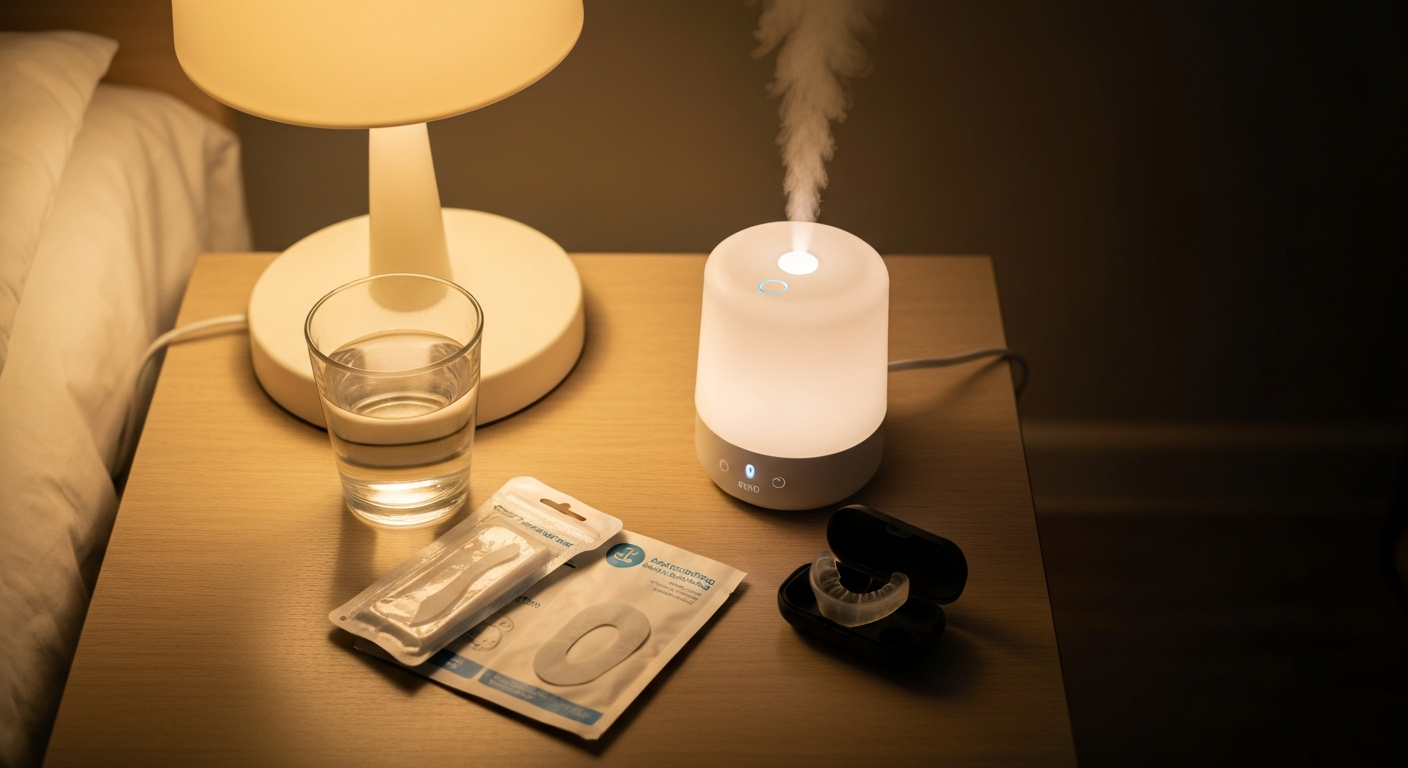

To reduce snoring immediately — tonight — sleep on your side, avoid alcohol for the rest of the evening, use a nasal strip, and run a humidifier. These four steps address the most common snoring triggers and can produce a noticeable difference on the very first night.
Snoring is a mechanical event caused by airway narrowing and soft-tissue vibration. Several of the factors that cause airway narrowing are reversible within hours — which means snoring reduction can begin tonight, not next month.
The immediate-effect interventions work on two mechanisms: they either keep the airway more open (by changing sleep position or adding a nasal strip) or they reduce how much the throat muscles relax (by cutting alcohol). Neither requires a prescription, a device, or a habit built over weeks.
The caveat is that immediate fixes address tonight's triggers. Structural causes of snoring — jaw anatomy, excess throat tissue, chronic nasal obstruction — need ongoing interventions like mandibular advancement devices or medical evaluation.
This is the fastest snoring intervention available and costs nothing. Sleep position determines how gravity acts on your tongue and soft palate — the two most common vibrating tissues in snoring.
When you lie on your back, the tongue falls backward toward the throat and the soft palate drops into the airway. Air flowing past these tissues causes the snoring vibration. Rolling onto your side repositions the tongue laterally, away from the airway center.
Set up your position before you fall asleep rather than hoping you'll stay on your side:
Many position-dependent snorers experience significant or complete reduction the same night they make this change.
Also Read: Best Pillow for a Snorer: 4 Types That Actually Work
If you have consumed alcohol in the past few hours, the damage is partly done — but stopping now reduces further throat-muscle relaxation before sleep.
Alcohol relaxes pharyngeal muscles beyond their normal sleep-related relaxation. The more you drink and the closer to bedtime you drink, the more pronounced this effect is. If you have an event tonight and have already had drinks, drink water for the remainder of the evening. Hydration helps metabolize the alcohol faster and also keeps throat tissues from drying out.
For ongoing snoring reduction, the standard guidance is no alcohol within three hours of sleep. This one change consistently ranks among the most impactful behavioral interventions in snoring studies.
Nasal strips are adhesive strips that stick across the bridge of the nose and mechanically pull the nasal walls outward, widening the nasal passage.
For snorers whose snoring is caused or worsened by nasal congestion or narrow nasal anatomy, a nasal strip can meaningfully reduce snoring on the first night. They work by reducing nasal airflow resistance — when the nose can breathe more freely, the mouth tends to stay closed, and throat-level vibration decreases.
Nasal strips are available at any pharmacy in the sleep aid aisle (Breathe Right is the most recognized brand). Apply them immediately before lying down. They peel off painlessly in the morning.
Internal nasal dilators (soft inserts placed just inside the nostrils) work by the same mechanism and are preferred by some people who find adhesive strips irritating.
Note: nasal strips do not help for throat-level snoring — if your snoring originates from the soft palate or tongue base rather than nasal resistance, this step will be less effective.
"Nasal dilation devices — including external nasal strips and internal dilators — reduce nasal airflow resistance and have been shown to reduce snoring loudness and improve sleep quality in patients with nasal-origin snoring." — American Journal of Rhinology & Allergy at journals.sagepub.com
Dry air desiccates the mucous membranes in the throat and nasal passages, causing them to swell slightly and vibrate more aggressively. A cool-mist humidifier at 40–50% humidity reduces this effect immediately.
This is especially relevant in winter when heating systems reduce indoor humidity to 20 to 30 percent. If you have a humidifier, fill it up and run it tonight. If you don't, a bowl of water placed near a heat source can provide some benefit while you acquire one.
A humidifier won't stop structural snoring, but for snorers whose symptoms worsen in dry conditions, it can noticeably reduce intensity the first night it's used.
For snorers who already have a mandibular advancement device (MAD), wearing it tonight is the most impactful mechanical intervention available. If you don't have one yet, this is the best next-step purchase for ongoing reduction.
A MAD holds the lower jaw slightly forward, keeping the tongue base away from the throat and widening the airway throughout the night. Unlike nasal strips, MADs address throat-level snoring — making them effective for the majority of snorers regardless of nasal status.
SnoreMeds offers a self-impression MAD that you mold to your own teeth at home. The kit arrives within days and the mouthpiece is ready to use within minutes of receiving it.
| ✓Our Pick |
Stop snoring tonight with a custom-fit mouthpiece — SnoreMeds repositions your jaw while you sleep This is the go-to fix recommended by professionals — save time and money by getting it right the first time. Learn More → |
A saline nasal rinse 15 minutes before sleep physically removes allergens, dust, and mucus from the nasal passages — reducing nasal resistance and making nose breathing easier throughout the night.
A squeeze bottle saline rinse system (NeilMed is a common brand) or a neti pot works well. Use lukewarm sterile or distilled water. If you have nasal congestion from a cold or allergies, an OTC oxymetazoline decongestant spray (Afrin) provides rapid relief — but use it for no more than three consecutive nights to avoid rebound congestion.
Also Read: Mute Snore: How These Anti-Snoring Devices Work in 2026
| Action | Time Required | Effect on Snoring |
|---|---|---|
| Sleep on your side | 0 minutes (set up position) | Immediate — high impact |
| Stop alcohol | Now | Partial tonight, full next night |
| Apply nasal strip | 1 minute | Immediate — helps nasal snorers |
| Run humidifier | 2 minutes | Gradual over 30–60 minutes |
| Saline nasal rinse | 5 minutes | Immediate nasal clearing |
| Wear MAD (if you have one) | 1 minute | Immediate — high impact |
To reduce snoring immediately: roll onto your side now, stop drinking alcohol, apply a nasal strip, and run a humidifier. These four interventions address the most common and most reversible snoring triggers. For ongoing reduction beyond tonight, a mandibular advancement device is the most evidence-backed next step. If snoring persists with gasping or breathing pauses, a sleep medicine evaluation is needed.
In many cases, yes — especially for positional or alcohol-related snoring. Sleeping on your side instead of your back can eliminate snoring for position-dependent snorers immediately. Removing alcohol from the evening routine produces results the following night. For structural causes of snoring, one-night fixes reduce but do not eliminate snoring.
Roll onto your side if you're on your back, drink a small glass of water to re-hydrate throat tissues, and adjust your pillow height. A mandibular advancement device worn from the start of sleep prevents most self-arousal from snoring by keeping the airway open before the snoring begins.
Yes, nasal strips take effect immediately upon application. They are most effective for nasal-origin snoring — where nasal congestion or narrow nasal anatomy is a primary driver. For snorers with primarily throat-level (palatal or tongue-base) snoring, nasal strips have minimal impact.
OTC throat sprays marketed for snoring typically contain lubricating agents (glycerin, peppermint oil) that coat the throat and are claimed to reduce vibration. Evidence for their effectiveness is weak compared to positional changes, MADs, or nasal strips. They are harmless and may provide mild benefit for light snorers.
Reviewed and Updated on June 17, 2026 by George Wright