Sleep


Snoring in females is often dismissed as a "male problem," but up to 24% of adult women snore habitually — and that number rises sharply after menopause. The causes differ from men's in important ways, and so do the health stakes.
Snoring in any person — male or female — occurs when the upper airway partially narrows during sleep and soft tissue vibrates as air forces through. In females, specific anatomical features and hormonal factors shape how and when this happens.
The airway runs from the nose and mouth down through the pharynx (the throat behind the mouth) to the larynx. During sleep, the muscles holding this passage open relax. When relaxation causes enough narrowing, turbulent airflow vibrates the soft palate, uvula, and adjacent tissue — producing snoring.
Women's upper airways tend to be slightly narrower than men's but better supported by hormonal factors, particularly estrogen and progesterone. These hormones maintain muscle tone in the pharyngeal muscles and stimulate breathing through direct effects on respiratory drive. When those hormonal influences decline — through pregnancy, menopause, or hormonal fluctuations — the airway becomes more vulnerable to collapse and snoring becomes more likely.
According to the American Academy of Sleep Medicine, snoring prevalence in women rises from roughly 24% in premenopausal women to over 40% in postmenopausal women — approaching male rates.
"Women who are postmenopausal have higher rates of sleep-disordered breathing, including snoring, compared to premenopausal women. Hormone replacement therapy may have a protective effect on upper airway function." — American Academy of Sleep Medicine
Female snoring has the same foundational mechanics as male snoring, but specific triggers hit women harder or at different life stages. Here are the seven most common causes.
Yes — it's one of the strongest predictors. Before menopause, estrogen and progesterone actively support pharyngeal muscle tone and respiratory drive, reducing airway collapse during sleep. After menopause, these protective hormones drop. The result: the airway becomes more likely to narrow and vibrate during sleep. Postmenopausal women snore at nearly twice the rate of premenopausal women.
Women who use hormone replacement therapy (HRT) after menopause show somewhat lower snoring rates in observational studies, though HRT isn't prescribed specifically for snoring and carries its own risk profile.
Pregnancy is one of the most common triggers for new snoring in women who never snored before. Two mechanisms drive this:
Studies show that up to 46% of pregnant women snore in the third trimester, compared to around 14% before pregnancy. Pregnancy-related snoring often resolves after delivery, though women who gained significant weight may see it persist.
| ✓Our Pick |
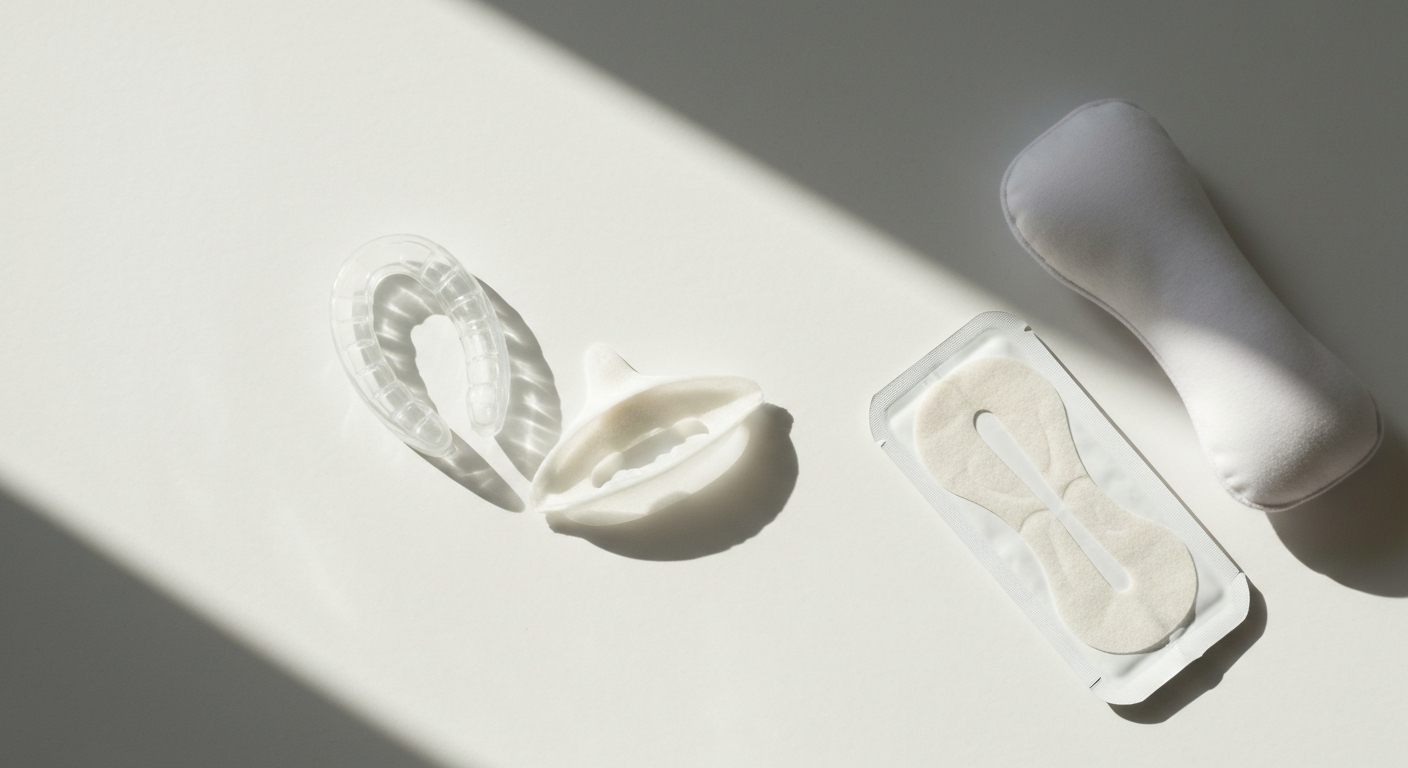
Custom-fit anti-snoring mouthpiece that gently repositions the jaw to open the airway Highly rated by thousands of buyers — this is one of the most effective solutions for this issue you can try at home. Learn More → |
Yes, and the relationship is strong. Excess weight — particularly fat deposited around the neck and throat — compresses the airway from the outside. Women's fat distribution patterns mean this effect is somewhat less pronounced than in men (men deposit more weight centrally and in the neck), but overweight women still have significantly higher snoring rates than their normal-weight peers.
A neck circumference over 15 inches (38 cm) in women is associated with elevated snoring risk.
Chronic nasal congestion — from allergies, sinus infections, or a deviated septum — forces nighttime mouth breathing. Mouth breathing sends air directly through the pharynx without the filtering and pressure regulation the nasal passage provides, increasing turbulence and tissue vibration. This is a common but underrecognized cause of snoring in women, particularly those with seasonal allergies.
Alcohol relaxes the throat muscles beyond their normal sleep relaxation. Women generally process alcohol at lower body weights and with lower enzyme activity than men, so equivalent drinks may produce a stronger relaxant effect. Even one drink within a few hours of bedtime can trigger snoring in women who are borderline snorers otherwise.
Yes. A naturally low, thick soft palate, enlarged tonsils, or a deviated nasal septum can predispose any person — regardless of gender — to snoring. These are structural features, not lifestyle-related, and don't require weight gain or other triggers to cause problems. Women with this anatomy may snore from young adulthood.
This connection is underappreciated. Hypothyroidism — an underactive thyroid — affects women at roughly 5 to 8 times the rate of men. Low thyroid hormone causes weight gain, soft tissue swelling (myxedema), and reduced muscle tone throughout the body, including in the pharynx. Untreated hypothyroidism can trigger or significantly worsen snoring. Treating the thyroid condition often reduces snoring substantially.
"Hypothyroidism can cause upper airway dysfunction and sleep apnea through a combination of weight gain, myxedema of the pharynx, and reduced ventilatory drive." — American Journal of Respiratory and Critical Care Medicine
Snoring in women is historically underdiagnosed as a marker of sleep apnea because the presentation often differs from men's. Women with sleep apnea are less likely to report the classic "loud snoring and gasping" pattern. Instead, they more often describe symptoms like:
This symptom profile overlaps with menopause, depression, and other conditions more common in women — leading to delays in diagnosis. The American Academy of Sleep Medicine estimates that female sleep apnea is significantly underdiagnosed as a result.
| Symptom | Male Presentation | Female Presentation |
|---|---|---|
| Snoring | Loud, classic | Often quieter, intermittent |
| Apnea reports | Partner often reports gasping | Less frequently reported by partner |
| Daytime symptom | Excessive daytime sleepiness | Fatigue, insomnia, mood changes |
| BMI at diagnosis | Often high | Sometimes normal-weight |
Women who snore and experience persistent fatigue or poor sleep quality — even without classic gasping symptoms — should consider a sleep study.
Most causes of female snoring respond to the same solutions that work for men, with some adjustments for the specific triggers most common in women.
Also Read: Why Is My Uterus Twitching? 7 Causes & What It Means
Snoring in females is more common than most people assume — up to 24% of premenopausal women and over 40% of postmenopausal women snore habitually. The main causes are hormonal changes (especially menopause and pregnancy), weight gain, nasal congestion, alcohol use, anatomy, and — uniquely common in women — hypothyroidism. Female snoring is also often a marker of sleep apnea that presents differently from the classic male pattern, leading to chronic underdiagnosis. Women who snore and experience persistent fatigue, mood changes, or poor sleep quality should consider a sleep evaluation.
Estrogen and progesterone maintain pharyngeal muscle tone and stimulate respiratory drive. After menopause, both hormones decline substantially — reducing the protective effect on the upper airway. The result is a significantly higher rate of airway narrowing during sleep. Postmenopausal women snore at nearly twice the rate of premenopausal women.
Yes, and female sleep apnea is frequently missed because women's symptoms differ from men's. Instead of loud snoring and gasping, women with sleep apnea more often present with fatigue, insomnia, morning headaches, and mood changes. If you're a female snorer experiencing poor sleep quality or persistent tiredness, a sleep study is worth pursuing.
Research suggests that snoring in pregnancy — particularly if it reflects sleep apnea — may be associated with pregnancy complications including gestational hypertension and fetal growth restriction. Mild, occasional snoring is less concerning. Loud, frequent, or worsening snoring in pregnancy, especially with gasping, should be discussed with your obstetrician.
Side sleeping is the easiest first step, particularly for pregnant women and positional snorers. Treating nasal congestion and avoiding alcohol before bed address common female triggers. For persistent snoring, a custom-fit mandibular advancement device is the most evidence-based non-surgical option regardless of gender.
Reviewed and Updated on June 13, 2026 by George Wright