Health

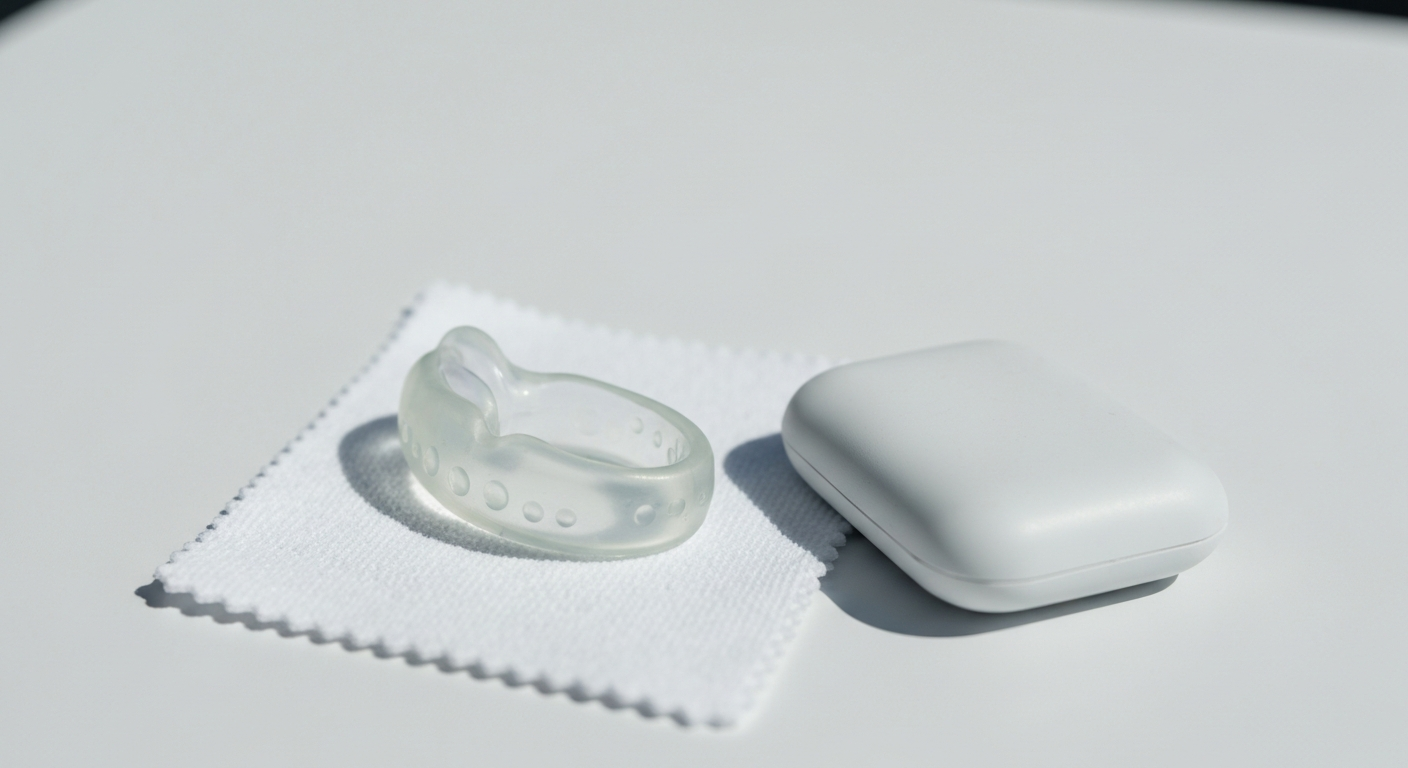
A snore mouth guard (also called a mandibular advancement device or MAD) holds the lower jaw slightly forward during sleep, preventing the tongue and throat tissue from collapsing into the airway. It's the most consistently effective non-surgical, non-prescription solution for most adult snorers — reducing snoring in approximately 75–85% of users.
| ✓Our Pick |
Custom-fit anti-snoring mouth guard — molded to your jaw for a precise, comfortable fit One of the highest-rated products in its category — a reliable fix used by thousands of people. Learn More → |
A snore mouth guard is an oral appliance worn during sleep that repositions the lower jaw a few millimeters forward. This single mechanical change keeps the tongue base pulled away from the throat wall, maintaining a wider airway and preventing the vibration that causes snoring.
Snoring occurs when the upper airway partially collapses during sleep and soft tissue vibrates as air forces through the narrowed passage. The most common point of collapse is where the tongue base meets the back of the throat. In most snorers, the tongue relaxes backward during sleep and reduces the airway opening below the threshold for quiet airflow.
A snore mouth guard works by holding the lower jaw (mandible) in a forward position relative to the upper jaw. Since the tongue attaches to the lower jaw, moving the jaw forward automatically repositions the tongue away from the throat. The airway stays wider. Air flows more freely. The vibration — and the sound — is eliminated or significantly reduced.
The American Academy of Sleep Medicine recognizes mandibular advancement devices as a first-line treatment for snoring and mild-to-moderate obstructive sleep apnea.
"Oral appliances are recommended for the treatment of snoring and mild to moderate obstructive sleep apnea. They work by holding the lower jaw forward to maintain an open airway during sleep." — American Academy of Sleep Medicine
Not all snore mouth guards are the same. Three main categories exist, and the right one depends on your budget, the severity of your snoring, and how much jaw comfort matters to you.
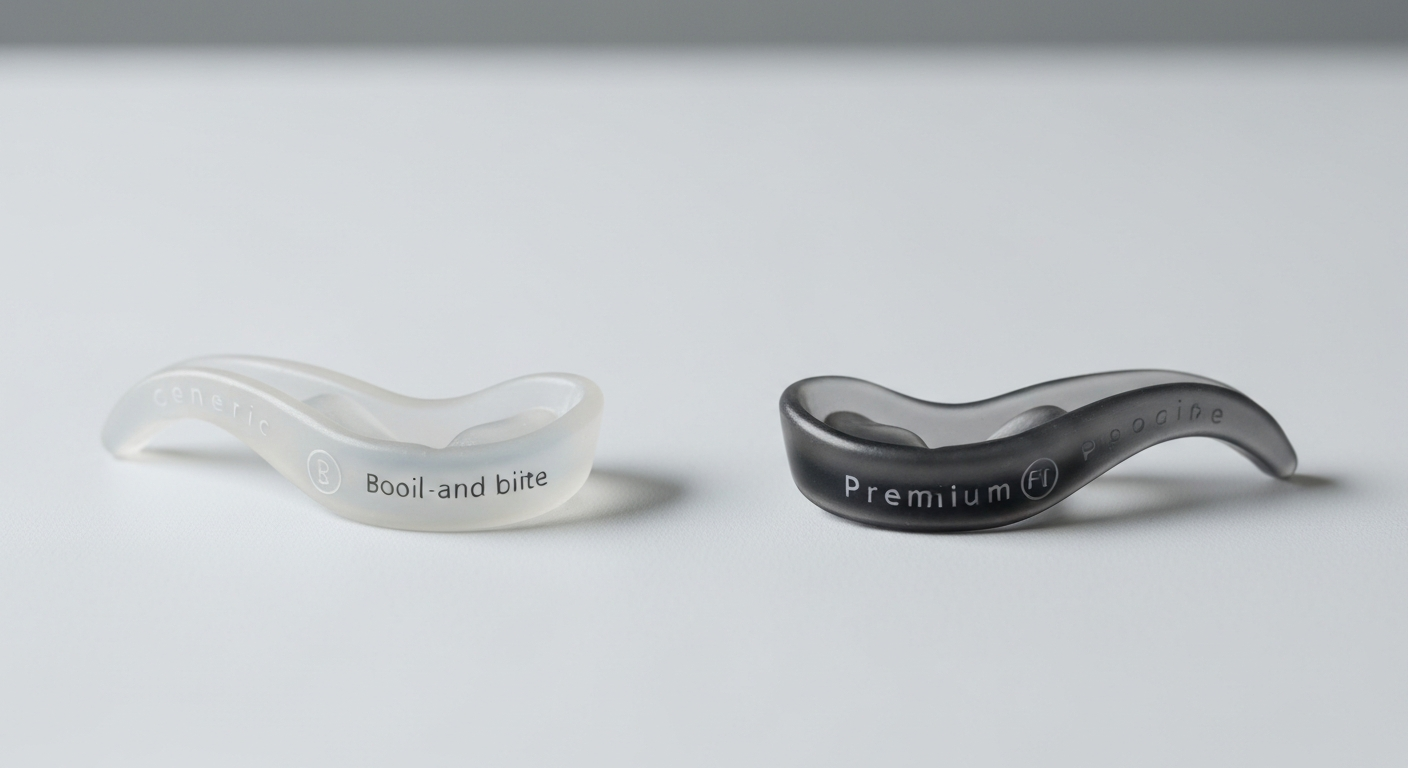
These are the most widely available and cheapest option — typically $20–$60, found at pharmacies and online retailers. You soften the device in hot water, bite into it to create an impression, and allow it to harden. The result is a rough approximation of your bite.
Pros: Immediately available, low cost, no waiting period
Cons: Imprecise fit, often uncomfortable over a full night, more likely to slip, shorter lifespan (a few months of nightly use)
Boil-and-bite devices are a reasonable first experiment to confirm that a MAD approach works for you before investing in a custom version.
These devices — like SnoreMeds — come with a professional-quality impression kit that lets you take an accurate mold of your teeth at home. You mail the impression to a lab (or complete the digital process), and a custom device is fabricated to your exact dental anatomy.
Pros: Significantly more comfortable, stays in position through the night, more precise jaw advancement, better long-term effectiveness
Cons: Higher cost ($100–$200), takes 1–2 weeks to receive
This is the sweet spot for most snorers: custom-quality fit without the dentist price tag.
Made from a dental impression taken in a dentist's office, these are the gold standard. A sleep-qualified dentist or orthodontist creates a device calibrated to your specific anatomy and adjusts it iteratively.
Pros: Most precise, can be adjusted and titrated for optimal jaw position, appropriate for sleep apnea treatment, covered by insurance in many cases when prescribed for OSA
Cons: $1,000–$2,500 if not covered by insurance, requires multiple appointments
For snoring alone, custom impression kit devices offer most of the benefit. Dentist-made devices make most sense when treating confirmed sleep apnea.
| Device | How It Works | Best For | Effectiveness |
|---|---|---|---|
| Snore mouth guard (MAD) | Advances the jaw forward | Most snorer types; tongue-based and soft-palate snoring | High — 75–85% reduction |
| Tongue retaining device (TRD) | Holds tongue forward with suction | Tongue-only snorers who can't wear a MAD | Moderate |
| Nasal strips | Widens nostrils mechanically | Nasal snorers; congestion-driven snoring | Moderate for nasal cases only |
| Chin strap | Keeps mouth closed | Mouth breathers | Low-moderate |
| Positional device | Prevents back sleeping | Positional snorers | High for positional snorers |
| CPAP | Delivers pressurized air to hold airway open | Sleep apnea | Very high — gold standard for OSA |
For most people with habitual, partner-disturbing snoring, a custom-fit MAD is the most practical and effective starting point.
When selecting a device, consider these factors:
1. Adjustability. Better MADs allow you to set the degree of jaw advancement. This lets you dial in the minimum advancement that stops your snoring — which improves comfort and reduces jaw soreness.
2. Breathing holes. If you're a mouth breather or have nasal congestion, choose a device with a central breathing aperture. Some MADs are designed as sealed trays that force nasal breathing — uncomfortable for people with chronic congestion.
3. Bite coverage. Devices that cover all teeth distribute jaw force more evenly than those covering only front teeth.
4. Materials. Medical-grade, BPA-free materials are important for a device in your mouth for 7–8 hours nightly.
5. Warranty and adjustment period. Good devices offer a trial period. Jaw soreness in the first 1–2 weeks is normal as muscles adjust; it shouldn't be severe or persist beyond that.
Most users experience mild, temporary effects during the adjustment period:
Also Read: Why Is My Lip Twitching? 7 Causes & How to Stop It
Persistent or severe jaw pain, significant changes in bite alignment, or TMJ symptoms warrant stopping the device and consulting a dentist. People with active TMJ disorders should use a MAD only under dental supervision.
A snore mouth guard (MAD) works by holding the lower jaw forward during sleep, which keeps the tongue base away from the throat wall and maintains a wider airway. Clinical evidence shows these devices reduce snoring in 75–85% of users. Custom-fit devices — whether from impression kits or a dentist — significantly outperform generic boil-and-bite versions in comfort and effectiveness. For most habitual snorers, a custom-fit impression kit device is the best balance of performance and cost.
Yes, for most snorers. Mandibular advancement devices are clinically validated by the American Academy of Sleep Medicine and reduce snoring in approximately 75–85% of users in clinical studies. Custom-fit versions outperform generic ones. The device works best for tongue-based and soft-palate snoring — the most common types.
Most people notice significant snoring reduction from the first night. The full benefit — including optimal jaw position and comfort level — typically develops over the first 1–2 weeks as you and the device adapt to each other. Adjustable devices can be titrated during this period to find the best position.
Depends on the dental work. People with crowns, bridges, or implants can generally use MADs, though the device should be fitted to accommodate the existing dental work. People with loose or damaged teeth, full dentures, or severe gum disease should consult a dentist before using any oral appliance.
No — they're different devices serving different purposes. A teeth-grinding night guard (occlusal splint) protects teeth by cushioning bite force. A snore mouth guard (MAD) advances the jaw to widen the airway. Some hybrid devices exist that attempt to do both, but purpose-built devices work better for their specific function.
Reviewed and Updated on June 13, 2026 by George Wright