Sleep
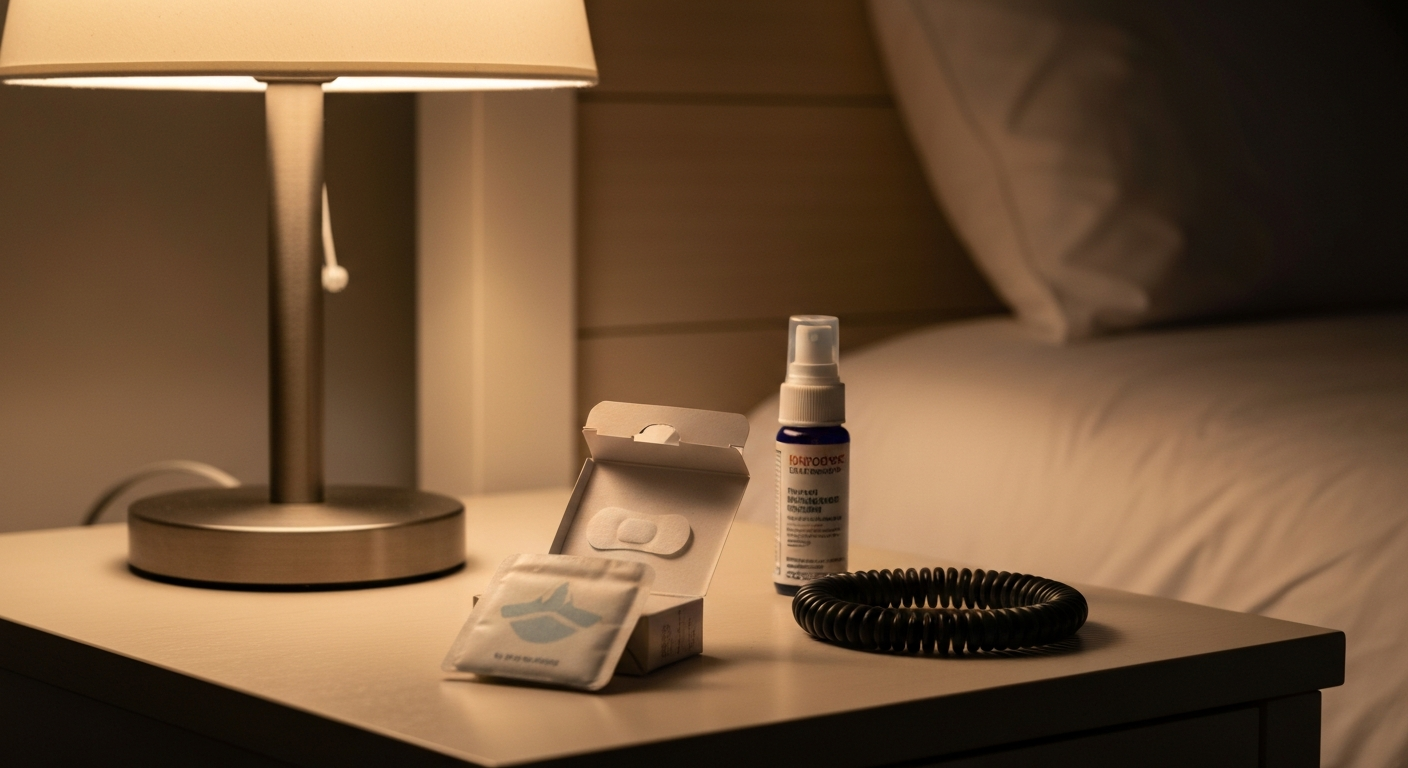

The fastest way to quiet snoring tonight is to physically stop airway collapse while you sleep — not to wait weeks for a lifestyle change to pay off. Nasal strips, mouth tape, anti-snore sprays, and chin straps target the exact moment soft tissue blocks airflow, and most show some effect the very first night.
Snoring happens when relaxed throat and nasal tissue vibrates as air squeezes past it during sleep. The products in this guide work by widening the nostrils, holding the jaw or lips in a better position, or lightly toning the throat tissue itself — three different mechanical fixes for three different versions of the same problem. None of them is a cure for sleep apnea, and that distinction matters before you buy anything.
Snoring starts when the soft tissue in your nose, throat, or the back of your tongue relaxes enough to partially block airflow, creating the vibration you hear. The exact location of that narrowing — nose, mouth, or throat — determines which product will actually help.
When you fall into deep sleep, the muscles supporting your soft palate, tongue, and throat walls lose tone (they go slack, the same way your arm goes limp when you fall asleep sitting up). Air still has to move in and out of a narrower space, so it speeds up and makes the surrounding tissue flutter. That flutter is the sound.
Nasal congestion adds a second bottleneck. A stuffy or narrow nose forces more air through the mouth, which dries out and relaxes the throat tissue faster, which makes the vibration louder. According to the American Academy of Sleep Medicine, nasal strips and external dilators may reduce snoring by widening the nostrils, but the agency is clear that they are not a treatment for obstructive sleep apnea (OSA) — a distinction that matters because the products in this article address simple snoring, not a diagnosed breathing disorder.
If you snore loudly every night, gasp or choke during sleep, or feel exhausted no matter how much you sleep, talk to a doctor about an apnea screening before relying on any device below. Mechanical fixes can mask the symptom of apnea without treating the underlying drops in oxygen, which is a medical risk, not just an inconvenience.
Nasal strips and internal nasal dilators pull the nostrils open from the outside or inside, which helps when the bottleneck is in your nose — but research shows the effect is modest and inconsistent. They are the most "tonight" of the products here: open the package, stick it on, go to sleep.
External strips (the adhesive kind across the bridge of the nose) use a stiff band to spring the nostrils open, similar to a tiny external splint. Internal dilators work the opposite way, inserting a small flexible piece into each nostril to hold the passage open from the inside. Both are aimed squarely at congestion-driven snoring, not throat-based snoring, which is why they don't work for everyone.
"Nasal strips are most helpful when the source of snoring is in the nose. They may improve airflow but they are not a treatment for sleep apnea." — Dr. Lulu Guo, MD at SleepApnea.org
That last point is worth repeating: if your snoring originates in your throat rather than your nose — which is common with mouth breathers and people who snore regardless of congestion — a nasal strip alone usually won't move the needle. A simple way to tell which one you're dealing with: pinch your nostrils shut gently while breathing through your mouth before bed. If you can still make a snoring-like sound through your mouth, the problem isn't purely nasal.
Also Read: The Fastest Fix People Try for This
Mouth tape works by holding your lips closed so you're forced to breathe through your nose, which can quiet mouth-breathing snoring — but sleep doctors are split on whether the benefit outweighs the risk. It has become one of the most talked-about sleep trends of the last two years, largely on the strength of anecdotal social media reports rather than large clinical trials.
The theory is straightforward: mouth breathing dries and relaxes the throat faster than nasal breathing, so closing the mouth should, in principle, quiet the vibration. In practice, the research base behind that idea is thin, and several sleep physicians have pushed back hard on the trend.
"There is no solid scientific evidence to support this pervasive practice. I do not recommend that practice at all." — Dr. Adrian Salmon at UConn Today
A second sleep specialist raised a similar concern from a different angle.
"There's not strong enough evidence to support that mouth tape is beneficial, and it's not part of our current practice to treat any sleep disorder." — Dr. Brian Chen, MD at Cleveland Clinic
This doesn't mean mouth tape is dangerous for everyone — it means it's a poor fit for anyone with nasal congestion, allergies, or undiagnosed sleep apnea, because forcing nose-only breathing through a blocked nose can cause real distress overnight. If you have a clear, unobstructed nose and only mild, occasional snoring, the risk profile is low. If you wake up congested, have allergies, or snore loudly every night, skip it and talk to a doctor instead.
| ✓Our Pick |
Custom-fit anti-snoring mouthpiece that repositions the jaw Highly rated by thousands of buyers — this is one of the most effective solutions for this issue you can try at home. Learn More → |
Throat sprays and essential-oil blends marketed for snoring work mainly by lightly lubricating or toning the soft palate, not by structurally opening the airway — they're the gentlest option here, and also the least proven. Many contain a mix of natural oils like peppermint, eucalyptus, or sage, applied to the back of the throat shortly before bed.
The mechanism these products claim is twofold: temporarily reducing inflammation in the throat tissue, and adding a thin lubricating layer that's supposed to reduce vibration during breathing. Unlike nasal strips or chin straps, there isn't a strong evidence base — most of what exists is small-scale or anecdotal, which is a meaningful gap compared to the nasal-strip research above.
That doesn't make them useless. For people whose snoring is mild and worsens specifically with a dry throat (common in heated bedrooms during winter, or after talking a lot before bed), a throat spray used right before sleep is low-risk and inexpensive to try. Just treat the marketing claims with the same skepticism the underlying research warrants — "clinically tested" on a spray label often means a small internal study, not an independent peer-reviewed trial.
Also Read: How a Snore Straw works and whether it actually helps
Chin straps wrap under the jaw and over the top of the head to hold the mouth shut overnight, the same goal as mouth tape but with a re-usable, adjustable strap instead of adhesive. They're aimed at the same mouth-breathing snorers that mouth tape targets, and the clinical research on them is more developed — and considerably less encouraging.
A controlled study published in the Journal of Clinical Sleep Medicine tested chin straps specifically for sleep-disordered breathing and snoring, including in patients with only mild obstructive sleep apnea.
"A chinstrap alone is not an effective treatment for OSA. It does not improve sleep disordered breathing, even in mild OSA, nor does it improve the AHI in REM sleep or supine sleep. It is also ineffective in improving snoring." — Dr. Sushanth Bhat at Journal of Clinical Sleep Medicine
That's a clear, study-backed result: chin straps used on their own measured no real improvement in snoring or breathing events. They still show up paired with CPAP machines, where they serve a different job — stopping air leaking out of the mouth when the mask is sealed over the nose. As a standalone snoring fix bought off the shelf, the evidence doesn't support them.
| Method | Best for | Night-one effect | Evidence strength |
|---|---|---|---|
| Nasal strips / dilators | Nasal congestion, stuffy nose at night | Mild improvement possible | Mixed; modest at best |
| Mouth tape | Mild snoring, no congestion, clear nose | Varies; risky if congested | Weak; doctors caution against it |
| Throat sprays / oils | Mild, dryness-related snoring | Subtle, short-lived | Very limited |
| Chin straps | Mouth-breathing snorers wanting reusable option | Minimal in studies | Studied; result was negative |
If snoring is loud, constant, or paired with gasping, choking, or daytime exhaustion, no over-the-counter product replaces a medical sleep evaluation. Working through this list is reasonable for occasional or mild snoring; it's the wrong approach for suspected sleep apnea.
Red flags worth escalating immediately include: your bed partner reports pauses in your breathing, you wake yourself up gasping, you have high blood pressure that's hard to control, or you fall asleep unintentionally during the day. A home sleep study or in-lab polysomnogram can tell you definitively whether apnea is involved — something none of the products above are designed to diagnose or treat.
Nasal strips, mouth tape, throat sprays, and chin straps each target a different physical cause of snoring — nasal congestion, mouth breathing, throat dryness, or jaw position — and none of them treats sleep apnea. Nasal strips and a custom-fit mouthpiece like SnoreMeds have the most practical track record for mild, nose- or jaw-related snoring. Mouth tape carries real cautions from sleep doctors and should be skipped if you have any nasal congestion. Chin straps, despite wide availability, showed no measurable benefit in controlled research. If snoring is loud, frequent, or accompanied by breathing pauses, see a doctor before trying another device.
No. Nasal strips only help when the snoring originates in the nose, such as from congestion or narrow nasal passages. If your throat tissue is the source of the vibration, a nasal strip won't have much effect, and you may need a different product, like a mouthpiece or chin strap, instead.
It depends on your nasal health. Sleep doctors caution that mouth taping lacks strong supporting evidence and can be risky for anyone with nasal congestion, allergies, or undiagnosed sleep apnea, since it can make breathing harder rather than easier. People with a clear nose and only mild snoring face a lower risk, but it's still not a doctor-recommended treatment.
Most physical products are designed to work the same night you use them, since they act mechanically rather than building up an effect over time. That said, the actual improvement people notice tends to be modest, and results vary a lot from person to person depending on what's causing the snoring.
No. Research shows chin straps alone don't meaningfully reduce snoring or sleep-disordered breathing, even in mild obstructive sleep apnea. They're sometimes used alongside CPAP to stop air leaking from the mouth, but they aren't a standalone treatment and shouldn't be used as a substitute for diagnosed apnea care.
General remedies focus on lifestyle changes like losing weight, avoiding alcohol before bed, or changing sleep position. The products covered here — nasal strips, mouth tape, throat sprays, and chin straps — are physical tools you wear or apply each night to interrupt the snoring mechanism directly, regardless of lifestyle factors.
Reviewed and Updated on June 23, 2026 by George Wright