Sleep

| ✓Our Pick |
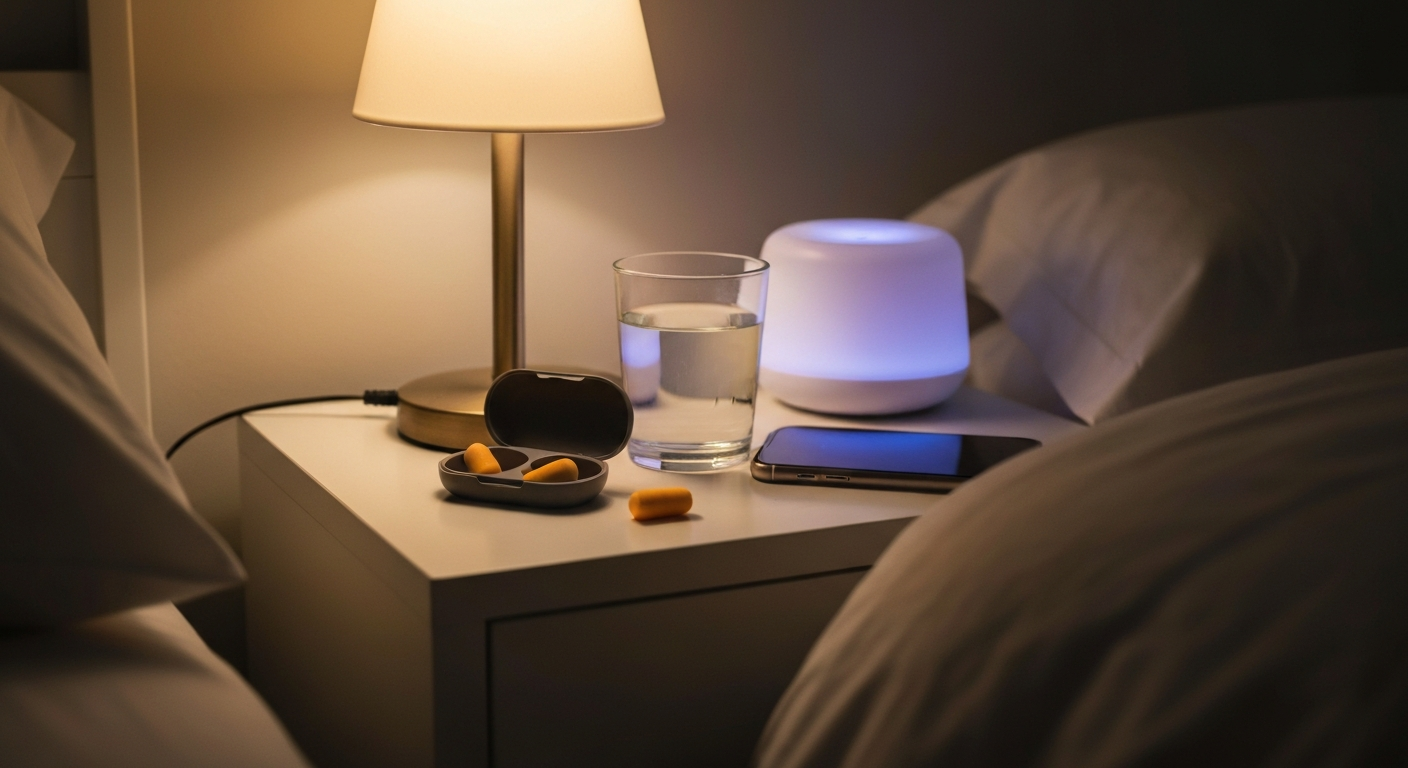
Sleep earplugs designed for snoring noise A well-reviewed choice that delivers real results — worth every penny for anyone dealing with this. See on Amazon → |
Earplugs can genuinely block snoring noise if you pick the right pair, but the right pair matters more than people expect — comfort, fit, and noise reduction rating all decide whether they actually work.
A partner who snores at 50-60 decibels — about as loud as a running air conditioner — can easily disrupt deep sleep, and a well-fitted pair of foam or moldable silicone earplugs can knock that down to a tolerable hum. The catch is that most people grab the wrong earplugs, wear them wrong, or expect them to block 100% of the noise. None of that has to be true if you understand what you're actually shopping for.
Snoring typically measures 50 to 60 decibels, loud enough on its own to interrupt sleep, and earplugs with the right noise reduction rating can bring that down to a level your brain can sleep through.
Snoring volume varies a lot. Mild snoring sits around 50 decibels — similar to steady rainfall. Severe snoring can climb to 70-80 decibels, comparable to a vacuum cleaner or running garbage disposal. According to the World Health Organization's noise guidance, continuous sound above just 30 decibels is enough to disturb sleep, trigger difficulty falling asleep, and cause frequent awakenings during the night. That means even "mild" snoring is well above the threshold your brain needs for undisturbed rest.
This is why a snoring partner doesn't just annoy you — it measurably damages your sleep architecture. Partners of people who snore have been shown to experience worse sleep efficiency and a higher percentage of light, easily-interrupted sleep compared to people sleeping next to a non-snorer.
Earplugs work by physically sealing the ear canal, which dampens sound waves before they reach the eardrum. According to the Sleep Foundation, "correctly worn earplugs should block or significantly reduce the sound of snoring." The word "correctly" is doing a lot of work in that sentence — fit is what separates an earplug that works from one that just sits there.
Look for earplugs with a Noise Reduction Rating (NRR) of 27 to 33 decibels — that range matches typical snoring volume without going so far you can't hear anything at all.
The Noise Reduction Rating, or NRR, is a number printed on earplug packaging that estimates how many decibels of sound the earplug blocks under ideal lab conditions. According to the Sleep Foundation, "earplugs typically have an NRR between 22 dB to 33 dB," and the right choice "depends on your needs and how loud the noises in your bedroom are."
Here's the catch most shoppers miss: that number is a best-case lab estimate, not a guarantee. The CDC's National Institute for Occupational Safety and Health (NIOSH) notes that "hearing protector manufacturers include a noise reduction rating (NRR) on packaging, but this often does not reflect the actual protection provided for each worker." A loose fit, a foam plug that didn't fully expand, or hair caught under the seal can all cut the real-world reduction by half or more. NIOSH does note one reassuring baseline, though: "almost any hearing protector, when fit correctly, can reduce noise by 10 dB" — which on its own can take the edge off moderate snoring.
For snoring specifically, this translates into a simple rule: aim toward the higher end of the NRR range (27-33 dB) rather than the low end, since real-world performance almost always comes in under the labeled number.
| NRR Range | Lab-Rated Reduction | Realistic Use Case |
|---|---|---|
| 22-26 dB | Moderate | Light snoring, quiet sleeper, light sleeper not too sensitive to sound |
| 27-30 dB | High | Typical snoring (50-65 dB), most partners |
| 31-33 dB | Maximum | Loud or chronic snoring (70+ dB), very light sleepers |
| ✓Our Pick |
Comfortable noise-blocking earplugs built for side sleepers Used by over 10,000 satisfied customers — an easy, affordable option you can start using today. See on Amazon → |
Soft silicone putty and low-profile foam earplugs are the most comfortable options for side sleepers, since they don't protrude far enough to dig into your ear when your head presses into the pillow.
Material matters as much as NRR if you sleep on your side, which is most people. Standard foam plugs can work loose overnight or press uncomfortably against the pillow. Moldable silicone putty earplugs conform to the shape of your outer ear and sit nearly flush, which is why the Sleep Foundation found that certain low-profile designs let "even side sleepers feel comfortable" and don't "protrude at all," so you "can sleep comfortably in the side position."
A few practical comfort notes worth knowing before you buy:
If foam earplugs irritate your ear canal or fall out overnight, switching material — not giving up on earplugs altogether — usually solves it.
The biggest risks are missing important sounds (alarms, a crying child, smoke detectors) and minor ear health issues from nightly use, like earwax buildup or irritation — both manageable with simple precautions.
Earplugs are not risk-free, and it's worth knowing what you're trading for quieter sleep. According to Healthline, reviewed by physician assistant Cynthia Taylor Chavoustie, "over time, earplugs can push earwax back into your ear, causing a buildup" that "can cause several problems, including temporary hearing loss and tinnitus." The same review notes that "earplugs can also cause ear infections," since "bacteria growing on earplugs can also cause them."
The more serious downside is situational awareness. High-NRR earplugs are, by design, very good at blocking sound — including sounds you need to hear. If you have young children, rely on a phone alarm without a strong vibration backup, or live somewhere smoke detectors are your primary fire warning, this is a real safety tradeoff to think through before committing to nightly use.
A few ways people manage this without giving up on earplugs:
None of this means earplugs are a bad idea — it means they work best as one part of a broader plan, not a total solution worn on autopilot every single night.
Earplugs work best paired with at least one other coping strategy — white noise, separate sleep spaces on bad nights, or addressing the snoring itself — rather than relying on earplugs alone.
Earplugs solve the noise problem for your ears, but they don't address why your partner is snoring, and they're not the only option for protecting your own sleep in the meantime.
Also Read: Partner Snores? What to Do Tonight and Going Forward
A few complementary approaches worth layering in:
Combining a comfortable, well-rated earplug with one of these strategies tends to outperform any single fix on its own, since you're addressing both the sound and the underlying disruption pattern.
Earplugs can effectively block snoring noise when you choose the right NRR (27-33 dB for typical to loud snoring) and the right material for your sleep position — silicone putty or low-profile foam for side sleepers. The main tradeoffs are missing important sounds like alarms or a child's cries, and minor ear health issues like wax buildup from nightly use, both of which are manageable with simple precautions like vibrating alarms and regular earplug replacement. For the best results, pair earplugs with another coping strategy, like white noise or occasional separate sleep, rather than relying on them alone.
Yes, when fitted correctly and matched to the volume of the snoring. Foam and silicone earplugs with an NRR of 27 dB or higher typically reduce snoring (50-80 decibels) to a level that no longer disrupts sleep. The most common reason earplugs "don't work" is incorrect insertion or too low an NRR for the snoring volume, not a flaw in earplugs as a solution.
Aim for an NRR between 27 and 33 decibels for typical to loud snoring (50-80 decibels). Lower-rated earplugs (22-26 dB) may be enough for mild, occasional snoring or lighter sleepers who aren't very sound-sensitive, but real-world performance is usually lower than the labeled rating, so it's safer to round up.
Mostly yes, with a few precautions. Nightly use can push earwax deeper into the ear canal and occasionally lead to buildup or minor ear infections, so it helps to replace disposable earplugs every few days and give your ears an occasional night off. The bigger safety consideration is that earplugs can block alarms, smoke detectors, or a child's cries, so pair them with a vibrating alarm or another backup if that's a concern in your household.
White noise machines are the most common alternative, masking snoring with a steady background sound rather than blocking your hearing entirely. Occasional separate sleeping arrangements on particularly loud nights, and addressing the snoring at its source (sleep position changes, anti-snoring mouthpieces, nasal strips), can also reduce how often you need to rely on earplugs at all.
Used as directed, earplugs don't damage hearing — they protect it. The realistic risks are localized: earwax buildup, occasional minor ear infections from bacteria on reused earplugs, and temporary muffled hearing or tinnitus if wax accumulates. Replacing earplugs regularly and keeping ears dry and clean during insertion largely prevents these issues.
Reviewed and Updated on June 23, 2026 by George Wright