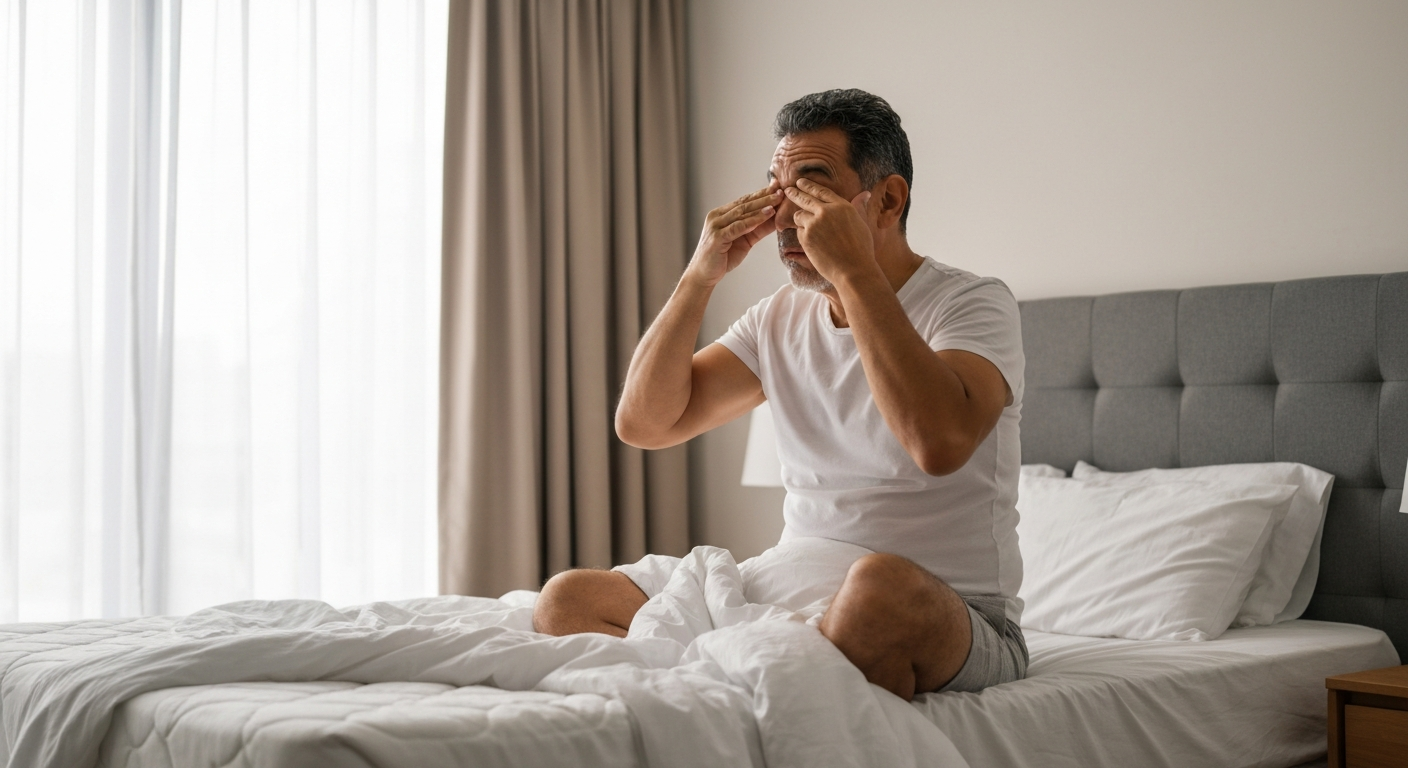
Sleep
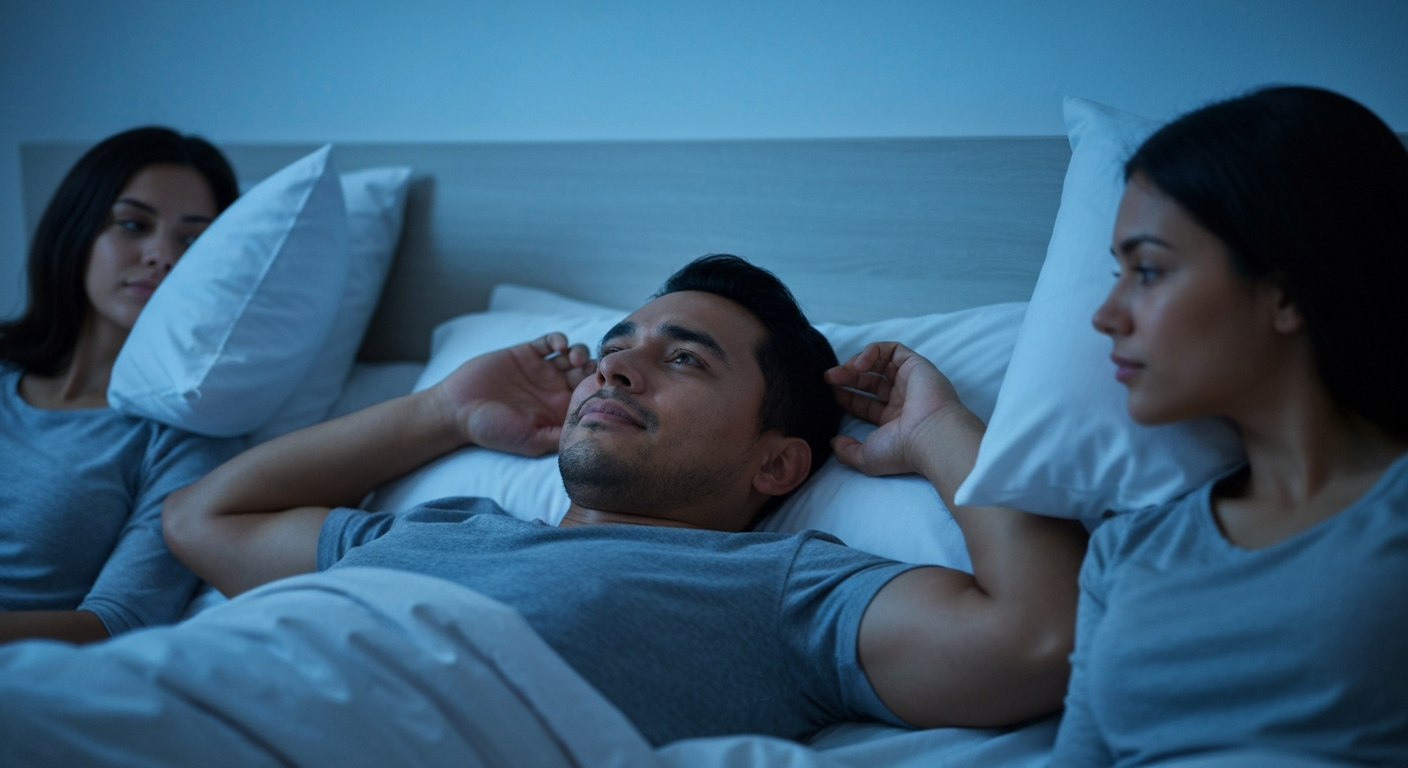

Most husbands who snore aren't doing anything wrong — relaxed throat muscles, nasal blockage, or extra neck weight narrow the airway during sleep, and the vibration is the result. The good news: most of these causes have a specific, low-effort first fix before anyone needs a sleep clinic referral.
| ✓Our Pick |
Custom-fit mouthpiece that repositions the jaw to stop snoring at the source A well-reviewed choice that delivers real results — worth every penny for anyone dealing with this. Learn More → |
Snoring happens when relaxed tissue in the nose, mouth, or throat narrows the airway enough that airflow makes it vibrate — and several common male traits make that narrowing more likely. Men snore more often than women in part because of where fat tends to settle (neck and upper torso) and because male airways are, on average, slightly longer and more prone to collapsing during sleep.
Snoring itself is just noise — vibrating tissue, nothing more. But it's also a signal. According to the Cleveland Clinic, "snoring is one of the first signs of obstructive sleep apnea, a health condition where your breathing pauses or is disrupted while you're asleep," as explained by Dr. Nancy Foldvary-Schaefer, DO, MS, a sleep medicine specialist there. That doesn't mean every snorer has apnea — most don't — but it's why persistent, loud snoring is worth taking seriously rather than just tolerating with earplugs.
Plain snoring is steady and doesn't interrupt breathing. Obstructive sleep apnea (OSA) involves pauses in breathing, gasping, or choking sounds, and daytime exhaustion despite a full night in bed. If your husband's snoring includes any of those, it's a different conversation — see the "When to Worry" section below.
The most common causes are nasal blockage, throat and mouth anatomy, alcohol before bed, extra weight around the neck, sleep position, and natural age-related muscle loosening — usually more than one is at play at once. Here's how each one narrows the airway.
Yes. When the nasal passages are partly blocked — by a cold, allergies, a deviated septum, or nasal polyps — air has to move faster through a narrower space, and that faster airflow is what makes soft tissue vibrate. As Cleveland Clinic explains, "If you have partially blocked nasal passages, you have to make an extra effort to transfer air through them... Injuries to your nose, such as a deviated septum... or nasal polyps... can also cause the kind of obstruction that leads to snoring," according to Dr. Foldvary-Schaefer. A husband who only snores during allergy season or a cold is usually dealing with this cause specifically, not a structural problem.
Yes — the shape of the mouth and throat matters as much as what's blocking the nose. Enlarged tonsils, a long soft palate, or an elongated uvula all narrow the passage between the nose and throat. Cleveland Clinic notes that "if the roof of your mouth is longer or softer than usual — or if your uvula... is longer — the opening from your nose to your throat can be narrower." This is one reason some men snore even when they're not overweight and don't drink — the anatomy itself is the bottleneck.
"Snoring is one of the first signs of obstructive sleep apnea, a health condition where your breathing pauses or is disrupted while you're asleep." — Dr. Nancy Foldvary-Schaefer, DO, MS, Sleep Medicine Specialist at Cleveland Clinic
Yes, and this is one of the easiest variables to test. Alcohol is a muscle relaxant, and that relaxation doesn't stay in the limbs — it loosens the muscles holding the airway open too. The NIH's National Heart, Lung, and Blood Institute states plainly that "alcohol can make the muscles of your mouth and throat relax, which may close your upper airway." If snoring is noticeably louder on nights your husband has had a couple of drinks versus nights he hasn't, alcohol is very likely a direct contributor — not a coincidence.
It's one of the strongest, best-documented links. Extra fat around the neck and throat physically narrows the airway, and a larger neck circumference is one of the clearest predictors of both snoring and sleep apnea risk. According to the NHLBI, "people with obesity can have increased fat deposits in their neck that can block their upper airway." This is also why snoring sometimes appears or worsens after weight gain in adulthood, even in men who never snored in their twenties.
| ✓Our Pick |
AI-powered calorie and food tracker for managing weight without obsessive counting This is the go-to fix recommended by professionals — save time and money by getting it right the first time. Learn More → |
Yes — this is the single most fixable cause on this list. Lying flat on the back lets gravity pull the tongue and soft palate backward into the throat, narrowing the same airway that's already prone to collapsing. Cleveland Clinic confirms that "sleeping on your back is more associated with snoring than other positions, such as sleeping on your side or stomach," per Dr. Foldvary-Schaefer. Many husbands who snore loudly on their backs are nearly silent on their sides — it's worth testing for a few nights before trying anything else.
Also Read: Best Sleeping Positions to Stop Snoring (Ranked)
Generally, yes. As men get older, the muscles supporting the throat — like muscles everywhere else — gradually lose tone and become more prone to slackening during sleep. That looser tissue vibrates more easily and more often. This is one reason a husband who never snored in his 20s or 30s may start snoring regularly in his 40s and 50s, without any new illness or major weight change explaining it.
Yes, and this version usually resolves on its own. Seasonal allergies, sinus infections, and colds all cause nasal swelling and congestion, producing the same airflow-narrowing effect as a structural nasal blockage — just temporarily. If snoring started suddenly alongside a stuffy nose or sneezing and disappears once the cold or allergy season passes, this is almost certainly the cause, not something chronic.
For some men, yes — and this is the one cause that needs more than a lifestyle tweak. Obstructive sleep apnea is a repeated, complete blockage of the airway during sleep, not just vibrating tissue. It's diagnosed with a sleep study, not guessed from snoring alone.
"It's important to get a comprehensive workup to find out what's causing your snoring." — Dr. Tony Reisman, Otolaryngologist at Cleveland Clinic
If your husband is already using CPAP therapy and it isn't fully resolving the snoring, that's a different troubleshooting path — see Why Is My Husband Still Snoring With CPAP? for mask fit, pressure, and leak issues specific to that therapy.
| Cause | First-Line Fix | When to Escalate |
|---|---|---|
| Nasal blockage (cold/allergy) | Saline rinse, antihistamine, nasal strip | Persists past 2 weeks with no cold |
| Anatomy (tonsils, uvula, soft palate) | Anti-snoring mouthpiece to reposition jaw/tongue | No improvement after consistent use |
| Alcohol before bed | Stop drinking within 3–4 hours of sleep | Snoring continues even alcohol-free |
| Weight / neck circumference | Gradual weight loss, neck circumference tracking | BMI in obese range with loud snoring |
| Back sleeping | Side-sleeping training, body pillow | No change after 1–2 weeks of side sleeping |
| Age-related muscle loosening | Mouthpiece, throat-strengthening exercises | Snoring worsens sharply over months |
| Suspected sleep apnea | Sleep study referral | Gasping, choking, or breathing pauses reported |
The fastest, lowest-effort fix for most men is an anti-snoring mouthpiece that holds the jaw slightly forward, since that opens the same airway space that alcohol, sleep position, and aging all narrow. It won't fix sleep apnea, but it directly addresses the anatomy and muscle-relaxation causes that affect the majority of male snorers.
Also Read: What Actually Works for This, Fast
Loud, constant snoring on its own usually isn't dangerous — but gasping, choking sounds, witnessed breathing pauses, or daytime exhaustion despite a full night's sleep are signs it could be sleep apnea, which does need medical evaluation. Sleep apnea raises long-term risk for high blood pressure, heart problems, and daytime accidents from drowsiness, so it's not something to wait out.
Talk to a doctor if your husband:
A sleep study (in a lab or at-home) is the only way to confirm or rule out sleep apnea. It's a straightforward, non-invasive test, and getting it done early prevents months of guessing.
Most husbands who snore have one or more of eight common causes: nasal blockage, throat/mouth anatomy, alcohol, extra neck weight, back sleeping, age-related muscle loosening, temporary allergies or colds, or — less often — sleep apnea. Side-sleeping, cutting evening alcohol, and an anti-snoring mouthpiece resolve the majority of cases without a doctor's visit. The exception is suspected sleep apnea — gasping, breathing pauses, or persistent daytime exhaustion — which needs a real sleep study, not a home remedy. If he's already on CPAP and still snoring, that points to a mask or pressure issue rather than a new cause.
Lying flat lets gravity pull the tongue and soft palate backward into the throat, narrowing the airway more than side or stomach sleeping does. This is why many men who snore loudly on their backs are noticeably quieter on their sides. Training your husband to fall asleep on his side — using a body pillow or a shirt with a tennis ball sewn into the back — often reduces snoring within a week or two without any other changes.
In many cases, yes, especially when extra weight is concentrated around the neck. Fat deposits around the throat physically narrow the airway, so even a modest reduction in neck circumference can reduce or eliminate snoring. It won't help if the snoring is mainly caused by anatomy (like enlarged tonsils) or sleep apnea, so it's worth combining with other fixes rather than relying on it alone.
Yes, especially with age, weight gain, or a new habit like drinking later in the evening. Throat muscle tone naturally loosens over the years, which is why snoring that wasn't present in someone's 20s or 30s often appears in their 40s or 50s. Sudden new snoring is also a reason to rule out other changes — nasal injury, recent weight gain, or a new medication that causes drowsiness or muscle relaxation.
For snoring caused by jaw position, tongue placement, or general muscle relaxation — which covers a large share of male snorers — a well-fitted mouthpiece that holds the jaw slightly forward can meaningfully reduce or stop the vibration. It is not a treatment for sleep apnea itself, though some people use one alongside other care. Consistency matters more than the specific brand — it only works while it's actually being worn.
Volume alone isn't the main warning sign — what happens around the snoring matters more. Gasping, choking, witnessed pauses in breathing, or daytime exhaustion despite enough sleep are the real red flags for sleep apnea, not loudness by itself. If those symptoms aren't present, very loud snoring is usually just very loud vibration — annoying, but not dangerous on its own.
Reviewed and Updated on June 23, 2026 by George Wright