
Technology
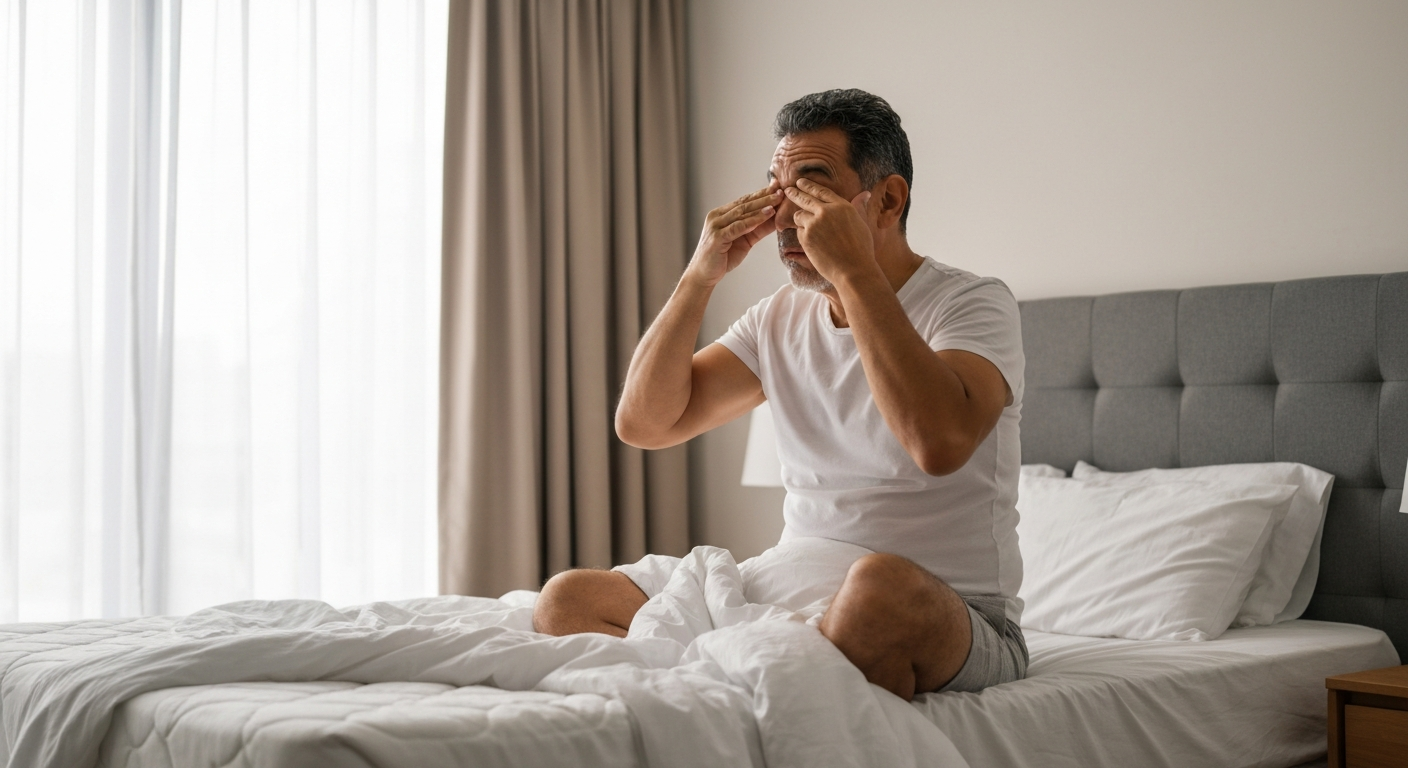

Snoring doesn't just disturb the person next to you — it disrupts your own sleep architecture, pulling you out of deep and REM sleep through repeated micro-arousals long before it ever becomes loud enough to notice.
Every snore is a sign that air is squeezing through a narrowed airway, and that narrowing — not just the noise — is what fragments your sleep. The vibration you hear is soft tissue at the back of the throat flapping as air struggles past it. According to the Sleep Foundation, "during sleep, the muscles loosen, narrowing the airway. As a person inhales and exhales, the moving air causes the tissue to flutter and make noise" (Sleep Foundation). That narrowing forces your breathing muscles to work harder, and your brain notices.
Each time airflow gets tight enough, your brain triggers a brief, protective wake-up signal called a micro-arousal — even though you stay asleep and remember none of it. These arousals can happen dozens of times an hour in heavy snorers, and each one resets your progress through the sleep cycle. Instead of moving smoothly from light sleep into deep sleep and then into REM, you get pulled back toward lighter stages every time your airway narrows.
Research backs this mechanism directly. A 2024 study published in PLOS ONE found that "snoring time was shown to be predominant during N3 and N2 sleep and less dominant during REM sleep" (Suzuki M, Kawai Y, Funayama Y, PLOS ONE). That matters because N3 — deep, slow-wave sleep — is when your body does most of its physical repair work. If snoring is concentrated there, it's interrupting the exact stage you can least afford to lose.
You don't need full-blown sleep apnea to fragment your sleep — partial airway narrowing alone is enough to trigger repeated brain arousals all night. This pattern has a clinical name: upper airway resistance. It sits on the milder end of the same spectrum as obstructive sleep apnea (OSA), but it doesn't require your airway to fully close.
According to a StatPearls clinical overview authored by Abdulghani Sankari, Margaret D. Maggard, and Marco Cascella, "repetitive episodes of flow limitation typically result in arousals triggered by increased respiratory effort, leading to sleep fragmentation" (NCBI StatPearls). In plain terms: your throat doesn't have to close all the way for your brain to interrupt sleep. It just has to make breathing noticeably harder, over and over, for the brain to step in.
This is the core science most generic snoring articles skip. Snoring isn't simply "loud breathing" — it's a physical signal that your airway is working overtime, and your brain is responding to that effort by repeatedly nudging you toward wakefulness, even when you have no memory of waking up.
Also Read: CPAP and Snoring: Do You Actually Need One?
Snoring and obstructive sleep apnea sit on the same spectrum, but they damage sleep differently: snoring narrows the airway and fragments sleep through repeated arousals, while apnea closes it completely and adds repeated drops in blood oxygen on top of that fragmentation. Both interrupt your sleep cycle, but apnea adds a second layer of physiological stress that simple snoring does not.
The Sleep Foundation draws this distinction clearly: "Obstructive sleep apnea (OSA) is a breathing disorder in which the airway gets blocked or collapses during sleep, causing repeated lapses in breath" (Sleep Foundation). With snoring alone, airflow is reduced but never stops. With OSA, breathing actually pauses — sometimes for ten seconds or longer — and oxygen levels can drop measurably each time.
The table below lays out how the two patterns compare on the markers that matter most for sleep quality.
| Marker | Snoring (airway narrowing) | Obstructive Sleep Apnea (airway blockage) |
|---|---|---|
| Airway state | Partially narrowed | Fully or near-fully blocked |
| Airflow | Reduced but continuous | Stops temporarily (apnea event) |
| Brain response | Micro-arousals from breathing effort | Arousals plus oxygen-drop response |
| Blood oxygen | Typically stable | Can drop noticeably per event |
| Deep sleep (N3) impact | Reduced via frequent light arousals | Reduced more severely, often with REM loss too |
| Daytime fatigue | Often mild to moderate | Often pronounced, with higher health risk |
If you snore loudly, wake up gasping, or your partner notices pauses in your breathing, that points toward the apnea end of the spectrum rather than simple snoring — and it's worth getting evaluated rather than self-treating.
You can have fragmented sleep from snoring without ever realizing you woke up — the clues show up the next day instead. Because micro-arousals are so brief, most snorers never remember them. What you will notice is the downstream effect: feeling unrested no matter how many hours you spent in bed.
Common signs that snoring-related fragmentation is affecting your sleep quality include:
None of these symptoms alone confirms a sleep-fragmentation problem — fatigue has many causes — but if they show up alongside regular, noticeable snoring, the snoring itself is the more likely explanation than poor sleep hygiene.
The most direct way to protect your sleep architecture is to reduce the airway narrowing that's triggering the arousals in the first place — not just muffle the noise. Positional changes, weight management, and reduced evening alcohol intake all help by keeping throat tissue from collapsing as easily. For many people, a mandibular device that repositions the jaw forward is the most effective at-home option, because it directly opens the airway rather than treating the sound.
| ✓Our Pick |
Custom-fit anti-snoring mouthpiece that repositions the jaw to open the airway Consistently earns five-star reviews — reliable, well-supported, and genuinely effective. Learn More → |
Also Read: The Quick Fix Most People Reach for First
If snoring is heavy and consistent, sleep position matters too — side-sleeping keeps the tongue and soft palate from collapsing backward as easily as sleeping on your back.
Also Read: Best Sleeping Positions to Stop Snoring (Ranked)
If you snore loudly most nights, wake up gasping, or feel persistently exhausted despite a full night in bed, it's time to get evaluated for sleep apnea rather than assuming it's "just snoring." A home sleep study or an overnight test at a sleep clinic can measure exactly how often your airway narrows or closes, and how much oxygen drops as a result — information you can't get from how loud the snoring sounds.
Also Read: Snoring Symptoms: What's Normal vs. What's a Warning Sign
Snoring fragments sleep through repeated micro-arousals triggered by a narrowed airway, even when no full blockage occurs. This pulls you out of deep, slow-wave sleep and reduces how restorative your night feels, independent of total hours slept. It differs from sleep apnea mainly in degree: apnea adds complete airway blockage and oxygen drops on top of the same arousal pattern. Persistent daytime fatigue alongside regular snoring is the clearest sign your sleep architecture is being disrupted. Addressing the airway narrowing directly — through positioning, jaw-repositioning devices, or medical evaluation — protects sleep quality more effectively than simply masking the sound.
Yes. Snoring reflects a narrowed airway, and that narrowing alone can trigger repeated micro-arousals that fragment sleep, even when the airway never fully closes. This pattern is sometimes called upper airway resistance, and it can reduce time spent in deep, restorative sleep without meeting the criteria for obstructive sleep apnea.
Frequent micro-arousals reset your progress through the sleep cycle before you reach enough deep or REM sleep, so total hours in bed don't translate into proportional rest. You're sleeping, but the sleep is broken into many short segments rather than long, restorative stretches. This is why snorers often feel unrested despite logging 7–8 hours.
Research shows snoring is more concentrated during N2 and N3 (light-to-deep NREM) sleep and less common during REM sleep, which means the arousals it triggers most directly interrupt deep, slow-wave sleep. Since N3 sleep is when the body does most physical repair, frequent snoring-driven arousals there can leave you feeling physically unrested even after a full night.
Snoring narrows the airway and reduces airflow without stopping it, triggering arousals from breathing effort alone. Sleep apnea goes further: the airway closes fully or nearly fully, breathing actually pauses, and blood oxygen can drop with each event, adding a second source of strain on top of the same fragmentation pattern.
Sleeping on your side rather than your back reduces airway collapse for many people immediately, and a jaw-repositioning mouthpiece can open the airway further by preventing the tongue and soft palate from blocking airflow. If snoring is loud, frequent, or paired with gasping or daytime exhaustion, a sleep evaluation is the most reliable next step to rule out sleep apnea.
Reviewed and Updated on June 23, 2026 by George Wright