Sleep

To avoid snoring while sleeping, position matters most: side sleeping removes the gravitational pull that draws the tongue and soft palate into the airway. Combined with nasal clearing before bed and a mandibular advancement device for structural airway narrowing, most snorers can eliminate or dramatically reduce snoring through positional and physical approaches alone.
Among all non-device interventions, sleep position produces the most immediate and predictable effect on snoring — because it directly controls how gravity acts on the soft tissues in your throat.
When you sleep on your back (supine position), gravity pulls the tongue, soft palate, and uvula directly downward and backward into the airway. This reduces the cross-sectional area of the throat at its narrowest point. Air flowing through this narrowed passage causes the surrounding tissue to vibrate — producing snoring.
When you sleep on your side (lateral position), the tongue falls sideways rather than backward. The airway remains more open. The gravitational effect on the soft palate is reduced. The result is typically less or no snoring.
Clinical studies show that 50 to 60 percent of habitual snorers are position-dependent — their snoring occurs primarily or exclusively on their backs. For this group, consistently sleeping on their side can produce near-complete resolution of snoring.
"Positional therapy for snoring is supported by evidence in a substantial proportion of patients. Sustained lateral positioning during sleep reduces the apnea-hypopnea index and snoring frequency significantly in position-dependent patients." — Journal of Clinical Sleep Medicine at aasm.org
Intending to sleep on your side is not enough — most people drift back to their preferred position within the first sleep cycle. Sustained lateral positioning requires a physical setup that makes returning to the back uncomfortable or difficult.
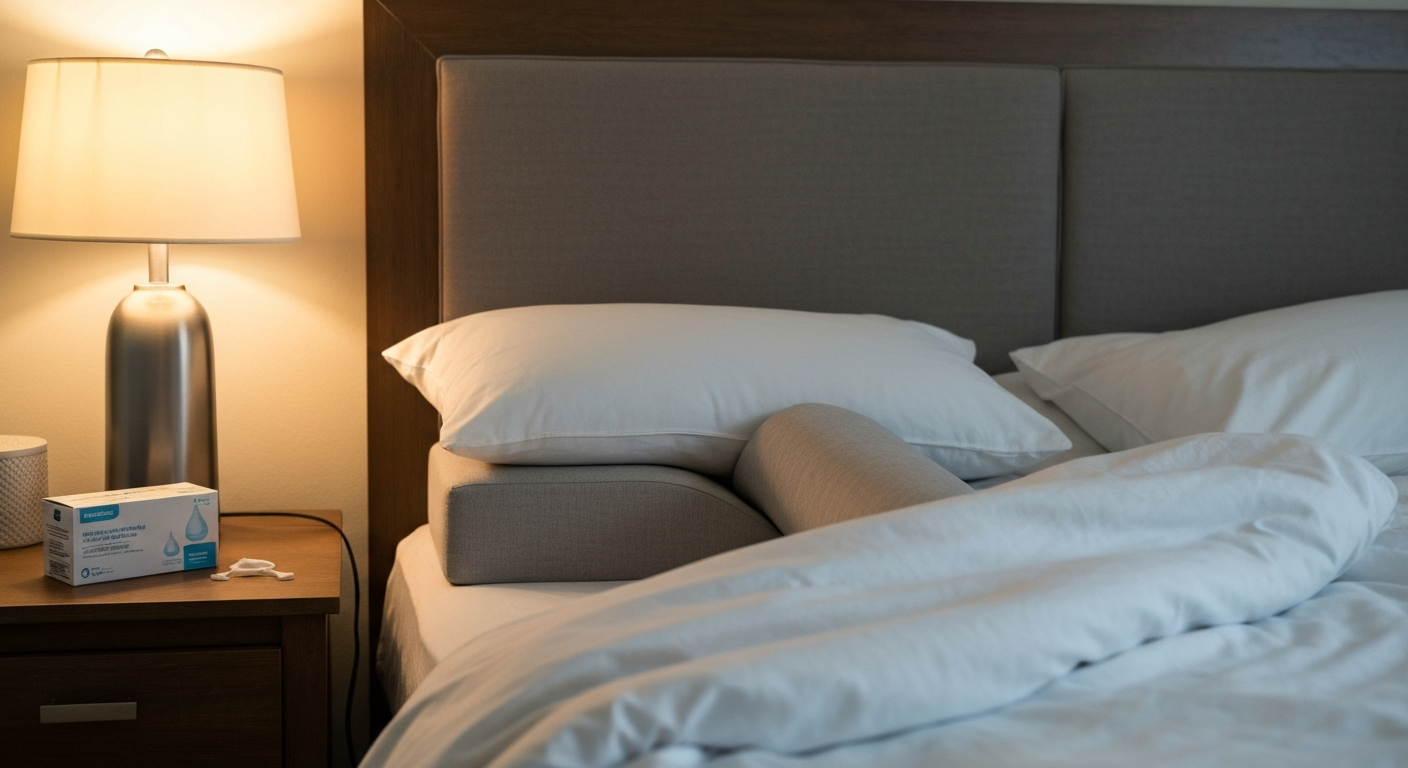
A full-length body pillow placed along your back creates a physical barrier. When you begin to roll backward, the pillow creates resistance and discomfort that prompts your body to stay lateral — usually without fully waking. This is the simplest and most widely effective tool.
Small wearable devices (worn on the chest, neck, or wrist) detect when you roll into a supine position and produce a gentle vibration or sound. This creates a conditioned response over days to weeks — the body learns to avoid supine position to avoid the stimulus. Commercial options include SmartNora and similar devices.
Securing a tennis ball (or a small soft bumper) to the back of a sleep shirt creates mild discomfort when you roll onto your back. The tactile feedback is enough to prompt a position change in lighter sleep stages. Some people find this effective; others find the discomfort too disruptive to sleep itself.
A wedge pillow under the upper body elevates it at 30 to 45 degrees. In this semi-upright position, gravity still pulls the tongue forward relative to the throat — reducing airway collapse even in people who tend to drift onto their backs during sleep.
Also Read: Best Pillow for a Snorer: 4 Types That Actually Work
Beyond position, physical interventions that change airway anatomy directly — nasal dilation and jaw repositioning — address snoring that persists even in optimal sleeping positions.
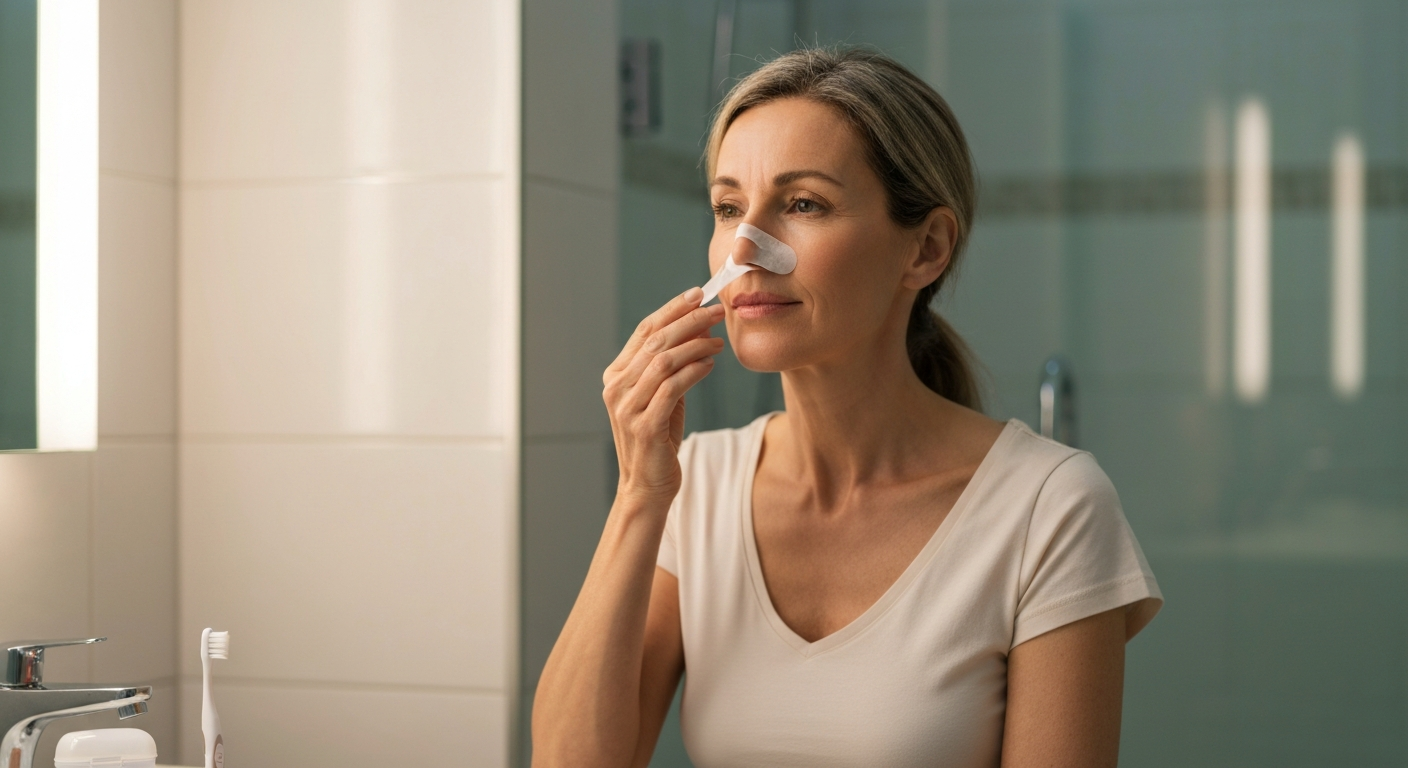
Nasal strips applied across the bridge of the nose mechanically widen the nostrils, reducing nasal resistance and making nose breathing easier throughout the night. For snorers whose snoring is partly driven by nasal congestion or narrow nasal anatomy, nasal strips reduce the pressure differential that draws the throat walls inward.
Internal dilators — soft plastic or silicone inserts placed just inside the nostrils — work by the same mechanism from inside the nose.
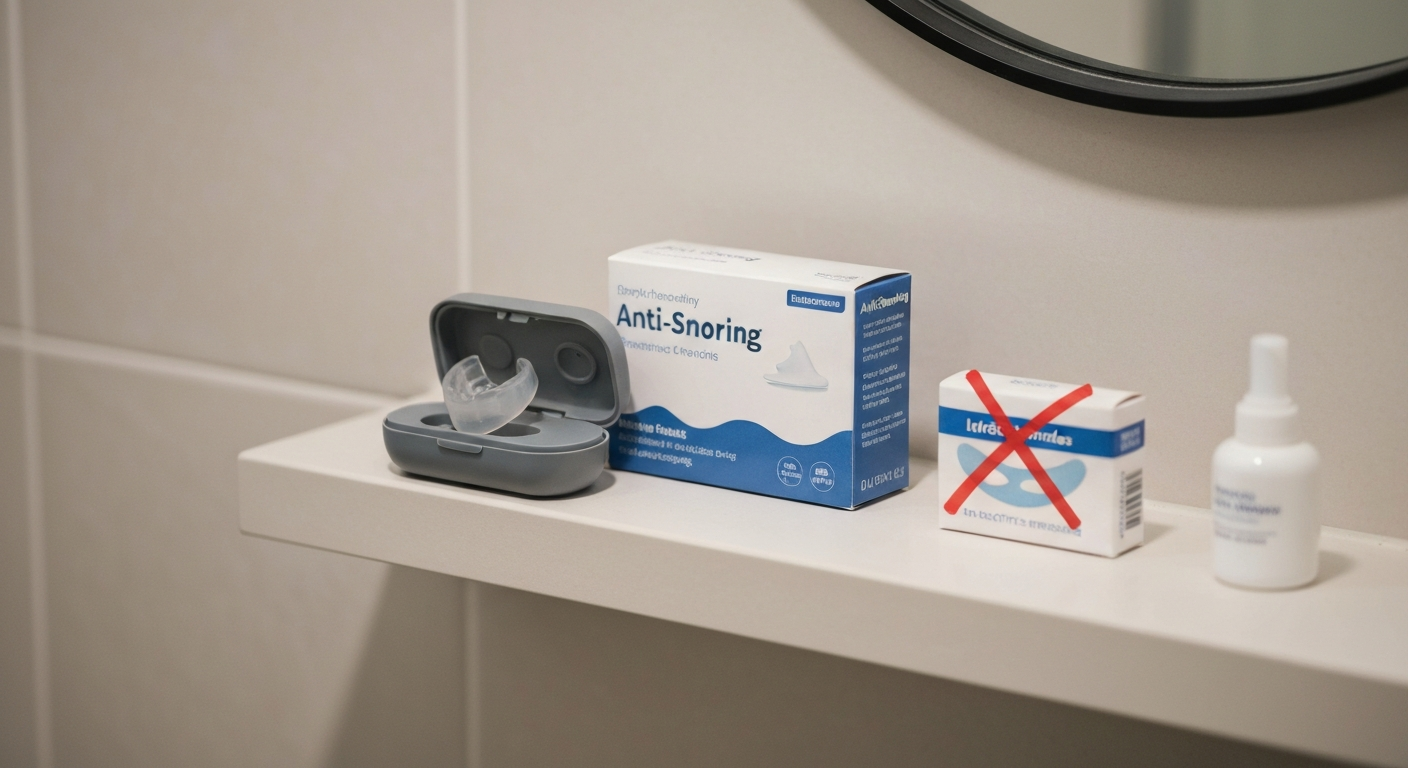
For snoring that persists despite optimal sleep position, a mandibular advancement device addresses the structural airway problem directly. By holding the lower jaw forward during sleep, a MAD:
SnoreMeds provides a self-impression MAD that you mold to your own teeth at home, offering personalized fit at a fraction of the dental-office cost.
| ✓Our Pick |
Avoid snoring in any sleep position with a custom-fit SnoreMeds mouthpiece — repositions the jaw to keep your airway open This is the go-to fix recommended by professionals — save time and money by getting it right the first time. Learn More → |
Pillow height and sleeping surface firmness affect airway geometry by changing how the head, neck, and jaw relate to each other during sleep.
The pillow should be thick enough to fill the space between the ear and the mattress, keeping the cervical spine neutral. A pillow that is too thin allows the head to drop toward the mattress, compressing the side of the throat. A pillow that is too thick pushes the head upward, potentially angling the chin down and narrowing the anterior airway.
Most side sleepers do best with a medium-firm pillow at 4 to 6 inches of loft.
The pillow height becomes less important than the bed angle. A wedge pillow that elevates the entire upper body at 30 degrees allows back sleeping while reducing airway collapse through postural gravitational advantage.
Also Read: Snoring Help: 7 Proven Solutions That Actually Work
The most effective physical approach combines positional support with nasal dilation and — for persistent snoring — a mandibular advancement device.
Recommended physical setup:
- Body pillow along the back of the bed (positional barrier)
- Medium-firm side-sleeping pillow at appropriate loft
- Nasal strips on the nightstand for pre-bed application
- MAD in its case, placed visibly to remind you to wear it
- Bedroom humidifier running at 40–50% humidity (reduces tissue dryness)
Think of it as creating an environment where the path of least resistance during sleep is lateral, nasal breathing with an open airway — rather than supine, mouth breathing with a narrowed throat.
Avoiding snoring while sleeping is primarily a positional problem with a physical solution. Side sleeping supported by a body pillow or wedge removes the gravitational factor that narrows the throat. Nasal strips address nasal-origin airway resistance. A mandibular advancement device is the most effective physical tool for structural throat-level snoring and works regardless of sleep position. For snoring that persists despite these measures — especially with breathing pauses — a sleep medicine consultation is appropriate.
Both lateral positions are significantly better than supine for snoring. The difference between left and right side is small. Some evidence suggests the left side is slightly better for people who also have acid reflux (reducing reflux improves throat inflammation that can worsen snoring), but either side is effective for pure positional snoring.
A firmer mattress makes it easier to roll without sinking, which can help some people maintain their preferred lateral position. It also prevents the hip-and-shoulder sink that can cause the spine to rotate toward supine in side sleepers. It is a contributing factor rather than a primary fix.
Yes. Too-thin a pillow drops the head toward the mattress, compressing one side of the throat. Too-thick a pillow pushes the head up and forward, potentially narrowing the anterior airway. A pillow that keeps the ear directly above the shoulder — maintaining neutral cervical alignment — reduces both positional and structural contributors to snoring.
Side sleeping eliminates positional snoring but does not address structural snoring — snoring caused by jaw anatomy, excess throat tissue, or nasal obstruction. If you snore consistently on your side as well as your back, the contributing factor is structural rather than purely positional, and a mandibular advancement device or medical evaluation is the appropriate next step.
Reviewed and Updated on June 17, 2026 by George Wright