


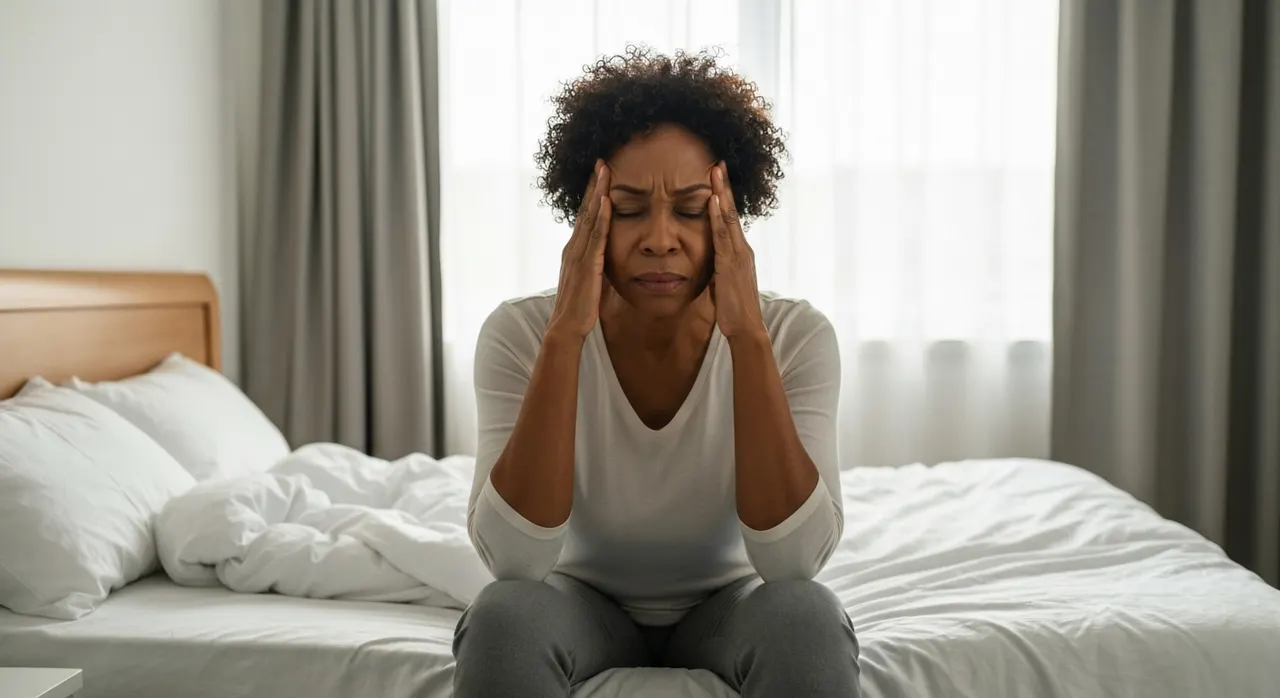
Yes, snoring can cause headaches — and the link is stronger than many people realize. When you snore, your airway partially collapses, which can reduce oxygen flow to your brain and disrupt the deep sleep stages your body needs to recover. This combination of oxygen dips and fragmented sleep triggers morning headaches in up to 29% of frequent snorers, according to research. The good news: once you understand the mechanism, targeted fixes can break the cycle.
If you wake up most mornings with a dull, pressing headache that fades within an hour or two of getting up, your snoring may be the culprit. The same airway obstruction that produces that rumbling sound can set off a chain reaction affecting blood oxygen, carbon dioxide levels, and sleep architecture — all of which contribute to head pain.
How Snoring Triggers Morning Headaches in 2026
Snoring causes headaches through three interconnected mechanisms: oxygen deprivation, carbon dioxide buildup, and sleep fragmentation.
When your airway narrows during sleep, less air reaches your lungs with each breath. Your blood oxygen level drops, even if only slightly, and carbon dioxide (a waste product of metabolism) accumulates. Your brain's blood vessels respond by dilating to compensate for the reduced oxygen delivery. This dilation stretches pain-sensitive nerve fibers around the vessels, producing a headache.
At the same time, snoring fragments your sleep. Each time your airway partially collapses, your brain may trigger a micro-arousal — a brief awakening you won't remember — to restore muscle tone and reopen the passage. These interruptions prevent you from cycling properly through restorative deep sleep and REM stages.
"Sleep-related headache is associated with snoring and obstructive sleep apnea. The recurrent drops in oxygen saturation during apneic events lead to cerebral vasodilation and subsequent headache." — Dr. Pradeep Sahota in Current Pain and Headache Reports
The combination matters. Oxygen dips alone can cause headaches, and sleep deprivation alone can cause headaches — but when both occur together night after night, the risk compounds significantly.
| ✓Quick Fix |
See What Solves This in Minutes Many readers dealing with this exact issue start with something like this before trying anything else. See on Amazon → |
Do All Snorers Get Headaches?
Not everyone who snores develops headaches, but the more severe and frequent your snoring, the higher your risk.
Light, occasional snoring (the kind that happens when you're congested or after a few drinks) rarely causes headaches because the oxygen disruption is minimal and temporary. Heavy, nightly snoring is different. Studies show that habitual snorers are nearly three times more likely to report chronic morning headaches than non-snorers.
The critical factor is whether your snoring crosses into obstructive sleep apnea (OSA) territory. OSA involves complete or near-complete airway blockages that last 10 seconds or longer, causing measurable oxygen desaturation. Morning headaches are so common in OSA patients that the International Classification of Headache Disorders lists "sleep apnea headache" as a distinct diagnosis.
| Snoring Severity | Oxygen Impact | Headache Risk |
|---|---|---|
| Occasional, light | Minimal | Low |
| Frequent, moderate | Mild dips | Moderate |
| Heavy with pauses | Significant drops | High |
| Obstructive sleep apnea | Repeated desaturation | Very high |
If you snore heavily and wake with headaches more than three times a week, it's worth investigating whether sleep apnea is involved.
Also Read: Free audiobooks on managing stress and sleeping better
What Does a Snoring-Related Headache Feel Like?
Snoring headaches are typically dull, bilateral (both sides of the head), and pressing rather than throbbing — and they fade within 30 to 60 minutes of waking.
This pattern distinguishes them from migraines, which tend to be one-sided, pulsating, and often accompanied by nausea or light sensitivity. Snoring headaches also differ from tension headaches, which can last all day and worsen with stress.
The American Academy of Sleep Medicine describes sleep apnea headaches as:
- Present upon awakening
- Bilateral or generalized location
- Pressing quality (not pulsating)
- Mild to moderate intensity
- No nausea, vomiting, or sensitivity to light or sound
- Resolution within 4 hours (usually much faster)
If your morning headaches match this profile and you're a known snorer, the connection is likely. If your headaches are severe, one-sided, or come with visual disturbances, other causes should be explored.
| ✓Our Pick |
Anti-snoring mouthpiece — adjustable mandibular advancement device (MAD) One of the highest-rated products in its category — a reliable, widely used fix. See on Amazon → |
Can Snoring Cause Headaches Without Sleep Apnea?
Yes — even simple snoring without apnea can trigger headaches, though the mechanism differs slightly.
With sleep apnea, oxygen levels drop dramatically during complete airway blockages. With primary snoring (snoring without apnea), oxygen levels stay relatively stable, but the effort required to breathe through a narrowed airway still disrupts sleep quality.
"Primary snoring, even in the absence of apnea, is associated with increased sleep fragmentation and daytime symptoms including morning headache." — Journal of Clinical Sleep Medicine
Think of it this way: breathing through a partially blocked airway is like trying to suck a thick milkshake through a narrow straw. Your respiratory muscles work harder, your brain makes constant micro-adjustments, and your sleep becomes lighter and less restorative — even if you never fully wake up.
Also Read: Sleep Apnea vs Snoring: Key Differences & When to Worry
Other Reasons Snorers Wake Up With Headaches
Snoring often coexists with other headache triggers, and untangling the causes matters for effective treatment.
Several factors can compound the headache risk:
Mouth breathing and dehydration. Snorers frequently breathe through their mouths, which dries out oral and nasal tissues. Dehydration overnight can contribute to morning headaches independently of oxygen issues.
Teeth grinding (bruxism). Up to 25% of sleep apnea patients also grind their teeth, creating jaw tension and muscle strain that radiates into the temples and forehead.
Poor sleep position. Sleeping flat on your back worsens airway collapse and can strain neck muscles, both of which contribute to head pain.
Alcohol and sedatives. These relax airway muscles, worsening snoring and oxygen dips, while also disrupting REM sleep — a double hit to morning freshness.
Addressing snoring alone may not fully resolve headaches if these contributing factors remain.
Also Read: Snoring without apnea
How to Diagnose Whether Snoring Is Causing Your Headaches
Start with a simple headache diary, then consider a sleep study if patterns emerge.
For two weeks, record:
- What time you woke up
- Whether you had a headache (and its intensity on a 1–10 scale)
- How long the headache lasted
- Whether you snored that night (ask a partner or use a sleep-tracking app)
- Alcohol, medication, or anything else that might affect sleep
If headaches consistently follow nights of heavy snoring and resolve within an hour of waking, the link is probable.
For confirmation — especially if sleep apnea is suspected — a sleep study provides objective data. Home sleep tests can measure oxygen saturation and breathing patterns overnight, while in-lab polysomnography captures brain waves, muscle activity, and airflow with greater precision.
Also Read: Help With Snoring: 9 Natural Fixes & When to See a Doctor
How to Stop Snoring Headaches: 6 Evidence-Based Fixes
Reducing or eliminating snoring typically resolves the associated headaches — here's what works.
Does Changing Sleep Position Help Snoring Headaches?
Sleeping on your side instead of your back prevents gravity from collapsing your airway. Studies show that positional therapy alone can reduce snoring severity by 50% or more in many people. A simple tennis ball sewn into the back of a sleep shirt can discourage back-sleeping.
Can a Mandibular Advancement Device Stop Snoring Headaches?
Mandibular advancement devices (MADs) are custom or semi-custom mouthpieces that hold your lower jaw slightly forward, opening the airway. For mild to moderate snoring and sleep apnea, they're highly effective and often eliminate morning headaches within weeks of consistent use.
Will Losing Weight Reduce Snoring and Headaches?
Excess weight, particularly around the neck, narrows the airway. Losing even 10% of body weight can significantly reduce snoring severity. In overweight patients with sleep apnea, weight loss has been shown to cut apnea episodes in half and resolve associated headaches.
Do Nasal Strips or Sprays Help?
If nasal congestion contributes to your snoring, opening the nasal passages can help. Nasal strips physically widen the nostrils, while saline sprays reduce swelling. For allergic rhinitis, a nasal corticosteroid spray prescribed by your doctor may be more effective.
Should Snorers Avoid Alcohol Before Bed?
Alcohol relaxes the muscles that keep your airway open, worsening snoring and oxygen dips. Avoiding alcohol within three hours of bedtime can noticeably reduce snoring intensity — and the headaches that follow.
When Is CPAP Therapy Necessary?
Continuous positive airway pressure (CPAP) is the gold standard for moderate to severe sleep apnea. The device delivers pressurized air through a mask, keeping the airway open throughout the night. Studies show that consistent CPAP use eliminates sleep apnea headaches in most patients.
| Treatment | Best For | Effectiveness |
|---|---|---|
| Positional therapy | Back-sleeping snorers | Moderate |
| Mandibular device | Mild-moderate snoring/apnea | High |
| Weight loss | Overweight snorers | High (long-term) |
| Nasal treatments | Congestion-related snoring | Variable |
| Alcohol avoidance | All snorers | Moderate |
| CPAP | Moderate-severe apnea | Very high |
Also Read: What Causes Snoring in Females? 7 Causes & Fixes
When to See a Doctor About Snoring Headaches
Seek medical evaluation if headaches occur most mornings, if you've been told you stop breathing during sleep, or if daytime sleepiness affects your functioning.
Red flags that warrant prompt attention:
- Witnessed pauses in breathing during sleep
- Waking up gasping or choking
- Severe morning headaches that don't fit the typical pattern
- Excessive daytime sleepiness despite adequate time in bed
- High blood pressure that's difficult to control
- Headaches that are one-sided, throbbing, or accompanied by vision changes
Your doctor may refer you to a sleep specialist for formal evaluation. If sleep apnea is diagnosed, treatment typically resolves both the snoring and the headaches.
In Short
Snoring can absolutely cause headaches, primarily through oxygen dips, carbon dioxide buildup, and fragmented sleep that prevent your brain from recovering overnight. The more severe and frequent your snoring, the higher your headache risk — especially if obstructive sleep apnea is involved. Morning headaches that are dull, bilateral, and fade within an hour of waking are classic signs. Effective treatments range from simple positional changes and jaw-positioning mouthpieces to CPAP therapy for confirmed apnea, and most people see their headaches resolve once snoring is controlled.
What You Also May Want To Know
Can snoring cause daily headaches?
Yes, if you snore heavily every night, you can experience headaches every morning. The repetitive cycle of oxygen disruption and sleep fragmentation accumulates, preventing your brain from fully recovering. Daily morning headaches that fit the pattern described above strongly suggest snoring or sleep apnea as the underlying cause — and treating the snoring typically breaks the cycle.
Can snoring cause migraines?
Snoring doesn't directly cause migraines, but it can trigger them in people who are already prone. Sleep deprivation and oxygen fluctuations are known migraine triggers. If you have a history of migraines and notice they worsen on mornings after heavy snoring, improving your sleep quality by addressing the snoring may reduce migraine frequency.
Why do I wake up with a headache every morning?
Morning headaches have several possible causes, including snoring, sleep apnea, teeth grinding, poor sleep posture, dehydration, caffeine withdrawal, and certain medications. If your headaches are dull, bilateral, and resolve within an hour — and you're a known snorer — the snoring is a likely culprit. A sleep study can help confirm whether oxygen dips overnight are contributing.
Can a snoring mouthpiece help with headaches?
Yes. Mandibular advancement devices that hold your jaw forward can significantly reduce snoring by keeping the airway open. When snoring decreases, oxygen levels stabilize, sleep quality improves, and associated headaches often disappear. Studies show that consistent use of these devices resolves morning headaches in most users with snoring-related headaches.
How long does it take for headaches to stop after treating snoring?
Most people notice improvement within one to two weeks of effective snoring treatment. With CPAP therapy for sleep apnea, headaches often resolve within the first few nights of use. Mandibular devices may take slightly longer as your jaw adjusts to the positioning, but significant improvement typically occurs within two to four weeks.