Ear
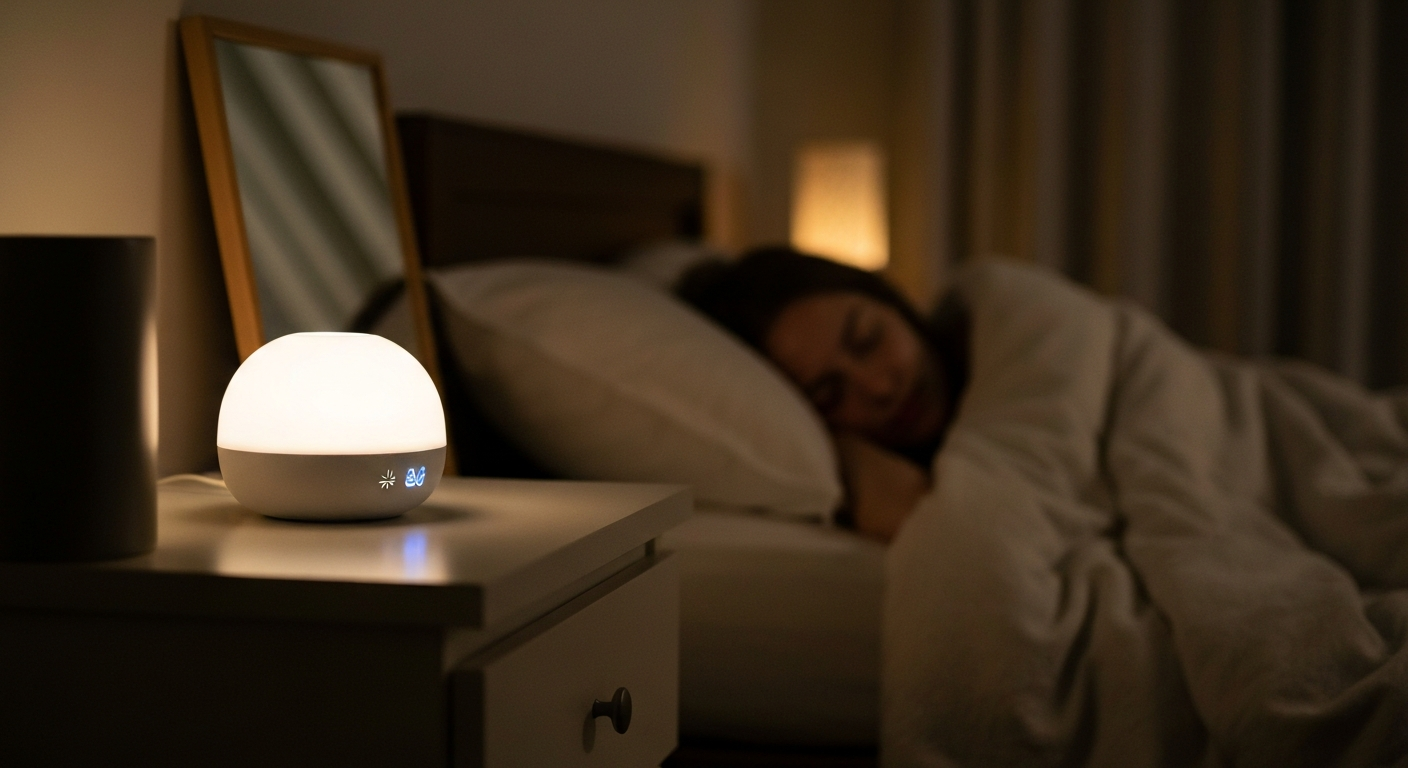

Blocking out snoring noise comes down to three approaches: mask it with steady background sound, physically dampen it with earplugs or soundproofing, or separate the sleeping spaces — and most couples end up combining two of the three.
An average snore measures around 70–75 decibels, loud enough to sit well above the noise level known to fragment sleep, and a quiet bedroom has almost nothing else competing with it.
Snoring volume varies a lot from person to person — gentle snoring sits closer to 40 decibels, while heavier snoring regularly reaches 80 to 90 decibels, comparable to a lawnmower or a passing motorcycle. The loudest snores ever recorded have topped 90 decibels, in the range of a power drill. What makes it so disruptive isn't just the volume; it's the contrast. A bedroom at night typically sits around 20 to 30 decibels of ambient sound, so even moderate snoring can be 40 or 50 decibels louder than everything else in the room, which is more than enough to repeatedly pull a light sleeper out of deep sleep.
There's also a hearing-health angle that's easy to overlook. According to the CDC's National Institute for Occupational Safety and Health:
"Repeated exposures to sounds at or above 85 A-weighted decibels (dBA) can cause permanent hearing loss." — CDC NIOSH at CDC
That threshold applies to workplace noise, not bedrooms, but it's a useful reference point: a partner sleeping next to someone whose snoring regularly hits 85-plus decibels is, every night, near a noise level the CDC flags for hearing damage in other contexts. It's one more reason blocking the sound out — or addressing it at the source — is worth taking seriously rather than just toughing it out.
Also Read: What Most People Reach for First to Sleep Through It
White noise or fan noise is the most reliable low-effort fix because it raises the bedroom's overall sound floor, so a snore has to compete with constant background noise instead of cutting through silence.
A few approaches consistently work better than others:
Sleep physician Raj Dasgupta, MD, of Keck Medicine of USC, explains why steady background noise works better than silence for noise-sensitive sleepers:
"The more arousals, the more signs of sleep deprivation." — Raj Dasgupta, MD at Keck Medicine of USC
In other words, it's not snoring itself that wrecks a night's sleep — it's how many times it startles you awake. A constant white noise floor reduces those arousals even when it can't fully cancel a loud snore.
If you specifically want a deeper comparison of earplug brands and how well they hold up against snoring, see our dedicated guide:
Also Read: Partner Snores? Do Earplugs Work, Plus What to Look For
Blocking out the sound treats the symptom for the listener; addressing why your partner snores in the first place is the only fix that helps both of you sleep through the night without any noise at all.
Common, fixable causes of snoring include sleeping on your back (which lets the tongue fall toward the throat), nasal congestion, alcohol before bed, and excess soft tissue in the throat. Anti-snoring mouthpieces that gently reposition the jaw forward are one of the most studied non-surgical fixes, since they open the airway directly instead of just changing sleep position. For a broader look at what's behind chronic snoring on the snorer's side, see:
Also Read: Why Is My Husband Snoring? 8 Causes & Fixes
Loud, irregular snoring with pauses in breathing, gasping, or choking sounds during sleep can be a sign of obstructive sleep apnea rather than ordinary snoring, and it's worth raising with a doctor rather than only treating the noise. Daytime fatigue despite a full night in bed is another common flag. If sleep apnea is a concern, see our guide on whether a CPAP machine is actually necessary:
Also Read: CPAP and Snoring: Do You Actually Need One?
For most people, pairing a white noise machine with a long-term fix for the snorer covers both the immediate problem and the underlying one.
| ✓Our Pick |
White noise machine that keeps a steady sound floor all night One of the highest-rated products in its category — a reliable fix used by thousands of people. See on Amazon → |
If the snoring itself is the bigger issue — loud enough that no amount of background noise fully covers it — a mouthpiece designed to keep the airway open tends to address more of the problem than anything aimed at the listener's side of the bed.
| ✓Our Pick |
Custom-fit anti-snoring mouthpiece that repositions the jaw No special skills required — straightforward to use and most orders ship quickly. Learn More → |
Blocking out snoring noise usually means combining a steady background sound — a white noise or fan machine works best because it reduces how often you're jolted awake — with earplugs or room changes for especially loud nights. Snoring above roughly 80–85 decibels is loud enough to repeatedly disrupt sleep, so for chronic loud snoring, treating the cause with an anti-snoring mouthpiece or a sleep apnea evaluation usually helps more than noise-blocking alone.
Foam and silicone earplugs reduce noise by roughly 25 to 33 decibels, which is enough for light-to-moderate snoring but often not enough for very loud snoring above 80 decibels. They work best combined with a white noise machine rather than relying on either alone.
For most people, yes, because white noise raises the entire room's background sound level rather than just blocking the ear canal, which reduces how often the snore itself causes a noticeable startle. Earplugs are more portable and don't require power, which makes them a useful backup for travel.
The CDC's occupational noise guidelines flag repeated exposure at or above 85 decibels as a hearing-damage risk in workplace settings, and very loud snoring regularly falls in or above that range. This isn't a direct medical finding about bedrooms specifically, but it's a reasonable signal that chronic, very loud snoring is worth addressing rather than ignoring.
Yes, and it doesn't have to be permanent. Many couples use a guest room or different sleeping arrangement on the loudest nights — often tied to congestion, illness, or alcohol — while treating the snoring itself as a longer-term project.
The most studied non-surgical options are anti-snoring mouthpieces that reposition the jaw forward to keep the airway open, along with addressing contributing factors like back-sleeping, nasal congestion, and alcohol close to bedtime. Persistent loud snoring with breathing pauses should be evaluated for sleep apnea by a doctor.
Reviewed and Updated on June 25, 2026 by George Wright