Finance
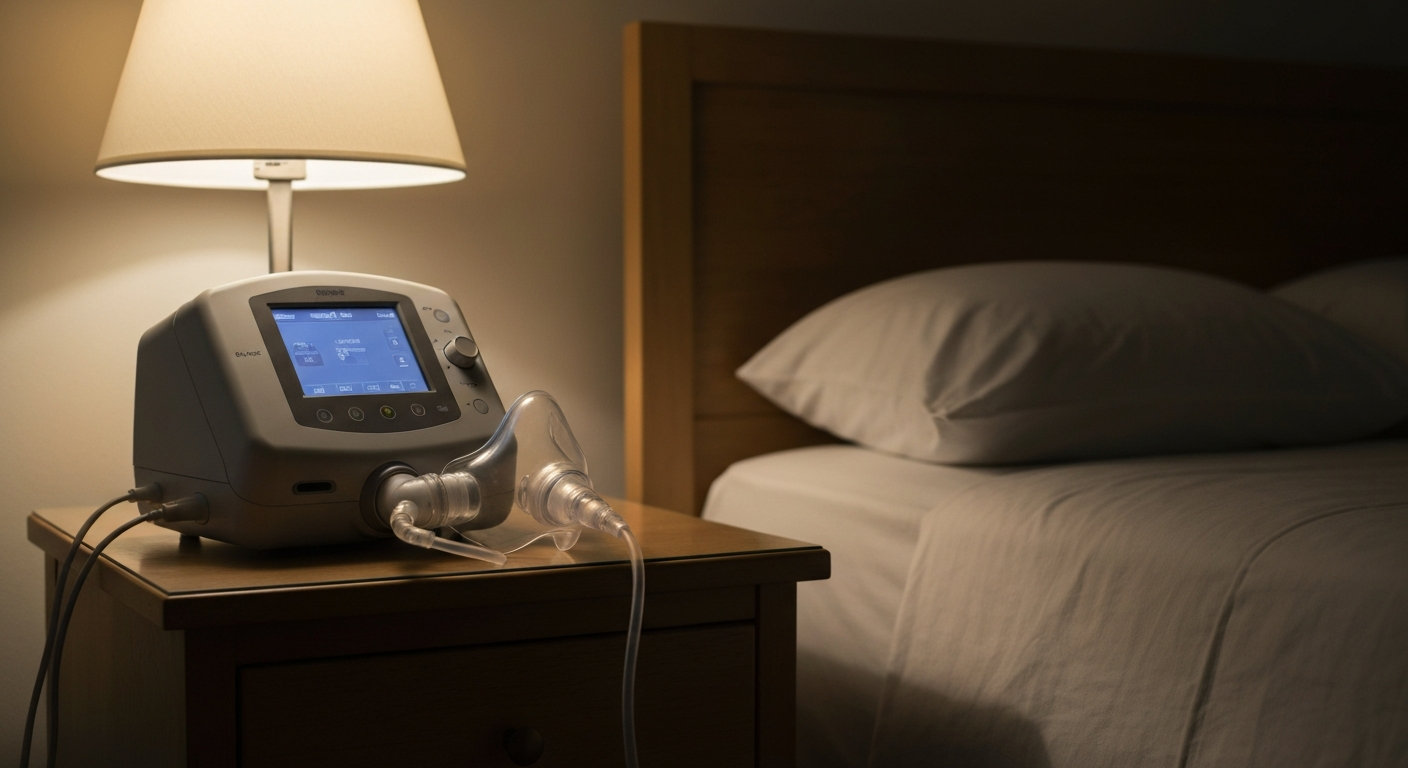

CPAP eliminates snoring in the large majority of users by holding the airway open with a steady stream of pressurized air — but it's designed and prescribed for sleep apnea, not for snoring on its own.
| ✓Our Pick |
Custom-fit mouthpiece that repositions your jaw to eliminate snoring Used by over 10,000 satisfied customers — an easy, affordable option you can start using today. Learn More → |
A CPAP machine pulls in room air, filters and pressurizes it, then delivers it through a tube into a mask, where the continuous airflow keeps the tongue, uvula, and soft palate from collapsing into the airway.
That collapsing tissue is exactly what causes the sound of snoring in the first place — air pushing past relaxed, narrowed tissue and making it vibrate. By keeping the airway propped open with steady pressure, CPAP removes the vibration mechanism almost entirely, which is why it's widely regarded as highly effective for stopping snoring tied to obstructive sleep apnea specifically.
Most people who snore do not have sleep apnea and don't need CPAP — it's typically reserved for cases where snoring is a symptom of a diagnosed breathing disorder, not the main problem on its own.
"In fact, most people who snore don't need to use a CPAP machine." — Jay Vera Summer at Sleep Foundation
"CPAP therapy is typically recommended when a person is diagnosed with obstructive sleep apnea through a sleep study." — Jay Vera Summer at Sleep Foundation
In obstructive sleep apnea, the airway narrows or closes so much that breathing briefly stops, sometimes hundreds of times in a single night, which is a meaningfully different — and more serious — condition than simple snoring. CPAP is built to treat that underlying collapse, which happens to also stop the snoring as a side effect, rather than being designed as a snoring treatment first.
The majority of people who snore don't have sleep apnea and can often reduce snoring through far simpler treatments: positional changes, weight management, reduced alcohol before bed, or a mandibular advancement mouthpiece.
| Factor | CPAP | Anti-Snoring Mouthpiece |
|---|---|---|
| Best for | Diagnosed sleep apnea | Simple snoring without apnea |
| Requires a prescription/sleep study | Usually yes | No |
| Setup | Mask, tubing, machine | Boil-and-bite or custom-molded fit |
| Effectiveness for snoring alone | Very high | Good for mild-to-moderate cases |
| Comfort/adjustment period | Mask fit, air pressure adjustment | Jaw soreness for several nights |
If you haven't been formally diagnosed with sleep apnea, a mouthpiece is usually the lower-effort, lower-cost place to start. If you already know you have apnea, CPAP remains the more thoroughly studied option for both the breathing pauses and the snoring that comes with them.
Loud, frequent snoring combined with gasping, witnessed breathing pauses, or daytime exhaustion despite a full night's sleep is the pattern that points toward sleep apnea rather than ordinary snoring.
A formal sleep study is the only way to know for certain whether CPAP is the right tool for you, since snoring alone — without those additional signs — doesn't necessarily mean you have apnea, and apnea can sometimes occur with relatively quiet snoring.
What Actually Works for This, Fast: See what people try first for snoring relief
The adjustment period is the part most people underestimate — mask fit, air pressure, and simply sleeping with equipment attached all take real time to get used to, typically two to four weeks before it feels routine.
Many new CPAP users initially struggle with mask leaks, a feeling of claustrophobia, or dry mouth and nose from the airflow, all of which are common and addressable rather than signs the therapy isn't working. Mask leaks usually mean the fit needs adjusting or a different mask style needs to be tried — there's no single mask that works for every face shape, and most sleep clinics expect a bit of trial and error here. Dryness is often solved by adding or adjusting a heated humidifier attachment, which most modern CPAP machines support.
Sticking with it through this adjustment period matters because the benefits — quieter sleep, more consistent oxygen levels, and noticeably less daytime fatigue — usually build gradually rather than appearing on night one. People who give up in the first week, before working through the common early friction points, miss out on benefits that often only become obvious after several weeks of consistent use.
For people who've genuinely tried CPAP and can't tolerate it, oral appliances, positional therapy, and in some cases surgery are recognized alternative paths, though each works through a different mechanism and fits different situations.
| Alternative | Best Fit For | Trade-off |
|---|---|---|
| Mandibular advancement device | Mild-to-moderate apnea or simple snoring | Less effective for severe apnea |
| Positional therapy devices | Apnea that's worse on the back | Doesn't help if apnea occurs in all positions |
| Inspire (hypoglossal nerve stimulation) | Moderate apnea, CPAP-intolerant patients | Requires a surgical implant |
| Weight loss | Apnea linked to excess weight | Gradual, not an immediate fix |
None of these are simply "better than CPAP" in general — they're different tools suited to different severities and causes, which is why a sleep specialist's input matters before switching away from a prescribed CPAP therapy rather than just stopping it.
CPAP works by holding the airway open with continuous air pressure, which stops snoring in the large majority of users as a byproduct of treating sleep apnea. It's the right tool when snoring is paired with diagnosed apnea, but most people who just snore don't need it and can often get good results from simpler options like a mandibular advancement mouthpiece. Loud snoring with gasping or daytime exhaustion is the signal to get evaluated rather than guessing which tool to try.
It likely would, since the mechanism that quiets snoring works regardless of diagnosis. But CPAP machines typically require a prescription and sleep study, so most people without diagnosed apnea use simpler alternatives instead.
This is usually caused by a mask leak, incorrect pressure setting, or mouth breathing around the mask seal, all of which let air escape instead of reaching the airway with full pressure.
Many users notice reduced or eliminated snoring from the very first properly fitted and pressured night, though full comfort with the mask and pressure often takes one to two weeks.
Modern CPAP machines are generally designed to run quietly, and unusual loudness or rattling typically signals a maintenance issue like a dirty filter or a leaking hose rather than normal operation.
Reviewed and Updated on June 21, 2026 by George Wright