Health
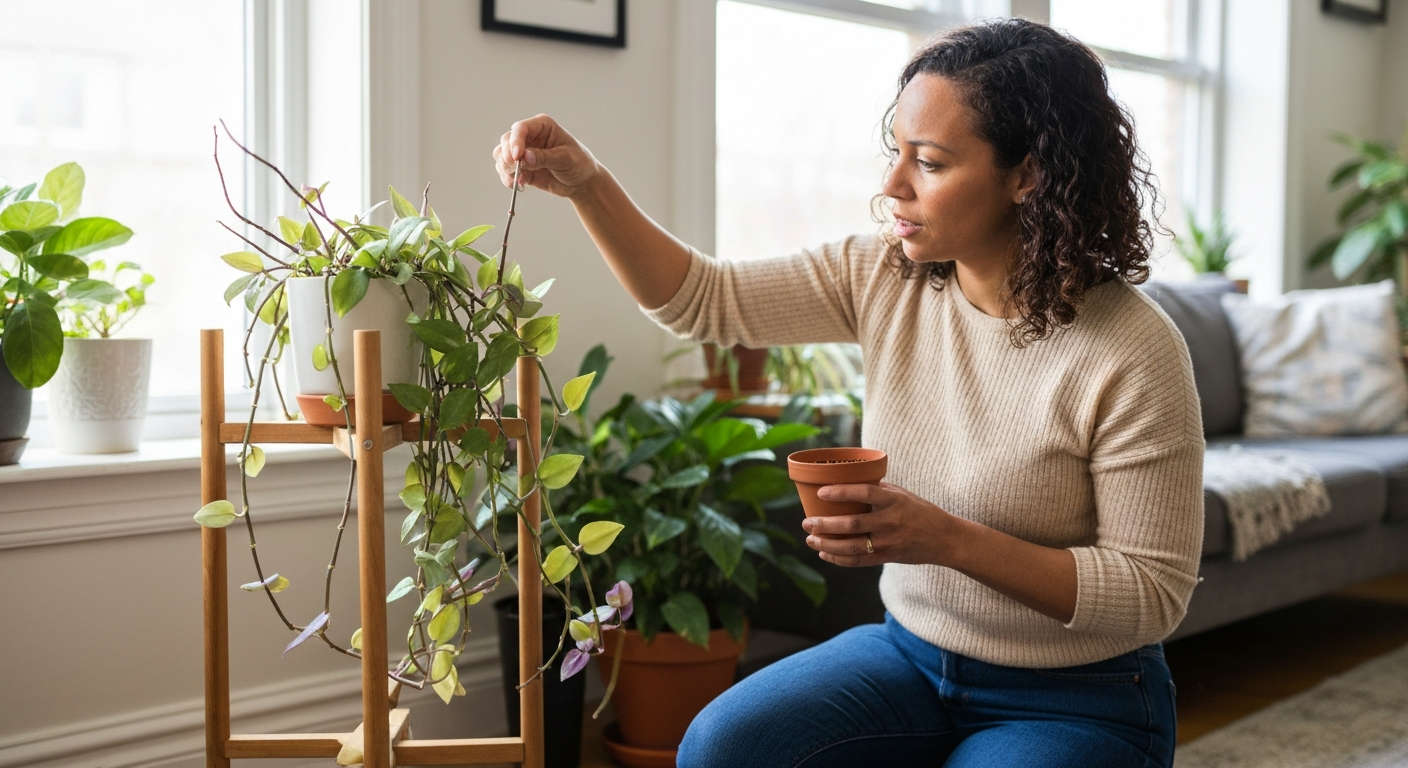

Your wandering jew (Tradescantia) is most likely dying because of inconsistent watering, insufficient light, or low humidity — the three conditions this tropical plant cannot tolerate for long. While these trailing beauties are often marketed as "easy-care," they have specific needs that, when unmet, cause rapid decline: crispy brown leaves, leggy bare stems, root rot, or sudden wilting. The good news is that wandering jews are remarkably resilient once you identify and correct the problem, and most struggling plants can be revived within weeks.
| ✓Our Pick |
Indoor plant moisture meters and watering tools One of the highest-rated products in its category — a reliable fix used by thousands of people. See on Amazon → |
Wandering jews fail when their native rainforest conditions — bright indirect light, consistent moisture, and humid air — aren't replicated indoors.
These plants originate from the forests of Mexico, Central America, and South America, where they grow as ground cover beneath tree canopies. They experience dappled sunlight, regular rainfall, and humidity levels between 50–70%. When we bring them into climate-controlled homes with dry air, inconsistent watering schedules, and sometimes dim corners, the stress accumulates until visible damage appears.
Understanding your plant's origins helps diagnose the problem. A wandering jew in a dark hallway isn't "low-light tolerant" — it's slowly starving. One that's watered on a strict weekly schedule regardless of soil dryness is either drowning or parching. The key is reading your specific plant's signals and adjusting care accordingly.
Watering mistakes — both overwatering and underwatering — are the most common reason wandering jews die, and the symptoms can look surprisingly similar at first glance.
Overwatering causes root rot, a fungal condition where the roots suffocate and decay in waterlogged soil. Signs include:
Root rot progresses quickly in wandering jews because their stems are succulent-like and hold water. Once rot reaches the main stems, the damage is often irreversible.
Underwatering causes dehydration damage that's sometimes mistaken for disease. Signs include:
| Symptom | Overwatering | Underwatering |
|---|---|---|
| Leaf color | Yellow, translucent | Brown, crispy edges |
| Leaf texture | Mushy, soft | Papery, dry |
| Stem condition | Black, mushy base | Shriveled, deflated |
| Soil condition | Constantly wet, smells | Bone dry, pulls from pot |
| Recovery | Slow, may not recover | Fast after watering |
The fix: Water your wandering jew when the top inch of soil feels dry to the touch. Stick your finger in — if it's dry at the first knuckle, water thoroughly until it drains from the bottom holes. Never let the plant sit in a saucer of standing water, and never water on a calendar schedule without checking soil moisture first.
Also Read: Why Is My Ivy Dying? 7 Causes & How to Save It
Yes — insufficient light is the second most common killer, causing leggy growth, faded colors, and eventual death as the plant can no longer photosynthesize enough energy to survive.
Wandering jews need bright, indirect light to maintain their signature vibrant purple, green, and silver variegation. In low light, the plant responds by:
"Tradescantia species require high light intensities to maintain their colorful variegation. In low light conditions, plants will revert to solid green coloration as chlorophyll production increases to compensate for reduced photosynthesis." — North Carolina State Extension
Where to place your wandering jew: Within 3 feet of an east or west-facing window is ideal. South-facing windows work if the plant is set back a few feet or filtered through a sheer curtain. North-facing windows rarely provide enough light unless supplemented with a grow light. The variegated varieties (purple, silver, or pink) need even more light than solid green types.
Low humidity below 40% causes wandering jews to develop brown leaf tips and edges, and chronic low humidity weakens the plant over time.
Most homes in the US hover between 30–50% humidity, with winter heating systems dropping levels even lower. Wandering jews evolved in 50–70% humidity and show stress when conditions are consistently drier.
Humidity stress symptoms include:
How to increase humidity:
Misting is often recommended but provides only temporary relief and can promote fungal issues if water sits on leaves overnight.
Spider mites, aphids, and fungus gnats can weaken or kill a wandering jew, especially when the plant is already stressed from suboptimal conditions.
These tiny arachnids (not insects) thrive in dry conditions and are the most common pest on wandering jews. Signs include:
Small soft-bodied insects that cluster on new growth:
Small flies that breed in overly wet soil:
Treatment: For spider mites and aphids, wipe leaves with a damp cloth, then spray with insecticidal soap or neem oil weekly until pests are gone. For fungus gnats, let the soil dry out completely between waterings and add a half-inch layer of sand on top to discourage egg-laying.
If your wandering jew has been overwatered and now shows yellowing leaves, mushy stems, or a foul smell, root rot may have set in — but it's not necessarily too late.
Root rot is caused by fungal pathogens (typically Pythium or Rhizoctonia) that flourish in waterlogged soil where oxygen is depleted. Healthy roots are white or tan and firm; rotted roots are brown or black, mushy, and smell like decay.
How to check for root rot:
How to treat root rot:
If rot has spread to most of the plant, take healthy stem cuttings (see propagation section below) and start fresh.
Dense, water-retentive soil and pots without drainage holes set wandering jews up for root rot, while excessively fast-draining soil can cause chronic underwatering.
Wandering jews need soil that holds some moisture but drains freely. A standard indoor potting mix amended with perlite (about 2 parts potting mix to 1 part perlite) works well. Avoid:
Pot requirements:
Repot only when the plant is severely root-bound (roots circling the bottom, poking out drainage holes, or pushing the plant upward). Wandering jews tolerate being slightly root-bound better than being over-potted.
Even severely damaged wandering jews can often be saved through a combination of environmental correction and propagation of healthy sections.
Review your current care against the issues above. The most likely culprits, in order:
Make one major change at a time and wait 2 weeks to assess improvement. If you change light, water, humidity, and soil simultaneously, you won't know what fixed the problem — or what made it worse.
Cut back leggy, bare, or damaged stems to 2–3 inches above the soil line. This redirects energy to new growth and stimulates bushier regrowth from the base.
If significant portions of the plant are healthy, take cuttings as a backup:
Wandering jews root so easily that even if the mother plant dies, you can rebuild your collection from a single healthy cutting.
Your wandering jew is dying because one or more of its basic needs — proper watering, bright light, and adequate humidity — isn't being met. Check for overwatering and root rot first (mushy stems, yellow leaves, wet soil), then assess light levels (leggy growth, faded colors). Low humidity causes brown crispy edges even when watering is correct. Pests like spider mites compound existing stress. The fix is identifying your specific issue, making targeted corrections, and using the plant's exceptional propagation ability to salvage healthy stem cuttings while you rehabilitate the original.
Brown leaves on a wandering jew typically indicate either underwatering (crispy, papery brown) or overwatering/root rot (soft, mushy brown). Brown leaf tips and edges specifically point to low humidity or inconsistent watering. Check soil moisture first — if it's bone dry, increase watering frequency. If it's wet and the browning is mushy, check for root rot and reduce watering.
Loss of purple variegation almost always means insufficient light. Wandering jews produce more chlorophyll (green pigment) in low light to compensate for reduced photosynthesis, overriding the purple and silver coloration. Move your plant to brighter indirect light, and new growth should return to its original vibrant color within a few weeks.
Yes, if caught early enough. Remove the plant from its pot, trim all rotted roots (they're brown, mushy, and smell), and repot in fresh soil in a clean pot. If less than half the roots are salvageable, your better option is propagating healthy stem cuttings in water and starting fresh.
Water when the top inch of soil feels dry — typically every 5–10 days depending on your pot size, soil type, humidity, and light levels. Never water on a fixed schedule. In summer with bright light, you may water twice weekly; in winter with low light, once every two weeks may suffice.
Intense direct sunlight can scorch wandering jew leaves, causing bleached or brown patches. However, some gentle direct morning sun (1–2 hours) or filtered afternoon light is beneficial and intensifies variegation. The goal is bright indirect light for most of the day, with protection from harsh midday and afternoon direct sun.
Reviewed and Updated on May 27, 2026 by George Wright