
Technology
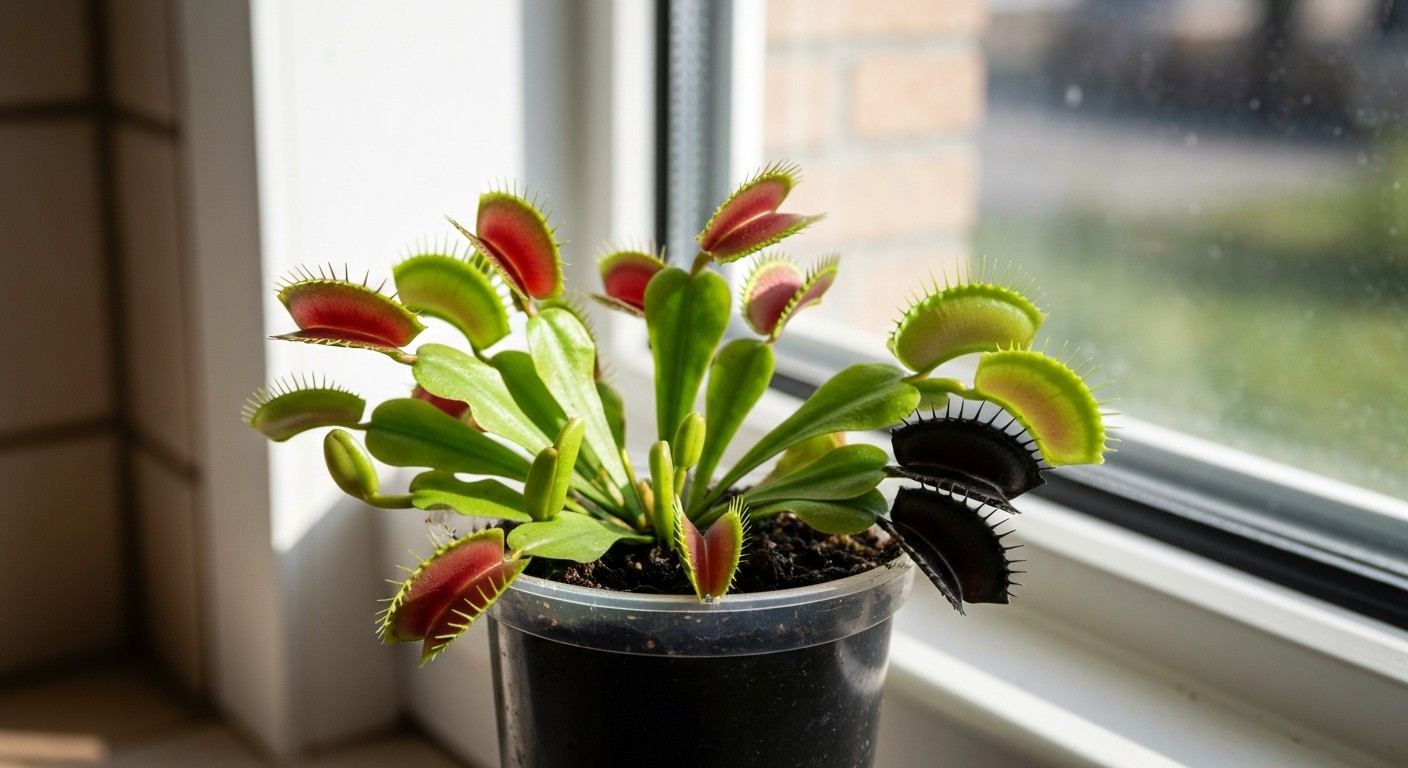

Your Venus fly trap is turning black because of natural post-digestion die-off, overwatering, incorrect water quality, insufficient light, dormancy, or stress from improper handling — most blackening is normal and rarely fatal if you identify and correct the cause.
Seeing those iconic snap traps fade to black can be alarming, especially when you've invested time and care into this fascinating carnivorous plant. The good news: blackening is usually part of the plant's normal life cycle, not a death sentence. Each trap has a limited lifespan of 3–5 catches before it naturally dies back, and the plant simply grows new ones to replace it. However, when multiple traps blacken simultaneously or the entire plant looks distressed, something in its environment needs attention.
| ✓Our Pick |
Carnivorous plant soil mix for Venus fly traps Used by over 10,000 satisfied customers — an easy, affordable option you can start using today. See on Amazon → |
A single trap turning black after catching prey or reaching the end of its lifespan is completely normal — Venus fly traps cycle through traps continuously, and healthy plants always have some black tissue while producing new growth.
Each individual trap on a Venus fly trap (Dionaea muscipula) functions like a disposable hunting tool. After snapping shut around an insect 3–5 times — or even fewer if digestion occurs — the trap exhausts its cellular energy reserves and dies. This is not disease; it's programmed obsolescence built into the plant's biology.
The digestion process itself accelerates trap death. When a trap successfully captures prey, it seals shut and secretes digestive enzymes over 5–12 days. This chemical process is taxing, and the trap often blackens soon after reopening. Meanwhile, the plant channels nutrients from that meal into producing vigorous new growth from its center rosette.
"Each leaf trap has a limited lifespan and will eventually turn black and die — this is a natural part of the plant's growth cycle and not a cause for concern if new leaves are forming." — International Carnivorous Plant Society
When to worry: If more than half your traps are blackening at once, new growth looks weak or absent, or the rhizome (the bulb-like base underground) feels mushy, you're dealing with environmental stress rather than normal cycling.
| ✓Quick Fix |
The First Thing Most People Try Most people dealing with this exact problem start here — quick, affordable, and easy to try today. See on Amazon → |
Yes — overwatering is the most common killer of Venus fly traps, causing root rot that shows up as widespread blackening from the base upward.
Venus fly traps need consistently moist soil, but "moist" does not mean "waterlogged." When roots sit in stagnant water without oxygen, they rot. The decay spreads upward, and you'll notice traps blackening from the bottom of the plant before the tops are affected.
The classic symptom of overwatering: the entire plant looks limp and dark, and when you gently tug a trap, it slides out easily because the base has rotted. By contrast, a naturally dying trap stays firmly attached at its base.
The fix: Use the tray method — sit your pot in a shallow tray with 1/2 to 1 inch of water, and let the pot absorb moisture from below. Never pour water directly onto the crown. Empty the tray once a week to refresh oxygen levels, then refill.
Absolutely — tap water contains minerals that accumulate in the soil and poison Venus fly traps within weeks to months, causing progressive blackening.
Venus fly traps evolved in the mineral-poor bogs of coastal North and South Carolina. Their roots cannot handle the dissolved solids found in most municipal water supplies. Chlorine, fluoride, calcium, and sodium all build up in the soil and burn the roots, which manifests as traps blackening from the tips inward.
| Water Type | Total Dissolved Solids (TDS) | Safe for Venus Fly Traps? |
|---|---|---|
| Distilled water | 0–10 ppm | Yes |
| Rainwater | 5–30 ppm | Yes |
| Reverse osmosis water | 0–25 ppm | Yes |
| Bottled spring water | 50–300 ppm | No |
| Tap water (average US) | 150–500 ppm | No |
| Softened water | 300+ ppm | No |
If you've been using tap water, flush the soil thoroughly with distilled water several times, then switch permanently. A TDS meter (under $15 on Amazon) lets you test any water source instantly.
| ✓Our Pick |
TDS meter for testing plant water quality Used by over 10,000 satisfied customers — an easy, affordable option you can start using today. See on Amazon → |
Insufficient light causes weak, spindly traps that blacken quickly — Venus fly traps need 4–6 hours of direct sunlight minimum, ideally more.
These plants are full-sun species in the wild. Indoors, a north-facing window or a spot far from windows simply doesn't provide enough light energy for trap production. The plant stretches toward available light, produces pale and elongated traps, and those weak traps die off rapidly.
Signs of light deficiency:
- Traps are pale green instead of the characteristic red interior
- Leaves grow long and leggy rather than compact
- New traps are smaller than older ones
- Traps blacken within days of forming
The fix: Move your plant to a south-facing window that receives unobstructed sunlight for at least 4 hours daily. If natural light is insufficient, supplement with a full-spectrum grow light positioned 6–12 inches above the plant for 12–14 hours daily.
Feeding inappropriate prey — raw meat, dead bugs without stimulation, or oversized insects — triggers rapid trap death without nutritional benefit.
A trap needs to sense movement to complete its seal and begin digestion. Dropping a dead fly into a trap without triggering the hair-like sensors inside means the trap closes incompletely, bacteria invade instead of enzymes, and the trap rots rather than digests.
Similarly, feeding hamburger, chicken, or other raw meat introduces fats and bacteria that the plant cannot process. The trap blackens and may spread rot to neighboring tissue.
Proper feeding rules:
- Use insects smaller than 1/3 the trap size
- If feeding dead bugs, gently squeeze the closed trap every few hours to simulate movement
- Feed only 1–2 traps per month maximum — the plant doesn't need much
- Never feed during dormancy (winter)
Yes — each trap can only close 3–5 times before dying, so triggering closures without providing food exhausts traps prematurely.
It's tempting to make the traps snap shut for entertainment. Each closure costs significant cellular energy, though. A trap that closes multiple times without capturing prey will blacken and die having provided no nutritional benefit to the plant.
Children and curious visitors are often the culprits here. If your plant's traps are blackening without apparent cause, consider whether someone has been triggering them for fun.
Venus fly traps require winter dormancy — during this period, most traps blacken naturally as the plant enters a low-energy rest phase for 3–4 months.
Without dormancy, Venus fly traps weaken year over year and eventually die. Native to USDA zones 7–8, they evolved to experience cool winters with temperatures between 35°F and 50°F. During this time, aboveground growth largely dies back.
If your plant's traps start blackening in late fall (October–November) and you've been keeping it indoors at room temperature year-round, the plant is likely trying to enter dormancy despite warm conditions. This stresses the plant and causes premature decline.
The fix: Move your Venus fly trap to an unheated garage, enclosed porch, or refrigerator crisper drawer from November through February. Maintain minimal moisture without feeding, and provide only a few hours of indirect light. The plant will emerge in spring with vigorous new growth.
"Dormancy is not optional — Venus flytraps require a cold rest period of 3–4 months each year to survive long-term." — North Carolina State Extension
Standard potting soil kills Venus fly traps — they require nutrient-free acidic media like pure peat moss or sphagnum moss mixed with perlite.
Regular potting mixes contain fertilizers and minerals that are toxic to carnivorous plants. Even "organic" soils with compost or worm castings are too nutrient-rich. If your plant is in standard soil, root damage is already occurring, and blackening traps are an early warning.
Correct soil recipe: 1 part peat moss (no additives) + 1 part perlite. No fertilizer, ever. Repot into a plastic or glazed ceramic pot (not terracotta, which leaches minerals).
Also Read: Why Is My Palm Tree Turning Brown? 8 Causes & Proven Fixes
If black tissue hasn't spread to the rhizome (the white bulb-like base), your plant can recover — trim dead growth, correct environmental conditions, and give it time.
Assess the rhizome: Gently unpot the plant and examine the white, onion-like bulb at the base. If it's firm and white, the plant is salvageable. If it's mushy or brown, the plant has likely died.
Trim black tissue: Using clean scissors, cut away all blackened traps and leaves at their base. This prevents rot from spreading and redirects energy to new growth.
Check roots: Healthy roots are white or light tan. Black, mushy roots should be trimmed back to healthy tissue.
Repot in correct media: Fresh peat/perlite mix in a clean plastic pot. No fertilizer.
Establish proper watering: Tray method with distilled, rain, or RO water only.
Provide maximum light: Outdoors in full sun or under grow lights 12+ hours daily.
Wait: New traps emerge from the center within 2–4 weeks if conditions are correct. Recovery takes patience.
Also Read: Why Is My Evergreen Turning Brown? 7 Causes & Fixes
If the rhizome is mushy, completely black, or has a foul odor, the plant has died from root rot and cannot be revived.
Signs the plant is dead:
- Rhizome is soft and dark when you press it
- All growth pulls away easily from the base
- A rotting smell is present
- No new growth appears after 4–6 weeks in optimal conditions
At this point, starting fresh with a new plant and correcting the conditions that killed the first one is your best path forward.
Venus fly trap blackening is usually normal trap cycling after digestion or age — but widespread blackening signals overwatering, tap water use, insufficient light, improper feeding, excessive handling, lack of dormancy, or wrong soil. Check the rhizome: if it's firm and white, trim dead tissue and correct care conditions. If it's mushy, the plant has died and needs replacing. Use only distilled or rainwater, provide 4+ hours of direct sunlight, plant in peat/perlite mix, and give winter dormancy for long-term health.
This is completely normal. Digestion is energy-intensive, and traps typically blacken within 1–2 weeks after successfully catching and digesting prey. The plant absorbed nutrients from that meal and will grow new traps to replace the spent one. Only be concerned if new growth stops appearing.
Check the timing and the rhizome. If it's October through February and the rhizome is firm and white, your plant is entering natural dormancy — this is healthy. If it's summer, or if the rhizome is mushy and dark, you're dealing with disease or rot rather than dormancy.
Most bottled water is unsafe. Spring water and mineral water contain dissolved solids that harm Venus fly traps. Only use distilled water, reverse osmosis water, or collected rainwater. Check labels — "purified" water is sometimes safe, but testing with a TDS meter is the only way to be sure.
Yes, once a trap is fully black and crispy, trim it at the base with clean scissors. This tidies the plant and prevents dead tissue from harboring fungus or bacteria. Never pull — always cut to avoid damaging the rhizome.
Indoor plants commonly suffer from insufficient light and lack of dormancy. South-facing windows or grow lights are essential, and you must provide 3–4 months of cold rest (35–50°F) each winter. Without these conditions, indoor Venus fly traps decline steadily and blacken regardless of other care factors.
Reviewed and Updated on June 20, 2026 by George Wright