Health
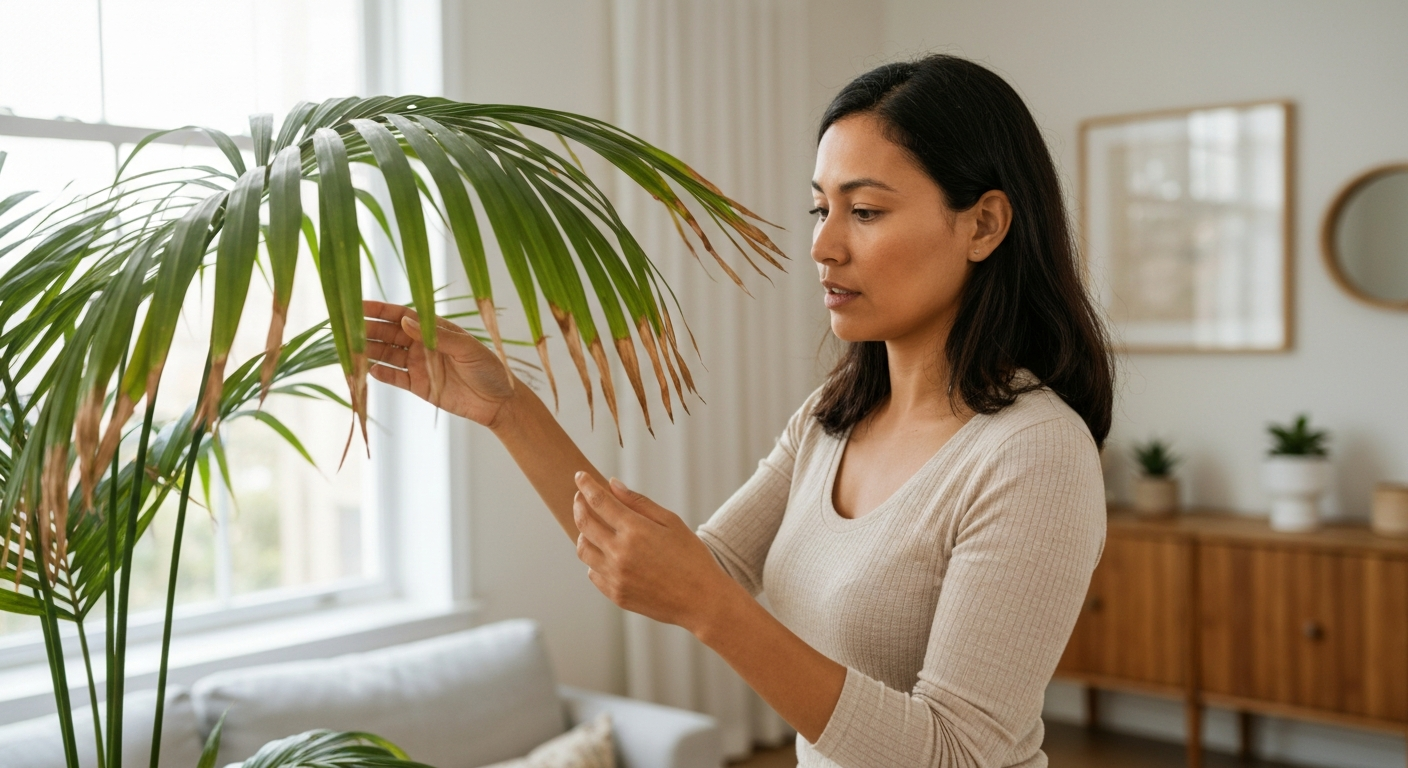

Your palm tree is turning brown because it's stressed—most commonly from underwatering, low humidity, or too much direct sunlight, though overwatering, nutrient deficiencies, and natural leaf aging can also be responsible. Indoor palms like majesty palms, parlor palms, and ponytail palms are particularly sensitive to dry air and inconsistent watering, while outdoor palms often struggle with cold damage or soil issues. The good news: once you identify the specific cause, most browning palms recover fully within weeks.
| ✓Our Pick |
Indoor plant moisture meter for accurate watering Simple to use and genuinely effective — for many people this is all they ever needed. See on Amazon → |
Brown fronds develop when your palm can't deliver enough water, nutrients, or protection to its leaf tissue—and the cause almost always traces back to one of eight common problems.
Palm trees communicate stress through their leaves. When something disrupts the plant's ability to function normally, the fronds show it first. Understanding the root cause matters because treating the wrong problem can make things worse—overwatering a palm that's already drowning, for instance, or moving a sun-stressed plant into even brighter light.
The browning pattern itself offers clues. Tips turning brown often points to underwatering or low humidity. Entire fronds yellowing before browning suggests overwatering or nutrient problems. Brown spots scattered across leaves may indicate sunburn or fungal disease. Let's break down each cause so you can match what you're seeing to the right fix.
Underwatering is the most common reason indoor palm plants turn brown. Palms need consistently moist (not soggy) soil, and when they don't get enough water, the leaf tips dry out first, then the browning creeps down the frond.
You'll notice the soil pulling away from the pot edges when it's too dry. The fronds may also feel crispy or papery rather than leathery. Majesty palms and parlor palms are especially thirsty—they evolved in humid, tropical environments where water was never scarce.
Check soil moisture by inserting your finger two inches deep. If it's completely dry, your palm needs water. During the growing season (spring through fall), most indoor palms need watering every 5 to 7 days. In winter, every 10 to 14 days is usually sufficient.
Yes—and overwatering actually kills more houseplants than underwatering. When roots sit in waterlogged soil, they can't absorb oxygen and begin to rot. Once root rot sets in, the plant can't take up water or nutrients, and the fronds turn yellow, then brown.
"Root rot is caused by overwatering or poor drainage, leading to fungal infections that destroy the root system. Affected plants show yellowing leaves, wilting despite wet soil, and soft, dark-colored roots." — University of Florida IFAS Extension
The key difference: overwatered palms often have yellow fronds that turn brown, while underwatered palms go straight to brown tips. If your soil feels soggy days after watering, or if there's a musty smell from the pot, overwatering is likely the culprit.
Indoor palms often suffer in typical home humidity levels, which hover around 30 to 40 percent—far below the 50 to 60 percent these tropical plants prefer.
Central heating and air conditioning strip moisture from indoor air. In 2026, with more people working from home and keeping thermostats high in winter and low in summer, humidity-related browning has become one of the top palm problems plant shops report.
Signs of humidity stress include browning leaf tips and edges while the center of the frond stays green. Ponytail palms handle low humidity better than most, but majesty palms and parlor palms struggle significantly in dry air.
Most indoor palms evolved as understory plants, growing beneath taller trees in filtered light. When placed in direct sunlight—especially hot afternoon sun through a window—the fronds can scorch, developing brown or bleached patches.
Sunburn damage appears as irregular brown spots on the parts of the leaf facing the light source. It's not the same as the uniform tip browning you see from watering issues. If you recently moved your palm closer to a window or the seasons changed to bring more intense light, sunburn is a strong possibility.
Palms are tropical plants, and most species suffer when temperatures drop below 50°F (10°C). Cold damage shows up as brown or black spots on fronds, drooping leaves, and in severe cases, a mushy trunk.
Outdoor palms in states like Florida, Texas, and California can experience frost damage during unexpected cold snaps. Indoor palms placed near drafty windows, exterior doors, or air conditioning vents may also show cold stress. The damage often doesn't appear immediately—it can take a week or two for browning to develop after a cold event.
Palms have specific nutritional needs, and deficiencies show up distinctly in the foliage:
| Deficiency | Symptoms | Most Affected |
|---|---|---|
| Potassium | Older fronds yellow/brown at tips and margins | Majesty palm, date palm |
| Magnesium | Yellow bands on older leaves, green center | Most palm species |
| Manganese | New growth yellows, then browns | Parlor palm, areca palm |
| Iron | New leaves yellow with green veins | Ponytail palm, sago palm |
Potassium deficiency is the most common in palms. It causes the tips and edges of older fronds to turn brown while younger growth stays green. If you've never fertilized your palm or it's been in the same soil for years, nutrient depletion is likely contributing to the browning.
Not all browning indicates a problem—palms naturally shed their oldest, lowest fronds as they grow.
This process is called self-cleaning. The oldest fronds at the bottom of the canopy turn yellow, then brown, then eventually dry up and fall off (or you can trim them). Meanwhile, new growth emerges from the center of the plant.
If only the lowest one or two fronds are browning and the rest of the plant looks healthy, you're witnessing normal aging. This doesn't require any intervention beyond optional trimming for aesthetics.
| ✓Quick Fix |
See What Solves This in Minutes One of the simplest things to try immediately — no appointment, no waiting. See on Amazon → |
Aloe vera and other succulents turn brown for reasons that overlap with palms—primarily overwatering, sunburn, and cold damage—but their water needs are drastically different.
Aloe plants store water in their thick leaves, making them far more drought-tolerant than palms. The most common mistake people make with aloe is treating it like a tropical plant and watering too frequently.
| Issue | Aloe Symptoms | Palm Symptoms |
|---|---|---|
| Overwatering | Mushy, brown, translucent leaves | Yellow fronds turning brown, root rot |
| Underwatering | Thin, curling leaves with brown tips | Crispy brown tips, dry soil |
| Sunburn | Brown/white patches on sun-facing sides | Bleached or brown irregular patches |
| Cold damage | Dark brown or black mushy spots | Brown/black fronds, drooping |
If your aloe is turning brown, check the soil first. It should be completely dry between waterings—aloe in standard potting soil (rather than cactus mix) often stays too wet. Repot into well-draining succulent soil and water only when the top two inches are bone dry.
Also Read: Why Is My Evergreen Turning Brown? 7 Causes & Fixes
Start by examining the browning pattern, then check environmental factors one by one until you identify the match.
Use this diagnostic flowchart:
All fronds yellowing then browning → overwatering or root rot
What does the soil feel like?
Normal moisture but browning continues → look at light, humidity, or nutrients
What's the light exposure?
Very low light → unlikely to cause browning, but may cause leggy growth
Check for pests. Spider mites, mealybugs, and scale insects can cause browning. Look for tiny webs, white cottony masses, or brown bumps on stems and frond undersides.
Once you've identified the cause, most palms respond well to corrective care within 4 to 8 weeks.
Water thoroughly until liquid drains from the bottom of the pot. Don't just wet the surface—the entire root ball needs moisture. For severely dried-out soil, bottom watering works best: set the pot in a tray of water for 30 minutes, allowing the soil to absorb moisture from below.
Going forward, establish a consistent watering schedule. Use a moisture meter if you're unsure—these inexpensive tools remove the guesswork.
Group tropical plants together so they create a humid microclimate. Place pots on trays filled with pebbles and water (the pot sits on the pebbles, above the water line). Run a humidifier near your palms, especially in winter when heating systems dry the air.
Misting provides minimal lasting benefit—the moisture evaporates within minutes. A humidifier or pebble tray offers sustained humidity.
If caught early, yes. Remove the plant from its pot, shake off the old soil, and trim any roots that are brown, black, or mushy. Healthy roots are white or tan and firm. Repot in fresh, well-draining soil and a clean pot with drainage holes. Water sparingly until the plant shows signs of recovery.
"Discard the old potting mix, clean the container with a dilute bleach solution, and repot in fresh sterile media to prevent reinfection." — Penn State Extension
Wait until the frond is completely brown and dry before removing it. A partially green frond is still producing energy for the plant. Use clean, sharp pruning shears and cut close to the trunk without damaging it. Avoid removing more than 20 percent of the fronds at once—this stresses the plant.
Also Read: Why Is My Skin So Dry Even When I Moisturize? 9 Causes & Fixes
Different palm species have distinct tolerances—what works for a ponytail palm may kill a majesty palm.
| Palm Type | Water Needs | Humidity Tolerance | Light Preference | Cold Hardiness |
|---|---|---|---|---|
| Majesty Palm | High (keep moist) | Needs 50%+ | Bright indirect | Sensitive below 55°F |
| Parlor Palm | Moderate | Tolerates 40%+ | Low to medium | Tolerates 50°F briefly |
| Ponytail Palm | Low (let dry out) | Handles low | Bright to direct | Tolerates 50°F |
| Areca Palm | Moderate-high | Needs 50%+ | Bright indirect | Sensitive below 55°F |
Majesty palms are notoriously difficult as houseplants because they need both high humidity and bright light—conditions hard to maintain in most homes. Parlor palms are more forgiving of average home conditions, making them better choices for beginners.
Most browning is reversible if you catch it early, but some situations require immediate action.
See these as urgent:
- More than half the fronds are brown or yellow
- The trunk feels soft or spongy (severe root rot)
- New growth is emerging brown (serious nutrient deficiency or root damage)
- Browning spreads rapidly over days rather than weeks
In these cases, the plant may be beyond simple care adjustments. Repotting with root inspection is essential. If the root system is mostly dead, propagation from healthy sections (if possible) or replacement may be your only options.
Palm trees turn brown primarily from watering problems (too much or too little), low humidity, harsh light, cold exposure, or nutrient deficiencies—and the browning pattern tells you which cause is most likely. Start by checking soil moisture and examining where the browning occurs. Tip browning points to underwatering or dry air; yellow-then-brown fronds suggest overwatering. Adjust your care based on the specific diagnosis, and most palms will push out healthy new growth within a month or two. Remember that lower fronds naturally die off as the plant ages—this is normal and not cause for concern.
Also Read: Why Is My Wood Floor Buckling? 6 Causes & Proven Fixes
Majesty palms need more than just water—they require high humidity (above 50 percent) and bright indirect light to thrive indoors. If you're watering correctly but the tips still brown, dry air is likely the culprit. Run a humidifier nearby, especially in heated or air-conditioned rooms. These palms are native to humid Madagascar swamps and struggle in typical home environments, which is why many plant experts consider them one of the more challenging houseplants.
No—once leaf tissue has died and turned brown, it cannot recover. However, the plant will produce new green fronds from its center if you correct the underlying problem. You can trim off brown tips for aesthetics, cutting just into the brown area to leave the green tissue intact. Focus on preventing further browning rather than trying to revive dead tissue.
Yellow fronds that then turn brown typically indicate overwatering, root rot, or a nutrient deficiency (especially potassium or magnesium). Check the soil moisture—if it's consistently wet, reduce watering frequency and ensure the pot has adequate drainage. If the soil seems fine, the plant may need fertilizing. Use a palm-specific fertilizer that contains micronutrients like magnesium and manganese.
Most indoor palms need watering when the top one to two inches of soil feel dry—typically every 5 to 10 days depending on the season, pot size, and humidity levels. In winter, reduce frequency since growth slows and evaporation decreases. Always water thoroughly until it drains from the bottom, then empty the saucer so the pot isn't sitting in standing water. A moisture meter takes the guesswork out of the process.
Very likely. Ponytail palms are actually succulents (not true palms) and store water in their bulbous trunk base. They need far less water than most houseplants—let the soil dry out completely between waterings, then soak thoroughly. In winter, once a month may be sufficient. Brown, mushy lower leaves on a ponytail palm almost always mean overwatering. Switch to a fast-draining cactus mix and a pot with excellent drainage.
Reviewed and Updated on June 20, 2026 by George Wright