
Health
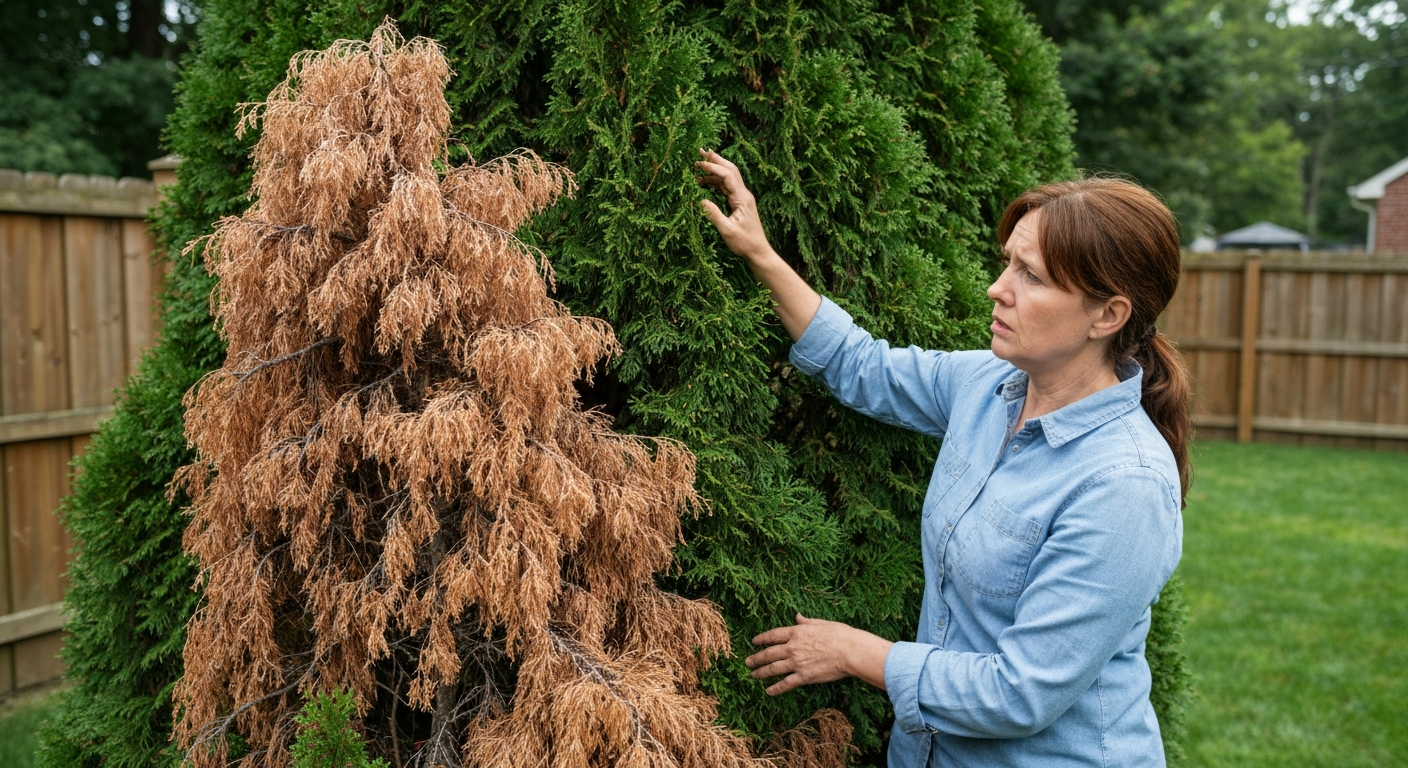

Your evergreen is turning brown because of environmental stress, water problems, pest damage, disease, or natural needle shedding — with drought, winter desiccation, and spider mites being the most common culprits in 2026.
Evergreens aren't supposed to turn brown. That's kind of their whole thing. So when your pine, spruce, arborvitae, or juniper starts looking like it's giving up, it's a clear distress signal that something in its environment has gone wrong. The good news: most browning evergreens can be saved if you catch the problem early and address the root cause.
| ✓Our Pick |
Moisture meter for diagnosing tree watering problems Trusted by professionals and everyday users alike — a smart investment that pays for itself. See on Amazon → |
Evergreen browning happens when the tree can't move water from its roots to its needles — whether because there's not enough water coming in, too much water drowning the roots, or something blocking the internal transport system.
Unlike deciduous trees that drop their leaves as a normal seasonal response, evergreens hold onto their needles year-round. When those needles turn brown, the tree is telling you it's under serious stress. The browning pattern — where it starts, how it spreads, and when it appears — gives you critical diagnostic clues.
Here's what you're likely dealing with:
| Browning Pattern | Most Likely Cause | When It Appears |
|---|---|---|
| Tips of branches brown first | Drought stress or winter burn | Late winter through summer |
| Inner needles yellow then brown | Natural needle drop | Fall |
| Entire branches die from base outward | Root rot or vascular disease | Any season |
| Scattered brown patches | Spider mites or bagworms | Spring through fall |
| One side of tree brown | Salt damage or wind exposure | Late winter to early spring |
| Bottom branches brown first | Fungal disease | Wet spring conditions |
| ✓Quick Fix |
The First Thing Most People Try A fast first step before anything more expensive or time-consuming — worth a look right now. See on Amazon → |
Drought is the number one reason evergreens turn brown in summer, and it's becoming more common as climate patterns shift across the United States.
Evergreens need consistent moisture year-round — yes, even in winter. When soil moisture drops too low, the tree can't pull enough water up through its roots to keep all those needles hydrated. The tree responds by shutting down water flow to the oldest or most exposed needles first, which then turn brown and crispy.
"Evergreens are particularly vulnerable to drought stress because they retain their foliage year-round, which means they're constantly losing moisture through transpiration even when deciduous trees have shed their leaves." — Linda Chalker-Scott, PhD at Washington State University Extension
You'll notice drought stress shows up as:
- Browning that starts at needle tips and works inward
- Needles that feel dry and brittle, not soft
- Browning on the south or west side of the tree (most sun exposure)
- Soil that's dry 4–6 inches below the surface
The fix is straightforward but requires patience. Water deeply — we're talking 1 inch of water per week during dry periods, applied slowly so it soaks down to the root zone rather than running off. A soaker hose left running for 2–3 hours weekly works better than frequent shallow watering.
Winter burn — also called winter desiccation — happens when cold, dry winds pull moisture out of needles faster than frozen roots can replace it, leaving you with a brown surprise once spring arrives.
This is one of the most frustrating types of browning because the damage happens in January or February but doesn't become visible until March or April. You think your evergreen made it through winter fine, then suddenly half of it looks dead.
Here's the mechanism: evergreen needles continue losing small amounts of water through their pores even in winter. Normally, roots absorb enough groundwater to replace what's lost. But when the ground freezes solid, roots can't take up water. If you get a stretch of sunny, windy days while the ground is still frozen, the needles dehydrate and die — but they stay green for weeks before finally turning brown.
Winter burn typically shows up on:
- The side of the tree facing prevailing winds
- Exposed trees not protected by buildings or other trees
- Young trees with shallow root systems
- Trees planted the previous fall that haven't established roots yet
Prevention is easier than treatment. In late fall, water your evergreens deeply before the ground freezes. For vulnerable trees, consider wrapping them in burlap or applying an anti-desiccant spray that creates a waxy coating on needles to reduce moisture loss.
Also Read: Why Is My House So Humid? 8 Causes & Proven Fixes
Spider mites are microscopic sap-suckers that explode in population during hot, dry summers — and they can turn an entire evergreen brown within weeks if you don't catch them early.
These tiny pests are almost invisible to the naked eye, but their damage is unmistakable. They pierce individual needle cells and suck out the contents, leaving behind a stippled, bronzed appearance that eventually turns full brown. By the time you notice obvious browning, you're looking at a severe infestation.
"Spider mite populations can double every three to five days under optimal conditions, meaning a minor infestation can become a major problem within two to three weeks." — Whitney Cranshaw, PhD at Colorado State University Extension
To check for spider mites:
1. Hold a white piece of paper under a brown branch
2. Tap the branch sharply
3. Look for tiny moving specks on the paper
4. Smear the specks — if they leave green or reddish streaks, those are mites
The good news: spider mites are relatively easy to control if caught early. A strong blast from the garden hose knocks them off and disrupts their webbing. For heavier infestations, horticultural oil or insecticidal soap applied every 7–10 days will knock down the population. Avoid broad-spectrum insecticides — they kill the beneficial predatory mites that naturally control spider mite populations.
Too much water is just as deadly as too little — waterlogged soil suffocates roots, invites fungal disease, and produces the exact same brown needles as drought stress.
This is where many well-meaning homeowners go wrong. They see browning needles, assume drought, and start watering heavily — which makes the problem worse if the real issue is already too much moisture. Root rot from overwatering kills more evergreens in poorly-drained clay soils than drought ever will.
Signs your evergreen is drowning, not thirsty:
- Soil stays soggy for days after rain or watering
- Needles turn yellow-green before browning (nitrogen deficiency from damaged roots)
- Entire branches die rather than just needle tips
- Mushrooms growing near the base of the tree
- Bark at the soil line looks dark or feels spongy
The solution depends on severity. For mild cases, simply stop watering and let the soil dry out. For trees in chronically wet sites, you may need to improve drainage by installing a French drain, amending heavy clay soil, or in extreme cases, transplanting to a better location.
All evergreens drop their oldest needles every year — this natural shedding happens from the inside of the tree outward and is perfectly normal, not a sign of disease.
Here's something that catches a lot of people off guard: "evergreen" doesn't mean "keeps every needle forever." It means the tree always has some green foliage — but individual needles have a lifespan of 2–5 years depending on species, after which they yellow, brown, and drop.
Natural needle drop looks like:
- Inner needles (closest to the trunk) turning yellow then brown
- Outer needles staying green and healthy
- Happens in fall, usually September through November
- Affects all trees of that species in your area simultaneously
White pines are notorious for dramatic fall needle drop — they'll shed 2–3-year-old needles all at once, and it looks alarming if you're not expecting it. Arborvitae, spruce, and junipers also shed inner needles, though usually less dramatically.
No treatment needed. Just rake up the fallen needles to reduce habitat for pests and diseases.
Fungal diseases like needle cast, tip blight, and root rot cause progressive browning that spreads over months or years — and unlike environmental stress, these often require fungicide treatment to stop.
Several diseases target evergreens specifically, and they tend to be more serious than environmental stress because they don't resolve on their own. Common culprits include:
| Disease | Species Affected | Symptoms | Treatment |
|---|---|---|---|
| Rhizosphaera needle cast | Spruce (especially Colorado blue) | Lower branches brown first, progresses upward over years | Fungicide in spring |
| Diplodia tip blight | Pines (especially Austrian, Scots) | New growth stunts and browns, old needles stay green | Prune affected tips, fungicide |
| Cytospora canker | Spruce, firs | Branch dieback with white resin bleeding from bark | Prune infected branches, improve tree health |
| Phytophthora root rot | Most evergreens | Entire sections die, roots show brown discoloration | Fungicide drench, improve drainage |
"Rhizosphaera needle cast has become increasingly prevalent in landscape spruces across the Midwest and Northeast, often requiring three consecutive years of fungicide applications for effective control." — Janna Beckerman, PhD at Purdue University Extension
If you suspect disease rather than environmental stress, look for these red flags:
- Browning follows a consistent pattern year after year
- Black spots or fungal fruiting bodies visible on needles (use a magnifying glass)
- Oozing sap or cankers on branches
- Problem gets progressively worse despite correcting water and site issues
For confirmed fungal diseases, fungicide applications are most effective as preventatives in early spring before new growth emerges. Once needles are visibly damaged, those needles won't recover — you're treating to protect next year's growth.
| ✓Our Pick |
Deep-root tree watering system for established evergreens Backed by strong customer feedback — the most recommended solution in forums and Q&A communities. See on Amazon → |
Match the browning pattern to the cause using this diagnostic approach: start with when it appeared, then where on the tree, then examine the needles up close.
Step 1: Note the timing
- Brown in late winter/early spring → winter desiccation
- Brown in mid-summer → drought or spider mites
- Brown in fall (inner needles only) → natural needle drop
- Progressive browning over months/years → disease
Step 2: Observe the pattern
- Browning from tips inward → water stress
- Browning from inside outward → natural drop or root problem
- Browning from bottom up → fungal disease
- One side only → environmental exposure (wind, salt, reflected heat)
Step 3: Examine up close
- Stippled, bronzed look → spider mites
- Black dots on needles → fungal infection
- Tiny bags hanging from branches → bagworms
- Needles pull off easily → drought
- Needles stay attached but crumble → winter burn
Step 4: Check the roots
- Dig down 6 inches near the trunk
- Healthy roots are white or light tan and firm
- Rotting roots are brown, mushy, or smell sour
- Circling roots wrapped tight around the trunk indicate root-bound stress
Also Read: Why Is My Well Water Brown? 5 Causes & How to Fix It
The most important immediate action is to water deeply if the soil is dry, stop watering if it's soggy, and hold off on fertilizer until you've identified the actual problem.
Here's your recovery plan:
Assess soil moisture — Dig down 6 inches. Dry and crumbly means water deeply. Wet and sticky means stop watering entirely.
Check for pests — Do the white paper test for spider mites. Look for bagworm casings or aphid colonies on new growth.
Don't prune yet — Wait until late spring to see what recovers. Branches that look dead in March may push new growth in May.
Skip the fertilizer — Stressed trees can't use extra nitrogen. Fertilizing a sick tree is like making someone with a fever run laps.
Mulch properly — 3–4 inches of wood mulch in a wide ring around the tree (not piled against the trunk) conserves moisture and regulates soil temperature.
For prevention in future years, water evergreens deeply before the ground freezes in fall, protect vulnerable specimens from winter wind, and maintain a consistent deep-watering schedule during summer dry spells.
Evergreen browning almost always traces back to water problems — either too little, too much, or the inability to transport water internally due to root damage or frozen soil. Spider mites and fungal diseases are secondary causes that thrive when trees are already stressed. Diagnose by observing when the browning appeared, where it started on the tree, and what the needles look like up close. Most browning evergreens can recover with proper watering, patience, and pest control, though severely diseased trees may need fungicide treatment or removal.
Inside-out browning is almost always natural needle drop, which happens every fall as the tree sheds its oldest needles. Evergreens typically keep needles for 2–5 years, then discard the innermost ones while the outer canopy stays green. This is normal and healthy. However, if the browning is accompanied by branch dieback (entire limbs dying) or is happening outside of fall, suspect root rot or vascular disease and check your soil drainage.
Summer browning is typically caused by drought stress or spider mite infestation — and often both together, since mites thrive in hot, dry conditions. Check soil moisture at 6 inches deep. If it's dry, water deeply and consistently. If moisture is adequate, inspect for spider mites using the white paper test. Hot, dry summers in 2026 have created ideal conditions for mite populations to explode, so this should be your first suspect.
It depends on how much of the tree is affected and whether the buds are still alive. Needles that have turned brown are dead and won't green up again — but branches can push new growth from dormant buds if the branch itself is still alive. Scratch the bark on a brown branch with your fingernail. If you see green underneath, the branch is alive and may recover. If it's brown and dry all the way through, that branch is gone.
Check the soil, not the tree — both conditions produce identical needle browning. Dig down 6 inches near the trunk. Dry, crumbly soil indicates drought. Wet, sticky soil that stays soggy for days indicates overwatering or poor drainage. Also note: drought-stressed needles are dry and brittle, while overwatered trees often show yellowing before browning and may have mushrooms growing near the base.
No — hold off on fertilizer until you've identified and corrected the underlying problem. Fertilizing a stressed tree forces it to push new growth when it's already struggling to support existing foliage. This makes the stress worse, not better. Once the tree has stabilized and is showing signs of recovery (new growth, improved color), you can resume fertilizing the following spring with a slow-release evergreen formula.
Reviewed and Updated on June 20, 2026 by George Wright