Health
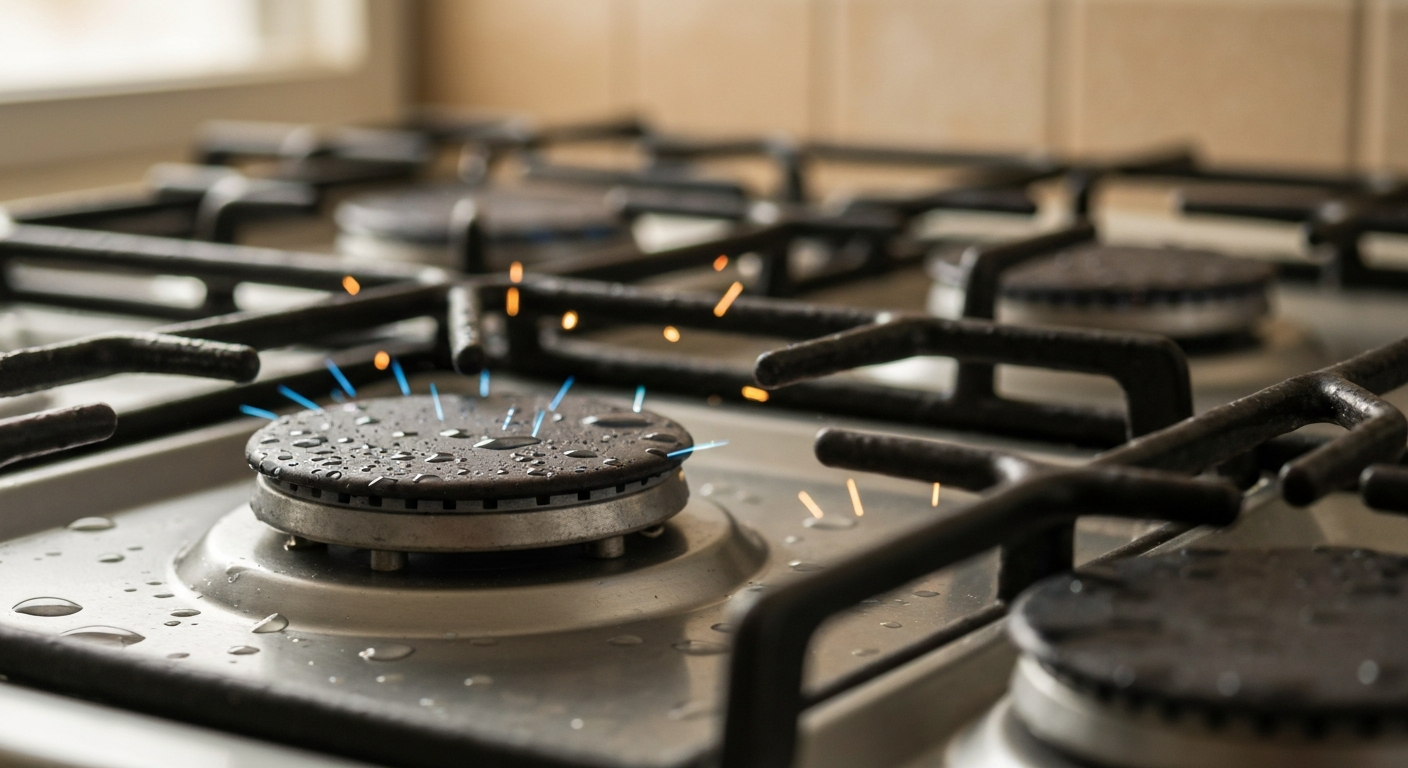

Your gas stove is clicking because the igniter is trying to spark — either you haven't turned the knob far enough to release gas, or moisture, food debris, or a misaligned burner cap is preventing the spark from igniting the gas properly. This clicking sound is the electric spark generator doing its job. The problem is almost always mechanical or environmental, not a sign that your stove is failing. Most fixes take under five minutes and cost nothing.
| ✓Our Pick |
Heavy-duty degreaser for stove and oven cleaning Consistently earns five-star reviews — reliable, well-supported, and genuinely effective. See on Amazon → |
The clicking you hear is an electric spark jumping across a small gap — it's the modern replacement for a pilot light and is designed to click until gas ignites.
When you turn a gas stove knob, two things happen simultaneously. First, the knob opens a valve that releases natural gas or propane to the burner. Second, it triggers a spark module that sends electrical pulses to a small ceramic igniter near the burner. Each pulse creates a visible spark across a tiny metal gap. You hear that spark as a click.
The spark ignites the gas, and the flame appears. Once the burner lights, the clicking should stop within one to three seconds. If the clicking continues — or if it happens when you're not using the stove at all — something is interfering with this process.
"The igniter creates a spark to light the gas. If the burner doesn't light within a few seconds, turn off the burner and wait before trying again." — U.S. Consumer Product Safety Commission
This system is safe by design. The igniter only works when you physically turn the knob, and modern stoves have safety valves that limit gas flow if ignition doesn't occur quickly.
| ✓Quick Fix |
See What Solves This in Minutes A fast first step before anything more expensive or time-consuming — worth a look right now. See on Amazon → |
A stove that clicks when no burners are on usually has moisture in the igniter assembly or a stuck switch caused by food debris — not an electrical fault.
This is one of the most alarming symptoms because it seems like your stove has a mind of its own. But the cause is almost always mundane. Here's what triggers phantom clicking:
Water is the most common culprit. If you've recently boiled over a pot, cleaned the stovetop with a wet cloth, or had a spill, moisture can bridge the electrical contacts in the igniter switch. This completes the circuit even though you haven't turned the knob.
The fix: Remove the burner grates and caps. Let the stovetop air dry completely — this can take several hours. You can speed it up by pointing a fan at the burners or running the oven for 15 minutes to warm the area. Do not use the stove while it's wet.
Grease, sauce splatters, and burnt-on food can physically jam the igniter switch in the "on" position. The switch sits beneath the control knob, and if residue prevents it from fully releasing, the igniter keeps firing.
The fix: Turn off the stove at the circuit breaker. Remove the knobs and clean around the switch area with a toothbrush dipped in warm soapy water. Wipe dry completely before restoring power.
Less commonly, a faulty spark module or a short in the wiring can cause continuous clicking. If drying and cleaning don't solve the problem within 24 hours, the igniter switch itself may need replacement. This is a $15–$50 part, and many homeowners can replace it with basic tools by following the manufacturer's instructions.
Also Read: Why Is My Gas Bill So High This Month? 9 Causes & Fixes
If your stove clicks repeatedly without producing a flame, the spark is working — but something is stopping ignition.
| Cause | What's Happening | Fix |
|---|---|---|
| Burner cap misaligned | Cap is sitting crooked, blocking gas flow | Remove and reseat cap flat on burner base |
| Clogged burner ports | Food debris blocks the tiny holes around the burner | Clear ports with a toothpick or needle |
| Wet igniter electrode | Moisture shorts out the spark | Air dry for 2–4 hours or use a hair dryer on low |
| Dirty igniter tip | Carbon buildup weakens the spark | Gently scrub with a soft toothbrush |
| No gas supply | Gas valve is off, or utility issue | Check other burners and gas shut-off valve |
| Faulty igniter | Electrode is cracked or worn | Replace igniter assembly ($20–$60 part) |
This is the single most common cause of clicking with no flame. The burner cap is the flat metal disc that sits on top of the burner base. If it's not perfectly centered and level, it can block gas from reaching the igniter spark.
Remove the cap, wipe both the cap and the base clean, and reseat it carefully. You'll feel it settle into place when it's correct.
The small holes around the burner base allow gas to flow and mix with air. When these ports get clogged with grease, food, or carbon deposits, the gas can't reach the spark. Use a toothpick, straight pin, or the tip of a paperclip to gently clear each port. Never use anything that could break off inside the port.
Even small amounts of moisture prevent proper sparking. If you've been cooking with lots of steam or cleaning the stovetop, dampness in the igniter area can cause repeated clicking without ignition. Dry the area thoroughly and wait before trying again.
Look closely at the small ceramic post near each burner — that's the igniter electrode. Over time, it accumulates carbon residue and grease, which weakens the spark. Clean it gently with a soft toothbrush or a dry cloth. Don't use water or harsh chemicals directly on the electrode.
An oven that clicks during preheat is using its igniter normally — continuous clicking during cooking or when the oven is off signals a problem with the igniter, thermostat, or wiring.
Gas ovens also use spark ignition systems, though they work slightly differently than stovetop burners. The oven igniter must glow hot enough to open a safety valve before gas is released. You'll often hear a few clicks during the initial light-up cycle, followed by a whooshing sound when the burner ignites.
If your oven clicks repeatedly without lighting, the igniter may be too weak to open the safety valve. This is a common issue in ovens over five years old. The igniter still sparks, but it doesn't get hot enough to trigger gas flow. Replacement igniters cost $25–$80 and are straightforward to install for most DIYers.
Continuous clicking during cooking — or when the oven should be off — suggests a faulty igniter switch or temperature sensor. If cleaning and drying don't help, this is a job for a professional.
Most stove clicking problems can be resolved in under 10 minutes with no tools and no parts.
Turn off all burner knobs. Make sure every knob is in the fully off position, not just turned down.
Remove the grates and burner caps. Lift them straight up. Set them aside.
Inspect for visible debris or moisture. Look at the burner bases, the igniter electrodes (small ceramic posts), and the area around each burner.
Dry everything thoroughly. If there's any moisture, let the stovetop air dry for 2–4 hours. Use a fan or a hair dryer on the low/cool setting to speed this up.
Clean the igniter electrodes. Use a soft, dry toothbrush to gently remove any carbon buildup or grease from each electrode. Don't use water.
Clear the burner ports. Use a toothpick to poke through each small hole around the burner base. Don't force anything that could break off inside.
Reseat the burner caps. Place each cap flat and centered on its base. They should sit flush without wobbling.
Replace the grates and test. Turn on each burner one at a time. The clicking should stop within 2–3 seconds of the flame appearing.
If the problem persists after these steps, the issue is likely a faulty igniter switch or spark module that needs replacement.
"Appliance igniters are consumable parts that wear out over time. Most can be replaced by following manufacturer instructions, but always disconnect power first." — U.S. Department of Energy
Also Read: Why Is My Room So Hot? 9 Causes & Fixes That Work
If your stove smells like gas while clicking, turn off the gas supply immediately and call your utility company — this is a potential safety hazard.
Most clicking issues are harmless annoyances caused by moisture or debris. But some situations require professional attention:
A licensed appliance repair technician can diagnose and fix these issues safely. Most repairs cost $100–$250 including parts and labor.
The best prevention is keeping burner components clean and dry, and wiping up spills before they reach the igniter.
A little routine maintenance keeps the igniter dry and the gas ports clear — the two main factors that cause clicking problems.
Also Read: Why Is My Sink Gurgling? 7 Causes & How to Fix It
A clicking gas stove is almost always caused by moisture, food debris, or a misaligned burner cap — not a dangerous malfunction. The fix usually takes less than 10 minutes: dry the stovetop, clean the igniter electrodes, clear the burner ports, and reseat the caps. If clicking continues or you smell gas, call a professional immediately.
Moisture or food debris is most likely jamming the igniter switch in the on position. Turn off the stove at the circuit breaker, clean around the control knobs, and let the burner area dry completely for several hours. If the clicking continues after 24 hours of drying, the igniter switch may be faulty and need replacement.
The spark is working, but gas isn't reaching the spark. Check that the burner cap is seated flat and level. Clear any clogged burner ports with a toothpick. Make sure the gas supply is on by testing other burners. If none of those work, the igniter electrode may be dirty or the gas valve may be stuck.
This is normal. Gas ovens use an igniter that clicks several times during the initial light-up cycle. You should hear the clicks, then a whooshing sound as the burner ignites. If the clicking continues for more than 60 seconds without ignition, the igniter may be too weak and need replacement.
A clicking stove by itself is not dangerous — it's just an electrical spark. However, if you smell gas while the stove is clicking and not igniting, turn off the gas supply, leave the area, and call your gas company immediately. This means gas is flowing without being ignited, which is a safety hazard.
If you do it yourself, replacement igniters cost $15–$60 for the part. Professional repair typically costs $100–$250 including labor. In most cases, you can fix the clicking without replacing anything — cleaning and drying the igniter area resolves the majority of problems.
Reviewed and Updated on June 20, 2026 by George Wright