
Cats
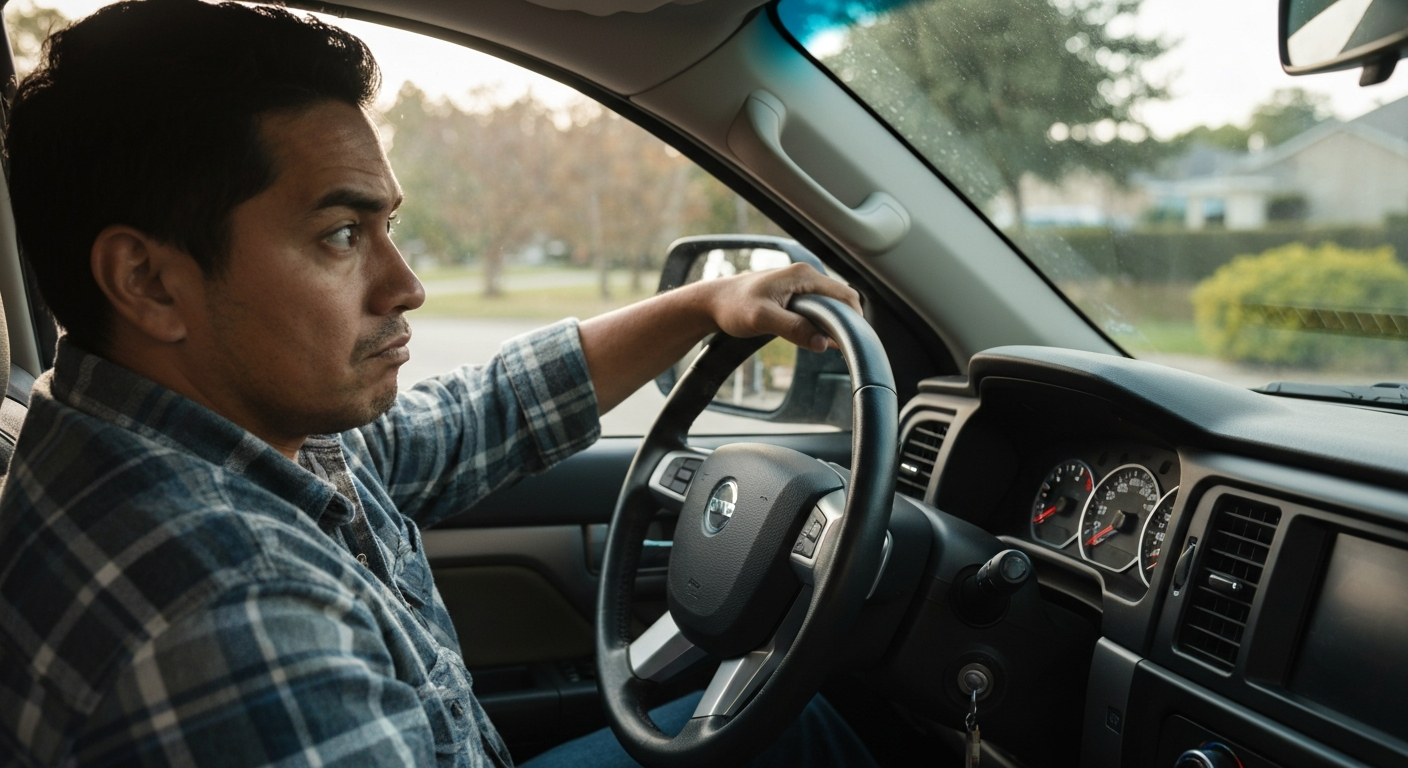

Your speedometer is most likely off because your tire size doesn't match the factory specification — larger or smaller tires than stock cause the speedometer to read incorrectly because the sensor measures wheel rotations, not actual ground speed.
Other common causes include a faulty vehicle speed sensor, a damaged speedometer cable (on older vehicles), incorrect calibration after modifications, transmission problems, or a malfunctioning instrument cluster. The good news: most speedometer inaccuracies are straightforward to diagnose and fix once you understand what's causing the error.
| ✓Our Pick |
Search speedometer calibration tools and OBD-II diagnostic scanners Save yourself the frustration — a proven solution with consistently positive feedback from real buyers. See on Amazon → |
When you change your tire size from the factory specification, your speedometer will read incorrectly — larger tires make it read slower than actual speed, and smaller tires make it read faster.
Your speedometer calculates speed by counting how many times your wheels rotate per minute and multiplying that by the tire's circumference. The vehicle's computer is programmed with the exact circumference of the original tires. When you install different-sized tires, the math no longer works.
Here's a practical example: if your factory tires have a circumference of 80 inches and you install tires with an 84-inch circumference (about 5% larger), your wheels complete fewer rotations to cover the same distance. Your speedometer thinks you're going slower than you actually are. At an indicated 60 mph, you might actually be traveling at 63 mph.
The effect works in reverse with smaller tires — your speedometer shows a higher speed than reality.
| Tire Change | Speedometer Reading | Actual Speed | Error |
|---|---|---|---|
| Stock tires | 60 mph | 60 mph | 0% |
| 3% larger tires | 60 mph | 61.8 mph | -3% |
| 5% larger tires | 60 mph | 63 mph | -5% |
| 3% smaller tires | 60 mph | 58.2 mph | +3% |
This issue is extremely common among truck and SUV owners who upgrade to larger off-road tires without recalibrating their speedometer.
Also Read: Why Is My Speedo Not Working? 6 Causes & How to Fix
Yes — a failing vehicle speed sensor (VSS) can cause erratic, intermittent, or completely incorrect speedometer readings, and it's one of the most common electronic causes of speedometer problems in modern vehicles.
The VSS is typically mounted on the transmission or differential. It generates an electronic signal as the output shaft rotates. This signal goes to your vehicle's computer, which calculates speed and displays it on your dashboard.
When the VSS starts to fail, you might notice:
"Vehicle speed sensor failures are among the top causes of speedometer inaccuracy in modern vehicles. The sensor's magnetic pickup can become contaminated with metal debris from the transmission, causing intermittent or incorrect signals." — Society of Automotive Engineers
A diagnostic scanner can pull trouble codes related to the VSS. If you get a P0500 code (Vehicle Speed Sensor Malfunction), the sensor likely needs replacement — typically a $50–$150 part plus labor.
If you drive a vehicle built before the mid-1990s, a worn or broken speedometer cable is a likely culprit for inaccurate readings.
Older vehicles use a mechanical speedometer system. A flexible cable connects the transmission to the speedometer head in your dashboard. This cable physically spins to move the speedometer needle.
Over time, the cable can:
You can often hear a squealing or clicking noise from behind the dashboard when a speedometer cable is failing. The fix is straightforward — cables cost $15–$40 and can be replaced with basic tools, though routing the new cable can be tedious.
Transmission issues can affect speedometer accuracy because the speed signal originates from the transmission's output shaft — if that component has problems, the signal will be wrong.
The speed sensor reads the rotation of gears inside your transmission. If those gears are worn, the sensor may receive inconsistent rotation data. Low transmission fluid can also affect how smoothly these internal components rotate.
Signs that your transmission is causing speedometer problems:
If you suspect transmission involvement, check your fluid level and condition first. Dark, burnt-smelling fluid or metal particles in the fluid indicate internal wear that could affect speed sensor accuracy.
Also Read: Why Is My Motor Shaking? 9 Causes & How to Fix Them
A malfunctioning instrument cluster — the unit containing your speedometer, tachometer, and gauges — can display incorrect speeds even when receiving accurate signals from the sensor.
Modern instrument clusters are electronic. The speedometer needle is controlled by a small stepper motor that can fail over time. Symptoms of a failing cluster include:
Some vehicles, particularly certain GM trucks and SUVs from the early 2000s, are notorious for instrument cluster failures. Stepper motor replacement or cluster rebuild services cost $150–$300 and often fix the issue without requiring a full cluster replacement.
"Instrument cluster stepper motors have a finite lifespan and commonly fail between 100,000–150,000 miles. The speedometer motor often fails first because it moves more frequently than fuel or temperature gauges." — National Highway Traffic Safety Administration Technical Service Bulletin Database
The easiest way to verify speedometer accuracy is to compare your speedometer reading against a GPS speedometer app or standalone GPS device while driving at a steady speed.
GPS calculates your actual ground speed independently of your vehicle's systems. Here's how to test:
If your speedometer consistently reads 3 mph higher than GPS across all speeds, you have a calibration issue (likely tire-related). If the error varies wildly or the speedometer jumps around, you have a sensor or electrical problem.
Another method: use mile markers on the highway. Set a stopwatch and time how long it takes to travel exactly one mile at an indicated 60 mph. At true 60 mph, one mile takes exactly 60 seconds. If it takes 57 seconds, you're actually going about 63 mph.
| Test Method | Best For | Accuracy |
|---|---|---|
| GPS speedometer app | General verification | ±1 mph |
| Mile marker timing | Confirming consistent error | ±2 mph |
| Dyno shop measurement | Precise calibration | ±0.5 mph |
The fix depends entirely on the cause — tire-related errors require recalibration, sensor failures need part replacement, and cable issues are solved by replacement.
If you've changed tire sizes, you have three options:
This is typically a DIY-friendly repair:
Parts cost $30–$100 depending on your vehicle. Labor at a shop runs $75–$150.
For older vehicles with mechanical speedometers:
Also Read: Why Is My Steering Wheel Locked? 5 Causes & How to Fix It
See a mechanic if your speedometer error is accompanied by other symptoms, if you can't identify the cause, or if the repair involves transmission work or instrument cluster replacement.
Situations requiring professional diagnosis:
A qualified technician can use manufacturer-specific diagnostic tools to pinpoint whether the problem is the sensor, wiring, cluster, or transmission. Diagnostic fees typically run $75–$150 and are often credited toward the repair.
Your speedometer is most likely off because of non-stock tire sizes, a failing vehicle speed sensor, or (in older vehicles) a worn speedometer cable. Test accuracy using a GPS speedometer app, then address the specific cause — recalibrate for tire changes, replace sensors or cables for failures, or have the instrument cluster serviced if gauges are malfunctioning. Most speedometer fixes are affordable and straightforward once properly diagnosed.
Costs vary widely depending on the cause. A speedometer cable for an older vehicle costs $15–$40 plus an hour of labor. A vehicle speed sensor runs $30–$100 for the part and $75–$150 for shop labor. Instrument cluster repairs range from $150–$400. ECU recalibration for tire size changes costs $50–$150 at a dealership. The most expensive scenario — a full instrument cluster replacement — can reach $500–$1,000 with labor.
Yes, but it's risky. No state requires annual speedometer calibration for passenger vehicles. However, you're responsible for obeying posted speed limits regardless of what your speedometer says. If your speedometer reads low and you're actually speeding, you can still receive a ticket. Some states allow speedometer calibration certificates as evidence in court to potentially reduce speeding fines, but this isn't guaranteed.
Yes. Your speedometer and odometer share the same speed signal source. If your tires are 5% larger and your speedometer reads slow, your odometer also registers 5% fewer miles than you actually travel. Recalibrating for the correct tire size fixes both simultaneously. This is important for lease vehicles where excess mileage charges apply.
Factory speedometers are intentionally calibrated to read slightly high — typically 1–3% — as a liability buffer. Manufacturers would rather you think you're going faster than you are. GPS measures true ground speed. So even with perfectly stock tires and a functioning sensor, your speedometer may show 62 mph when you're actually going 60 mph. This is normal and by design.
Extreme cold can temporarily affect speedometer accuracy in several ways. Tire pressure drops approximately 1 psi for every 10°F decrease, effectively reducing your tire diameter slightly and causing your speedometer to read a bit high. Cold weather can also make mechanical speedometer cables stiff, causing sluggish response. These effects are minor — usually less than 2% — and resolve as temperatures normalize.
Reviewed and Updated on June 11, 2026 by George Wright