DIY
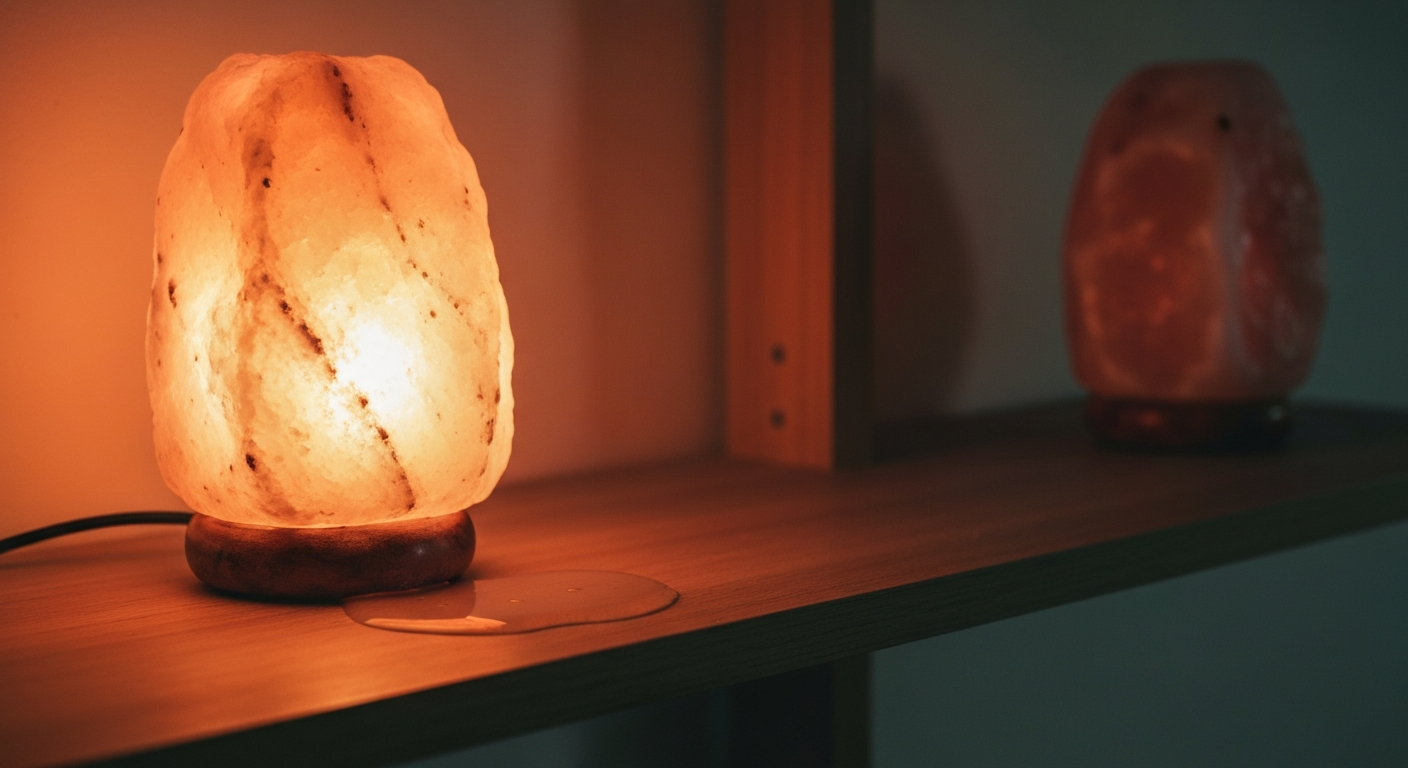

A Himalayan salt lamp melts or weeps water because it is hygroscopic — it absorbs moisture from the air — and when the humidity around it is too high or the lamp is turned off for extended periods, the absorbed water causes the salt to dissolve and drip. Keeping the lamp on continuously and reducing ambient humidity are the primary fixes.
Salt naturally attracts and holds water molecules from the surrounding air. The pink Himalayan salt used in these lamps is especially porous. When humidity exceeds the rate at which the lamp's heat can evaporate the absorbed water, the lamp visibly sweats, drips, or appears to melt — leaving wet spots, salt crust, and puddles beneath it.
Himalayan salt lamps are hygroscopic — a property of all salts that causes them to attract water vapor from the air. At humidity levels above approximately 60%, the rate of water absorption exceeds what the lamp's heat can evaporate. The lamp begins to visibly sweat and drip.
Rooms most prone to this problem:
- Basements: Often exceed 70% relative humidity without dehumidification
- Bathrooms and kitchens: Steam from showers, cooking, and dishwashing elevates local humidity dramatically
- Coastal or tropical climates: Outdoor humidity regularly exceeds 70–80%
- During rainy seasons: Indoor humidity tracks outdoor humidity without HVAC dehumidification
Fix: Move the lamp to a drier room, or address the humidity source. A relative humidity (RH) level below 55% prevents most salt lamp melting. A basic hygrometer (under $15) measures your room's humidity.
The bulb inside a salt lamp serves a dual purpose: it illuminates the lamp and generates enough heat to evaporate the water the salt absorbs. A lamp that is left off for more than 12–24 hours in a humid environment absorbs moisture without the heat needed to release it. The salt becomes saturated and begins to drip.
The simplest fix: Leave the lamp on continuously. The low-wattage incandescent bulb (typically 15W) generates minimal electricity cost (roughly $1.50–$3 per month) and maintains the evaporation cycle that prevents melting.
If you want to turn it off overnight, place the lamp in a plastic bag to isolate it from ambient humidity.
The standard bulb included with most salt lamps is a 15W incandescent. Some users replace burned-out bulbs with lower-wattage LED bulbs — often 4W to 7W — which look similar but generate far less heat. LED bulbs produce less than 10% of the heat that an equivalent incandescent produces.
Without adequate heat, the lamp cannot evaporate absorbed moisture and will melt noticeably faster. Always replace the salt lamp bulb with an incandescent bulb of the correct wattage (15W for most lamps, higher for larger lamps). LED replacements are not appropriate for salt lamps.
"Incandescent bulbs convert approximately 90% of their energy to heat and 10% to visible light. This heat output is integral to the function of hygroscopic decorative lamps. Replacing with LED alternatives dramatically reduces heat and disrupts the moisture evaporation cycle." — U.S. Department of Energy Lighting Energy Basics, U.S. Department of Energy
Placement near humidity sources causes rapid melting even in otherwise moderate climates:
- Near an open window during humid weather
- Near a humidifier
- Near a fish tank or water feature
- On a bathroom vanity or kitchen counter
- Near a boiling kettle or coffee maker
Relocate the lamp at least 3 feet from any moisture-generating appliance or ventilation source.
A lamp that arrives wet or seems to melt very quickly from day one may have been exposed to humidity during shipping or storage in a warehouse. This is common with lamps shipped in humid conditions or stored in a damp facility.
In this case, turning the lamp on continuously for 24–48 hours drives out the absorbed moisture and normalizes the behavior. Place the lamp on a tray or absorbent surface during this initial drying period.
Salt water from a melting lamp damages wood, finished furniture, and fabric. Salt is corrosive to metal surfaces. Always place your salt lamp on a plate, tray, or coaster — ideally with a layer of paper towel or an absorbent mat beneath it to catch drips.
If the lamp has been dripping onto wood furniture, clean the area with fresh water and dry immediately. Salt draws more moisture into wood, causing warping. Prolonged exposure causes permanent finish damage.
Authentic Himalayan salt lamps are mined from the Khewra Salt Mine in Pakistan and have a characteristic pink-to-deep-orange color. Counterfeit lamps made from dyed white salt, rock salt from other sources, or synthetic materials can be more reactive to humidity and melt more aggressively.
Signs of a low-quality or counterfeit lamp:
- Extremely uniform pink color (genuine lamps show variation)
- Very low price (under $10 for large lamps)
- Melting aggressively even in moderate humidity (under 50%)
- Salt that crumbles rather than holding its shape
Purchasing from reputable retailers and checking for product origin information reduces the risk of counterfeit lamps.
| ✓Our Pick |
Shop AlorAir crawl space and basement dehumidifiers for humidity control Simple to use and genuinely effective — for many people this is all they ever needed. Learn More → |
| Issue | Fix |
|---|---|
| High room humidity (above 55%) | Use a dehumidifier or move lamp to a drier room |
| Lamp turned off overnight | Leave lamp on 24/7 or bag it when off |
| LED replacement bulb | Replace with 15W incandescent |
| Near moisture source | Move 3+ feet from humidifier, window, aquarium |
| Surface damage from drips | Place lamp on tray with absorbent mat |
A melting salt lamp is a humidity problem, not a defective lamp. The fix is almost always to leave the lamp on continuously (the heat evaporates absorbed moisture) and reduce ambient humidity below 55%. Use a 15W incandescent bulb — not an LED — to maintain sufficient heat output. Place the lamp on an absorbent tray to protect surfaces. In chronically humid spaces like basements, a dehumidifier is the permanent solution.
The salt and water are not toxic, but an actively dripping lamp creates electrical hazard if the water contacts the lamp base, cord, or electrical components. Inspect the base regularly — if salt water has reached the cord or socket, stop using the lamp immediately and allow it to dry fully before checking the cord for corrosion. Use a lamp with an appropriate tray and keep the base dry.
Turn the lamp off and allow it to dry completely. Use a slightly damp (not wet) cloth to wipe away white salt crust from the exterior surface. Do not submerge or rinse a salt lamp in water — it will dissolve. Dry the cleaned surface immediately and turn the lamp back on to continue the evaporation cycle.
Directional melting happens when one face of the lamp is exposed to more airflow or humidity than the other. This occurs near air vents, windows, or fans that direct airflow at one side. Rotate the lamp periodically to expose different faces equally to the lamp's heat, or redirect the airflow source.
There is no credible scientific evidence that Himalayan salt lamps purify the air, reduce allergens, or emit meaningful quantities of negative ions at the distances involved in home use. The primary appeal is aesthetic — warm, orange-tinted ambient light. The hygroscopic activity does absorb some airborne moisture but does not constitute meaningful air purification.
Reviewed and Updated on June 6, 2026 by George Wright