
Skin
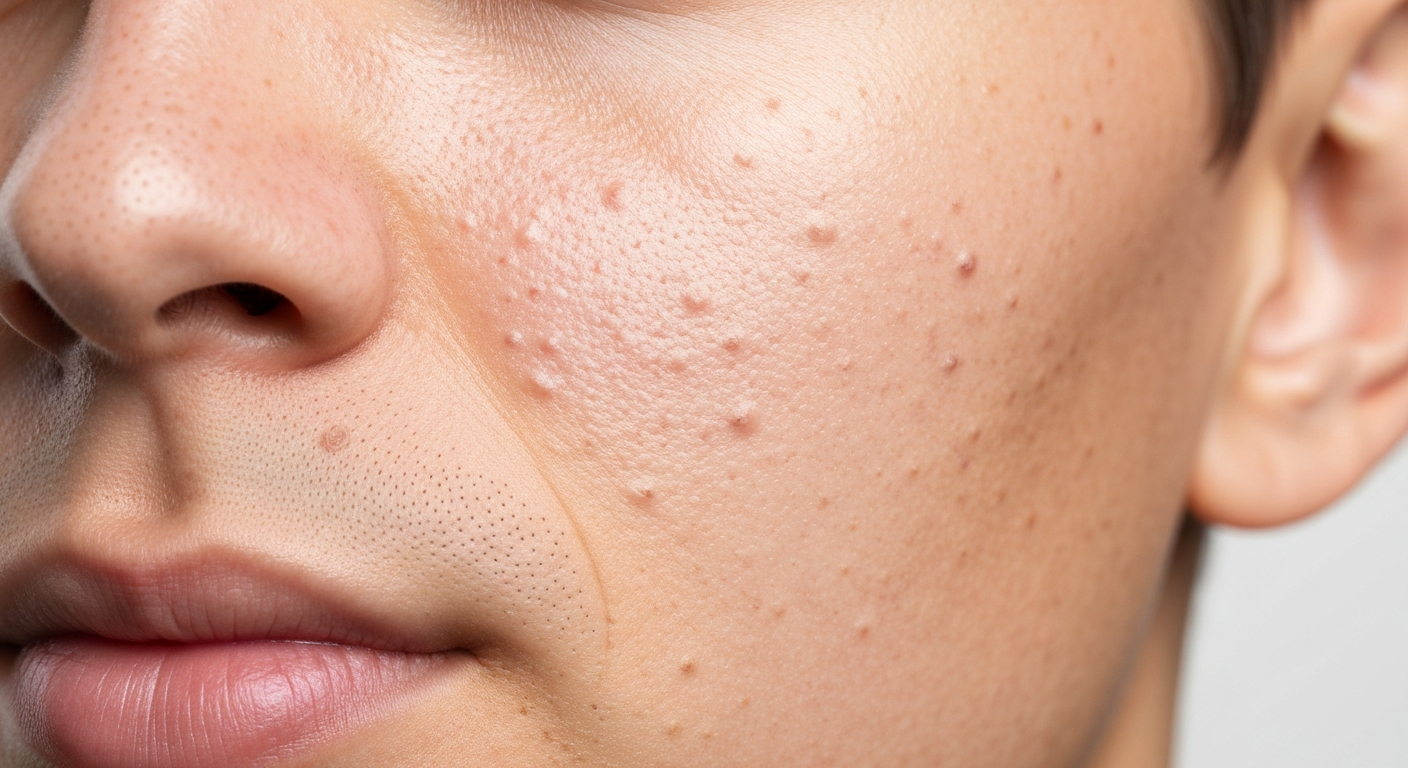

Your face is bumpy because of clogged pores, dead skin buildup, or an underlying skin condition like keratosis pilaris, milia, or acne — and the texture often worsens when your skin barrier is compromised by harsh products, dehydration, or hormonal shifts.
That uneven, rough-to-the-touch feeling you're noticing isn't just in your head. Bumpy facial texture is one of the most common skin concerns dermatologists hear about, and it stems from a handful of identifiable causes that respond well to targeted treatment. Whether your skin suddenly turned rough and bumpy or you've been dealing with textural issues for years, understanding the root cause is the first step toward smoother skin.
Bumpy face texture occurs when something disrupts the normal, smooth surface of your skin — whether that's trapped oil, accumulated dead cells, or tiny cysts forming beneath the surface.
Your skin constantly renews itself, shedding old cells and producing new ones roughly every 28 days. When this process gets disrupted, dead cells pile up instead of sloughing off naturally. Oil gets trapped under that layer of buildup. Bacteria multiply. The result is a bumpy, uneven surface that doesn't reflect light smoothly and feels rough when you run your fingers across it.
The bumps themselves can take different forms: closed comedones (clogged pores that haven't turned into pimples), milia (tiny white keratin cysts), keratosis pilaris (rough patches caused by keratin plugs), or inflammatory acne. Each has a different underlying mechanism, which is why identifying your specific type matters for treatment.
Yes — when dead skin cells accumulate faster than they shed, they create a rough, uneven surface and clog pores.
Cell turnover naturally slows as you age, dropping from about 28 days in your twenties to 45–60 days by your forties. Environmental factors like pollution, UV exposure, and dry indoor air accelerate this slowdown. The result is a dull, bumpy texture that no amount of moisturizer seems to fix.
Signs that dead skin buildup is your issue include flakiness alongside the bumps, products sitting on top of your skin rather than absorbing, and makeup that looks patchy or emphasizes texture.
Clogged pores — especially closed comedones — are one of the most common reasons skin feels bumpy rather than smooth.
Closed comedones are pores blocked by a combination of sebum and dead cells, but they haven't opened to the surface (which would make them blackheads) or become inflamed (which would make them pimples). They appear as small, flesh-colored or slightly white bumps, often clustered on the forehead, chin, or cheeks.
"Comedonal acne is characterized by many small flesh-colored papules that make the skin look and feel bumpy." — American Academy of Dermatology
Heavy skincare products, not removing makeup thoroughly, and over-moisturizing can all contribute to clogged pores.
Keratosis pilaris (KP) creates small, rough bumps when keratin — the protein that protects skin — builds up and plugs hair follicles.
Often called "chicken skin," KP typically appears on upper arms and thighs, but it can affect the face, particularly the cheeks. The bumps are usually skin-colored or slightly red, feel rough like sandpaper, and don't respond to typical acne treatments.
KP is genetic and harmless, but it can be frustrating. It tends to worsen in dry conditions and improve with humidity and consistent exfoliation.
Milia are tiny, hard white bumps that form when keratin becomes trapped under the skin's surface — and they won't respond to squeezing or typical acne products.
Unlike whiteheads, milia aren't filled with pus or oil. They're small keratin cysts, usually 1–2 millimeters across, that form when dead skin gets trapped instead of shedding. They commonly appear around the eyes, on the cheeks, and across the forehead.
Milia can develop after skin damage (sunburn, dermabrasion, or steroid use), from heavy occlusive products, or sometimes for no identifiable reason. They typically require professional extraction or retinoid treatment to resolve.
Hormonal fluctuations — from menstrual cycles, pregnancy, perimenopause, or conditions like PCOS — can trigger sudden changes in skin texture and bump formation.
Androgens (male hormones that everyone has in varying amounts) increase sebum production. More oil means more clogged pores, more bacterial growth, and more bumps. This explains why skin often breaks out before periods, during pregnancy, or when starting or stopping hormonal birth control.
"Hormonal fluctuations can cause an increase in sebum production, which can lead to clogged pores and acne breakouts." — Cleveland Clinic
If your bumpy texture appeared suddenly alongside other hormonal symptoms (irregular periods, unusual hair growth, fatigue), it's worth discussing with a healthcare provider.
Using the wrong products or too many products can damage your skin barrier, leading to texture problems, increased sensitivity, and more bumps.
Over-exfoliating strips away protective oils and causes micro-tears. Heavy moisturizers can clog pores. Comedogenic ingredients (certain oils, silicones, and emollients) directly contribute to blocked pores. Even products labeled "non-comedogenic" may not work for everyone's skin.
Signs your routine is the culprit: texture worsened after adding a new product, skin feels tight or irritated, or you're layering more than 5–6 products daily.
Dehydrated skin — which lacks water, not oil — often compensates by overproducing sebum, leading to a bumpy, congested texture even in people with oily skin.
Dehydration differs from dryness. Dry skin lacks oil; dehydrated skin lacks water. You can have oily, dehydrated skin simultaneously, which feels rough and looks shiny at the same time. Dehydration impairs the skin barrier, slows cell turnover, and makes existing texture issues more visible.
Common causes include not drinking enough water, overusing drying acne treatments, alcohol-based toners, and climate-controlled environments that strip moisture from skin.
Fungal acne — technically called pityrosporum folliculitis — creates uniform, itchy bumps that look like acne but don't respond to typical acne treatments.
Unlike bacterial acne, fungal acne is caused by an overgrowth of yeast (Malassezia) that lives naturally on skin. The bumps are typically small, similar in size, and clustered in areas where you sweat — forehead, hairline, chest, and back. They often itch, which regular acne doesn't.
Fungal acne thrives in humid conditions, after antibiotic use (which kills competing bacteria), and when you use occlusive products that trap moisture against skin.
Contact dermatitis or allergic reactions to skincare ingredients, laundry detergent, or environmental allergens can cause sudden bumpy texture and roughness.
Allergic reactions on facial skin often manifest as small bumps, redness, and itching rather than hives. The reaction may not appear immediately — some allergic responses take 24–72 hours to develop, making it hard to identify the trigger.
Common culprits include fragrances, preservatives (like methylisothiazolinone), essential oils, and certain botanical extracts. If your skin became suddenly rough and bumpy after changing any product — including hair care, laundry detergent, or makeup — an allergy is worth investigating.
Identifying the specific type of bump helps you choose the right treatment — here's a quick comparison to narrow down what you're dealing with.
| Bump Type | Appearance | Location | Key Characteristics |
|---|---|---|---|
| Closed comedones | Flesh-colored, slightly raised | Forehead, chin, cheeks | No redness or inflammation |
| Keratosis pilaris | Rough, sandpaper-like | Cheeks, upper arms | Genetic, worsens when dry |
| Milia | Tiny, hard, white | Around eyes, cheeks | Don't pop, keratin-filled |
| Fungal acne | Uniform small bumps | Forehead, hairline | Itchy, doesn't respond to acne Rx |
| Allergic reaction | Red, itchy bumps | Anywhere product applied | Appeared after new product |
| Dehydration bumps | Rough with oily sheen | T-zone, cheeks | Skin feels tight despite oil |
Gentle, consistent exfoliation is one of the most effective ways to smooth bumpy texture — but the type of exfoliant matters.
Chemical exfoliants work better than physical scrubs for most bump types. They dissolve the bonds holding dead cells together rather than scraping them off, which reduces irritation and inflammation.
For clogged pores and comedones, look for beta hydroxy acid (BHA/salicylic acid), which is oil-soluble and penetrates into pores. For general texture and keratosis pilaris, alpha hydroxy acids (AHAs like glycolic or lactic acid) work well. Start with lower concentrations (2% salicylic acid or 5–8% glycolic acid) and use 2–3 times per week initially.
Retinoids are considered the gold standard for improving skin texture — they speed cell turnover, unclog pores, and prevent new bumps from forming.
Over-the-counter retinol and prescription-strength tretinoin both work by increasing how quickly skin cells renew. This pushes clogged material out of pores, prevents dead cells from accumulating, and smooths existing texture over time.
Results take 8–12 weeks of consistent use. Start slowly (2 times per week) and build up as your skin adjusts. Irritation, dryness, and temporary worsening are normal initially.
Sometimes the fastest path to smoother skin is using fewer products — a minimalist approach lets your skin barrier heal and reduces the chance of pore-clogging ingredients.
A simplified routine for bumpy skin includes:
1. Gentle, non-foaming cleanser
2. Hydrating toner or essence (no alcohol)
3. One active treatment (exfoliant OR retinoid, not both)
4. Lightweight, non-comedogenic moisturizer
5. Sunscreen during the day
Eliminate anything with fragrance, essential oils, or heavy occlusives until your texture improves.
Also Read: Why Is My Fingers Peeling? 11 Causes & How to Fix It
Certain ingredients commonly trigger or worsen bumpy texture — checking your product labels can reveal hidden culprits.
Potentially comedogenic ingredients to watch for:
- Coconut oil and coconut derivatives
- Isopropyl myristate and isopropyl palmitate
- Algae extract
- Wheat germ oil
- Lanolin (for some people)
- Heavy silicones like dimethicone (high on ingredient list)
This doesn't mean these ingredients cause problems for everyone, but if you're struggling with persistent bumps despite a good routine, eliminating them is a reasonable experiment.
Sudden texture changes warrant attention — they often indicate an external trigger or internal shift that you can identify and address.
If your skin was smooth and became bumpy seemingly overnight, consider:
Sudden changes are more likely to be allergic reactions, fungal overgrowth, or barrier damage than genetic conditions like keratosis pilaris.
Also Read: Why Is My Face Aging So Fast? 9 Causes & How to Slow It
If over-the-counter treatments haven't improved your skin after 8–12 weeks of consistent use, or if bumps are painful, spreading, or affecting your quality of life, professional evaluation makes sense.
A dermatologist can:
- Perform extractions for milia
- Prescribe stronger retinoids
- Rule out conditions like rosacea or seborrheic dermatitis
- Recommend in-office treatments like chemical peels or microdermabrasion
- Test for hormonal imbalances if suspected
| ✓Our Pick |
Clinically tested supplements for skin, immunity, and overall health Simple to use and genuinely effective — for many people this is all they ever needed. Learn More → |
Bumpy facial texture stems from clogged pores, dead skin buildup, keratosis pilaris, milia, fungal overgrowth, or barrier damage — and identifying your specific cause is essential for choosing the right treatment. Gentle chemical exfoliation, retinoids, and a simplified skincare routine resolve most cases within 2–3 months. Sudden roughness often points to a new product or environmental trigger. If over-the-counter approaches don't work after consistent use, a dermatologist can provide prescription-strength options and rule out underlying conditions.
Sudden bumpy texture usually indicates an external trigger rather than a chronic condition. The most common causes are allergic reactions to new products (skincare, haircare, laundry detergent), fungal overgrowth after antibiotic use, or skin barrier damage from over-exfoliation. Think back to any changes in the past 2–4 weeks — new products, travel, stress, or medication. Eliminating the trigger and supporting your skin barrier with gentle products typically resolves sudden texture changes within a few weeks.
Yes. Dehydrated skin lacks water, which impairs the skin barrier and slows cell turnover. This causes dead cells to accumulate on the surface, creating a rough texture. Dehydration also triggers compensatory oil production, leading to clogged pores even in skin that feels dry. Drinking more water helps, but topical hydration with hyaluronic acid serums and avoiding alcohol-based products makes a bigger immediate difference.
Rough skin that doesn't feel dry often indicates closed comedones (clogged pores that haven't inflamed), keratosis pilaris, or fungal acne. Your skin may be producing enough oil — or even excess oil — while still having textural issues from buildup beneath the surface. This combination responds well to BHA (salicylic acid) products that penetrate into pores and dissolve the clogs causing the roughness.
With consistent treatment, most people see noticeable improvement in 6–8 weeks and significant smoothing by 12 weeks. Cell turnover takes about a month, so any treatment needs at least that long to show results. Retinoids work faster than exfoliants alone but cause an initial adjustment period. Keratosis pilaris is genetic and requires ongoing maintenance — texture will return if you stop treatment.
Diet can influence skin texture, though the effect varies by individual. High-glycemic foods (sugar, white bread, processed snacks) may worsen acne and texture in some people by spiking insulin and increasing oil production. Dairy has
Reviewed and Updated on June 12, 2026 by George Wright