Health
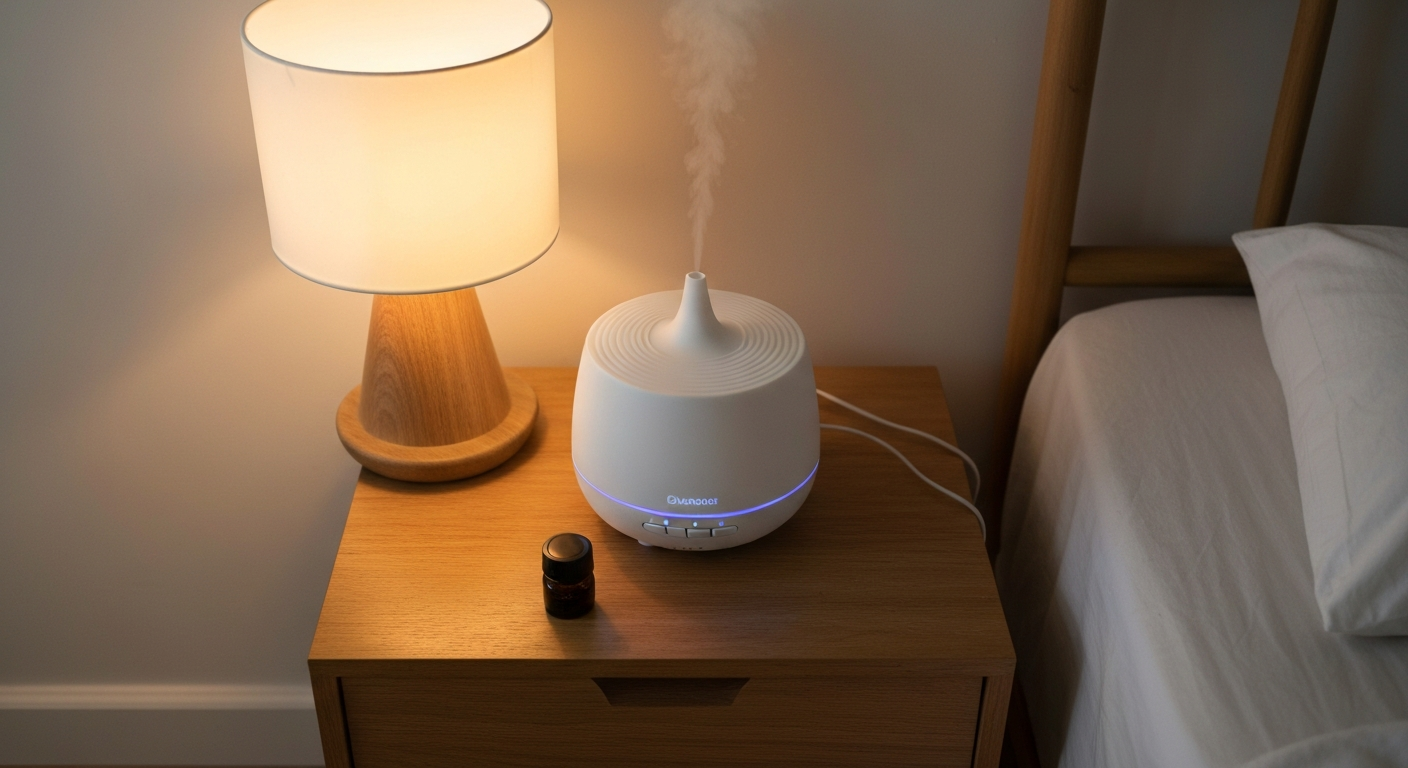

Your diffuser isn't misting because the water level is below the minimum line, the ultrasonic transducer disk is coated with mineral deposits from tap water or oil residue, the mist outlet is blocked, or the transducer has failed. Mineral buildup is the most common cause after the first few weeks of use — a 10-minute vinegar clean usually restores full mist output.
| ✓Our Pick |
Replacement ultrasonic diffuser and cleaning kit No special skills required — straightforward to use and most orders ship quickly. See on Amazon → |
Ultrasonic diffusers use a ceramic or metal transducer disk that vibrates at ultrasonic frequency (1–2 MHz). This vibration breaks water into microscopic droplets that the fan disperses as cool mist. Any coating on the transducer — mineral scale, oil film, or residue — damps the vibration and reduces or stops mist output. The fix almost always involves cleaning that disk.
Ultrasonic transducer disks must be submerged to a specific depth to vibrate properly. If the water level is below the minimum fill line, the disk is exposed or barely covered and can't generate mist regardless of whether the unit powers on.
Many new users fill the tank only halfway or to a "seems about right" level rather than reading the fill lines marked inside the tank.
Fix: Fill to the MAX line printed inside the water tank. The minimum and maximum lines differ by model — check the manual for yours.
Tap water contains dissolved calcium and magnesium carbonate. Every use deposits a thin layer of these minerals on the transducer disk. After 10–20 uses with hard tap water, the accumulated scale is thick enough to reduce vibration amplitude — the disk moves, the fan runs, but mist output drops or stops.
The transducer disk is the small ceramic or metallic disk at the bottom center of the water tank.
"Ultrasonic humidifier and diffuser performance degrades significantly in hard water areas due to mineral scale accumulation on the transducer. Regular cleaning with diluted white vinegar dissolves calcium carbonate deposits and restores normal function." — EPA WaterSense Program Resources
Fix: Empty the tank, dip a cotton swab in undiluted white vinegar, and gently scrub the transducer disk for 30 seconds. Rinse with clean water. Mist output typically returns to full within the next cycle. Switch to distilled water to prevent recurrence.
Thick essential oils — patchouli, vetiver, sandalwood, frankincense, and citrus oils with pulp — leave a waxy or sticky residue on the transducer disk and tank walls. This residue hardens over time and insulates the transducer from the water, preventing mist generation.
Fix: Add a few drops of dish soap to the tank with a tablespoon of water. Run the diffuser for 5 minutes. Empty and rinse with clean water. Follow with a vinegar swab of the transducer. For heavily fouled units, soak the tank with a 50/50 vinegar-water solution for 15 minutes before rinsing.
The small opening on top of the diffuser where mist exits can accumulate dried mineral or oil residue, particularly if the unit is stored without being rinsed between uses. A partial blockage reduces mist volume; full blockage stops it entirely despite the transducer working normally.
Fix: Use a dry cotton swab or soft brush to clear the mist outlet. Do not use metal tools — they can scratch the nozzle and permanently alter the mist direction.
Tap water chemistry varies dramatically by region. In very hard water areas, mineral deposition can occur fast enough to affect mist output after just 5–7 uses. In extreme cases, users report a brand-new diffuser stopping after less than a week.
Fix: Use only distilled or purified water. Distilled water contains no dissolved minerals and produces no scale. This alone resolves most recurring mist problems without any cleaning change.
Ultrasonic transducer disks require the water to be at a level position to function — even a few degrees of tilt can expose part of the transducer, reducing mist output or causing the diffuser to auto-shut-off via its low-water sensor.
Fix: Place the diffuser on a flat, level surface away from vibrating appliances (washing machines, speakers) that could move it.
After extended use — typically 2,000–3,000 hours — the piezoelectric transducer disk physically degrades and eventually stops vibrating. A failed transducer produces no mist regardless of water level or cleanliness. You can confirm a failed transducer by touching the disk gently while running: a working disk feels like a light buzz; a dead disk feels completely still.
Transducer disks are available as replacement parts for many popular diffuser models and are inexpensive ($2–$8). For budget diffusers, replacing the entire unit is often more practical.
Also Read: Why Is My Hardwired Smoke Detector Beeping? 7 Causes & Fixes
| Symptom | Most Likely Cause | Fix |
|---|---|---|
| No mist, new diffuser | Water below min line or packaging on disk | Fill to MAX; remove protective film |
| Mist reduced after weeks of use | Mineral scale on transducer | Vinegar swab the transducer |
| Strong oil smell, no mist | Oil residue on transducer | Dish soap clean + vinegar swab |
| Powers on, light works, no mist | Transducer issue | Clean; if no improvement, replace unit |
| Mist stopped after moving | Uneven surface or water sloshed | Place level; refill to MAX |
| Gurgling sound, no mist | Outlet blocked | Clear mist outlet with cotton swab |
A diffuser that stops misting is almost always a transducer problem: mineral scale from tap water, oil residue, or water below the minimum level. Swab the transducer disk with white vinegar, fill to the MAX line, and switch to distilled water. Those three steps fix the overwhelming majority of non-misting diffusers. A unit that still doesn't mist after a thorough clean has a failed transducer — either replace the disk or buy a new diffuser.
New diffusers most often fail to mist because the water level is below the minimum line, the transducer disk has protective film that wasn't removed, or the mist outlet is blocked. Fill to the max line and remove any protective packaging.
Mineral buildup from tap water on the ultrasonic transducer disk is the most common reason. Clean the transducer with white vinegar on a cotton swab and use distilled water going forward.
Yes. Thick or resinous essential oils leave residue on the transducer disk over time. Clean the diffuser after every use when using thick oils.
A diffuser that powers on but produces no mist has a transducer problem: mineral buildup, oil residue, too little water, or a failed transducer. Try cleaning first; if mist doesn't return, the transducer has failed.
Yes. Tap water deposits minerals on the transducer. Distilled water has no minerals and is the best choice for any ultrasonic diffuser.
Reviewed and Updated on May 31, 2026 by Adelinda Manna