Technology
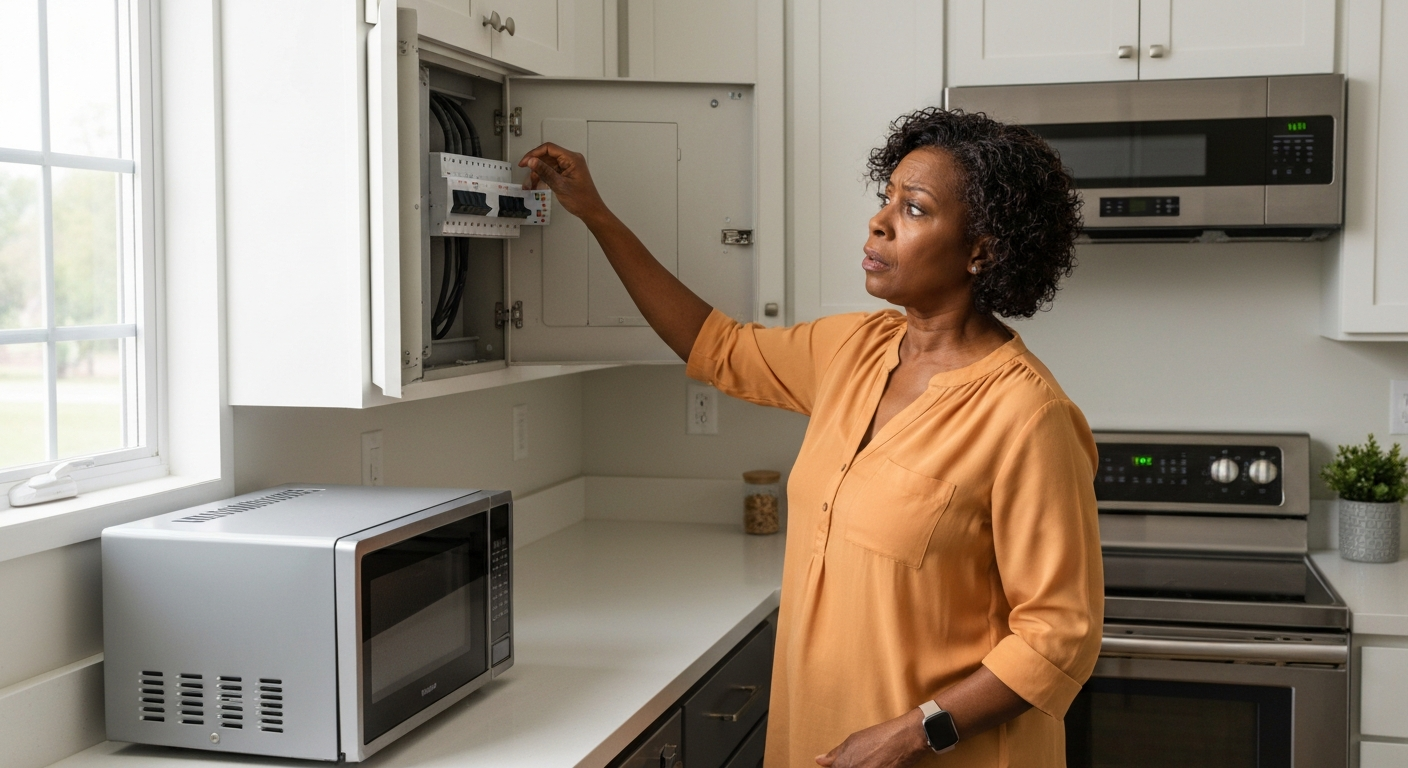

Your microwave is tripping the breaker because it's drawing more current than the circuit can safely handle—most often due to a shared circuit with other appliances, a faulty door switch, a failing magnetron, or a worn-out breaker itself.
Microwaves pull between 1,000 and 1,800 watts during operation, which translates to 8–15 amps on a standard 120-volt circuit. When that demand exceeds the breaker's rating—or when an internal component short-circuits—the breaker trips to prevent overheating and fire. The good news: most causes are identifiable without an electrician, and several are fixable yourself in under 30 minutes.
| ✓Quick Fix |
The First Thing Most People Try Most people dealing with this exact problem start here — quick, affordable, and easy to try today. See on Amazon → |
The core issue is almost always an electrical overload or a ground fault, and the fix depends on pinpointing which one applies to your situation.
Breakers exist to protect your home from electrical fires. When current exceeds the rated amperage (typically 15 or 20 amps for kitchen circuits), the breaker's internal mechanism heats up and "trips" to cut power. This happens instantly—by design. The same protective response occurs if electricity leaks to ground through damaged insulation or a faulty component.
Modern kitchens often have more appliances than the original wiring anticipated. A 2026 home might run a microwave, toaster oven, coffee maker, and air fryer—all potentially sharing one circuit. Older homes built before the 1990s frequently lack dedicated kitchen circuits entirely, making overloads even more common.
"A microwave oven should ideally be on its own dedicated circuit to prevent tripping and ensure safe operation." — National Electrical Manufacturers Association (NEMA)
Understanding whether your breaker trips immediately when the microwave starts, after running for several minutes, or only when combined with other appliances will help you identify the exact cause below.
The most frequent culprits are circuit overloads, faulty door switches, and aging magnetrons—each with distinct symptoms that point to the underlying problem.
This is the number-one cause of microwave breaker trips. If your microwave is plugged into the same circuit as your toaster, coffee maker, or refrigerator, the combined draw can easily exceed 15 or 20 amps. A microwave pulling 12 amps plus a toaster pulling 8 amps equals 20 amps—right at the limit of most kitchen circuits, with no margin for the startup surge.
Test this by unplugging everything else on the circuit before running the microwave. If it operates without tripping, you've found your answer.
Microwaves have multiple door interlock switches (usually three) that prevent operation when the door is open. When one fails, it can create a short circuit that trips the breaker instantly—often the moment you press start. You might notice the breaker trips before the turntable even begins rotating.
Door switches are inexpensive (under $15) but require disassembly to replace. If your microwave is over five years old and the breaker trips the instant you start it, suspect a door switch first.
The magnetron generates the microwaves that heat your food. As it ages, it can draw excessive current or short internally. Signs of magnetron failure include: the microwave runs but food doesn't heat, you hear unusual humming or buzzing, or the breaker trips after 30–60 seconds of operation.
Magnetron replacement typically costs more than the microwave is worth, making this a strong signal to consider a new unit.
The high-voltage capacitor stores thousands of volts to power the magnetron. A failing capacitor can leak current or short-circuit, causing immediate breaker trips. This component is dangerous—it holds a lethal charge even when unplugged. If you suspect capacitor failure, consult a professional or replace the microwave.
Breakers don't last forever. After thousands of trips over 15–25 years, the internal mechanism weakens and trips at lower thresholds than rated. If your breaker is original to an older home and trips only with the microwave (not other high-draw appliances), the breaker itself may need replacement.
"Circuit breakers can weaken over time and may trip at currents below their rated capacity, particularly after repeated tripping events." — Electrical Safety Foundation International (ESFI)
| ✓Our Pick |
Heavy-duty surge protector for kitchen appliances You'll wonder why you didn't try this sooner — practical, well-reviewed, and easy to get started. See on Amazon → |
Frayed, pinched, or melted wires inside the microwave or in your home's walls can create ground faults that trip breakers. Look for burn marks, melted plastic smell, or discoloration around the outlet. Damaged internal wiring often occurs near the door hinges where the harness flexes repeatedly.
A seized turntable motor draws excessive current as it struggles to rotate. You might hear grinding or notice the turntable moves erratically before the breaker trips. This is a relatively inexpensive fix if you're comfortable with basic appliance repair.
Systematic testing helps isolate the problem without unnecessary part replacements or electrician visits.
Start with the simplest tests and progress to more complex diagnostics:
| Symptom | Most Likely Cause | Test |
|---|---|---|
| Trips instantly when START pressed | Door switch or capacitor | Listen for any startup sounds before trip |
| Trips after 30–60 seconds | Magnetron or overload | Run microwave alone on circuit |
| Trips only with other appliances running | Circuit overload | Unplug other devices, retest |
| Trips intermittently | Loose connection or worn breaker | Check outlet tightness, inspect breaker |
| Burning smell before trip | Wiring damage or component short | Do not use—unplug immediately |
If the breaker trips with the microwave alone on the circuit and within seconds of starting, the problem is internal to the microwave. If it only trips when sharing load with other appliances, you have a circuit capacity issue.
Also Read: Why Is My GFCI Tripping? 7 Causes & How to Fix It
Several solutions require no special tools or electrical expertise—just methodical troubleshooting.
The National Electrical Code recommends that microwaves have their own 20-amp circuit. If you have an unused circuit in your breaker panel, an electrician can run a dedicated line for $150–$300. Alternatively, use a heavy-gauge extension cord (12 AWG minimum) temporarily to reach an outlet on a less-loaded circuit—though this is not a permanent solution.
Door switch replacement requires removing the microwave's outer cabinet. Unplug the unit, discharge the capacitor (or wait 24 hours), and locate the switches near the door latch mechanism. Switches are held by clips or screws and connect via push-on terminals. Order exact replacements using your microwave's model number.
Loose wire connections at the outlet or inside the microwave create resistance that generates heat and can trip thermal protection. Ensure the plug fits snugly in the outlet. If it feels loose, replace the outlet (a 10-minute job with basic tools).
Breakers can "weaken" in the tripped position. Switch it fully to OFF, then back to ON. If your breaker feels loose, doesn't click firmly, or shows discoloration, have it replaced. Breaker replacement should be done by an electrician unless you're experienced with panel work.
Also Read: Why Is My Outlet Buzzing? 7 Causes & How to Fix It
Some situations are unsafe for DIY repair or economically favor replacement over repair.
Call a licensed electrician if:
Consider replacing the microwave if:
A new countertop microwave costs $80–$200 and comes with a warranty. Professional magnetron or capacitor repairs often cost $100–$150 in labor alone.
Proactive habits extend your microwave's lifespan and keep your electrical system safe.
Clean the interior monthly to prevent grease buildup that can carbonize and cause arcing. Inspect the door seal for damage that might cause the switches to misalign. Avoid slamming the door, which accelerates switch wear.
Consider installing a dedicated 20-amp circuit during any kitchen renovation. This $200–$400 investment eliminates overload concerns permanently and may be required by code in new construction anyway.
If your home was built before 1980, have an electrician evaluate whether your kitchen circuits meet current standards. Upgrading from 15-amp to 20-amp circuits—or adding circuits—prevents the cascade of problems that come from overtaxing old wiring.
Your microwave trips the breaker because the electrical demand exceeds what the circuit can safely deliver—either from overloading, internal component failure, or a weakened breaker. Start by testing the microwave alone on its circuit to rule out overload. If it still trips, suspect the door switches (instant trip) or magnetron (delayed trip). Breakers older than 20 years may need replacement regardless of the appliance. For safety, never bypass a tripping breaker or ignore burning smells—both signal conditions that can cause electrical fires.
Microwaves draw significantly more current than most kitchen appliances—often 12–15 amps compared to 2–5 amps for a coffee maker. They also have startup surges that briefly exceed their running amperage. A circuit that handles everything else fine may simply be at its limit when the microwave kicks on, especially if the breaker has weakened from age.
Yes, and this is actually by design. GFCI outlets detect tiny current leaks to ground and trip to prevent shock. Microwaves with minor insulation breakdown can leak enough current to trip a GFCI even though they'd run fine on a standard outlet. If your kitchen has GFCI-protected circuits, consider having the microwave on a dedicated non-GFCI circuit (code allows this in some jurisdictions).
Occasionally resetting a tripped breaker is fine—that's what it's designed for. However, repeatedly resetting a breaker that keeps tripping is dangerous. Each trip heats the breaker mechanism, and the underlying overload or fault generates heat in your wiring. Investigate and fix the root cause rather than treating the symptom.
Check your microwave's wattage label (usually inside the door or on the back). Divide wattage by 120 to get amperage. If your microwave draws more than 10 amps (1,200 watts), it should have a dedicated circuit. For over-the-range microwaves, dedicated circuits are virtually always recommended.
Absolutely. Lightning strikes or utility surges can damage the magnetron, capacitor, or control board in ways that create shorts. If your microwave started tripping the breaker after a storm or known power event, internal damage is likely. A surge protector rated for high-draw appliances can prevent future damage.
Reviewed and Updated on June 20, 2026 by George Wright