
Health
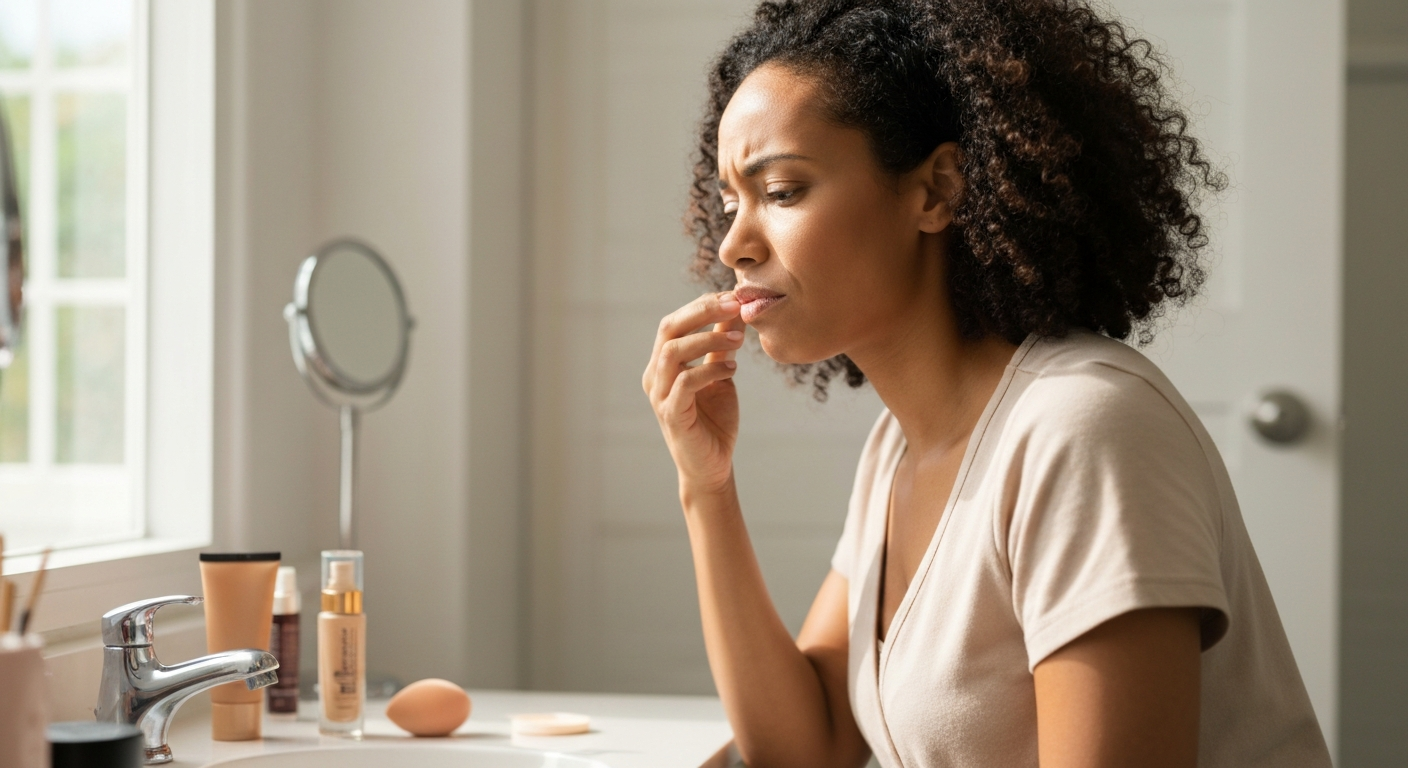

Makeup pilling happens when products roll into tiny balls on your skin instead of absorbing smoothly — it's almost always caused by layering incompatible formulas, applying products too quickly, or using too much product at once.
The good news is that this frustrating issue is entirely fixable once you understand what's going wrong. Whether your foundation is balling up over your moisturizer or your primer is separating into clumps, the cause usually comes down to a few predictable factors: conflicting ingredient bases (water vs. silicone vs. oil), insufficient drying time between layers, dead skin buildup, or simply using more product than your skin can absorb. Below, you'll find the exact reasons your makeup pills and the step-by-step fixes that actually work in 2026.
Pilling occurs when product layers can't bind together properly, causing the upper layer to separate and roll into small balls or flakes as you blend.
Think of it like trying to mix oil and water — they simply won't combine. The same principle applies to your skincare and makeup layers. When you apply a silicone-based primer over a water-based serum that hasn't fully absorbed, the formulas repel each other. As you rub or blend, the top layer has nowhere to go except into those telltale little balls.
The friction from your fingers, brush, or sponge accelerates this separation. Products containing certain polymers, film-forming agents, or high concentrations of silicones are particularly prone to pilling when paired incorrectly. Even well-formulated products can pill if applied under the wrong conditions.
"Pilling is essentially a compatibility issue between layers. When ingredients don't mesh well chemically, they separate on the skin's surface rather than forming a cohesive film." — Dr. Shereene Idriss, Board-Certified Dermatologist
Mismatched product bases are the number one cause of makeup pilling — water-based products and silicone-based products don't layer well together.
Here's how to identify what you're working with:
| Ingredient Base | Common Indicator Ingredients | Found In |
|---|---|---|
| Water-based | Water (aqua) listed first; glycerin, hyaluronic acid | Lightweight serums, gel moisturizers, some foundations |
| Silicone-based | Dimethicone, cyclopentasiloxane, any "-cone" ingredient | Primers, smoothing serums, many foundations |
| Oil-based | Plant oils, mineral oil, squalane listed high | Facial oils, rich creams, some foundations |
The rule is simple: like pairs with like. A silicone-based primer works best under a silicone-based foundation. A water-based moisturizer pairs better with a water-based foundation. When you cross these categories without allowing proper dry time, pilling is almost guaranteed.
Check the first five ingredients on each product's label. If your serum is water-based and your primer is silicone-heavy, you're setting yourself up for that dreaded ball-up effect.
Also Read: Why Is My Face So Greasy? 8 Causes & How to Fix It
Rushing through your routine is a major pilling trigger — each layer needs at least 60 seconds to absorb before adding the next.
Your skin can only absorb so much product at once. When you immediately layer moisturizer over serum over toner, you're essentially creating a traffic jam on your face. The products sit on the surface rather than sinking in, and the moment you add foundation and start blending, everything separates.
The fix is patience. After applying each skincare step, wait a full minute before moving on. For thicker products like moisturizers or SPF, wait two minutes. You can use this time to do your hair, pick out clothes, or check your phone — just don't touch your face.
A helpful test: gently press the back of your hand to your cheek. If it feels tacky or leaves residue, the product hasn't absorbed yet. Wait until your skin feels dry to the touch before proceeding.
| ✓Our Pick |
Search silicone-free makeup primers Simple to use and genuinely effective — for many people this is all they ever needed. See on Amazon → |
A layer of dead skin cells creates an uneven surface that prevents products from adhering properly, leading to pilling and patchy application.
Your skin naturally sheds cells, but sometimes they don't slough off completely. This creates a texture that sits between your skin and your products. When you apply foundation or primer over this layer, you're essentially painting over debris — and it will roll right off.
Regular exfoliation solves this problem. Chemical exfoliants containing AHAs (like glycolic or lactic acid) or BHAs (like salicylic acid) work by dissolving the bonds between dead cells. Physical exfoliants use gentle scrubbing action. Either approach works, but chemical exfoliants tend to be less irritating for most skin types.
Aim to exfoliate two to three times per week. Over-exfoliating can damage your skin barrier, which causes its own set of problems including increased oiliness and sensitivity.
"Dead skin accumulation is an often-overlooked cause of makeup application issues. A gentle exfoliation routine keeps the skin smooth and allows products to perform as intended." — American Academy of Dermatology
Certain primers, especially those with heavy silicone content or pore-filling formulas, are notorious for pilling when layered incorrectly.
Pore-filling primers contain high concentrations of silicones to create a smooth, blurred surface. While they look great initially, they're essentially sitting on top of your skin rather than sinking in. Any product applied over them must be compatible, or it will slide right off.
Mattifying primers can also cause issues if they contain film-forming agents that don't play well with certain foundations. And if you're using a primer with SPF plus a separate sunscreen plus foundation, you've got three layers competing for space.
Try these fixes:
Overloading your skin is one of the simplest causes of pilling — your face can only hold so many layers before products start competing for space.
The skincare industry encourages elaborate multi-step routines, but your skin doesn't always need twelve products to look good. When you stack toner, essence, serum, ampoule, moisturizer, eye cream, SPF, primer, and foundation, you're asking a lot of your skin's surface area.
The more products you apply, the longer you need to wait between each one. And even with patience, there's a limit to how much your skin can absorb in one session.
Consider streamlining your morning routine for days when you're wearing full makeup:
| Minimal Routine | Full Routine |
|---|---|
| Cleanser | Cleanser |
| Moisturizer with SPF | Toner |
| Primer | Serum |
| Foundation | Essence |
| Moisturizer | |
| SPF | |
| Primer | |
| Foundation |
The minimal routine has far fewer opportunities for product conflict. Save your elaborate skincare steps for nighttime when you're not layering makeup over them.
Also Read: Why Is My Gel Polish Peeling? 8 Causes & How to Fix It
Aggressive blending motions create friction that physically rolls products into balls — pressing and patting motions are far gentler on layered products.
When you rub your fingers across your face to blend foundation, you're creating lateral friction. If the layers underneath haven't fully set, this motion drags them along with your foundation, causing everything to ball up together.
The solution is to change your technique:
This adjustment alone fixes pilling for many people, even without changing any products.
If your makeup is pilling right now, use this checklist to identify and fix the culprit immediately.
| Symptom | Likely Cause | Fix |
|---|---|---|
| Pilling immediately after applying foundation | Incompatible bases (water/silicone mismatch) | Check ingredient lists; match bases |
| Pilling during blending | Products not absorbed; too much friction | Wait longer; use patting motions |
| Pilling only in certain areas (nose, chin) | Dead skin buildup in those zones | Exfoliate before makeup days |
| Pilling under eyes only | Too much eye cream | Use half the amount; pat gently |
| Pilling over SPF | Sunscreen not fully set | Wait 2–3 minutes after SPF before primer |
| Pilling with every foundation | Primer is the issue | Try skipping primer or switching formula |
Makeup pilling is caused by layering incompatible formulas, rushing through your routine, applying too much product, or neglecting exfoliation — and all of these are fixable. Match your product bases (water with water, silicone with silicone), wait at least 60 seconds between skincare layers, exfoliate two to three times weekly, and use pressing motions instead of rubbing when you apply foundation. Most people see immediate improvement by simply slowing down and using less product per layer.
Areas like the nose, chin, and around the mouth tend to have more texture, larger pores, and sometimes more dead skin buildup. These zones also produce more oil in many people. The combination of texture and oil makes products more likely to separate and roll. Focus your exfoliation on these areas, and consider using less product there. You can also try setting these zones with a light dusting of powder before the rest of your makeup has a chance to shift.
Hyaluronic acid itself doesn't cause pilling, but serums containing it are water-based and will conflict with silicone-based products applied over them. The key is giving hyaluronic acid time to absorb fully before layering anything else. Since HA draws moisture from the environment and lower skin layers, it needs about two minutes to settle. Applying silicone primer immediately over a wet HA serum almost guarantees pilling.
Yes. Humidity slows product absorption, meaning your skincare takes longer to sink in during summer months. In dry winter conditions, dehydrated skin can become flaky, creating texture that causes pilling. Adjust your wait times based on the season — longer in humid weather, and consider adding a hydrating toner in dry months to prevent surface flakiness.
Mineral makeup can reduce pilling because powder formulas don't interact with skincare bases the same way liquid foundations do. However, mineral makeup applied over heavy creams or oils can still slide around or appear patchy. The best approach is ensuring your moisturizer and SPF are fully absorbed before applying mineral foundation with a brush using pressing motions.
If pilling has already started, stop blending immediately — more rubbing makes it worse. Take a damp beauty sponge and gently press over the affected area to smooth down the balls without adding friction. If the pilling is severe, use a clean tissue to lightly blot away the loose product, then let the remaining layers dry for a minute before reapplying foundation in thin layers with a pressing motion.
Reviewed and Updated on June 1, 2026 by George Wright