Gadgets
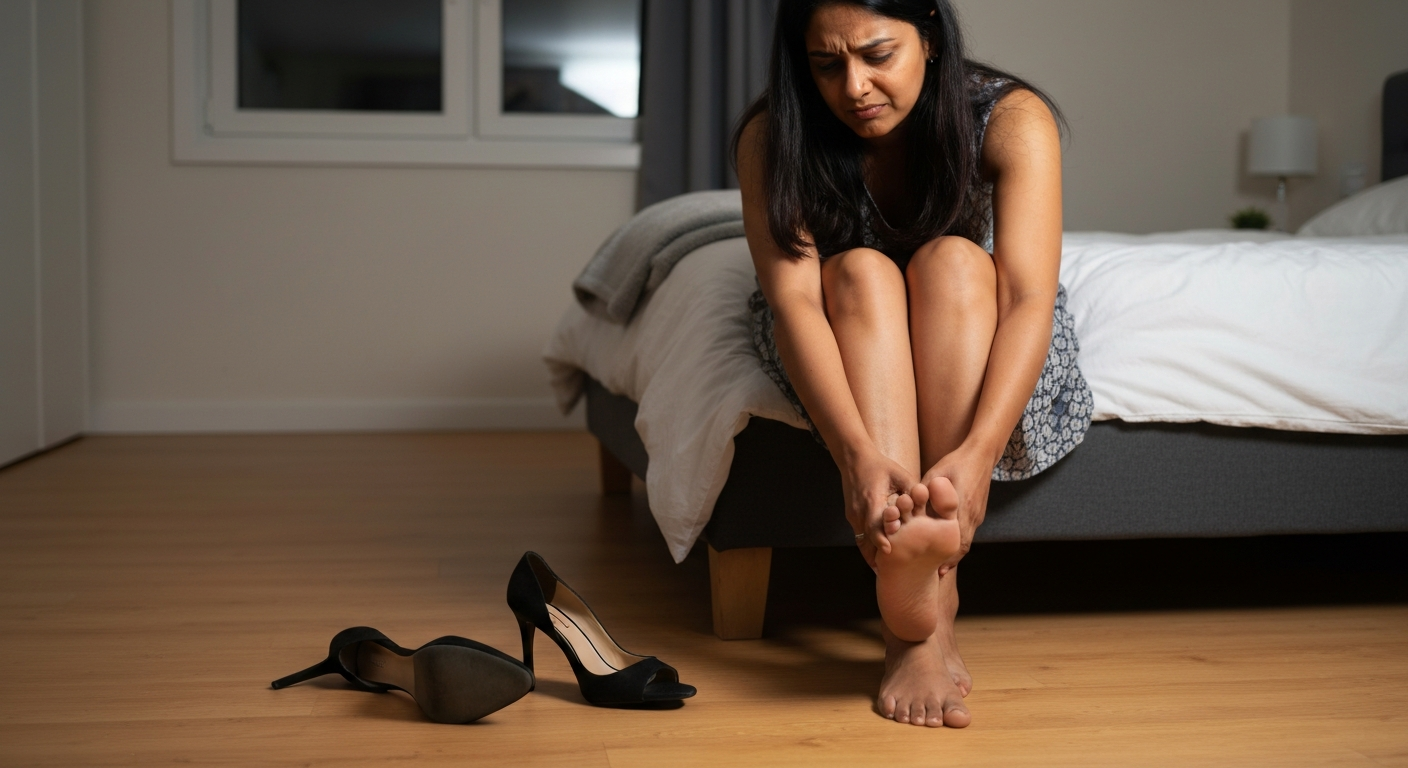

Wearing heels compresses the nerves in your foot—especially the digital nerves running to your toes—cutting off sensation and causing numbness that can linger for hours or even days after you kick off your shoes.
The culprit is usually temporary nerve compression (a harmless but annoying side effect of tight toe boxes and elevated heel angles), though repeated heel-wearing can lead to longer-lasting conditions like Morton's neuroma. The good news: most post-heel numbness resolves on its own, and a few simple changes to your footwear routine can prevent it from happening again.
| ✓Our Pick |
Science-backed supplements for nerve and joint health Save yourself the frustration — a proven solution with consistently positive feedback from real buyers. Learn More → |
High heels force up to 90% of your body weight onto the ball of your foot, compressing the nerves that supply sensation to your toes.
When you stand flat, weight distributes fairly evenly between your heel and forefoot. A 3-inch heel shifts that balance dramatically—your metatarsal heads (the bony prominences behind your toes) bear the brunt. The digital nerves that weave between these bones get squeezed against hard shoe materials, and sensation fades.
The toe box makes things worse. Most heels taper toward the front, cramming your toes together. Your little toe and big toe press against unyielding leather or synthetic walls. Blood flow decreases. Nerve signals slow. You're left with that familiar pins-and-needles feeling—or complete numbness.
"Prolonged pressure on the nerves of the foot can lead to temporary or, in some cases, permanent nerve damage." — American Academy of Orthopaedic Surgeons at OrthoInfo
Numbness in your big toe, little toe, or multiple toes typically traces back to one of these six mechanisms—each involving nerve compression, reduced blood flow, or structural foot changes.
The medial plantar nerve—a branch of the tibial nerve—supplies sensation to your big toe and the inner three toes. When a heel's narrow toe box or shifted weight distribution presses on this nerve, your big toe goes numb first. You might notice tingling on the side of your big toe or a complete loss of feeling across the toe pad.
This is the most common cause of numbness in your right big toe or left big toe after a night in heels. The compression is mechanical and temporary in most cases.
Your pinky toe sits at the outer edge of the foot, making it the first casualty of a pointed or narrow shoe. The lateral plantar nerve runs along this edge, and even moderate squeezing can interrupt its signals.
If your little toe is consistently numb after wearing certain shoes, the toe box is almost certainly too narrow. Numbness here often comes with visible redness or indentation marks on the skin.
Morton's neuroma is a thickening of tissue around the nerve between your third and fourth toes. It develops from repeated pressure and friction—exactly what heels deliver. Symptoms include tingling, burning, and the sensation of standing on a pebble.
"High heels and tight shoes have been linked to the development of Morton's neuroma, which is 8 to 10 times more common in women than men." — Cleveland Clinic at Cleveland Clinic Health Library
If your toes are numb and you also feel a sharp, burning pain between them, Morton's neuroma deserves investigation.
Tight straps and constricting shoe materials don't just compress nerves—they also limit arterial blood flow. Your toes need oxygenated blood to maintain normal sensation. When circulation drops, you'll notice coldness first, then numbness.
This explains why your toes might feel fine for the first hour in heels, then progressively lose sensation. The longer the circulation is restricted, the longer recovery takes.
Standing or walking in heels causes your feet to swell—up to half a shoe size over several hours. A shoe that fit comfortably at 6 PM may be compressing nerves by 10 PM.
This is particularly relevant if your big toe is going numb only at the end of long events. The shoe hasn't changed; your foot has expanded into a space that can no longer accommodate it.
Higher heels create steeper angles, pushing more weight forward. Research shows that a 3-inch heel increases forefoot pressure by approximately 76% compared to flat shoes. Every additional inch compounds the problem.
| Heel Height | Forefoot Pressure Increase | Numbness Risk |
|---|---|---|
| 1 inch | ~22% | Low |
| 2 inches | ~57% | Moderate |
| 3 inches | ~76% | High |
| 4+ inches | ~90%+ | Very High |
If multiple toes are numb after wearing very high heels, the sheer force on your metatarsal region is likely overwhelming the nerves.
Also Read: Why Is My Thigh Numb? 8 Causes & How to Find Relief
Most heel-related numbness resolves within minutes to hours once you remove the shoes and restore circulation—but persistent cases need targeted intervention.
| Numbness Duration | Likely Cause | Expected Recovery |
|---|---|---|
| Minutes to 1 hour | Simple nerve compression | Full recovery same day |
| 1–24 hours | Moderate compression + swelling | Recovery within 1–2 days |
| 24–72 hours | Prolonged compression, possible inflammation | 3–7 days with rest |
| Over 1 week | Possible nerve damage or neuroma | See a doctor |
Also Read: Why Is My Hand Burning All of a Sudden? 7 Causes & Fixes
Prevention comes down to three factors: choosing better-fitting heels, limiting wear time, and strengthening your feet for the demands you place on them.
Look for styles labeled "wide width" or with rounded (not pointed) toe shapes. Your toes should be able to wiggle slightly when standing. If you can't move them at all, the shoe is too narrow.
The American Podiatric Medical Association recommends keeping heel height under 2 inches to minimize forefoot pressure. Platform heels distribute weight more evenly than stilettos of the same height.
These cushions sit under the ball of your foot and reduce direct pressure on the metatarsal heads. They're especially helpful if you're prone to Morton's neuroma or general forefoot pain.
Slip your heels off under your desk or during seated portions of events. Even 10 minutes of relief every hour significantly reduces cumulative nerve compression.
Wearing heels daily doesn't give your nerves time to recover. Alternate with supportive flats or sneakers to prevent chronic compression issues.
Temporary numbness after heels is normal—but certain symptoms suggest nerve damage or an underlying condition that needs medical attention.
See a healthcare provider if:
Your doctor may order nerve conduction studies or imaging to assess for Morton's neuroma, tarsal tunnel syndrome, or other conditions.
Also Read: Why Is My Lower Back Hurting? 10 Causes & How to Fix It
Toe numbness after wearing heels happens because the elevated angle and narrow toe box compress the digital nerves and restrict blood flow to your toes. Your big toe, little toe, or multiple toes can all be affected depending on where the pressure is greatest. Most cases resolve within hours once you remove the shoes and restore circulation. To prevent future numbness, choose heels with wider toe boxes, keep height under 2 inches, use cushioning inserts, and give your feet regular breaks. If numbness lasts more than a few days or comes with severe pain, see a doctor to rule out Morton's neuroma or nerve damage.
Your little toe sits at the outermost edge of your foot, making it extremely vulnerable to compression from narrow or pointed toe boxes. The lateral plantar nerve supplies sensation to this area, and even moderate squeezing interrupts its signals. If your pinky toe consistently goes numb in certain shoes, those shoes are too narrow for your foot shape—try a wider width or rounded toe style.
Tingling indicates partial nerve compression—the signals are disrupted but not completely blocked. This often happens in the early stages of wearing tight heels, before full numbness sets in. It's also common during recovery as sensation returns. If tingling persists for days without improvement, the nerve may be irritated or inflamed and needs rest.
Numbness specifically on the side of your big toe often involves the medial plantar nerve or its branches. In most cases, it's benign compression from footwear. However, if this numbness occurs without wearing tight shoes, it could indicate conditions like tarsal tunnel syndrome or lumbar radiculopathy (a pinched nerve in your lower back). Persistent side-of-toe numbness warrants a medical evaluation.
If numbness continues after you've stopped wearing heels, the nerves may be inflamed or temporarily damaged from prolonged compression. Repeated heel-wearing can also cause Morton's neuroma, which produces symptoms regardless of shoe type. Give your feet 48–72 hours of rest in supportive footwear. If numbness persists beyond that window, consult a podiatrist.
Simple compression numbness typically resolves within minutes to a few hours after removing the shoes. More significant compression—especially after all-day wear—may take 24–48 hours to fully resolve. Numbness lasting longer than 72 hours suggests possible nerve inflammation or injury and should be evaluated by a healthcare provider.
Reviewed and Updated on June 1, 2026 by George Wright