Gel polish peels because the nail surface wasn't properly prepped before application — specifically, surface oils or moisture prevented the base coat from bonding. The fix is almost always in the preparation, not the product: dehydrate the nail, lightly buff the surface, cap the free edge on every coat, and cure fully under the lamp.
| ✓Our Pick |
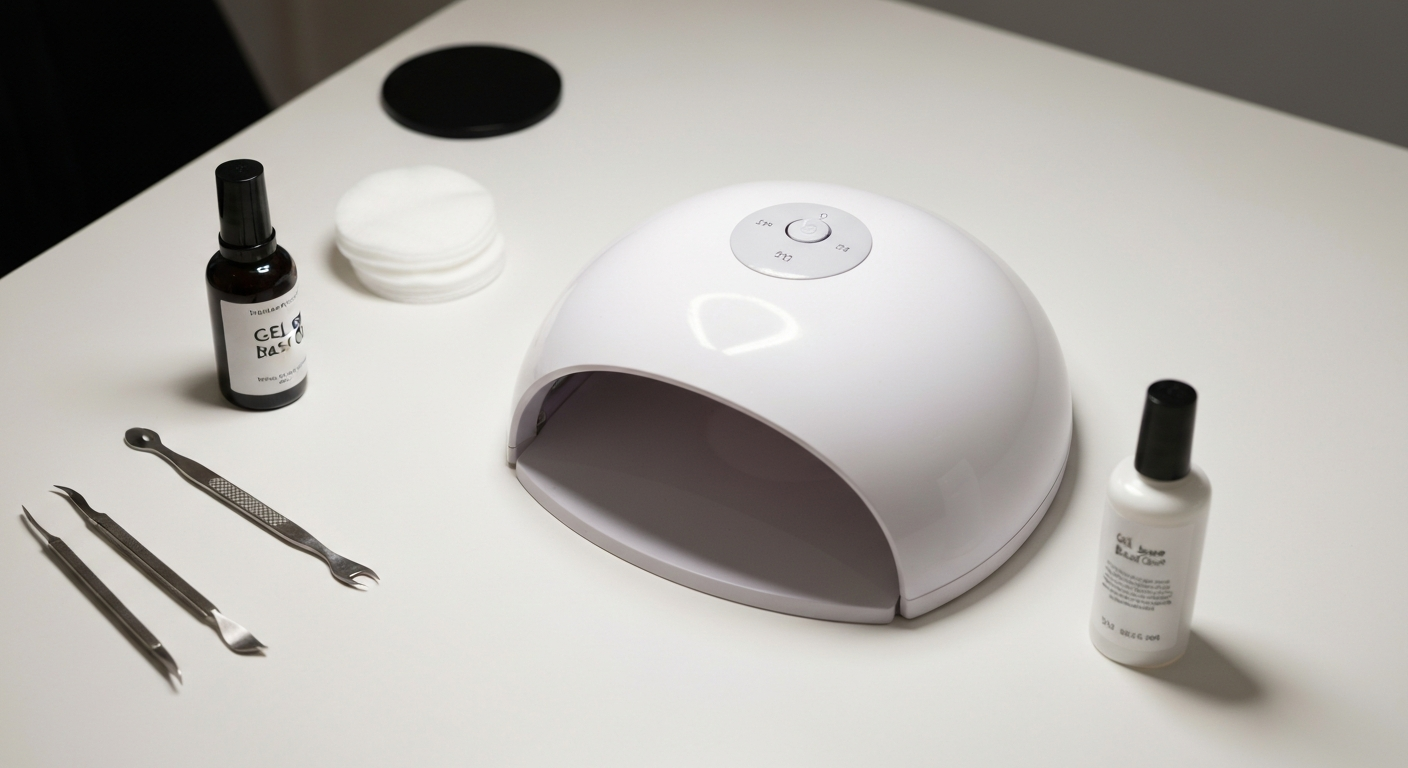
Professional gel nail UV/LED lamp and base coat kit Great value for money — this product tackles the root cause rather than just masking the symptoms. See on Amazon → |
8 Causes of Gel Polish Peeling
Gel polish bonds chemically to the nail plate through a photo-initiated process during curing. Anything that interferes with that bond — at any stage of application — causes lifting, peeling, or early chipping.
Surface Oils and Moisture on the Nail Plate
The nail plate naturally secretes sebum (oil) through the nail bed, and hands accumulate lotion, soap residue, and moisture throughout the day. Gel base coat cannot bond to an oily surface — the oil acts as a release layer that allows the cured gel to peel off cleanly.
Fix: After final nail prep, swipe each nail with a lint-free wipe saturated in 91–99% isopropyl alcohol. Let air dry for at least 30 seconds before applying base coat. Do not touch the nail surface after this step.
Skipping the Nail Dehydrator
A nail dehydrator (distinct from alcohol) temporarily removes moisture from the nail plate's deeper layers. It's especially important for oily nail types and in humid climates. Without it, moisture vapor migrating from the nail bed compromises the bond even if the surface looks dry.
Fix: Apply nail dehydrator to all nails and allow to evaporate fully (20–30 seconds) before applying base coat. Primer — either acid-based (aggressive adhesion) or non-acid (gentler) — applied after the dehydrator further improves adhesion on problem nails.
Not Buffing the Nail Surface
Gel needs microscopic texture to grip. A shiny, smooth nail plate doesn't provide enough surface area for the base coat to mechanically bond. Using a 180-grit buffer to remove the shine from the nail plate creates the texture needed.
Fix: Lightly buff the entire nail plate with a 180-grit file — just enough to remove the shine completely. Don't file so aggressively that you thin the nail. Wipe away the dust with an alcohol wipe after buffing.
Not Capping (Sealing) the Free Edge
The tip of the nail — the free edge — is a vulnerable point with no skin below it to anchor the gel. If gel isn't applied across the edge, it starts lifting from the tip within days. This is called "tip wear" and it's the most common location for early peeling.
Fix: At the end of applying each layer (base coat, color, top coat), drag the brush across the very edge of the nail tip before curing. This "caps" the edge and seals the gel from below.
Under-Curing
Gel that isn't fully cured remains tacky and soft. It may feel set but the photo-initiators haven't fully activated the cross-linking of the polymer chains. Under-cured gel peels because it never achieved its designed hardness and bond strength.
Under-curing happens from:
- Using the wrong lamp wattage for the gel brand
- Placing the hand at an angle where some nails don't receive full light
- Lamp bulbs degrading after extended use (LEDs degrade more slowly than UV tubes)
Fix: Ensure you're using the gel brand's recommended lamp. Cure for the full recommended time. Curl fingers into a "C" shape during curing so all nail surfaces face the lamp.
Flooding the Cuticle Area
Gel applied to the skin around the cuticle — even just 0.5mm onto the surrounding skin — will lift from that point inward as the skin moves. The skin doesn't bond to gel the way the nail plate does, creating a gap that spreads.
Fix: Apply gel 0.5–1mm away from the cuticle edge. A thin brush helps with precision. Use a cleanup brush dipped in acetone to remove any gel that touched skin before curing.
Product Incompatibility
Base coat, color gel, and top coat from different brands don't always cure at compatible wavelengths or with compatible chemistry. Mixing products from different systems — especially a non-gel regular nail polish under a gel top coat — creates adhesion failures.
Fix: Use products from the same system or confirm compatibility before mixing brands. A regular nail polish under gel top coat is designed to lift — these products are not compatible.
Naturally Thin or Flexible Nails
Thin, flexible, or damaged nail plates flex with every movement. Cured gel is rigid and doesn't flex. The constant micro-flexing eventually breaks the gel's adhesion and causes it to lift at the edges or crack across the nail.
Fix: A nail strengthener applied before gel prep helps reinforce thin nails. For severely flexible nails, builder gel (BIAB) creates a thicker structure that moves less than a thin color gel application.
Also Read: Why Is My Lip So Dry? 9 Causes & How to Fix It
Gel Application Checklist (2026)
| Step |
Common Skip |
Result of Skipping |
| Remove oils (alcohol wipe) |
Greasy nails |
Base coat won't bond |
| Dehydrator |
Oily nail type |
Early lifting |
| Buff to remove shine |
Shiny smooth nail |
No grip for base coat |
| Cap the free edge |
Rushing |
Tip lifting within days |
| Keep gel off skin |
Messy application |
Lifting from cuticle inward |
| Full cure time |
Impatience |
Soft, peeling gel |
In Short
Gel that peels within the first week almost always failed during prep, not application. Remove all surface oils with 91%+ isopropyl alcohol, apply a dehydrator, buff lightly, stay 1mm from the cuticle, and cap the tip on every coat. If the gel peels in one sheet, the base coat never bonded to the nail plate — usually an oil problem. If peeling starts at the tips, you're not sealing the free edge.
What You Also May Want To Know
Why does my gel polish peel off after a few days?
Gel that lifts within the first week almost always comes down to preparation: oils or moisture on the nail plate, skipping the pH-balancing primer, not buffing the surface, or touching the cuticle area with the brush.
Does gel polish peel because of my nails?
Naturally oily nail beds prevent adhesion no matter how good the application. A nail dehydrator applied before base coat is essential for oily nail types. Flexible nails also cause more frequent lifting.
Why is my gel polish peeling at the tips?
Tip peeling is a classic sign of skipped edge sealing. Swipe each coat across the tip (capping the edge) before curing to seal the free edge.
Can over-filing cause gel polish to peel?
Under-filing does — you need enough surface texture for the gel to grip. Over-filing damages the nail plate, making it thin and flexible. A light pass with a 180-grit file to remove shine is all that's needed.
Why does my gel polish peel off in one sheet?
Gel that lifts off in one intact sheet means the base coat never fully bonded — usually because of surface oils or skipping the dehydrator step.
Reviewed and Updated on May 31, 2026 by George Wright