
Health
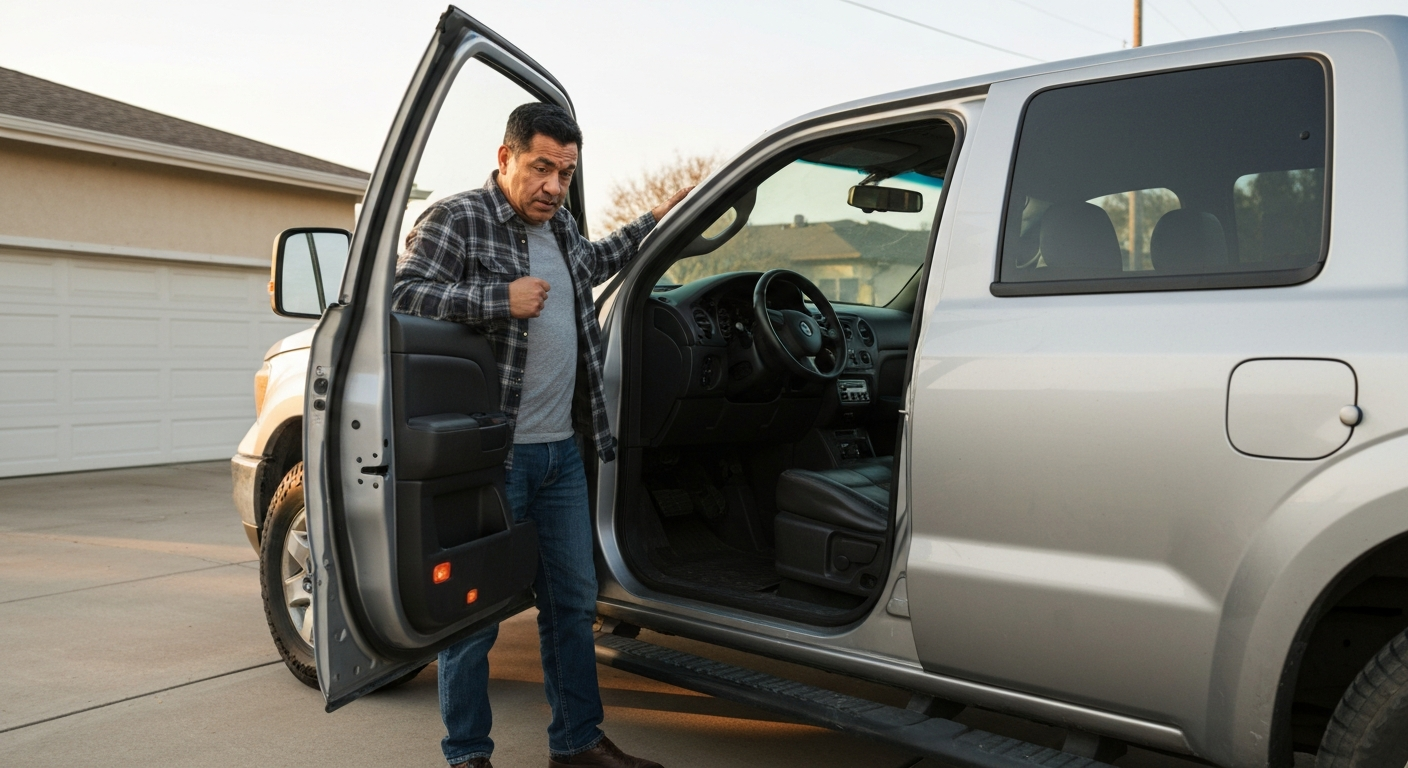

Your truck is shaking because something in the drivetrain, suspension, or wheels is out of balance, worn, or damaged—most commonly unbalanced tires, warped brake rotors, or failing suspension components.
The specific cause depends on when the shaking happens: vibrations felt only at highway speeds usually point to tire or wheel issues, shaking during braking signals rotor problems, and constant vibrations that worsen over time typically indicate worn suspension or drivetrain parts. The good news is that most causes are straightforward to diagnose once you know what to look for, and many fixes cost under $200.
| ✓Our Pick |
Wheel balancing weights and tire pressure monitoring kit You'll wonder why you didn't try this sooner — practical, well-reviewed, and easy to get started. See on Amazon → |
When your steering wheel shakes while driving, the vibration is traveling through your front wheels, steering linkage, or front suspension—which narrows down the likely culprits considerably.
The location and intensity of the shaking tells you a lot. A shimmy felt only in the steering wheel typically means front-end issues. Vibrations felt through the seat or floor often originate from the rear wheels or drivetrain. Here's what to check first.
Unbalanced tires are the single most common cause of steering wheel vibration, especially at speeds between 55 and 70 mph. Every tire and wheel assembly has slight weight variations. When a wheel spins at high speed, even a quarter-ounce imbalance creates noticeable vibration.
Tires can also develop flat spots from sitting in one position too long, or become "out of round" from wear. This creates a rhythmic thumping that worsens with speed. Signs of tire-related shaking include:
"Wheel balance should be checked whenever a tire is dismounted, and whenever a vibration complaint is noted. Even small imbalances can cause noticeable vibration at highway speeds." — Tire Industry Association
A tire balance typically costs $15–$50 per wheel at most shops. If you're due for new tires anyway, this is the time to address both issues at once.
Tie rods connect your steering rack to your wheel assemblies. When the ball joints at their ends wear out, they develop play—allowing your wheels to move slightly independent of your steering input. This creates a shimmying sensation, especially when driving over bumps or uneven pavement.
Worn tie rod ends often produce:
A mechanic can check for tie rod wear in minutes by grabbing the tire at 3 and 9 o'clock and rocking it. Any detectable play means replacement is needed. Tie rod ends typically cost $40–$120 per side for parts, plus an alignment afterward.
Hitting a pothole hard enough can bend your wheel rim without leaving obvious visible damage. A bent wheel creates vibration because the tire no longer rotates in a perfect circle. The wobble becomes more pronounced at higher speeds.
Check for bent wheels by:
Aluminum alloy wheels can sometimes be repaired by a wheel specialist for $75–$150. Steel wheels are usually replaced rather than repaired, at $50–$150 each.
Also Read: Why Is My Key Stuck in the Ignition? 7 Causes & Quick Fixes
| ✓Quick Fix |
What Actually Works for This, Fast A low-cost, no-commitment option to rule out before spending more on this problem. See on Amazon → |
Shaking that occurs specifically when you apply the brakes—and goes away when you release them—almost always indicates warped brake rotors or worn brake components.
Brake rotors are the smooth metal discs your brake pads squeeze to slow your truck. Over time, heat cycles cause the metal to warp slightly. When the rotor surface becomes uneven, the brake pads grab unevenly, creating a pulsation you feel through the steering wheel (front brakes) or the brake pedal and seat (rear brakes).
Symptoms of warped rotors are distinctive:
Rotors warp for several reasons: aggressive driving that overheats them, improper lug nut torque during tire changes, or simply age and wear. Most rotors last 50,000–70,000 miles, though this varies by driving style and vehicle.
| Brake Component | Typical Lifespan | Replacement Cost (Parts + Labor) |
|---|---|---|
| Brake pads | 30,000–70,000 miles | $150–$300 per axle |
| Brake rotors | 50,000–70,000 miles | $200–$400 per axle |
| Brake calipers | 75,000–100,000 miles | $300–$600 per axle |
"Brake rotor thickness variation of as little as 0.001 inch can cause noticeable pedal pulsation. Proper bedding-in procedures after brake service help prevent premature warping." — SAE International Technical Paper
Rotors can sometimes be "turned" (resurfaced on a lathe) if they have enough material left. However, many shops now recommend replacement since new rotors are often cheaper than the labor for resurfacing, and resurfaced rotors tend to warp again faster.
Extremely worn brake pads can cause vibration, though it's less common than rotor issues. When pads wear down to the metal backing plate, the metal-on-metal contact creates grinding, vibration, and rapid rotor damage. If you hear a grinding or squealing noise along with the vibration, inspect your brakes immediately.
Low-speed vibrations typically point to problems closer to the wheel itself—damaged tires, loose lug nuts, or failing wheel bearings.
High-speed shaking is usually balance-related, but low-speed issues suggest something more fundamental is wrong with how your wheel is mounted or rotating.
Loose lug nuts allow the wheel to wobble on the hub. This creates vibration that often starts at lower speeds and worsens progressively. It's a safety hazard—wheels can come off entirely if lug nuts back out completely.
Check lug nut torque with a torque wrench. Most trucks require 90–140 lb-ft of torque depending on the make and model (consult your owner's manual). Lug nuts work loose due to:
Wheel bearings allow your wheels to spin freely on the axle. When they wear out, they create a grinding or humming noise that changes with vehicle speed—often louder when turning in one direction. As wear progresses, vibration develops.
Signs of a bad wheel bearing:
Wheel bearing replacement typically costs $150–$400 per wheel, depending on whether the bearing is a press-in design or part of a hub assembly.
Also Read: Why Is My Windshield Fogging Up on the Outside? Causes & Fixes
Beyond tires and brakes, worn suspension components and drivetrain issues can create persistent vibrations—especially in trucks with higher mileage or those used for towing and hauling.
Ball joints are pivot points that connect your control arms to the steering knuckles. They allow your suspension to move up and down while also steering. Worn ball joints create play in the suspension, causing vibration, clunking noises, and unpredictable steering behavior.
Lower ball joints typically wear faster than uppers because they support vehicle weight. Replacement costs $100–$250 per joint, including alignment.
Shocks and struts don't directly cause vibration, but worn ones allow excessive suspension movement that amplifies other problems. If your truck bounces excessively over bumps, nose-dives during braking, or squats during acceleration, the shocks may be due for replacement.
Most shocks and struts last 50,000–100,000 miles. Replacement runs $400–$900 for a complete set, installed.
On rear-wheel-drive and four-wheel-drive trucks, the driveshaft transfers power from the transmission to the rear axle. Universal joints (U-joints) at each end allow the driveshaft to flex as the suspension moves. When U-joints wear out, they create:
Badly worn U-joints can fail completely, which drops the driveshaft and creates a dangerous situation. U-joint replacement costs $75–$200 in most cases.
A systematic approach helps you identify the cause without replacing parts unnecessarily—saving both time and money.
Start by noting exactly when the shaking occurs:
| Symptom Pattern | Most Likely Causes |
|---|---|
| Shaking at 55–70 mph only | Tire balance, out-of-round tire, bent wheel |
| Shaking when braking | Warped rotors, worn pads, stuck caliper |
| Shaking at low speeds | Loose lug nuts, damaged tire, wheel bearing |
| Constant shaking that worsens with speed | Bent wheel, tire damage, driveshaft/U-joint |
| Shaking over bumps | Tie rods, ball joints, shocks/struts |
| Shaking when accelerating | U-joints, CV axles, engine/trans mounts |
Next, perform a visual inspection:
If the visual check doesn't reveal an obvious problem, a test drive with careful attention to conditions helps. Note the exact speeds, whether braking affects it, and whether the vibration comes through the steering wheel, seat, or both.
Some vibration causes require professional diagnosis and specialized equipment—particularly balance issues, alignment problems, and internal component failures.
Take your truck in promptly if you notice:
A diagnostic appointment typically costs $50–$100 and can prevent you from replacing parts that aren't actually causing the problem.
| ✓Our Pick |
Portable tire inflator and diagnostic scanner for trucks Trusted by professionals and everyday users alike — a smart investment that pays for itself. See on Amazon → |
Truck shaking usually comes down to tire and wheel issues (imbalance, damage, or wear), brake problems (warped rotors or worn pads), or suspension and drivetrain wear (tie rods, ball joints, U-joints). Diagnosing the cause starts with noting when the shaking occurs—at what speed, during braking, or over bumps. Most fixes are straightforward and cost under $300 when caught early, but ignoring persistent vibration leads to more expensive damage and potential safety hazards.
If your steering wheel shakes only at certain speeds and not during braking, the most likely cause is tire-related—either unbalanced tires, tires that have developed flat spots, or a bent wheel. This type of vibration typically appears in a specific speed range (often 55–70 mph) and may decrease if you accelerate past that range. A tire balance and inspection should be your first step.
Misalignment alone rarely causes shaking, but it does cause uneven tire wear—and tires worn unevenly will eventually cause vibration. If your truck pulls to one side, the steering wheel isn't centered when driving straight, or you notice wear on only the inner or outer edges of your tires, an alignment is needed. This typically costs $75–$150.
Shaking at idle that disappears while driving usually indicates an engine or transmission mount problem, misfiring engine, or failing idle air control valve. This is distinct from wheel or suspension issues. Check for a check engine light, and have the engine's ignition system inspected if the shaking is accompanied by rough running.
It depends on the severity and cause. Mild vibration from tire imbalance is annoying but not immediately dangerous. However, severe shaking, vibrations accompanied by noise, or shaking that affects your ability to control the vehicle requires immediate attention. When in doubt, reduce speed and have the truck inspected before driving further.
Costs vary widely depending on the cause. Tire balancing runs $40–$100 for all four wheels. Rotor replacement costs $200–$400 per axle. Tie rod ends cost $100–$200 per side including alignment. U-joints typically run $75–$200. The diagnostic appointment itself usually costs $50–$100 and is worthwhile to avoid replacing parts unnecessarily.
Reviewed and Updated on June 20, 2026 by George Wright